
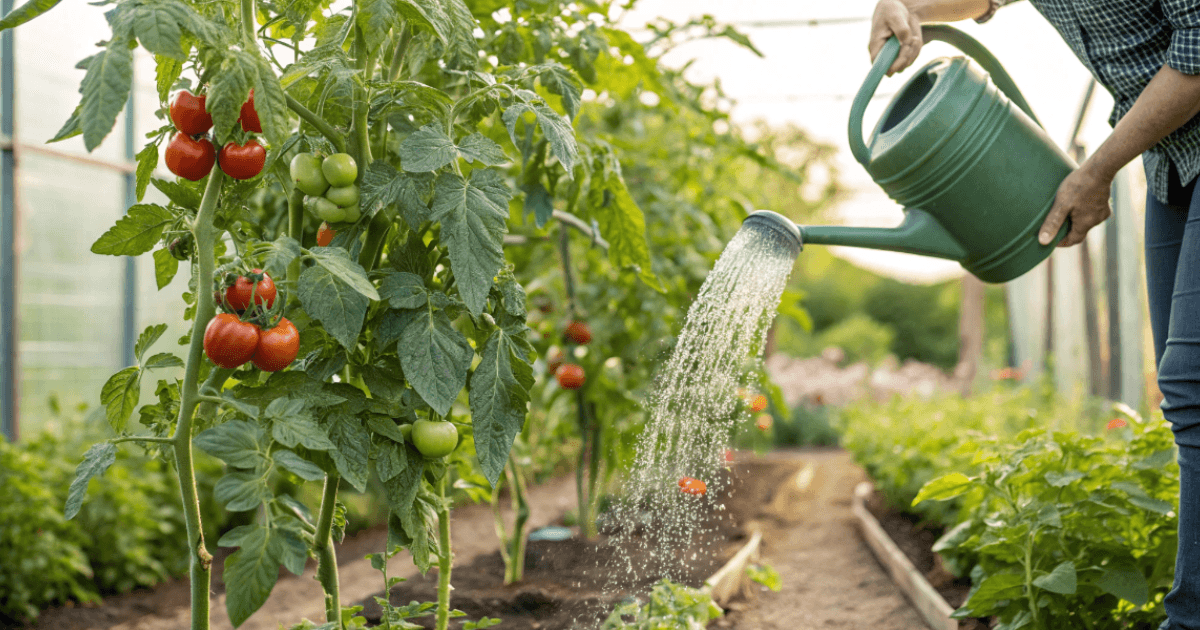
How often to water tomatoes depends on temperature, soil type, plant size, and whether the plants are growing in containers, raised beds, or in-ground gardens. Tomatoes grow best when the root zone stays consistently moist without swinging between extremely dry and heavily soaked soil.
Most common tomato problems, blossom end rot, cracked fruit, weak growth, or dropped flowers, can be traced back to inconsistent or incorrect watering.
Tomatoes don’t need constant watering. They need deep, steady moisture that stays consistent over time. When the soil swings between dry and wet, plants get stressed, roots struggle, and fruit quality suffers. The goal is simple: keep the root zone evenly moist without turning it soggy.
Quick Answer:
- Water deeply instead of lightly
- Keep soil consistently moist, not dry, then soaked
- Water at the base of the plant, not over the leaves
- Adjust watering frequency based on weather, soil, and plant size
- Containers and raised beds usually need more frequent watering
How Tomato Plants Actually Use Water
Understanding how tomatoes take up water helps you avoid the most common mistakes. The goal isn’t just giving water, it’s getting water to the right place in the right way.
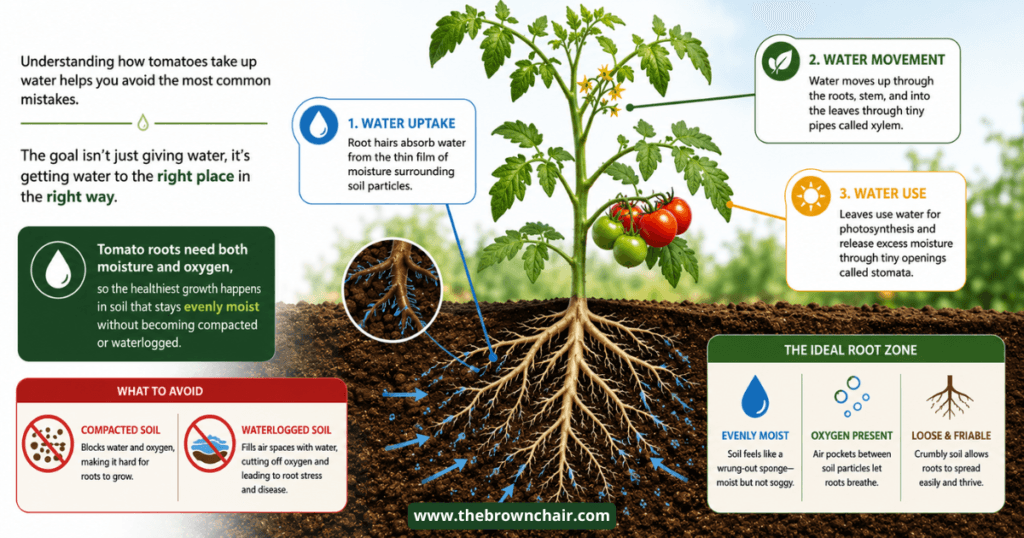
Tomato roots need both moisture and oxygen, so the healthiest growth happens in soil that stays evenly moist without becoming compacted or waterlogged.
Root Depth and Water Uptake
Tomato plants develop surprisingly deep root systems when encouraged. In good soil, roots can reach 12-24 inches deep, sometimes more. These deeper roots allow the plant to access stable moisture and handle heat better during hot weather.
When you water properly, you’re not just hydrating the surface, you’re feeding that deeper root zone where the plant does most of its work. Deep moisture also helps plants stay more stable during dry periods between waterings.
Deep roots become especially important once tomatoes begin heavy fruit production during summer.
Why Shallow Watering Creates Weak Roots
Frequent, light watering keeps moisture near the surface. Roots respond by staying shallow, which makes plants more vulnerable to:
- Heat stress
- Quick drying between waterings
- Poor nutrient uptake
- Faster wilting during hot afternoons
Shallow-rooted tomatoes often look fine early on, then struggle once temperatures rise or fruiting begins. Surface watering also increases moisture loss through evaporation before roots can fully use it.
Why Inconsistent Watering Causes Problems
Tomatoes rely on steady moisture, especially once fruit starts forming. When the water supply fluctuates, several issues show up quickly:
- Blossom end rot – Calcium can’t move properly during dry periods
- Fruit cracking – Fruit expands too quickly after a dry spell, followed by heavy watering
- Stress during fruit fill – Leads to smaller or misshapen tomatoes
- Blossom drop – Plants may abort flowers during severe moisture stress
Large swings between very dry and heavily soaked soil are harder on tomato plants than slightly imperfect but consistent moisture. Consistency matters more than frequency.
The Best Watering Method for Tomato Plants
The method you use affects how deeply water penetrates, how efficiently it’s used, and how healthy your plants stay. Good watering is less about the amount used at one moment and more about getting steady moisture deep into the root zone without creating soggy soil or runoff.
Water Deeply, Not Lightly
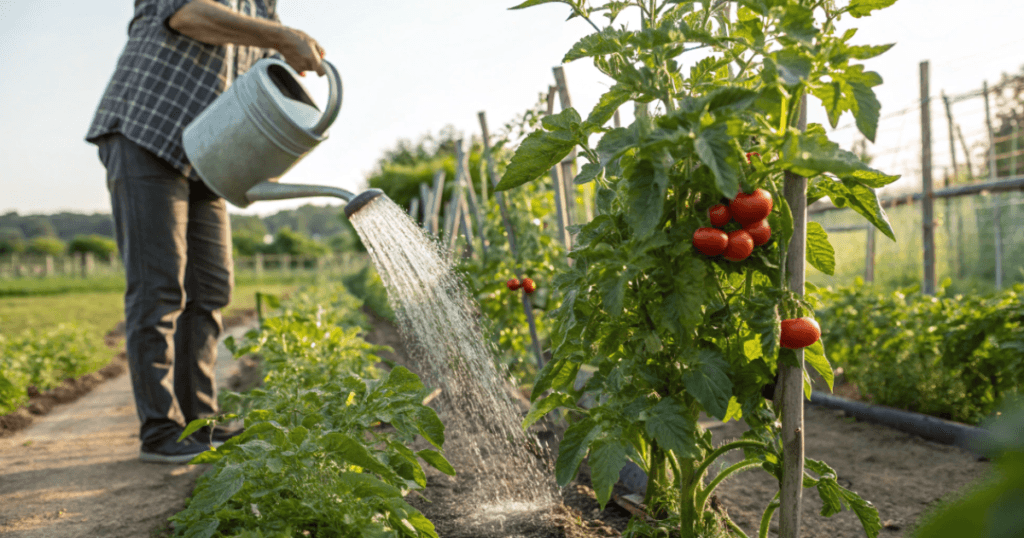
Each watering should soak the soil thoroughly enough to reach the full root zone. Deep watering encourages roots to grow downward, where moisture stays more stable.
A practical way to think about it:
- Aim to moisten at least 8–12 inches deep
- Water until the soil is evenly damp, not just wet on top
- Let the water soak in gradually rather than flooding the area quickly
If the top looks wet but the soil dries out an inch below, you’re not watering deeply enough.
Water at the Base Only
Always direct water to the soil around the plant, not over the leaves. Wet foliage stays humid longer and increases disease pressure, especially during warm or humid weather.
Keeping foliage dry helps reduce:
- Fungal diseases
- Leaf spotting
- Spread of soil-borne pathogens
A slow stream at the base, drip irrigation, or a soaker hose works best.
Water Slowly to Prevent Runoff
Fast watering often leads to water running off instead of soaking in, especially in compacted, sloped, or very dry soil. Slow watering gives the root zone time to absorb moisture properly.
Better approach:
- Use a gentle flow
- Pause between passes to let water absorb
- Water in stages if needed
- Re-wet extremely dry soil gradually instead of soaking it all at once
Drip Irrigation vs Hand Watering
Both can work well if done correctly. The best method is the one you can use consistently throughout the season.
Drip Irrigation
- Delivers water slowly and evenly
- Ideal for consistent moisture
- Reduces evaporation loss
- Saves time once set up
Hand Watering
- Flexible and simple
- Works well if you’re consistent
- Allows quick inspection of plants while watering
- Requires attention to depth and timing
Consistency matters more than the method itself.
How Often to Water Tomato Plants
No fixed schedule works for every garden. Frequency depends on conditions, not the calendar.
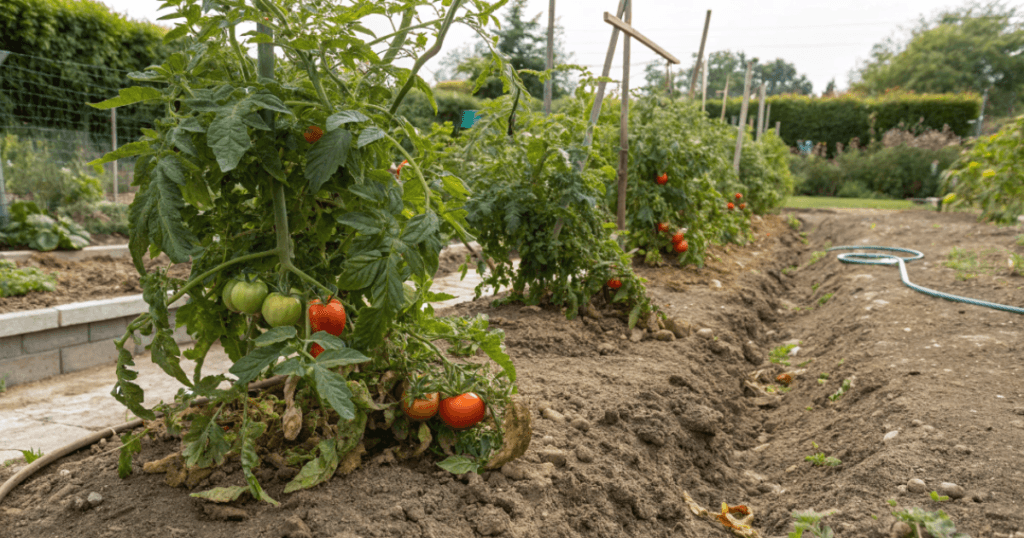
Many gardeners search for how often to water tomatoes, but the correct schedule changes constantly depending on weather, soil drainage, container size, plant growth stage, and fruit load.
Temperature, wind, soil type, plant size, and whether tomatoes are growing in containers or garden beds all change how quickly moisture disappears.
General Frequency Guidelines
These are starting points, not rules:
- In-ground tomatoes: Every 2-4 days, depending on conditions
- Containers: Often daily in warm weather
- Newly transplanted tomatoes may need more frequent watering until roots establish
Mature plants with large canopies and heavy fruit loads usually need more water than young plants. Tomatoes also need far less water early in the season than they do during peak summer growth and heavy fruit production.
Always adjust based on soil moisture, not habit or a fixed schedule.
How Much Water Do Tomatoes Need
Mature tomato plants often need around 1-2 inches of water per week between rainfall and irrigation, though containers, raised beds, sandy soil, and extreme heat can increase water demand significantly.
Instead of measuring exact amounts, it’s usually more reliable to monitor soil moisture and plant response directly. Healthy tomato plants should stay evenly hydrated without the soil remaining constantly wet.
Adjusting for Weather Conditions
Weather changes everything quickly. Tomatoes can go from comfortably moist to stressed surprisingly fast during heat, wind, or dry air.
- Hot weather: water more frequently; soil dries faster
- Cool or cloudy weather: water less often
- Windy conditions: soil loses moisture faster, even if temperatures are moderate
- Low humidity can also increase water loss from both soil and leaves
Recent rainfall should always be considered before watering again, especially in heavy soil or cooler weather.
During heat waves, you may need to water daily, even in-ground plants, especially during heavy fruit production.
Large fruiting tomato plants can suddenly start using far more water once heavy fruit production begins, which is why watering schedules that worked earlier in the season often stop working by midsummer.
Soil Type Changes Everything
Soil determines how long water stays available around the roots. Two gardens in the same weather can need very different watering schedules simply because of soil texture.
- Sandy soil: Drains quickly, dries fast → Water more often
- Clay soil: Holds water longer → Water less often but deeply
- Loamy soil usually holds the most balanced moisture level for tomatoes
If you’re unsure, test your soil after watering to see how long moisture lasts below the surface.
Raised Beds vs In-Ground
Raised beds behave differently from native soil. They usually warm earlier in spring and drain more efficiently, but they also lose moisture faster during summer.
- Raised beds drain faster and warm up quicker
- They often need more frequent watering than in-ground beds
- Wind and direct sun dry raised beds especially quickly
If your raised bed mix is light and well-draining, expect faster drying and check moisture more often during hot weather. For raised beds, check moisture a few inches below the surface rather than judging only by the dry top layer.
How Often to Water Tomatoes in Raised Beds
Raised beds usually need watering more often than in-ground gardens because elevated soil drains faster and heats up more quickly during summer. In hot weather, raised beds may dry significantly faster than nearby native soil, especially when the bed mix is loose and highly organic.
The exact frequency still depends on weather and soil moisture, but raised bed tomatoes often need more frequent monitoring once temperatures rise and fruit production increases.
How to Know When Your Tomatoes Need Water
Instead of guessing, use simple checks to read what your plants and soil are telling you. Tomatoes usually show moisture stress early if you know what to watch for, and catching it early helps prevent fruit problems later.
The Finger Test
One of the most reliable methods.
- Stick your finger 2-3 inches into the soil near the root zone
- If it feels dry at that depth, it’s time to water
- If it still feels moist, wait
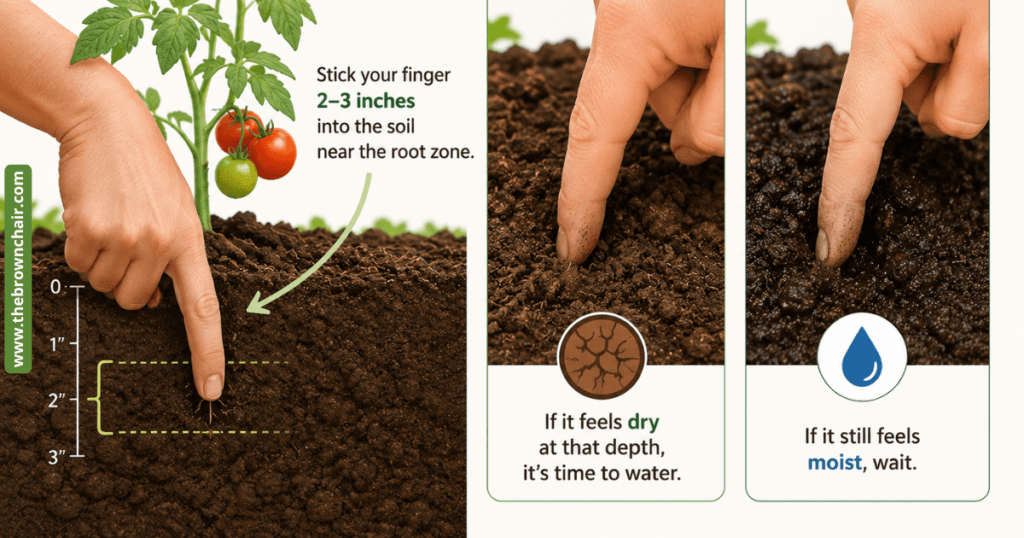
Very dry surface soil does not always mean the deeper root zone is dry, especially in raised beds during hot weather, where the top layer dries much faster than the soil below.
This works for both garden beds and containers. In larger beds, check close to the plant itself rather than only near the bed edge, since moisture levels can vary.
Visual Plant Signals
Plants often show early signs of stress before serious damage happens.
- Slight wilting in the morning → Usually needs water
- Persistent drooping even after watering → Possible overwatering or root issues
- Leaves curling inward during heat can also signal moisture stress
Midday wilting alone isn’t always a problem, it can happen in heat even when the soil is still moist. Tomatoes sometimes temporarily wilt during very hot afternoons and recover later in the day.
Soil Appearance and Surface Clues
Surface appearance can give hints, but it isn’t always enough on its own. The top layer often dries faster than the deeper root zone, especially in hot weather.
- Dry, dusty surface → May be dry deeper down
- Dark, damp soil → Still holding moisture
- Soil pulling slightly away from container edges → Often getting too dry
Always confirm with a deeper moisture check instead of judging only by the surface.
Container Weight as a Moisture Signal
For container plants, weight is a useful indicator.
- Lift the pot after watering → Note the “heavy” feel
- Lift it later → If it feels much lighter, it likely needs water
Fabric grow bags and smaller containers usually dry out especially quickly during warm or windy weather. With experience, container weight becomes one of the fastest and most reliable moisture checks.
Watering Tomatoes by Growth Stage
Tomato plants don’t need the same amount of water all season. Their water demand increases as they grow larger and start producing fruit. Adjusting watering by growth stage helps plants develop stronger roots early and improves fruit quality later.
Seedlings and Newly Transplanted Tomatoes
Young plants have small root systems and need consistent moisture to establish properly after planting.
- Keep soil evenly moist, not soggy
- Avoid letting the soil dry out completely
- Newly transplanted tomatoes may need watering more frequently for the first week or two, especially during warm weather
Drying out at this stage can slow root development and delay establishment.
Vegetative Growth Stage
As plants grow leaves and stems, focus on encouraging deeper roots instead of constant shallow moisture.
- Water less often but more deeply
- Let the top inch of soil dry slightly between waterings
- Encourage roots to grow downward into deeper moisture
This stage helps build a stronger plant before flowering and fruit production begin.
Flowering Stage
Water stress during flowering can reduce fruit set and overall production. Tomatoes are especially sensitive to sudden drying during hot weather.
- Keep moisture consistent
- Avoid large swings between dry and wet soil
- Watch plants closely during heat waves or windy weather
Even short dry periods can sometimes cause blossoms to drop before fruit forms.
Fruiting Stage
This is the most critical stage for consistent watering because developing fruit contains a large amount of water.
- Maintain steady moisture
- Avoid sudden heavy watering after dry soil
- Increase monitoring during heavy fruit production
Irregular watering at this stage directly affects fruit quality most through cracking, blossom end rot, uneven ripening, and reduced flavor balance.
Ripening Stage
Once tomatoes begin ripening heavily, consistency still matters, but extremely heavy watering becomes more likely to reduce fruit quality.
- Avoid letting plants swing between very dry and very wet soil
- Continue deep watering instead of frequent shallow watering
- Reduce stress without keeping the soil constantly saturated
Overwatering during ripening can increase fruit cracking and sometimes produce a more watery, less concentrated flavor.
Watering Tomatoes in Containers
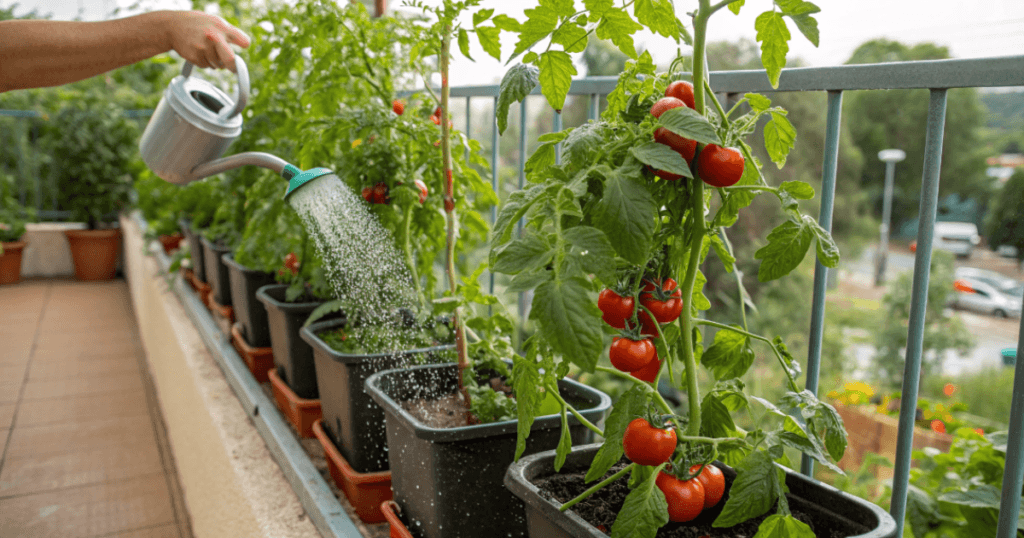
Container tomatoes are much less forgiving than garden-grown plants. The smaller soil volume heats up and dries out faster, so watering becomes more hands-on, especially during summer.
How Often to Water Tomatoes in Containers
Container tomatoes often need watering far more frequently than garden-grown plants because the limited soil volume dries out quickly during warm weather. In summer conditions, many container tomatoes need watering daily, while smaller pots or fabric grow bags may dry out even faster during heat waves or windy weather.
Large containers usually hold moisture longer than small pots, which is one reason tomatoes perform better in containers with at least 5 gallons of soil.
Why Container Tomatoes Need More Frequent Watering
Containers have limited soil volume, so they:
- Dry out faster
- Heat up more quickly
- Hold less reserve moisture
- Lose moisture faster in windy conditions
Even well-sized containers can dry out within a day in warm weather. Fabric grow bags and dark-colored containers usually dry even faster because they lose moisture and heat up more quickly.
Daily Watering in Warm Weather
In summer conditions:
- Most containers need watering once daily
- In extreme heat, sometimes twice daily
- Large fruiting plants use significantly more water than young plants
Check soil, not the clock. Some containers stay moist surprisingly long, while others dry rapidly depending on size, sun exposure, and potting mix.
Check Drainage Every Time
Good drainage is essential because tomatoes dislike constantly saturated roots.
- Water until it drains out the bottom
- This ensures the entire root zone is hydrated
- Prevents salt buildup from fertilizers
If water sits on top or drains too slowly, adjust your soil mix. If containers sit in trays or saucers, avoid letting them stay filled with water for long periods.
Why Small Pots Dry Out So Fast
Small containers don’t hold enough soil to buffer moisture changes.
- They heat up quickly
- Water evaporates faster
- Roots fill the space quickly and use water faster
- Root-bound containers dry especially fast
For tomatoes, larger containers (at least 5 gallons, ideally more) are much easier to manage and usually produce healthier plants with more stable moisture levels.
Mulch Helps Container Tomatoes Too
Container soil loses moisture quickly from the sun and airflow. A thin layer of mulch helps slow evaporation and keeps moisture levels more stable between waterings.
Even a small amount of straw, shredded leaves, or fine bark mulch can noticeably reduce how quickly containers dry out during hot weather.
Best Time of Day to Water Tomatoes
Timing affects how efficiently water is used and how healthy your plants stay. The best time is usually when water can soak into the soil before the day gets too hot, while still giving leaves time to dry if they get splashed.
Morning Watering (Best Option)
Watering in the morning gives plants what they need before the heat builds.
- Reduces evaporation loss
- Keeps plants hydrated through the day
- Gives any splashed leaves time to dry quickly
- Helps the soil absorb moisture before peak heat
This is the most reliable and recommended timing for tomato plants.
Evening Watering (When It Works)
Evening watering can work when mornings aren’t possible, especially during hot weather.
- Water early enough that any splashed foliage can dry before nightfall
- Focus on watering the soil, not leaves
- Avoid leaving the plant wet overnight
It’s less ideal than morning watering, but still effective if done carefully.
Midday Watering in Extreme Heat
Sometimes plants need relief during intense heat. Midday watering does not burn tomato plants, but more water may evaporate before it reaches the root zone.
- Water only if plants are clearly stressed
- Focus on the soil, not the foliage
- Use it as a rescue watering, not your normal routine
This isn’t a routine, just a temporary fix during extreme conditions.
How Mulching Improves Tomato Watering
Mulch is one of the simplest ways to stabilize watering and reduce effort during the growing season. It helps the soil hold moisture longer, reduces stress during heat, and makes watering more forgiving when temperatures fluctuate.
Why Mulch Helps
A layer of mulch over the soil:
- Reduces evaporation
- Keeps soil temperature more stable
- Prevents soil from splashing onto leaves during watering
- Helps reduce weed growth that competes for moisture
This leads to more consistent moisture with fewer waterings, especially during hot or windy weather. Mulch is particularly helpful for raised beds and containers, which tend to dry out faster than in-ground soil.
Common tomato mulches include:
- Straw
- Shredded leaves
- Fine bark mulch
- Untreated grass clippings applied in thin layers
When to Apply Mulch
Apply mulch once:
- Soil has warmed
- Plants are established and growing
Too early, and mulch can slow soil warming in spring. A layer around 2-4 inches thick usually works well for tomatoes.
Keep mulch slightly away from the plant stem instead of piling it directly against the base. This improves airflow and helps reduce stem rot problems.
Mulch helps reduce watering frequency, but tomatoes still need regular moisture checks during hot weather.
Signs You Are Watering Tomatoes Incorrectly
Plants usually show clear signals when watering is off. Catching these early helps prevent more serious problems like blossom end rot, cracking, root stress, and reduced yields.
Signs of Underwatering
Tomatoes struggling for moisture often look stressed quickly, especially during heat or fruit production.
- Dry soil below the surface
- Wilting that improves after watering
- Slow growth or smaller leaves
- Dry or curling leaf edges
- Containers becoming extremely light very quickly
Severely dry soil may also start pulling away from the sides of containers or raised beds.
Signs of Overwatering
Too much water limits oxygen around the roots and can weaken the entire plant.
- Yellowing leaves, especially lower leaves
- Soft, weak growth
- Soil stays wet for too long
- Persistent drooping even when the soil is wet
- Sour-smelling or poorly draining soil
Overwatered tomatoes can sometimes look wilted even though the soil is still moist.
Signs of Inconsistent Watering
Large swings between dry and moist soil often show up most clearly once fruit begins developing.
- Cracked fruit
- Blossom end rot
- Uneven fruit development
- Uneven ripening or misshapen tomatoes
These problems become much more common during hot weather or heavy fruit production if watering stays inconsistent.
Common Tomato Watering Mistakes
Most tomato watering problems come from a few repeated mistakes. Small adjustments often make a noticeable difference in plant health, fruit quality, and overall yield.
Watering Lightly Every Day
Frequent shallow watering keeps moisture near the surface instead of encouraging deep roots.
- Keeps roots shallow and weaker over time
- Makes plants dry out faster during heat
- Increases dependence on constant watering
Deep, less frequent watering usually creates stronger plants.
Letting Soil Dry Out Too Much
Severely dry soil stresses tomato plants quickly, especially during flowering and fruiting.
- Leads to stress, poor fruit development, and nutrient issues
- Increases blossom end rot risk
- Makes fruit cracking more likely after heavy watering
Very dry soil can also become harder to re-wet evenly.
Overcompensating After Dry Spells
Heavy watering after dryness often causes fruit problems because tomatoes absorb water too quickly after stress.
- Commonly leads to fruit cracking
- Increases moisture fluctuations inside developing fruit
- Can leave soil unevenly saturated
It’s better to restore moisture gradually instead of flooding dry soil all at once.
Wetting Leaves Instead of Soil
Tomato plants absorb water through their roots, not through spraying the leaves.
- Increases disease risk
- Keeps foliage damp longer
- Can spread soil-borne pathogens during splashing
Focus watering around the root zone whenever possible.
Ignoring Container or Raised Bed Drying Speed
Containers and raised beds lose moisture much faster than in-ground gardens.
- These setups often need more frequent monitoring
- Fabric grow bags and small pots dry especially fast
- Wind and direct sun increase moisture loss even more
Checking soil regularly matters more than following a fixed schedule.
Ignoring Soil Type
Sandy and clay soils behave very differently and need different watering approaches.
- Sandy soil dries quickly and needs more frequent watering
- Clay soil holds water longer and drains more slowly
- Loamy soil usually stays balanced longer between waterings
The same watering routine rarely works equally well in every soil.
Watering by Habit Instead of Soil Moisture
One of the most common mistakes is watering on a fixed schedule without checking the soil first.
- Conditions change constantly with the weather and plant growth
- Tomatoes may need very different watering from week to week
- Soil moisture matters more than the calendar
Checking the root zone before watering prevents both overwatering and underwatering.
Assuming Every Wilted Plant Needs Water
Tomatoes sometimes droop temporarily during extreme afternoon heat, even when the soil is still moist.
- Midday wilting alone does not always mean dry soil
- Overwatering stressed plants can worsen root problems
- Always check soil moisture before watering again
This mistake becomes especially common during heat waves.
How to Prevent Blossom End Rot and Cracking Through Better Watering
Blossom end rot and fruit cracking are two of the most frustrating tomato problems because they often appear suddenly on otherwise healthy plants. In many cases, both problems are closely connected to inconsistent soil moisture.
Why Moisture Fluctuations Trigger Problems
Blossom end rot happens when calcium can’t move properly through the plant, often because soil moisture swings too much between dry and wet conditions. In many gardens, the issue is inconsistent watering rather than a true lack of calcium in the soil.
Cracking usually happens when tomatoes suddenly absorb large amounts of water after being too dry. The inside of the fruit expands faster than the skin can stretch.
Heavy rain after a dry period commonly triggers cracking, especially in large-fruited varieties.
Why the Fruiting Stage Is the Highest-Risk Stage
Once fruit is developing, tomato plants become much more sensitive to uneven moisture.
- Small inconsistencies that didn’t matter earlier can now affect fruit quality
- Developing fruit demands a steady water supply
- Large and fast-growing fruits crack more easily during moisture swings
Paste tomatoes and large heirloom varieties are often more prone to cracking than smaller cherry tomatoes.
The Role of Mulch and Consistent Irrigation
Mulch and steady watering help reduce rapid moisture swings in the root zone.
- Soil stays more evenly moist
- Roots experience fewer stress swings
- Plants absorb water more gradually and consistently
Mulch combined with drip irrigation or slow deep watering is one of the most effective ways to reduce both cracking and blossom end rot risk.
What Watering Fixes, and What It Doesn’t
Good watering prevents many moisture-related fruit problems, but it does not fix every underlying issue.
It won’t fix:
- Poor soil structure
- Severe nutrient imbalances
- Damaged fruit that has already developed blossom end rot or cracking
Once fruit is badly affected, it will not fully recover, though the plant can still produce healthy future tomatoes if watering improves.
But consistent moisture removes one of the biggest stress factors affecting tomato fruit quality.
Simple Watering Routine for Beginners
If you want a reliable watering routine without overthinking it, focus on consistency instead of strict schedules. A quick daily check is usually more effective than following the same watering pattern every week.
Check Soil Daily
A simple moisture check takes less than a minute and prevents most watering mistakes.
- Use the finger test to check the moisture a few inches below the surface
- Morning is usually the best time to check plants and soil
- Containers may need checking twice daily during extreme heat
Daily checking does not always mean daily watering.
Water Deeply When the Root Zone Starts Drying
Water when the root zone begins drying, not just because it’s “watering day.”
- Deep watering encourages stronger root growth
- Water slowly enough for moisture to soak downward
- Avoid quick, shallow watering that only wets the surface
The goal is evenly moist soil deeper in the root zone, not constantly wet topsoil.
Adjust for Heat, Containers, and Fruit Load
Tomato water demand changes quickly depending on conditions.
- Higher temperatures increase evaporation and plant water use
- Large fruiting plants use more water than young plants
- Raised beds and containers dry faster than in-ground soil
Mulch helps slow moisture loss and reduces how often the soil dries out.
Stay More Consistent Once Fruiting Begins
This is the stage where watering consistency matters most for fruit quality and plant health.
- Avoid letting soil swing between very dry and heavily soaked
- Monitor plants more closely during heat waves
- Keep moisture as even as possible during heavy fruit production
Consistent watering during fruiting helps reduce cracking, blossom end rot, and uneven ripening.
How Watering Affects Tomato Yield and Flavor
Watering doesn’t just keep plants alive, it directly affects what you harvest. Steady moisture helps tomatoes size up properly, ripen more evenly, and avoid stress-related fruit problems.
Consistent Moisture Supports Better Yield
Plants that don’t experience repeated water stress usually produce more usable fruit over time. Consistent moisture helps the plant keep flowering, setting fruit, and filling tomatoes without frequent setbacks.
Irregular Watering Can Reduce Fruit Size and Quality
Inconsistent water supply can lead to smaller fruit, uneven ripening, cracking, and more blossom end rot. The biggest problems usually show up once tomatoes are actively developing and sizing up.
Even Moisture Helps Flavor Stay More Balanced
Steady watering supports better flavor development by helping fruit ripen evenly. Steady moisture supports more even ripening and better overall fruit quality.
Too much water near ripening can sometimes make tomatoes taste milder or more watery, especially after heavy rain or overwatering. Consistent moisture usually gives the best balance between good size and better flavor.
Signs Your Watering Routine Is Working
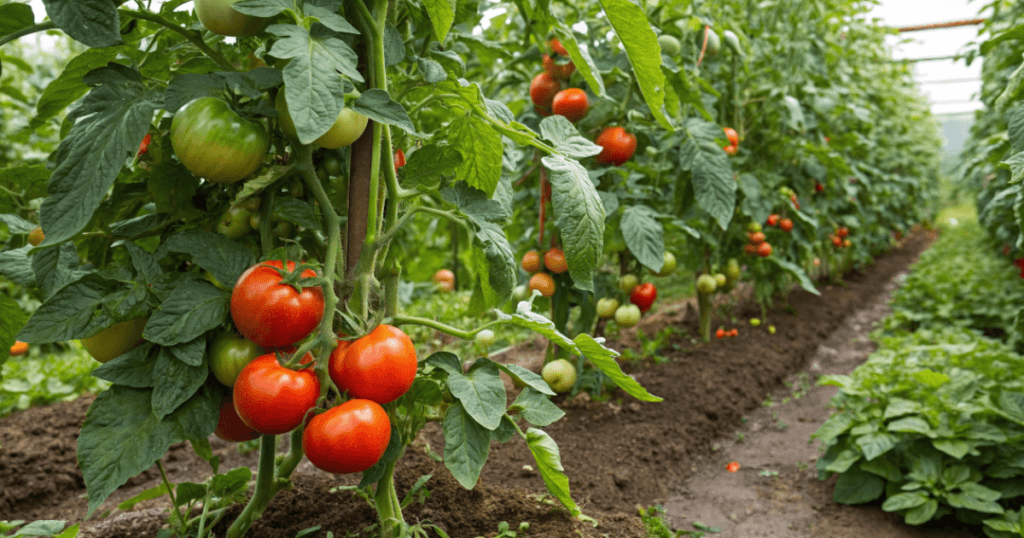
You’ll know your approach is right when tomato plants respond consistently. The plant should look steady from week to week, not constantly swinging between wilted, yellowing, and stressed.
Healthy Leaf Color
Leaves stay green, firm, and evenly hydrated. A healthy plant may still droop slightly during extreme afternoon heat, but it should recover once temperatures cool.
Steady Growth
Plants continue producing new leaves, stems, flowers, and fruit without staling. Growth should look balanced, not soft and weak from too much water or tight and stressed from too little.
Even Fruit Development
Fruits grow steadily without frequent splitting, deformities, or sudden size changes. This is one of the clearest signs that moisture is staying reasonably consistent.
Less Cracking and Fewer Moisture Disorders
Stable watering reduces visible fruit issues like cracking, blossom end rot, and uneven ripening. You may still see occasional problems after heavy rain or extreme heat, but they should become less frequent.
Conclusion
The best way to water tomato plants is to water deeply, keep moisture consistent, and focus water at the base of the plant. Tomatoes do not need a perfect schedule, but they do need soil that stays evenly moist without becoming soggy.
Check the soil regularly, adjust for heat, containers, raised beds, and fruit load, and stay especially consistent once tomatoes begin forming. When plants are growing steadily, fruit is developing evenly, and cracking is less frequent, your watering routine is doing its job.

Leave a Reply