
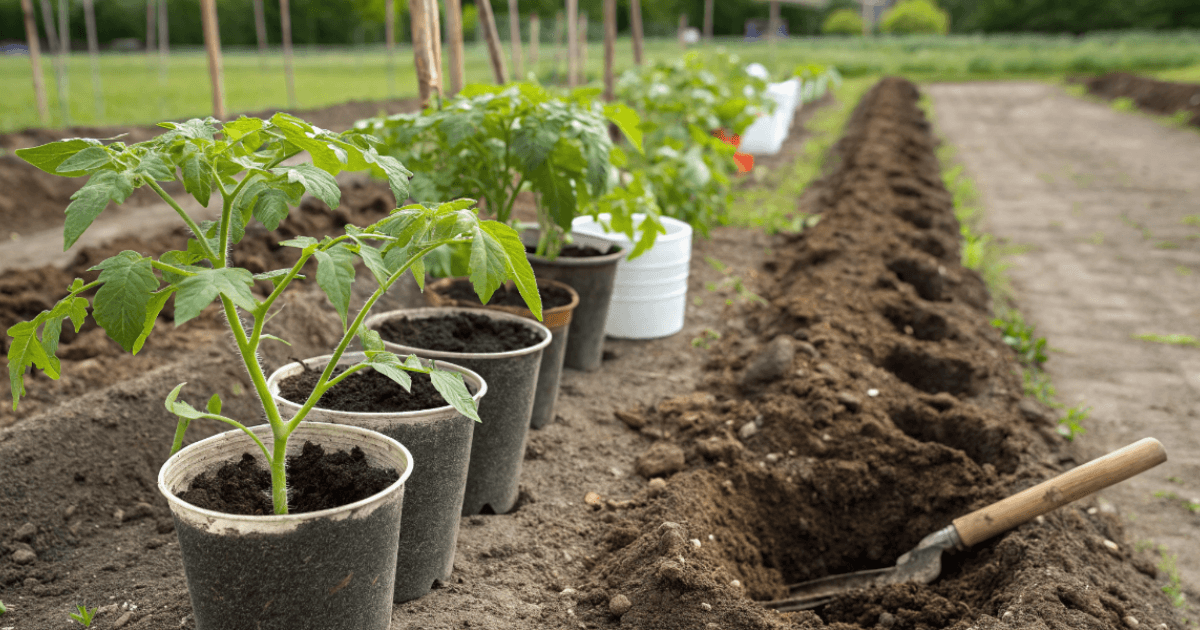
How deep to plant tomatoes depends on the size of the transplant, the soil conditions, and whether the seedling became leggy before planting. In most gardens, tomatoes grow best when about half to two-thirds of the stem is buried below the soil line so the buried stem can develop additional roots.
Unlike pepper, cucumber, or bean stems, tomato stems can produce new roots when buried in soil. That extra root growth helps plants anchor better, handle dry periods more easily, and recover more steadily after transplanting.
Deep planting is especially useful when seedlings become tall or leggy indoors before transplant time. Instead of struggling with a weak, floppy transplant, you can bury part of the stem and turn that extra length into productive root growth. For very tall seedlings, a shallow trench often works better than a very deep hole because it keeps the buried stem closer to warmer surface soil.
Quick overview before planting:
- Remove lower leaves before burying the stem.
- Bury about 1/2 to 2/3 of the plant when possible.
- Use a deep planting hole for compact seedlings.
- Use trench planting for tall or leggy seedlings.
- Keep the growing tip and healthy top leaves above the soil.
- Avoid deep planting in cold, wet, poorly draining soil.
If you are still learning the full transplanting and growing process, start with my complete guide on how to grow tomatoes before moving seedlings outdoors.
How Deep to Plant Tomatoes Correctly
Most tomato plants can be planted with roughly half to two-thirds of the stem buried below the soil line. Only the healthy top growth and upper leaves should remain exposed above ground.
Most gardeners leave at least the top 4-6 inches of growth above the soil line.
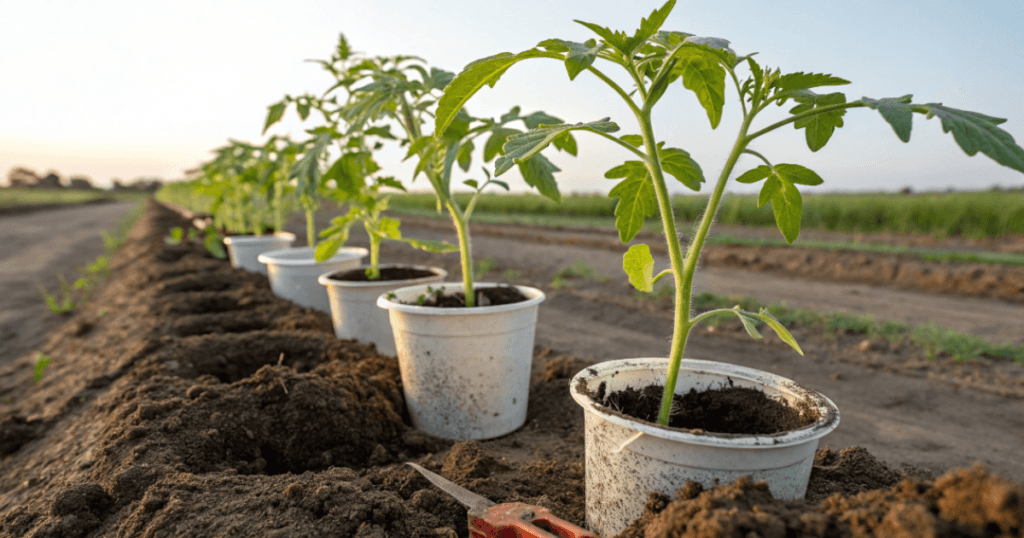
For short, sturdy seedlings, a standard deep planting hole usually works well. For tall, stretched seedlings that became leggy indoors, trench planting is often safer and easier because it keeps most of the buried stem in warmer upper soil layers.
Before planting:
- Remove lower leaves from the buried section of the stem
- Keep the growing tip above the soil
- Water deeply after transplanting to settle the soil around the buried stem
- Avoid packing soil tightly around the stem
Deep planting is not always the best choice in difficult soil. If the ground is cold, compacted, or stays wet after rain, planting too deeply can slow establishment and increase stress on young roots.
Why Gardeners Plant Tomatoes Deep
Planting tomatoes deeply helps buried stems develop additional roots underground. This larger root system can improve plant stability, moisture access, and recovery after transplanting.
Many gardeners intentionally bury tall or leggy tomato seedlings deeper than they originally grew in their containers because tomatoes can safely form roots along buried stems. This allows stretched seedlings to recover instead of remaining weak and floppy above ground.
Deep planting is especially useful for:
- leggy seedlings
- windy gardens
- raised beds
- dry climates
- fast-draining soil
- large indeterminate tomato varieties
Why Tomatoes Can Be Planted Deep
Tomatoes behave differently from most garden vegetables when transplanted. Once you understand how the stem responds underground, deep planting starts making practical sense instead of feeling like a gardening trick.
The difference becomes noticeable later in the season. Plants with larger root systems usually stay more stable during storms, recover faster after heat stress, and handle watering fluctuations better than shallow-rooted transplants.
Tomatoes Grow Roots Along Buried Stems
Tiny bumps or fine hairs along tomato stems can develop into new roots once buried in moist soil. These are called adventitious roots, and they allow tomatoes to safely form roots along buried stems in a way most garden vegetables cannot.
This is why gardeners can safely bury much more of a tomato transplant than they would with most vegetables.
More Roots Improve Water and Nutrient Uptake
A larger root system gives the plant access to more moisture and nutrients. During hot weather, deeply rooted tomatoes often stay steadier between waterings than shallow-rooted plants.
This becomes especially noticeable in raised beds and containers during midsummer. Plants with limited root systems tend to wilt faster once fruit production ramps up and temperatures climb.
Deep Planting Improves Stability
Tomato plants become surprisingly top-heavy once they start producing vigorous vines and fruit clusters. Deep planting creates a stronger anchor underground, reducing stem wobble and root disturbance from wind.
Loose plants that rock back and forth in spring winds often struggle to establish properly because tiny new roots keep breaking.
When Deep Planting Helps Most
Deep planting is especially useful for:
- Leggy indoor seedlings
- Outdoor transplants exposed to wind
- Dry climates or fast-draining soil
- Plants growing in raised beds
- Early-season transplants that need stronger anchoring
- Windy garden locations
When Deep Planting Works Best
Deep planting works best when soil conditions support fast root growth. Tomatoes recover quickly in warm, active soil, but they can stall badly if planted too early into cold spring ground.
A healthy transplant usually adjusts within a week or two when temperatures cooperate. Cool, wet spring weather usually slows recovery more than planting depth itself.
Warm Soil Conditions
Warm soil is one of the biggest factors in successful deep planting for tomatoes. Tomato roots grow aggressively once soil temperatures stay consistently above about 60°F.
If deeper soil layers still feel cold and damp, plants may sit nearly motionless for days instead of growing. Soil that feels cool to the touch several inches down is usually still too cold for aggressive root growth.
Many gardeners notice that tomatoes planted shallowly into warmer upper soil often outperform deeply buried transplants placed into cold spring ground too early.
Raised beds usually warm faster in spring than in-ground gardens, which often makes deep planting easier and safer early in the season.
After Frost Risk Has Passed
Tomatoes dislike cold stress. Even if frost no longer threatens, cool nighttime temperatures can still slow recovery after transplanting.
Wait until nighttime temperatures stay reliably above 55°F (13°C) before deeply planting tomatoes outdoors.
Strong Transplants With Enough Stem Length
Healthy transplants with sturdy stems and several sets of leaves usually respond best. Tomato seedlings grown one plant per pot usually transplant more easily because they already have their own root system. Crowded seedlings growing together in one pot or cell often have smaller, tangled roots and may take longer to recover after planting.
A little stretching is fine, especially since part of the stem will be buried anyway.
Plants with pencil-thin stems, pale foliage, or weak growth usually recover better before being planted deeply outdoors.
Leggy or Tall Seedlings
Deep planting is one of the best fixes for leggy tomato seedlings. Instead of trying to support a long, unstable stem above ground, you can bury much of it and allow the buried stem to develop additional roots underground.
Many gardeners intentionally plant leggy tomatoes deeper rather than discarding them.
When NOT to Plant Tomatoes Deep
Deep planting helps tomatoes in many situations, but it is not always the best approach. Soil conditions matter more than strict planting depth.
Sometimes shallow planting into warmer soil leads to faster growth than burying the plant too deeply into cold ground.
Cold Soil
Cold soil slows root development significantly. Tomatoes planted deeply into chilly spring soil often become stagnant and pale.
The top few inches of soil usually warm first in spring, while deeper layers stay cold longer.
Wet or Poorly Draining Soil
Deep planting into soggy soil can stress roots and slow establishment.
Heavy rain after transplanting becomes more problematic when the buried stem sits in saturated soil for long periods.
Heavy Clay Without Drainage Improvement
Dense clay soil often stays compacted, wet, and cold well into spring. In these conditions, trench planting often works better than a deep vertical hole.
When it stays wet, saturated clay soil can become oxygen-poor around developing roots, which slows recovery and increases transplant stress.
Adding compost before planting usually improves both drainage and root development. In very heavy clay, shallow trench planting is often safer than burying the root ball deeply.
Very Small or Weak Seedlings
Tiny seedlings with very little stem length usually do not benefit from aggressive deep planting.
Weak plants usually recover better with moderate planting depth and stable growing conditions.
Grafted Tomatoes
Grafted tomatoes should never have the graft union buried below soil level.
Keep the swollen graft area clearly above the soil line. The graft union is usually visible as a thicker, slightly raised section near the base of the stem. Otherwise, the top variety may produce its own roots and cancel the disease-resistant benefits of the rootstock.
How Deep Should You Plant Tomatoes?
The best planting depth depends on both the seedling and the soil conditions. There is no exact measurement that works for every situation.
Experienced gardeners usually adjust planting depth naturally based on transplant size, soil warmth, and drainage. The goal is to bury enough stem to encourage strong rooting without placing the plant into cold, soggy soil.
General Depth Rule
A common guideline is to bury roughly half to two-thirds of the tomato stem below the soil line.
That may mean:
- 3-4 inches for small seedlings
- 6-10 inches for taller transplants
- Most of the stems for leggy plants using trench planting
Extremely tall seedlings do not need to be buried straight down if the deeper soil is cold.
How Deep to Plant Leggy Tomato Seedlings
Leggy tomato seedlings are usually planted deeper than compact transplants because the stretched stem can produce additional roots underground. Many gardeners bury most of the stem while leaving only the healthy top leaves exposed above the soil line.
For extremely tall seedlings, trench planting is often easier than forcing the plant into a very deep vertical hole. Keeping the buried stem closer to the warmer upper soil layer usually helps leggy plants recover faster after transplanting.
What Must Stay Above Soil
Always leave:
- The growing tip
- Healthy upper leaves
- Several inches of top growth
The plant still needs enough exposed foliage to recover quickly and continue growing after transplanting.
Adjusting Depth Based on Seedling Size
Small, sturdy seedlings usually only need moderate depth.
Tall or leggy seedlings often benefit from:
- A deeper planting hole
- Trench planting
- A combination of both
Very tall seedlings often curve naturally upward within several days after trench planting. This natural upward bend does not harm the plant.
Why Depth Should Match Soil Conditions
Warm, loose soil supports faster root expansion along the buried stem.
Cooler soil often responds better to trench planting.
This matters especially during early spring transplanting.
Deep Hole Planting Method
The deep hole method works best when soil stays warm, loose, and workable several inches below the surface.
It is usually the simplest option for sturdy seedlings that are moderately tall without being severely leggy.
When to Use a Deep Hole
Use this method for:
- Compact healthy seedlings
- Loose garden soil
- Raised beds with deep soil
- Warm late-spring planting conditions
- Areas where deeper soil has already warmed
Step-by-Step Method
- Dig a hole deep enough to bury the planned section of stem comfortably.
- Remove lower leaves from the buried portion.
- Place the tomato upright in the hole.
- Backfill gently around the stem.
- Avoid leaving large air pockets around buried stems or roots.
- Firm the soil lightly without packing it tightly.
- Water thoroughly to settle the soil.
Avoid forcing oversized seedlings straight downward into narrow holes. Bent or damaged stems recover more slowly.
Trench Planting Method
Trench planting is one of the easiest and most practical ways to handle tall, stretched tomato seedlings. It also works well when deeper soil remains cool in spring.
This is one reason many gardeners prefer trench planting early in the season.
Instead of planting straight down, the plant is laid sideways with most of the stem buried horizontally.
When Trench Planting Is Better
This method works especially well for:
- Leggy seedlings
- Shallow workable soil
- Cold lower soil layers
- Tall transplants that would otherwise need extremely deep holes
- Spring planting in cooler climates
How Trench Planting Works
- Dig a shallow trench roughly 3-4 inches deep.
- Remove lower leaves from the buried stem.
- Lay the seedling gently sideways in the trench.
- Gently curve the top growth upward above the soil.
- Do not force the stem perfectly upright.
- Cover the stem while leaving the top leaves exposed.
Within several days, the exposed top usually bends naturally upward toward sunlight.
The University of Minnesota recommends removing lower leaves, laying the seedling in a shallow trench, and burying the stem just below the lowest remaining leaves.
Why It Reduces Stress
Trench planting keeps the buried stem closer to the warmer upper soil layer instead of the colder deeper soil.
It also:
- Reduces transplant shock
- Avoids cold, saturated subsoil
- Works well for oversized seedlings, especially seedlings that have become stretched indoors under limited light.
- Encourages rapid root formation near the surface
- Reduces the need for extremely deep planting holes
Step-by-Step: How to Plant Tomatoes Deep Correctly
Good transplanting technique matters just as much as planting depth itself. Healthy seedlings recover faster when the soil is prepared, the root ball stays moist, and the buried stem is handled gently.
Rough handling, dry roots, cold soil, or compacted backfill often cause more problems than planting depth alone.
Step 1: Prepare the Soil
Loosen the planting area at least 10-12 inches deep if you are using a deep hole, or loosen the full length of the trench if you are planting sideways. The soil should feel crumbly enough for roots to move through easily.
If the soil is heavy, mix in compost before planting. Avoid placing the tomato into dense, wet clay without improving the planting area first.
Step 2: Water the Seedling Before Planting
Water the seedling a few hours before transplanting so the root ball is evenly moist but not dripping wet. A hydrated transplant handles stress better than a dry one.
Dry root balls can repel water at first, especially in peat-heavy seed-starting mixes, so pre-watering helps the roots make better contact with the garden soil.
Step 3: Remove Lower Leaves
Remove the lower leaves from any part of the stem that will be buried. Pinch or snip them off cleanly, leaving only the healthy top growth above the soil.
Do not bury leaves underground. Buried foliage can decay and increase the chance of stem problems in wet soil.
Step 4: Choose the Deep Hole or Trench Method
Use a deep hole when the seedling is compact, and the soil is warm several inches down.
Use trench planting when the seedling is tall or leggy, or when the deeper soil still feels cool and damp.
Step 5: Position the Plant Carefully
For a deep hole, set the tomato upright and keep the top growth above the soil line. For a trench, lay the plant gently on its side and angle the leafy top upward.
Do not force a bent stem perfectly straight. Tomato stems are flexible, but young indoor-grown stems can crease or snap if handled roughly.
Step 6: Backfill and Firm Gently
Backfill around the buried stem and root ball with loose soil. Cover the stem fully, but avoid leaving large air pockets around the roots.
Firm the soil lightly with your hands. Do not pack it tightly, because compacted soil slows root growth and holds too much water around the buried stem.
Step 7: Water Thoroughly
Water deeply right after planting to settle the soil around the root ball and buried stem. The goal is evenly moist soil, not muddy soil.
If the soil sinks after watering, add a little more soil around the plant without covering the top leaves.
Step 8: Add Support Early
Install a cage, stake, or trellis soon after planting, before the roots spread. This prevents root damage later and keeps the young plant from rocking in spring wind.
Even deeply planted tomatoes need support once they start growing quickly.
Deep Planting in Different Growing Setups
Deep planting behaves differently depending on where the tomatoes are growing. Soil temperature, drainage, and available root space all influence results. A planting method that works well in a warm raised bed may struggle in cold spring ground or a small container.
The same method may perform differently in a raised bed versus a container.
In-Ground Gardens
In in-ground gardens, plant tomatoes deep enough to bury about ½ to ⅔ of the stem, as long as the soil stays warm and loose several inches below the surface. For tall seedlings in cool spring soil, use trench planting instead of forcing a very deep hole.
In-ground deep planting works best when the soil is:
- Loose and workable
- Warm below the surface
- Deep enough for root expansion
- Well-draining after rain
Cold compacted ground usually benefits from trench planting instead. In cool spring gardens, the upper few inches of soil are often much warmer than deeper layers.
Raised Beds
Raised beds often make deep planting easier because the soil drains better and warms faster in spring.
In raised beds, you can usually plant tomatoes 6-10 inches deep if the bed has at least 12 inches of loose, well-draining soil. For very tall seedlings, trench planting still works well across the top layer of the bed.
Deeper raised beds often perform better long-term for large indeterminate tomato varieties because they allow more root expansion.
Raised beds can dry faster during summer, but they also warm earlier in spring. Deeply planted tomatoes in raised beds may still need more frequent watering during heat waves because the elevated soil dries faster.
Containers
Deep planting still helps in containers, but container size limits how much stem can realistically be buried. Small containers heat up and dry out quickly, which limits how much benefit deep planting can provide.
In containers, bury several inches of stem if the pot is deep enough, usually about 4-6 inches for average transplants. Leave enough space at the top of the container for watering and mulch.
Use:
- Containers of at least 5 gallons for larger varieties
- Deep pots with drainage holes
- Loose, well-draining potting mix
Leave some space near the top edge for watering so runoff does not spill immediately over the sides. Avoid filling containers to the rim before planting deeply.
What to Do Immediately After Deep Planting
The first week after deep planting has a major effect on how quickly tomatoes establish and resume active growth. Most problems during this stage come from environmental stress rather than planting depth itself.
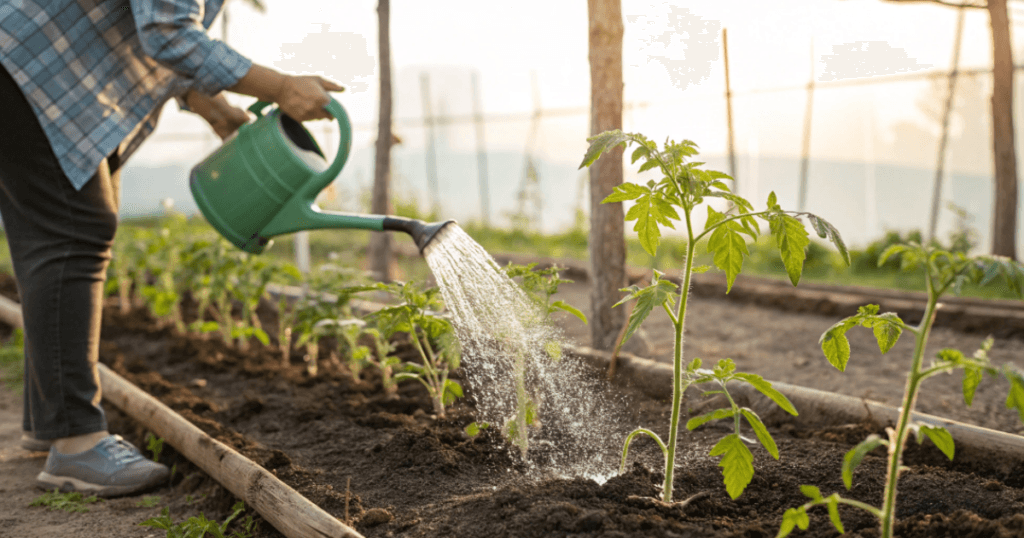
Freshly planted tomatoes often pause briefly before new growth begins. Mild drooping for a day or two after transplanting is common, especially during warm afternoons.
Avoid pruning or heavily handling newly transplanted tomatoes until active new growth resumes.
Water Thoroughly
Deep watering helps settle soil around buried stems, removes air pockets, and improves root-to-soil contact.
Avoid shallow sprinkling. If the soil settles significantly after watering, add a little more soil around the stem.
Add Support Early
Even deeply planted tomatoes benefit from support immediately.
Excessive movement from the wind can disturb developing roots before the plant fully establishes.
Avoid Fertilizing Immediately
Fresh transplants usually do not need strong fertilizer right away.
Too much nitrogen immediately after transplanting can stress roots or encourage weak, soft growth. Tomatoes usually establish better when the focus stays on root growth first, rather than rapid top growth.
Mulch Later, After Soil Warms
Mulching too early can trap cool spring temperatures in the soil.
Once the soil warms properly, mulch helps stabilize moisture and reduce rapid surface drying.
Protect From Cold or Wind If Needed
Young transplants sometimes need temporary protection during rough spring weather.
Cold wind can dehydrate leaves before roots fully establish. Temporary row covers, buckets, or garden fabric can help protect young transplants during sudden cold nights.
How Long Do Tomatoes Take to Establish After Deep Planting
Deeply planted tomatoes often spend several days rebuilding roots before strong new top growth begins again.
That temporary pause is normal. During this stage, the plant may look unchanged above ground even while new roots are actively forming below the soil.
Normal Adjustment Period
Most healthy transplants begin recovering within:
- 5-10 days in warm weather
- Slightly longer in cooler spring conditions
- Large indeterminate varieties sometimes take a little longer to fully resume vigorous growth.
Tomatoes often focus on rebuilding roots first after deep planting, which is why visible top growth may temporarily pause even when the plant is establishing successfully underground.
Signs of Healthy Recovery
Watch for:
- Upright new growth
- Darker, healthier leaf color
- Stem thickening near the base
- Faster water use between waterings
- New leaf development
Many healthy transplants begin growing noticeably faster once nighttime temperatures warm consistently.
When to Worry
Potential warning signs include:
- Ongoing severe wilting
- Yellowing that spreads upward
- Stem collapse
- Cold saturated soil
- Lack of new growth after prolonged warm weather
- Wilting that continues into the evening
Mild afternoon wilting alone is not always a problem, especially during sudden heat or windy weather after transplanting.
Deep Planting vs Shallow Planting
The differences between deep and shallow planting usually become more noticeable later in the season rather than immediately after transplanting.
| Deep Planting | Shallow Planting |
|---|---|
| Larger root system | Smaller root system |
| Better stability | More wind movement |
| Better moisture access | Dries faster |
| Better for leggy seedlings | Better for cold, wet soil |
| Usually steadier long-term growth | Easier in difficult spring soil |
Shallow-planted tomatoes can still produce well, but they often require more careful watering management during stressful weather. This becomes especially noticeable during prolonged summer heat or dry periods.
Root System Size
Deep planting usually creates a larger root system. More buried stems create more potential rooting area along the underground stem.
Plant Stability
Deeply planted tomatoes often wobble less during storms and strong winds.
Stable roots usually establish faster. Plants that move constantly in the wind often take longer to settle after transplanting.
Water Resilience
Larger root systems usually improve moisture access and help plants handle short dry periods more steadily.
This matters most during hot midsummer conditions.
Overall Yield Impact
Deep planting alone does not guarantee higher yields, but healthier roots often support steadier growth and better fruit development. The biggest advantage is usually more consistent growth during stressful weather rather than dramatically larger harvests.
Large indeterminate tomato varieties usually benefit the most from strong, deep root systems because they grow and produce for a longer period.
Does Deep Planting Increase Tomato Yield?
Deep planting usually helps tomato production indirectly rather than directly. It does not magically increase production on its own, but it can help build a stronger root system that supports steadier growth.
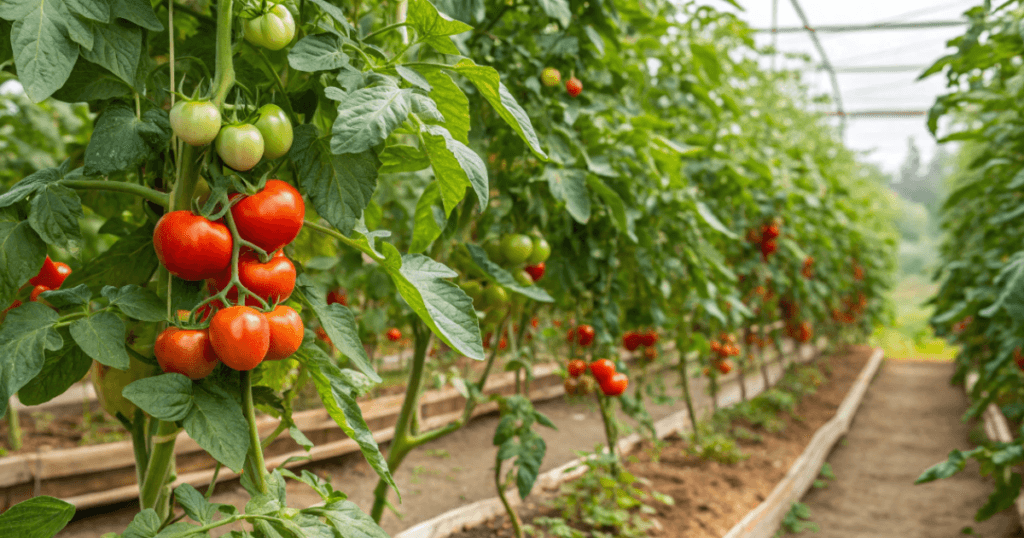
A healthier root system may improve moisture access, stability, stress tolerance, and recovery after transplanting. Those benefits can support better fruit development later, especially during heat, wind, or inconsistent watering.
Plants with weak root systems often struggle more during long stretches of hot summer weather.
Indirect Benefits
Deep planting may improve:
- Stronger root development
- Better stress tolerance
- Improved moisture access
- Better plant stability
- Faster recovery after transplanting
What Actually Determines Yield
Tomato production still depends heavily on:
- Sunlight
- Consistent watering
- Fertility
- Airflow
- Proper support
- Variety selection
- Temperature conditions
- Length of the growing season
Strong roots help support all of these factors, but they cannot compensate for poor growing conditions elsewhere.
Common Mistakes When Planting Tomatoes Deep
Most deep planting problems come from poor soil conditions or transplant timing rather than the deep planting method itself.
Many early tomato problems blamed on deep planting are actually caused by cold soil or overwatering after transplanting.
Planting in Cold Soil
Cold soil slows establishment dramatically.
Tomatoes rarely thrive when rushed outdoors too early. In spring, deeper soil layers often stay colder much longer than the surface.
Not Removing Lower Leaves
Buried leaves often decay underground and may encourage stem rot or disease problems in wet soil.
Planting Too Deep in Heavy Wet Soil
Deep saturated soil limits oxygen around developing roots. This is especially common in compacted clay after heavy spring rain.
Plants often become pale, stagnant, or slow to recover in saturated soil.
Overwatering After Planting
Freshly planted tomatoes need moisture, but constantly soaked soil stresses roots.
The soil should stay evenly moist, not waterlogged. Constantly wet soil slows oxygen flow around new roots and buried stems.
Not Supporting Plants Early
Late staking damages roots surprisingly often.
Install supports near transplant time whenever possible. Installing cages or stakes later can damage roots that already spread beyond the planting hole.
Burying the Graft Union on Grafted Tomatoes
Keep graft unions above the soil line to preserve rootstock benefits. The graft union usually appears as a thicker, swollen section near the lower stem.
Quick Deep Planting Checklist
Before planting, check that:
- Soil is warm several inches below the surface.
- Seedlings are healthy, sturdy, and well-watered.
- Lower leaves are removed.
- Planting depth matches the soil conditions.
- Supports are ready.
- The plant will be watered thoroughly.
- Buried stems will not sit in cold, saturated soil.
Conclusion
Deep planting is one of the simplest ways to help tomato transplants develop stronger roots and establish more steadily after transplanting. By burying part of the stem, you encourage additional root growth that can improve stability, moisture access, and overall resilience during stressful weather.
The best results come from matching the planting method to the conditions in your garden. Warm, loose, well-draining soil usually works well for deep holes, while trench planting is often better for leggy seedlings or cooler spring soil.
Most importantly, avoid rushing tomatoes into cold, saturated ground. Healthy transplants, proper soil conditions, careful watering, and early support matter far more than trying to bury the plant as deeply as possible.
When done correctly, deep planting helps tomatoes settle faster, grow more steadily, and handle the growing season with fewer problems later on.

Leave a Reply