
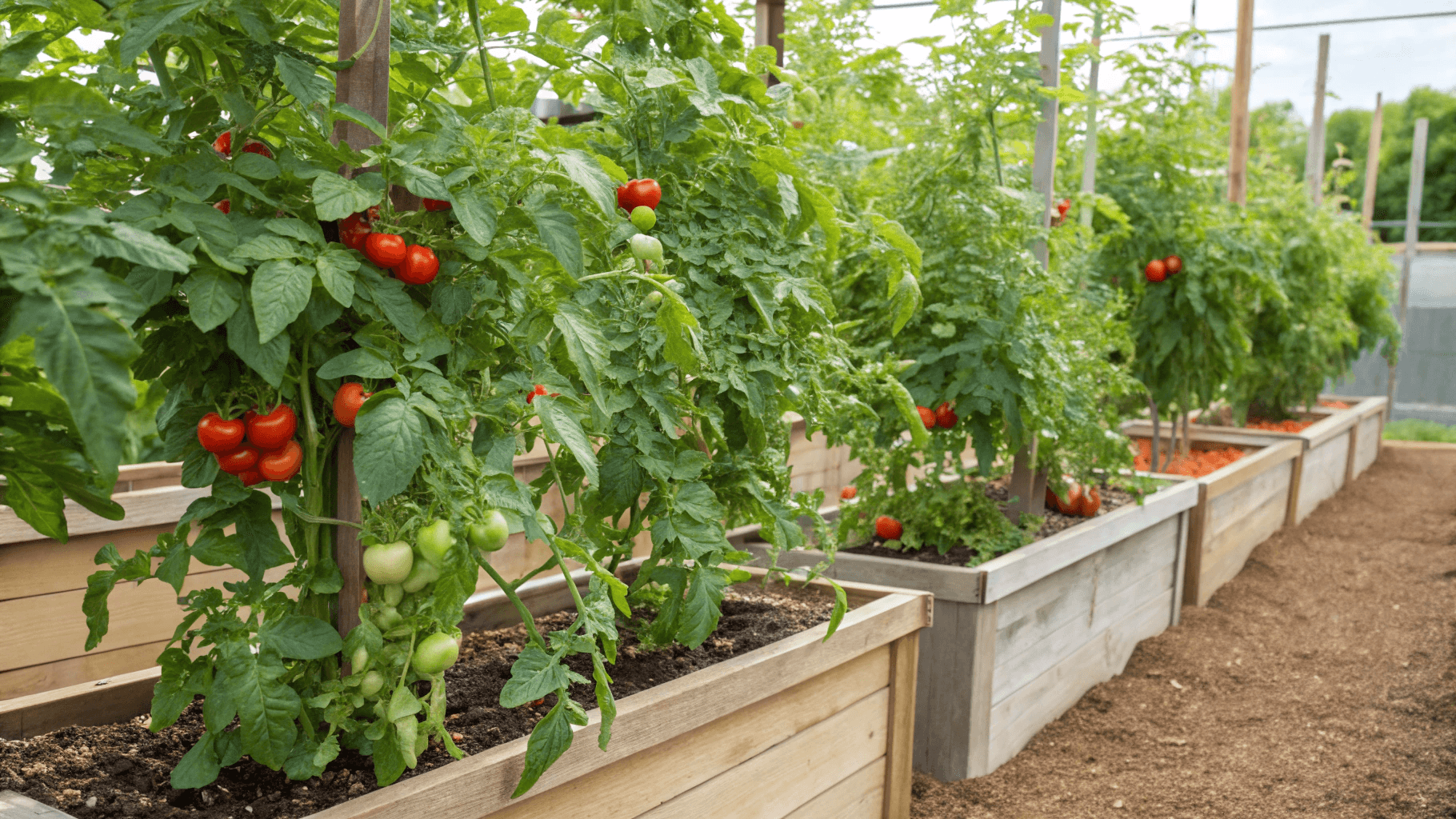
Learning how to grow tomatoes in raised beds starts with giving the plants enough sun, root space, drainage, and room to mature. Tomatoes are particularly well suited to raised beds because the soil warms earlier, drains efficiently, and can be improved specifically for their needs, even where native ground is compacted or poorly drained.
However, a raised bed does not guarantee success. Its soil can dry out faster than in-ground soil, and crowded plants quickly compete for moisture, nutrients, light, and airflow. Most problems can be prevented by starting with a good soil mix, spacing plants correctly, watering consistently, and installing sturdy support before the plants begin rapid growth.
A complicated setup is not necessary. Focus on the few decisions that matter most from planting through harvest.
If you’re new to growing tomatoes altogether, start with my complete guide on how to grow tomatoes, then use this guide to adapt those basics specifically to raised beds.
Quick Start Summary
- Place the bed where tomatoes receive at least 6-8 hours of direct sun
- Provide at least 12 inches of prepared soil, ideally 15-18 inches
- Space plants according to whether they are determinate or indeterminate
- Install cages, stakes, or a trellis at planting time
- Water deeply and consistently because raised beds dry faster
Why Raised Beds Are Ideal for Tomatoes
Raised beds solve several of the biggest challenges tomatoes face in traditional gardens. Instead of relying on whatever soil already exists in your yard, you create the growing conditions from the start. That control makes it easier to grow healthy, productive plants year after year.
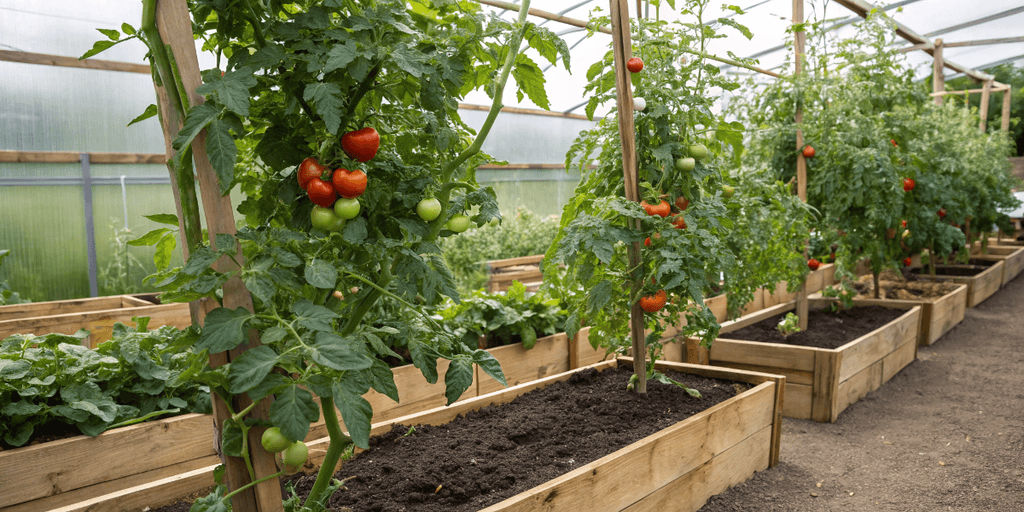
Faster Soil Warming
Raised beds warm earlier in spring because the soil is exposed on the sides as well as the top. Warmer soil encourages quicker root growth after transplanting, helping plants establish and begin growing sooner.
You should still wait until the soil and nighttime temperatures are warm enough, but raised beds may let you plant slightly earlier than nearby in-ground gardens.
Better Drainage
Tomatoes do not grow well in constantly wet soil. Raised beds drain excess water more efficiently, reducing the risk of waterlogged roots and related root problems.
This is especially helpful if your yard has heavy clay soil or tends to stay wet after rain.
Full Control Over Soil
Tomatoes growing in a raised bed depend heavily on the soil placed inside it. You can build a loose, fertile growing mix instead of trying to correct poor native soil.
Because you do not walk on the growing area, the soil also stays less compacted, allowing roots to spread more easily.
Easier Maintenance
Raised beds make routine care more comfortable. Watering, pruning, tying plants, and harvesting are easier because the growing area is elevated and organized.
They can also be easier to weed than traditional garden rows, especially when the bed begins with clean soil.
Choosing the Right Raised Bed Setup
Before planting, take time to choose the right bed size and location. These decisions affect root development, moisture retention, airflow, and how easily you can care for the plants throughout the season.
Ideal Bed Depth
Tomatoes develop deep root systems when conditions allow.
- Minimum prepared soil depth: 12 inches
- Ideal depth: 15-18 inches
A deeper bed holds moisture longer, provides more room for roots, and helps plants stay productive during summer heat.
An open-bottom bed placed over loose garden soil can allow roots to continue growing below the bed. If the bed has a solid bottom or sits over concrete, compacted subsoil, or another hard surface, aim for the deeper end of the range.
Best Bed Width
A raised bed that is 3-4 feet wide is easy to reach from both sides without stepping into the soil. The length can be adjusted to fit the available space.
If you can reach the bed from only one side, keep it closer to 2 feet wide. Avoid making beds so wide that you have to step inside them, since walking on the soil causes compaction.
Location Matters
Even the best soil cannot make up for a poor location.
Choose a spot with:
- At least 6-8 hours of direct sunlight, preferably more
- Good air circulation
- Reasonably level ground
- No persistent standing water after rain
- Enough distance from large trees that compete for water and nutrients
If your garden stays humid after rain, choose a location with good airflow so the foliage dries more quickly.
Choosing Determinate or Indeterminate Tomatoes
The type of tomato you grow affects spacing, support, pruning, and the number of plants that will fit in the bed. Choosing the right growth habit before planting makes the layout much easier to plan.
Determinate Tomatoes
Determinate, or bush-type, tomatoes grow to a more limited size and produce much of their crop within a shorter period. They usually work well in smaller beds and are commonly supported with sturdy cages.
They generally need little pruning beyond removing damaged or soil-touching leaves.
Indeterminate Tomatoes
Indeterminate tomatoes continue growing, flowering, and producing until cold weather or disease ends the season. They need more vertical support, more space, and regular tying as the vines grow.
Tall stakes or trellises are often more practical than small cages for these varieties.
Best Soil for Tomatoes in Raised Beds
Soil is one of the biggest reasons raised beds can outperform traditional gardens. Because the root zone is concentrated inside the bed, the quality of the soil mix directly affects moisture, nutrient availability, and plant growth.
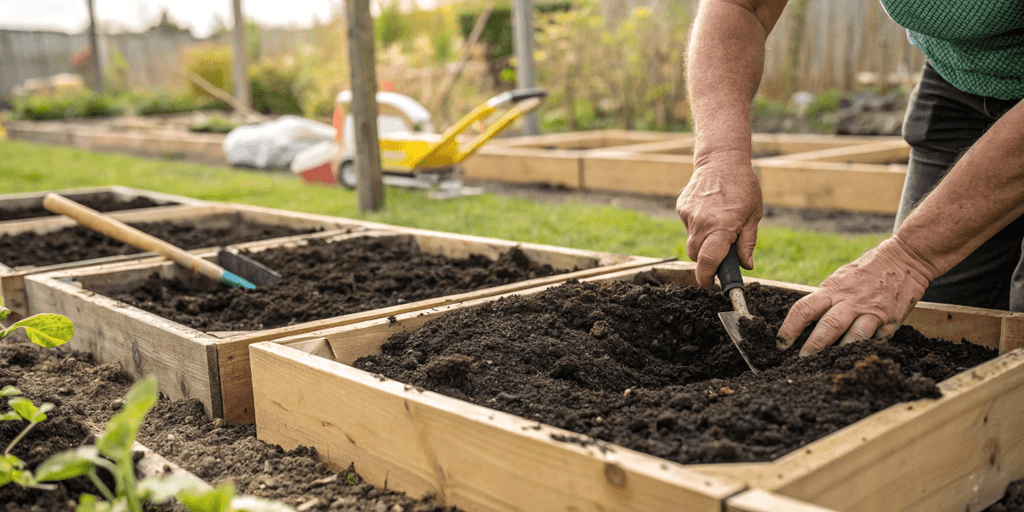
Ideal Soil Structure
Tomatoes grow best in soil that is:
- Loose
- Well-draining
- Rich in organic matter
- Able to retain moisture without becoming soggy
The soil should crumble easily in your hand rather than forming a dense, sticky lump.
A Simple Soil Mix
A reliable raised bed mix combines:
- Quality topsoil
- Finished compost
- An aeration material such as perlite or pine bark fines
This combination gives roots access to both moisture and oxygen. Avoid filling a raised bed with heavy garden soil alone, since it can compact and drain poorly.
Why Soil Matters More in Raised Beds
Raised-bed tomatoes have a limited volume of soil from which to draw water and nutrients. If that soil is dense, nutrient-poor, or poorly drained, the plants cannot easily grow beyond those conditions.
Starting with a quality mix makes the bed easier to manage. Add compost periodically to maintain organic matter, but expect heavy-producing tomatoes to need additional feeding during the growing season.
Newly filled soil often settles during the first season. Top up the bed with compost or additional soil as needed without burying the base of established plants.
Related guide: Best Soil for Tomatoes.
When to Plant Tomatoes in Raised Beds
Planting too early is one of the easiest ways to slow tomato growth. Raised beds warm sooner than surrounding soil, but tomatoes still need consistently warm conditions.
If you are transplanting seedlings started indoors, harden them off gradually for about a week before planting them outside.
Soil Temperature Rule
Wait until the soil reaches at least 60°F (16°C).
Cool soil slows root growth and may leave plants sitting almost unchanged for several weeks.
Night Temperature Check
Nighttime temperatures should remain consistently above 50°F (10°C), and the danger of frost should have passed.
If cold nights are still common, waiting another week usually produces healthier growth than planting too early.
The Raised Bed Advantage
Because raised beds warm faster, they may provide a slight seasonal advantage. Depending on your climate and weather, that could mean planting several days earlier than in nearby in-ground beds.
Do not rely on the calendar alone. Check the actual soil temperature and upcoming nighttime forecast before planting.
Related guide: When to Plant Tomatoes.
How to Plant Tomatoes in Raised Beds
Proper planting helps tomatoes establish quickly and develop a strong root system. If possible, transplant on a cloudy day or in the late afternoon so plants are not exposed to intense sun immediately after planting.
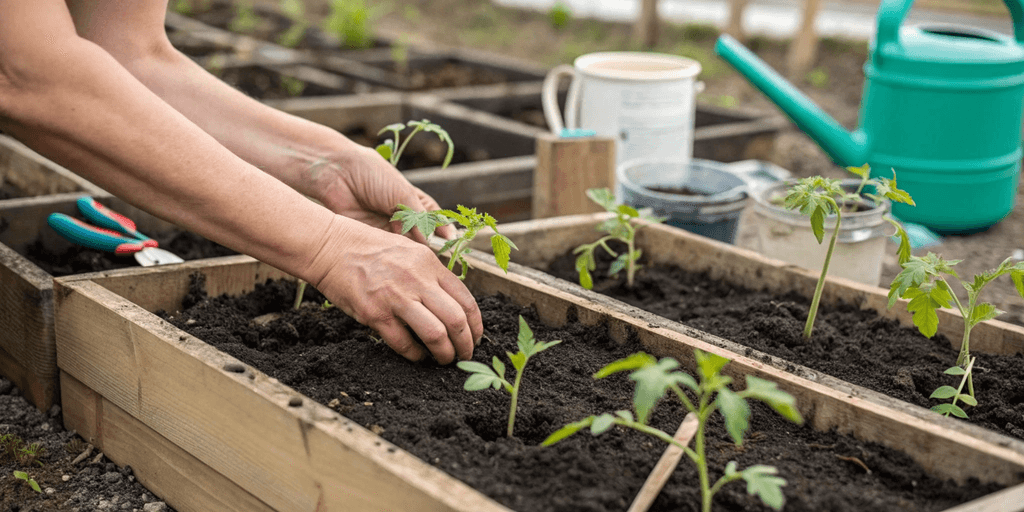
Plant Tomatoes Deep
Remove the lowest leaves and bury part of the stem, leaving the remaining healthy foliage above the soil.
Tomatoes can produce additional roots along the buried stem. Gently firm the soil around the plant to close large air pockets without pressing it down heavily.
Spacing Guidelines
Do not squeeze extra plants into the bed simply because the seedlings look small.
- Determinate tomatoes: 18-24 inches apart
- Indeterminate tomatoes: 24-36 inches apart
Use the wider end of the range for large varieties, humid climates, wide cages, or plants that will receive little pruning. Proper spacing improves access to light and air while making harvesting and plant care easier.
Water Immediately After Planting
Water deeply after transplanting to settle the soil around the roots.
Monitor soil moisture carefully during the first week, but do not keep the soil constantly saturated. The goal is evenly moist soil while the roots establish.
Related guides: How Deep to Plant Tomatoes and Tomato Spacing Guide.
Planning Your Raised Bed Layout
A thoughtful layout makes the entire growing season easier. It improves access, reduces crowding, and leaves enough room for support structures and routine maintenance.
4×4 Raised Bed Example
A standard 4×4-foot raised bed can usually hold:
- 4 compact determinate tomatoes, or
- 2 indeterminate tomatoes
Three indeterminate plants may fit when they are spaced carefully and trained vertically on a trellis, but two is the simpler choice for beginners and usually provides better access.
Trying to fit additional plants often reduces airflow, makes harvesting more difficult, and may lower the quality of the harvest.
Row Layout for Larger Beds
In longer beds:
- Center tomatoes when it improves access from both sides.
- Stagger plants rather than placing them directly opposite each other.
- Leave enough space around the bed to reach every plant.
- Position tall indeterminate varieties where they will not shade shorter crops.
- Account for the full width of cages or trellises before planting.
This arrangement improves light exposure, air circulation, and access throughout the season.
Avoid Overcrowding
More plants do not automatically produce more tomatoes.
Fewer well-spaced plants can produce a better total harvest because they are not competing as heavily for light, moisture, nutrients, and growing space.
Supporting Tomatoes in Raised Beds
Tomato plants become much heavier as they grow and set fruit. Without support, stems can bend, break, or sprawl across the soil.
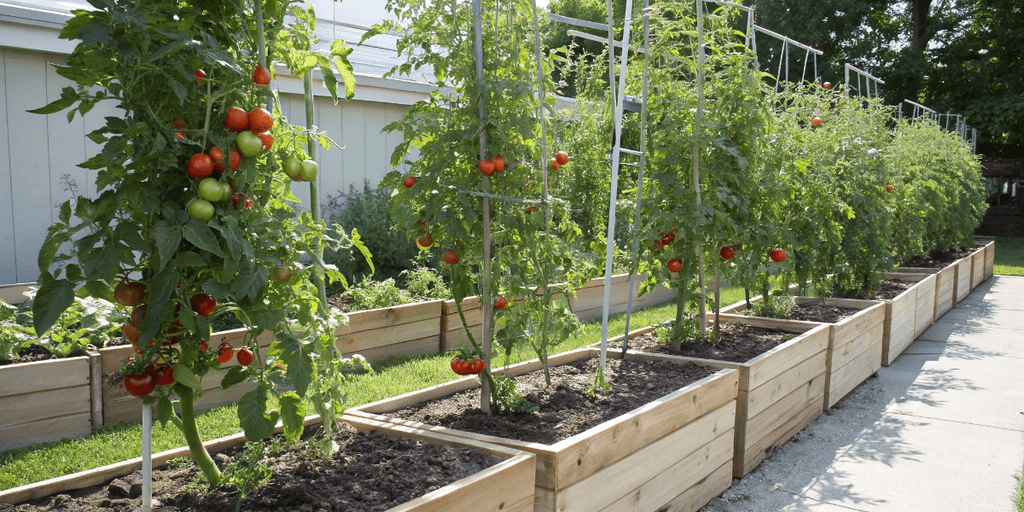
Installing support early keeps plants upright and prevents you from damaging established roots later.
Install Support at Planting Time
Place cages, stakes, or trellises immediately after transplanting.
Adding them after the plants become large is more difficult and can injure roots or stems.
Best Support Options
Common support systems include:
- Tomato cages
- Wooden or metal stakes
- Vertical trellises
Sturdy cages work well for wide determinate varieties. Tall stakes or trellises are usually better for indeterminate tomatoes that keep growing throughout the season.
Tie stems loosely with soft plant ties as they grow. Leave enough room for the stems to thicken without being constricted.
Plan Support Before the Layout
Support systems affect plant spacing, walking paths, sunlight, and harvesting access.
Plan their position before planting so cages do not overlap and trellises do not shade nearby plants unnecessarily.
Related guide: Tomato Support Systems.
Watering Tomatoes in Raised Beds
Raised beds usually dry out faster than in-ground gardens because they are exposed on the sides as well as the top. This does not mean they must be watered every day. It means soil moisture needs to be checked more carefully.
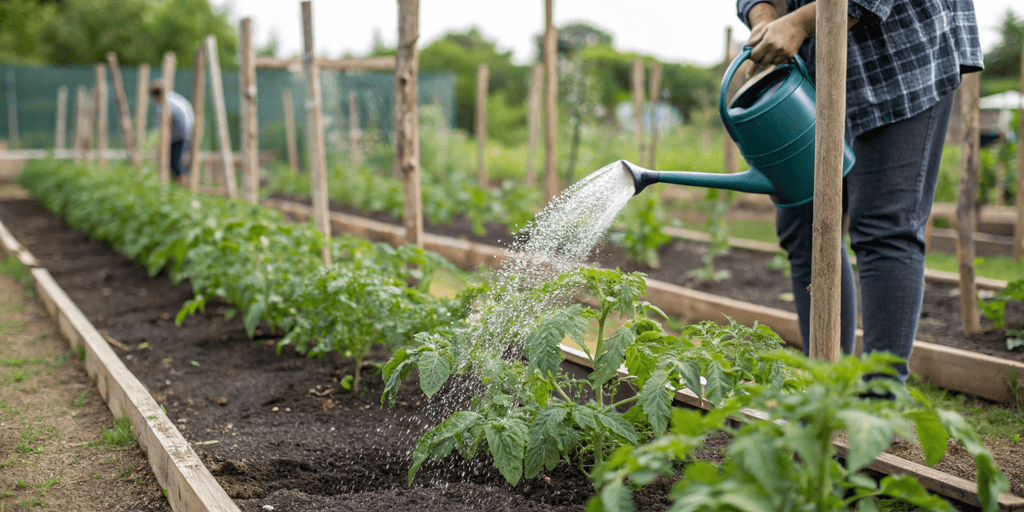
During hot weather, the surface may look dry while the root zone remains moist. Check the soil 2-3 inches below the surface before watering.
Why Raised Beds Dry Faster
Raised beds lose moisture through evaporation and drainage. Shallow beds, lightweight soil mixes, wind, and hot weather can accelerate moisture loss.
A layer of mulch helps the soil remain evenly moist between waterings.
Deep and Consistent Watering
Water deeply rather than applying frequent, shallow sprinkles. Apply water slowly enough to soak the root zone rather than run off the surface.
Water at the base of the plant whenever possible. Morning is usually the easiest time because moisture is available before the hottest part of the day and any accidentally wet foliage has time to dry.
Consistent moisture helps reduce plant stress, fruit cracking, and blossom end rot associated with disrupted calcium uptake during large swings in soil moisture.
Signs of Water Problems
Check the soil rather than relying on one symptom alone. Possible signs of moisture problems include:
- Wilting early in the morning
- Dry soil several inches below the surface
- Fruit cracking after heavy rain or watering
- Blossom end rot
- Leaf curling during extended dry weather
Temporary afternoon wilting during extreme heat is fairly common. If the plant recovers by evening and the deeper soil is still moist, additional watering may not be necessary.
Related guide: Best Way to Water Tomato Plants.
Feeding Tomatoes in Raised Beds
Raised beds contain a limited amount of soil, so heavy-producing tomato plants gradually use the available nutrients. Feeding replaces those nutrients, but applying too much can create large leafy plants with disappointing fruit production.
Why Feeding Matters More Here
Even a bed that begins with plenty of compost may need additional nutrients as the season progresses.
Compost improves the soil, but it does not always provide every nutrient in the amount or at the speed a heavily fruiting tomato plant needs.
When to Feed
Depending on the soil and fertilizer, tomatoes may be fed:
- At planting
- When flowering begins
- During continued fruit production
Follow the label directions for the specific fertilizer rather than feeding automatically on a rigid calendar. Slow-release and liquid products require different schedules.
Avoid Too Much Nitrogen
Excess nitrogen often produces lush green growth with fewer flowers and tomatoes.
Once flowering begins, use a fertilizer formulated for tomatoes or another product intended to support flowering and fruit development. Do not apply extra fertilizer simply because the plants are large or growing quickly.
Related guide: Best Fertilizer for Tomatoes.
Mulching Tomatoes in Raised Beds
Mulch is one of the simplest ways to keep soil conditions more stable after planting. It conserves moisture, reduces weeds, and limits soil splash during rain or watering.
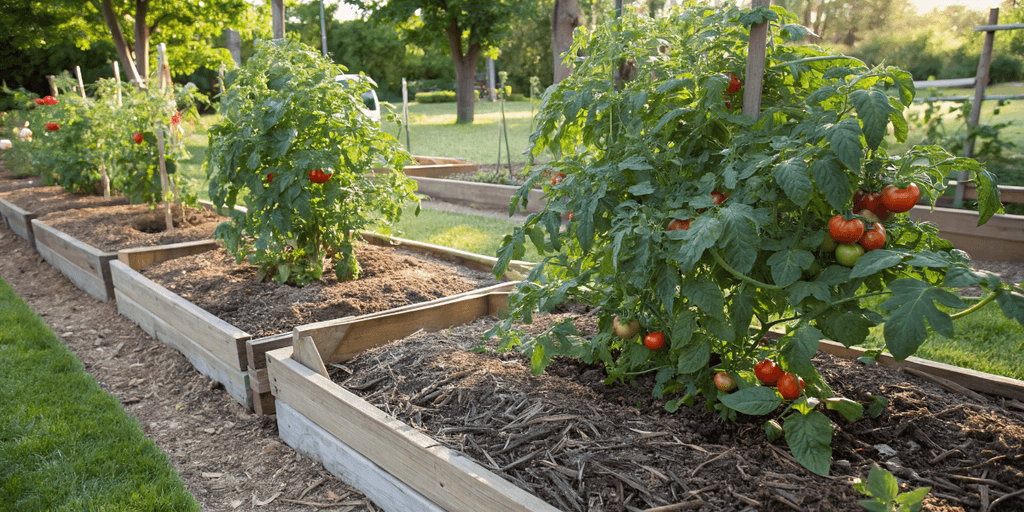
Why Mulch Helps
Mulch can:
- Retain soil moisture
- Moderate soil temperature
- Reduce weed growth
- Prevent soil from splashing onto lower leaves
Organic materials such as clean straw or shredded leaves gradually add organic matter as they break down. Untreated, herbicide-free grass clippings can also be used in thin layers after they have dried slightly.
When to Apply
Wait until the soil has warmed before applying a heavy layer of mulch.
Spread mulch about 2-3 inches deep, keeping it a few inches away from the main stem. Piling wet mulch directly against the stem can hold excess moisture around the base of the plant.
Companion Planting in Raised Beds
Raised beds make companion planting easier because you can plan exactly where each crop will grow. The goal is to use open space without reducing the light, air circulation, water, or nutrients available to the tomatoes.
Suitable Companion Plants
Simple options include:
- Basil
- Lettuce early in the season
- Marigolds
- Green onions
Lettuce grows quickly before tomato plants become large enough to shade much of the bed. Small herbs, flowers, and onions can also fit along the edges when they are given enough room.
Companion planting should be treated as a space-planning strategy, not as a replacement for pest management or proper tomato care.
Use the Bed Edges
Plant smaller companions around the outer edges whenever possible.
This keeps the central tomato-growing area open and makes the companion crops easier to harvest without reaching through tomato foliage.
Avoid Overcrowding
Companion plants should not block airflow around tomato stems, interfere with support structures, or make harvesting difficult.
Healthy tomato growth should take priority over filling every open space.
Related guide: Tomato Companion Plants.
Common Problems When Growing Tomatoes in Raised Beds
Raised beds reduce some growing difficulties, but they do not eliminate them. Most raised-bed-specific problems can be traced to moisture, soil quality, crowding, or nutrient availability.
Plants Drying Out Too Fast
Common causes include:
- Hot or windy weather
- Shallow soil
- A very lightweight soil mix
- Lack of mulch
- Too many plants sharing the bed
Check the moisture below the surface before watering. Apply water deeply, add mulch, and improve the soil with compost if it drains so quickly that the root zone cannot stay evenly moist.
Overcrowding
Crowded plants can lead to:
- Reduced air circulation
- More difficult harvesting
- Greater competition for water and nutrients
- Higher disease pressure
- Smaller or slower-ripening fruit
If the plants are already crowded, keep them upright and remove only damaged, diseased, soil-touching, or severely congested lower leaves. Avoid heavily pruning determinate tomatoes, since much of their crop forms on a limited amount of growth.
Poor Soil Mix
Heavy or compacted soil can cause slow growth, weak roots, surface runoff, and uneven moisture.
Avoid walking in the bed. After the season, add compost and gently loosen only compacted surface areas rather than repeatedly digging around active tomato roots.
Nutrient Depletion
Plants that begin strongly but lose vigor during heavy fruit production may need additional feeding.
Pale older leaves and slowing growth can suggest a nutrient problem, but they can also result from watering issues, root damage, or disease. Check soil moisture and overall plant health before adding fertilizer.
Related guide: Common Tomato Problems.
How to Increase Tomato Yield in Raised Beds
A productive raised bed usually comes from consistently managing the basics rather than relying on one special trick. Healthy roots, adequate space, reliable water, and enough nutrients have a greater effect than aggressive pruning or extra fertilizer.
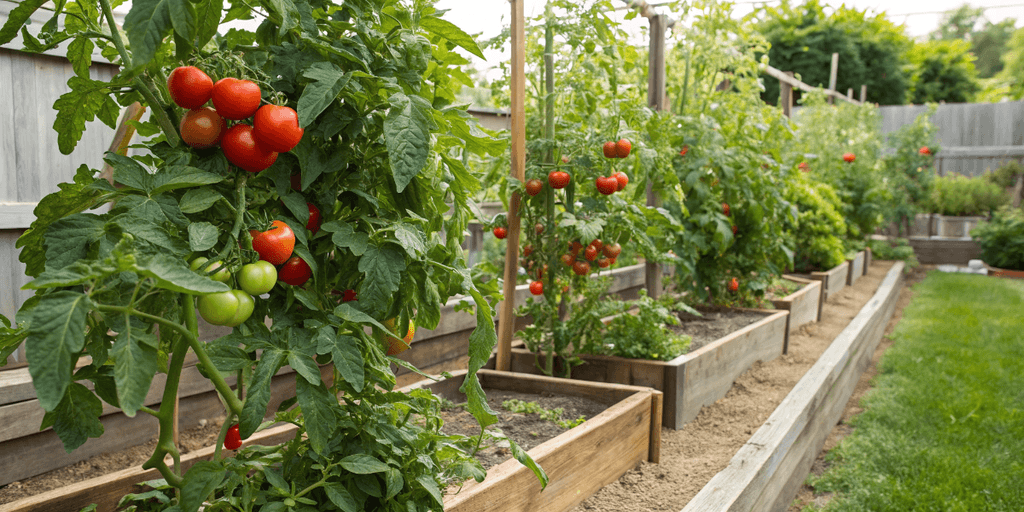
Use Deep, Healthy Soil
Deep, well-structured soil gives roots access to moisture and nutrients throughout the season.
Refresh the bed with compost between crops and avoid allowing the soil to become heavily compacted.
Space Plants Properly
Adequate spacing improves light exposure and air circulation while reducing competition between plants.
Choosing fewer plants often gives each one enough room to develop a larger, healthier canopy and support more fruit.
Support and Prune Carefully
Keep vines upright so the foliage and fruit remain accessible.
Remove damaged, diseased, or soil-touching leaves as needed. Indeterminate tomatoes may benefit from selective pruning when trained vertically, but determinate plants should not be heavily pruned.
Maintain Consistent Moisture
Steady moisture reduces stress and supports even fruit development.
Avoid allowing the bed to become extremely dry and then soaking it heavily, since sudden moisture changes can contribute to cracking.
Feed According to Growth
Replace nutrients as the plants grow, particularly once flowering and fruit production are underway.
Follow the product directions and the condition of the plants instead of assuming that more fertilizer will produce more tomatoes.
Protect Flowers During Extreme Heat
Very high daytime and nighttime temperatures can reduce fruit set even when the plants look healthy. During hot periods, keep the soil evenly moist and avoid stressing plants with heavy pruning or unnecessary transplanting.
You cannot control every temperature-related blossom drop, but healthy, consistently watered plants recover more readily when conditions improve.
Harvest Ripe Fruit Regularly
Check plants every few days during peak production.
Regular harvesting prevents ripe fruit from splitting, becoming overripe, or being damaged by pests. Indeterminate plants will continue flowering and producing while growing conditions remain suitable.
Harvesting Tomatoes from Raised Beds
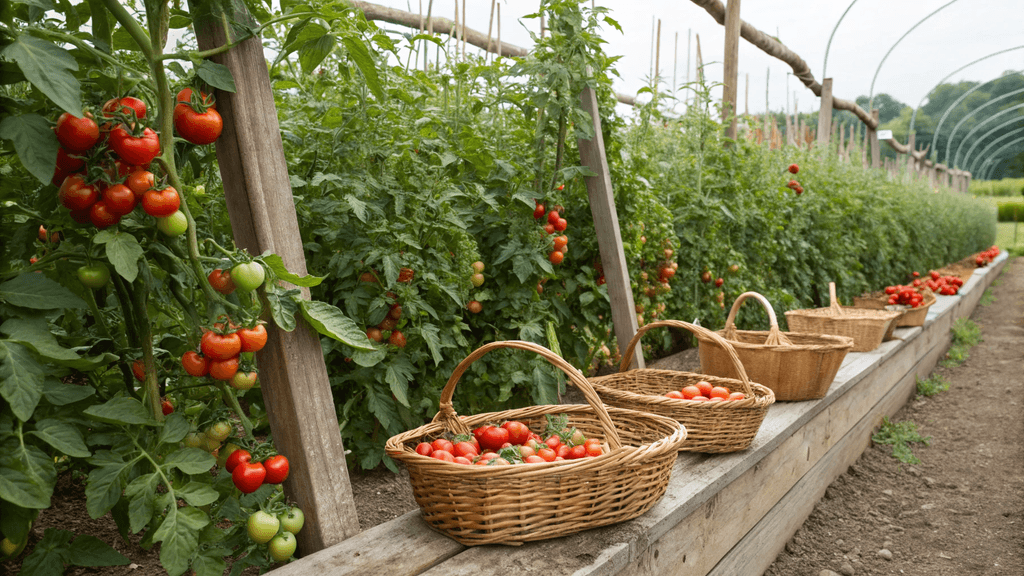
Harvest timing affects flavor, texture, and how much usable fruit you collect. Check the plants regularly once the first tomatoes begin changing color.
Watch for Mature Color
Most tomatoes taste best when they have developed the mature color expected for the variety and feel firm with a slight give.
Not every ripe tomato turns red. Yellow, orange, purple, green-when-ripe, and striped varieties should be judged by their expected mature appearance and texture.
Harvest Frequently
Check plants every couple of days during peak season.
If heavy rain is expected, harvest tomatoes that have begun coloring and allow them to finish ripening indoors. This can reduce losses from cracking.
Avoid Overripe Fruit
Overripe tomatoes split more easily, spoil quickly in warm weather, and may attract insects or other animals.
If a tomato does not release easily, cut the stem with clean scissors or pruners rather than pulling hard enough to damage the vine.
Related guide: When to Pick Tomatoes.
Storing Tomatoes After Harvest
Proper storage preserves the flavor and texture of freshly harvested tomatoes. The best method depends on whether the fruit is still ripening, fully ripe, or already becoming soft.
Room Temperature for Best Flavor
Keep tomatoes at room temperature and away from direct sunlight while they finish ripening.
Place them in a single layer rather than piling them in a bowl. Fully or partly ripe tomatoes can be stored stem-scar side down on a clean, flat surface to help limit moisture loss through the scar.
Refrigerate Fully Ripe Tomatoes When Needed
If fully ripe tomatoes are becoming soft and cannot be used immediately, refrigeration can slow further deterioration.
Allow refrigerated tomatoes to return to room temperature before serving for better flavor and texture.
Handle an Excess Harvest
Preserve tomatoes while they are still in good condition. Extra fruit can be:
- Cooked into sauces
- Frozen
- Canned using a tested safe recipe
- Dried
Related guide: How to Store Tomatoes.
End-of-Season Raised Bed Care
Cleaning the bed at the end of the season reduces potential disease and pest carryover while preparing the soil for the next crop.
Remove Old Plants
Remove tomato plants once production has ended.
Pull out as much of the main root system as practical without aggressively disturbing the entire bed. Remove cages, stakes, ties, and trellises, then clean them before storage.
Clean Up Debris
Collect fallen leaves, rotten fruit, and other tomato debris rather than leaving it on the soil.
Healthy material can be composted. Diseased plants should not be placed in a typical cool home compost pile, since many piles do not become hot enough to destroy pathogens. Dispose of them according to local yard-waste guidance.
Refresh the Soil
If the surface has become compacted, loosen only the top few inches before spreading finished compost over the bed.
Compost restores organic matter and prepares the soil for future planting. Wait until the next growing season to add fertilizers that may wash away or are not yet needed.
Rotate Crops When Practical
Avoid planting tomatoes or other nightshade crops, such as peppers, eggplants, and potatoes, in the same bed year after year when you have enough space to rotate them.
Rotation is especially useful when the bed has experienced recurring soil-borne disease. In a small garden where rotation is not practical, careful cleanup, healthy transplants, fresh compost, and disease-resistant varieties become even more important.
Beginner Mistakes to Avoid
Most raised-bed tomato problems are easier to prevent than correct after the plants become large.
Avoid:
- Planting before the soil and nights are warm enough
- Choosing a location with too little direct sunlight
- Using a shallow closed-bottom bed
- Filling the bed with dense garden soil alone
- Planting tomatoes too close together
- Forgetting to account for the size of cages or trellises
- Watering according to a fixed schedule without checking the soil
- Applying excessive nitrogen fertilizer
- Waiting until plants are large to install support
- Over-pruning determinate tomatoes
A few careful decisions at planting time prevent most of these problems and make the bed easier to manage throughout the season.
Conclusion
Growing tomatoes in raised beds does not require a complicated system. Start with enough sun, deep and well-draining soil, suitable tomato varieties, realistic spacing, and sturdy support. Then maintain steady moisture and replace nutrients as the plants grow.
Raised beds give you more control, but they also require closer attention to water, crowding, and soil fertility. When those basics are managed consistently, even a relatively small bed can produce healthy plants and a generous tomato harvest.

Leave a Reply