
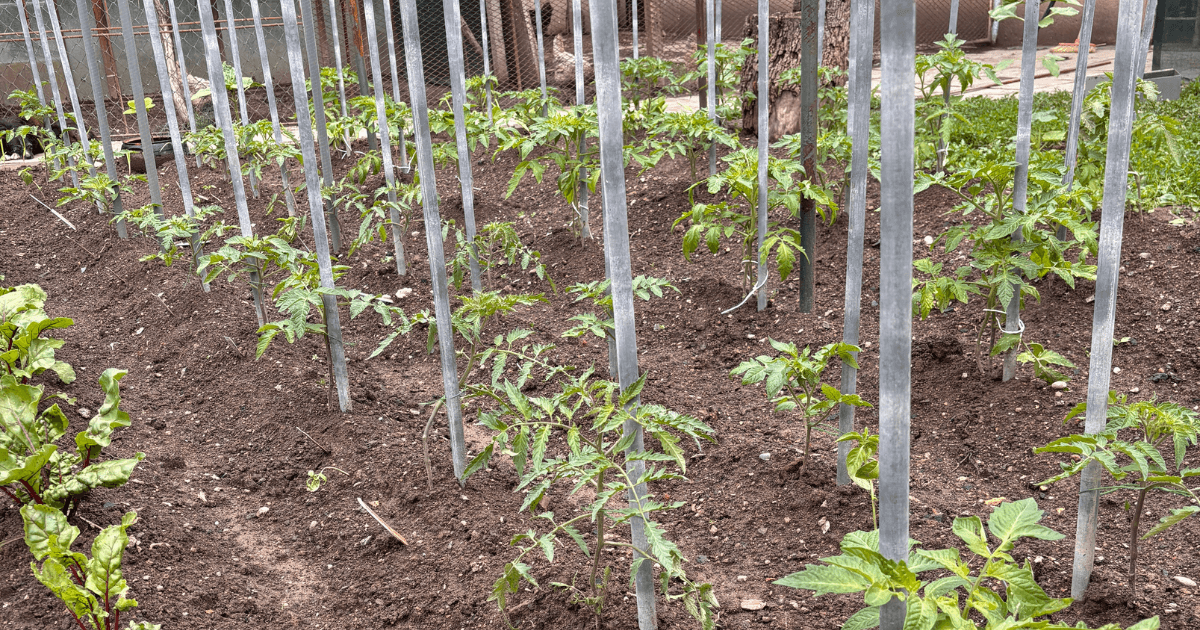
Choosing the right tomato plant support systems is one of the biggest factors in keeping tomato plants healthy, upright, and productive throughout the season. As tomato plants grow taller and heavier, unsupported stems bend, break, and sprawl across the soil, leading to disease, damaged fruit, and harder maintenance.
A good tomato support system improves airflow, keeps fruit clean, and makes watering, pruning, and harvesting much easier. The best option depends on your tomato type, growing space, pruning style, and how much maintenance you want to do during the season.
Quick Answer:
- Most tomatoes need some form of support
- Cages are the easiest option for many home gardeners
- Stakes work best for pruned plants
- Trellises are ideal for vertical growing and multiple plants
- Florida weave works well for rows
- Install support early, before roots spread and stems get heavy
If you want to learn more about the whole process of growing tomatoes, check out my full article about how to grow tomatoes for beginners.
Do All Tomato Plants Need Support?
Not every tomato grows the same way, but almost all benefit from some type of structure. The level of support depends on how the plant grows and how much fruit it sets.
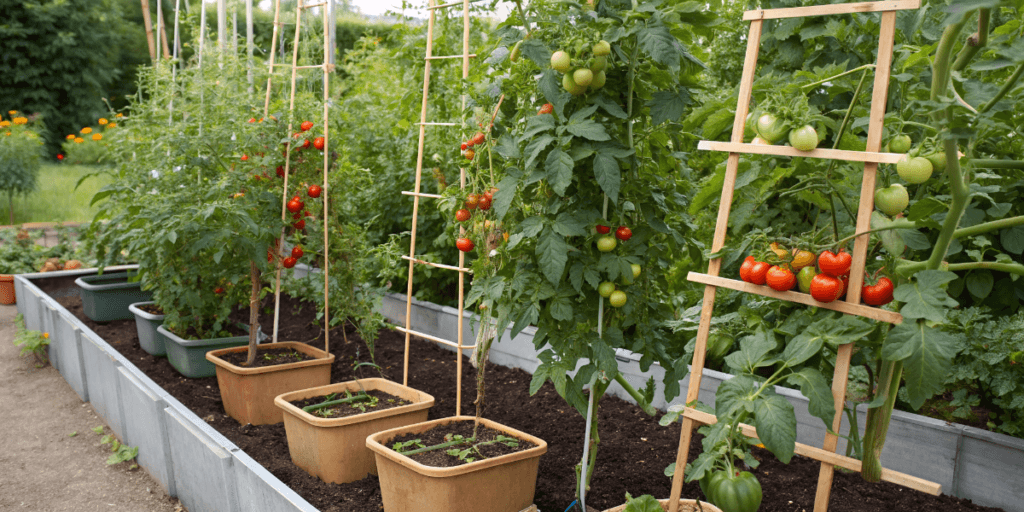
Indeterminate Tomatoes Almost Always Need Strong Support
Indeterminate tomatoes grow continuously throughout the season. They can easily reach 6-10 feet tall and keep producing new stems and fruit.
Without strong support, these plants collapse under their own weight. Stakes, tall cages, or trellis systems are essential here.
Determinate Tomatoes Still Benefit from Support
Determinate tomatoes grow to a set size and produce most of their fruit over a shorter period. They stay more compact, but once fruit sets, the branches can still bend or snap.
A cage or short stake is usually enough to keep them upright and manageable.
Dwarf and Container Tomatoes
Dwarf varieties and compact container tomatoes often need lighter support. Even small plants can tip over once fruit develops, especially in pots.
A small cage or single stake is usually enough.
What Happens Without Support
When tomatoes grow without structure, several problems show up quickly:
- Fruit sits directly on the soil and rots
- Airflow drops, increasing disease risk
- Harvesting becomes difficult and messy
- Stems bend, split, or break under weight
Why Unsupported Tomato Plants Produce Lower Yields
Unsupported tomato plants often produce smaller harvests over time because sprawling growth creates stress throughout the plant. When stems lie on the ground, airflow drops, leaves stay wet longer after watering or rain, and diseases spread more easily.
Plants also spend more energy supporting tangled growth instead of producing flowers and fruit efficiently. Heavy stems may crack under fruit weight, reducing nutrient flow to developing tomatoes.
Even simple support systems can noticeably improve fruit quality, reduce disease pressure, and increase overall productivity.
Why Supporting Tomato Plants Matters
Support is not just about keeping plants upright. It directly affects plant health, fruit quality, and how easy the plant is to manage throughout the season.
Prevents Stems From Bending and Breaking
Tomato stems are flexible but not strong enough to carry heavy fruit loads without help. Support distributes that weight and prevents damage.
Improves Airflow Around Plants
Lifting plants off the ground allows air to move through the leaves. This reduces trapped moisture around the plant, which can lower the risk of fungal problems.
Keeps Fruit Off the Ground
Fruit that touches soil is more likely to rot, develop blemishes, or attract pests. Support keeps tomatoes cleaner, healthier, and easier to pick.
Makes Pruning, Watering, and Harvesting Easier
Supported plants are easier to work with. You can see the stems, reach the fruit, and water at the base without fighting tangled stems.
Improves Fruit Quality and Ripening
When plants are properly supported, leaves and fruit get more consistent sunlight. This helps tomatoes ripen more evenly and develop better color and flavor. It also reduces the number of misshapen or damaged fruits caused by crowding.
How to Choose the Best Tomato Support System
Choosing the right support system early saves a lot of frustration later. The wrong setup often leads to plants outgrowing their support or needing constant fixes.
Choose Based on Tomato Type
Start by identifying whether your plant is determinate or indeterminate. Determinate tomatoes usually do well with cages or short stakes, while indeterminate tomatoes need taller, stronger support because they keep growing until frost.
Consider Mature Plant Size, Not Seedling Size
Small seedlings don’t show how large the plant will become. Always choose support based on the plant’s mature height and spread, especially for vigorous cherry, Roma, and beefsteak varieties.
Consider Fruit Size and Weight
Heavy tomatoes, especially beefsteak types, need stronger support than small cherry or salad tomatoes. If a variety produces large fruit clusters, choose a sturdy cage, reinforced stake, or trellis instead of a lightweight support.
Match the Support to Your Pruning Style
If you prune heavily and grow a single main stem, staking or string training works well. If you let plants grow more naturally, with several stems, cages or panel trellises usually give better side support.
Consider Your Growing Space
Different setups work better depending on where you’re growing:
- Rows – Florida weave or trellis
- Raised beds – cages, panel trellis, or vertical trellis
- Containers – compact cages, sturdy stakes, or pot-mounted trellis
- Small gardens – vertical systems to save space
Think About Wind and Stability
If your garden is exposed to wind, choose a support system that can be anchored deeply or tied to a stronger frame. Tall plants, light cages, and container tomatoes can tip easily once they become top-heavy.
Wind Damage Happens Faster Than Most Gardeners Expect
Tomato plants often look stable early in the season, but once fruit begins developing, the plant becomes dramatically heavier. A single storm, strong wind, or even saturated soil can pull weak cages or shallow stakes loose almost overnight.
This is why tall indeterminate tomatoes usually need deeper anchoring and stronger support than gardeners expect at planting time.
Think About Maintenance and Cost
Some systems require regular tying, pruning, and adjustment, while others are more hands-off once installed. Stakes and string systems are usually cheaper but need more attention. Strong cages and panel trellises cost more upfront, but they can last for many seasons.
Tomato Stakes
Staking is one of the simplest and most efficient methods, especially if you’re willing to do regular maintenance.
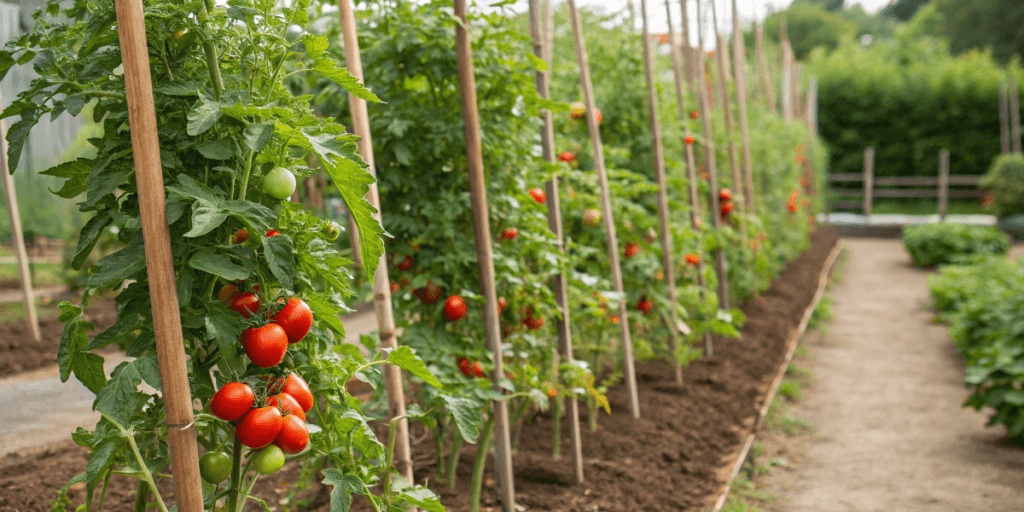
When Stakes Work Best
Stakes are best for indeterminate tomatoes that are pruned to one or two main stems. They also work well in small spaces where width is limited.
Pros of Staking Tomatoes
- Saves space
- Encourages vertical growth
- Good airflow
- Works well with pruning
Cons of Staking Tomatoes
- Requires regular tying
- Less support for heavy branching
- Not ideal for unpruned plants
- Can let heavy side branches sag if the plant is not pruned regularly
Best Materials for Tomato Stakes
Use strong, durable materials that won’t bend:
- Hardwood stakes
- Metal T-posts
- Fiberglass garden stakes
Avoid thin bamboo for large plants, as it bends under weight.
How Tall Stakes Should Be
For indeterminate tomatoes, use stakes at least 6-8 feet tall, knowing that part of the stake will be buried in the soil. For determinate tomatoes, a 4-5 foot stake is usually enough if the plant is compact.
How Deep to Set Tomato Stakes
Drive stakes at least 12-18 inches into the soil so they stay firm once the plant becomes heavy. Place the stake a few inches from the stem at planting time to avoid damaging roots later.
Read more in my article about how deep to plant tomatoes.
Tomato Cages
Cages are one of the easiest support systems, especially for beginners or low-maintenance setups.
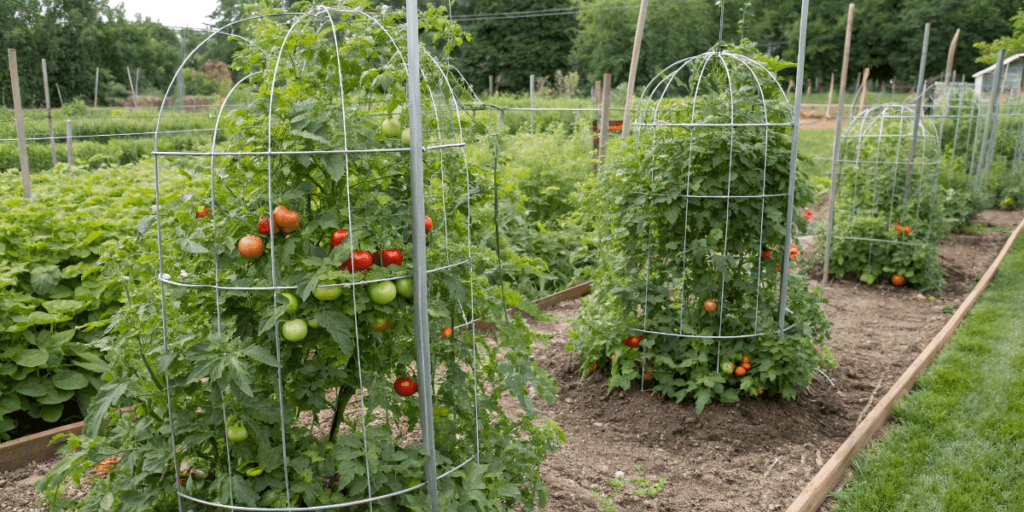
When Cages Are the Best Choice
Cages work best for determinate tomatoes or unpruned plants that need support from multiple sides.
Pros of Tomato Cages
- Minimal maintenance
- Supports multiple stems
- Easy to install
Cons of Tomato Cages
- Cheap cages are often too small
- Can collapse under heavy plants
- Can make pruning harder if the plant becomes very dense
- Take up more space
What Makes a Good Tomato Cage
A good tomato cage should be:
- Tall enough – at least 4-5 feet for determinate plants and taller for vigorous indeterminate types
- Wide enough – so branches can spread without being forced tightly together
- Sturdy enough – made from thick wire or heavy-duty metal, not thin, bendable wire
- Anchored well – so it does not tip when the plant becomes top-heavy
How to Keep Tomato Cages From Falling Over
Even a strong cage can tip once the plant is full of fruit. Push the cage firmly into the soil at planting time, then anchor it with one or two stakes if the plant is large, windy weather is common, or the soil is loose.
Tomato Cage Alternatives That Actually Work
If standard tomato cages feel too small, weak, or limiting, there are better options depending on how you grow your plants. The best alternative depends on whether you prune, how much space you have, and how much support your plants need.
Stakes for Pruned Tomatoes
Best for indeterminate plants trained to one main stem. Choose stakes if you want a narrow, vertical plant and you are willing to tie stems regularly.
String Trellis Systems
A clean vertical option for trained plants. Works especially well in raised beds and small gardens where you can attach a string to a strong overhead frame.
Wire or Panel Trellis
A stronger alternative to cages that supports heavy plants and multiple stems without collapsing. This is one of the best choices for vigorous indeterminate tomatoes.
Florida Weave for Rows
A practical solution when growing multiple plants in a row, using less material than cages. It works best when plants are evenly spaced and supported before they start leaning.
Tomato Trellis Systems
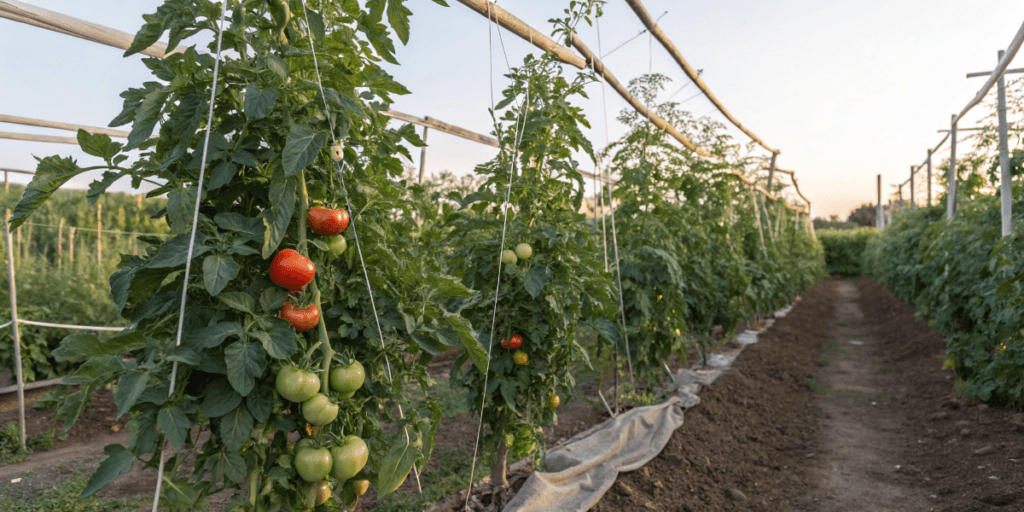
Trellising is one of the most efficient ways to grow multiple tomato plants vertically.
What Makes a Tomato Trellis Strong Enough
A tomato trellis should be strong enough to hold the full weight of mature plants, not just early growth. Use sturdy posts, tight wire or strong string, and secure anchors so the structure does not lean once plants are loaded with fruit.
When Trellising Makes the Most Sense
Trellises are ideal for rows, raised beds, and gardens where space is limited but height is available.
Common Tomato Trellis Options
- String trellis – best for pruned indeterminate tomatoes
- Panel trellis – strong and simple for raised beds or rows
- Wire fencing – useful for wider plants with multiple stems
- A-frame trellis – good when you want support on both sides
Pros of Trellising Tomatoes
- Excellent space efficiency
- Good airflow
- Easy to scale for many plants
Cons of Trellising Tomatoes
- Requires setup time
- Needs regular training
- Can require strong anchoring
The best trellis setup depends on whether you are growing in rows, raised beds, or containers.
Raised Bed Tomato Trellis Ideas
Raised beds change how support systems work because space is more limited and access matters. The goal is to keep plants upright without overcrowding the bed or blocking access to other crops.
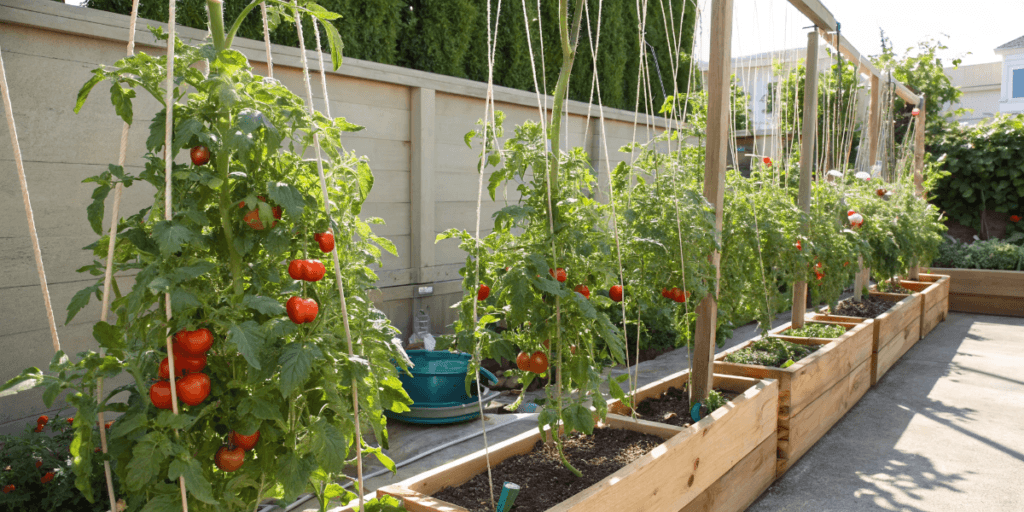
Back-of-Bed Vertical Trellis
Installed along the back edge of the bed to keep the front open for planting and harvesting.
Arch Trellis Over Raised Beds
Uses a cattle panel or similar structure to create a tunnel, allowing tomatoes to grow up while saving ground space.
A-Frame Trellis in Raised Beds
A freestanding option that works well in narrow beds and provides strong support for multiple plants without needing a wall or fence.
String Trellis From Overhead Frame
Best for organized layouts where plants are pruned and trained upward in a controlled way.
Place Trellises Where They Won’t Shade Smaller Crops
In raised beds, place tall tomato trellises on the north side of the bed when possible, so they do not shade shorter vegetables. Also, leave enough room to reach the plants for tying, pruning, and harvesting.
Florida Weave for Tomato Rows
This method is widely used for growing tomatoes in rows and is especially useful for larger plantings.
What Florida Weave Is
The Florida weave uses stakes placed along a row with twine woven between plants to support them as they grow.
When It Works Best
It works best for determinate tomatoes or evenly spaced rows where plants can be supported together. It is less ideal for very tall, heavily pruned indeterminate tomatoes unless the stakes are strong and the weave is maintained often.
Pros and Cons
Pros:
- Efficient for multiple plants
- Uses fewer materials than cages
- Quick to set up
Cons:
- Needs regular adjustment
- Less support for very tall plants
How Often to Add New Twine Rows
Add a new row of twine every 8-12 inches as the plants grow. Don’t wait until the plants are leaning heavily, because the weave works best when stems are guided early.
Use Strong Twine That Won’t Stretch or Slip
Use strong garden twine or UV-resistant string that can hold tension through the season. If twine slips down wooden stakes, small nails or notches can help keep each row in place.
String Training Tomatoes
String training is a clean, vertical method often used in greenhouses but works well in home gardens, too.
How String Training Works
Each plant is tied to a string that runs vertically from the plant to a support above. The plant is trained upward as it grows.
How Often to Wrap or Clip the Plant
Check plants every few days and gently wrap the main stem around the string or attach it with tomato clips as it grows. Do this while stems are still flexible, because older stems can snap more easily.
Best Situations for String Support
This works best for indeterminate tomatoes that are pruned to a single stem.
What Gardeners Often Get Wrong
- Not securing the top anchor properly
- Letting multiple stems grow without support
- Skipping regular training
Best Tomato Support System by Situation
Different growing setups benefit from different support systems. Choosing based on your situation simplifies everything.
Best Support for Determinate Tomatoes
Cages are usually the easiest and most reliable option because determinate tomatoes stay more compact but set a heavy crop at once.
Best Support for Indeterminate Tomatoes
Tall stakes, trellises, or string systems work best because indeterminate tomatoes keep growing and need support through the whole season.
Best Support for Cherry Tomatoes
Cherry tomatoes grow vigorously and can become very tall. Use tall cages, panel trellises, or string support instead of short, lightweight cages.
Best Support for Large Beefsteak Tomatoes
These plants need extra-strong support because the fruit is heavy. Use reinforced cages, sturdy stakes, or a strong trellis system.
Best Support for Container Tomatoes
Use compact cages, sturdy stakes, or pot-mounted trellises. Choose a heavy container so the plant does not tip once fruit develops.
Best Support for Raised Bed Tomatoes
Trellises or cages work well, depending on spacing and layout. For tighter beds, vertical trellises save space and keep paths easier to access.
Best Support for Small Gardens
Vertical systems like trellises, stakes, or string training maximize space. They are best for gardeners who can prune and train plants regularly.
When to Install Tomato Supports
Timing matters more than most gardeners expect. Early setup prevents root damage and makes training easier.
Why Early Installation Matters
Installing supports after plants are large can damage roots and stems. It also makes it harder to guide growth properly.
Installing Support at Planting Time
The best time to install support is when you transplant tomatoes into the garden. Place cages, stakes, or trellis anchors right away, before roots spread beyond the planting hole.
Can You Add Support Later?
You can, but it’s riskier. Work carefully to avoid root disturbance and broken stems.
How to Train Tomato Plants on Support Systems
Support alone isn’t enough. Plants need to be guided as they grow.
Tying Tomatoes Safely
Use soft ties like garden tape or cloth strips. Avoid tight knots that cut into stems.
Check Ties as Stems Thicken
Tomato stems expand as they grow, so check ties every week and loosen or replace any that are too tight. A tie that fits in June can cut into the stem by July.
Guiding Plants as They Grow
Check plants every few days and guide them onto the support before they fall over or twist.
Managing Multiple Stems vs One Main Stem
Single-stem plants are easier to manage on stakes or strings. Multi-stem plants need cages or wider support systems.
Supporting Tomatoes in Containers
Container tomatoes have unique challenges because the entire plant’s weight is supported by the pot.
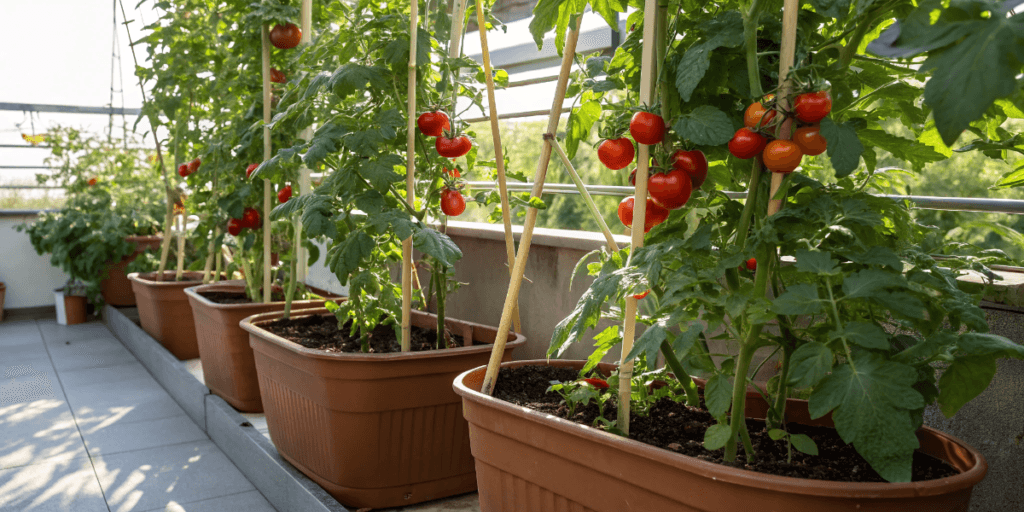
Best Support Options for Pots
- Compact cages – best for dwarf, patio, and determinate tomatoes
- Single sturdy stakes – best for pruned plants or smaller varieties
- Small trellis frames – best for larger pots and vertical growing
Stability Tips
Choose heavy pots and secure supports firmly. Lightweight containers tip easily.
Anchor the Support to the Pot, Not Just the Soil
In containers, stakes and cages can loosen because the potting mix is lighter than garden soil. Choose supports that fit deep into the pot, attach to the container, or are part of a freestanding frame.
Match Support to Container Size and Plant Size
Large plants need both large containers and strong support. A mismatch causes instability.
When Indeterminate Tomatoes Need Heavier Pot Support
Tall varieties in containers often need reinforced cages or anchored stakes to prevent tipping.
Common Support Problems and How to Fix Them
Even good setups can run into issues as plants grow.
Stakes Leaning or Pulling Loose
Push stakes deeper (at least 12-18 inches) or reinforce with a second stake or tie them to a horizontal support.
Cages Collapsing Under Fruit Weight
Switch to stronger cages or add stakes around the cage. If the plant is already heavy, support the cage first before pulling branches back into place so you do not snap stems.
Plants Outgrowing the Support
Top or prune plants, or extend support if possible. If the plant is already too large, secure the heaviest stems first to prevent breakage.
Branches Snapping During Training
Train earlier and handle plants gently. Move stems when they are still flexible, and tie them loosely instead of forcing thick, older branches into position.
Tangled, Overgrown Plants
Prune lightly and guide stems back onto support gradually. Do not untangle everything at once; secure the heaviest stems first, then clean up crowded growth over several days.
Support Mistakes That Reduce Yield or Create Problems
Small mistakes early can lead to bigger issues later in the season.
Choosing a Weak Support System
Lightweight supports fail when plants are fully grown. Choose support based on the mature plant size and fruit weight, not how small the seedling looks at planting time.
Waiting Too Long to Install Support
Late installation often damages roots and stresses plants. Add cages, stakes, or trellis anchors at planting time whenever possible.
Using Small Store-Bought Cages for Large Tomatoes
Most standard cages are too short and narrow for indeterminate plants. Use them for compact determinate varieties, not large cherry, beefsteak, or vining tomatoes.
Not Anchoring Supports Properly
Loose supports shift and damage plants. Push stakes deep, secure cages, and reinforce tall supports before plants become top-heavy.
Letting Plants Sprawl “Just a Little“
Sprawl spreads quickly and becomes hard to correct. Once stems bend and tangle, training them back onto support often causes breakage.
Tying Stems Too Tightly
Tight ties restrict growth and damage stems. Leave enough room for the stem to expand, and check ties as the plant thickens.
Not Checking Supports as Plants Grow
Supports that worked early in the season can fail later. Check ties, stakes, and cages regularly to prevent sudden collapse or stem damage.
Signs Your Tomato Plants Need Better Support
Plants will show clear signs when support isn’t working.
Plants Leaning or Falling Over
This usually means support is too weak or improperly placed, especially after watering or wind.
Broken or Bent Stems
This is a sign the plant is carrying more weight than the support can handle. Secure the heaviest stems first, then add stronger support if needed.
Fruit Touching the Ground
Fruit on the soil is more likely to rot, crack, or get pest damage. Lift branches gently and support them before the fruit becomes heavier.
Dense, Unmanageable Growth
Overgrown plants need better structure and possibly light pruning. Open the plant gradually instead of cutting too much at once, especially in hot weather.
DIY Tomato Support Ideas
You don’t need expensive materials to build effective support systems.
Make DIY Supports Strong Enough for Mature Plants
When building your own supports, plan for the plant at full size. Use thicker materials and secure joints, because tomatoes become much heavier once they are loaded with fruit.
Simple DIY Stakes
Use wooden posts or repurposed materials like broom handles. Choose pieces that are at least 6-8 feet tall for indeterminate tomatoes.
Cattle Panel or Wire Panel Trellis
These are strong, long-lasting, and ideal for multiple plants. Secure them to posts or a frame so they don’t shift under weight.
Homemade Tomato Cages
Use wire mesh to create custom cages that are larger and stronger than store-bought versions. Make them wide enough to allow airflow and easy harvesting.
Budget-Friendly Row Support Ideas
Combine stakes and twine to create a simple Florida weave system. Space stakes evenly, so plants are supported before they start leaning.
Comparing Tomato Support Systems
Choosing between systems is easier when you understand their strengths.
Quick Comparison Chart
| Support System | Best For | Maintenance Level | Strength |
|---|---|---|---|
| Stakes | Pruned indeterminate tomatoes | High | Moderate |
| Cages | Determinate tomatoes | Low | Moderate |
| Trellis | Multiple plants and vertical growing | Medium | Strong |
| Florida Weave | Rows of tomatoes | Medium | Moderate |
| String Training | Single-stem vertical growing | High | Strong |
- Stakes – best for pruned indeterminate plants that are trained to one or two main stems
- Cages – best for determinate and beginner setups with minimal pruning
- Trellis – best for multiple plants and vertical growing in rows or raised beds
- Florida weave – best for rows with evenly spaced plants
Conclusion
Choosing the right tomato support system comes down to understanding how your plants grow and how you prefer to manage them. There is no single “best” method, only the one that fits your space, your pruning style, and how much time you want to spend maintaining your plants.
The most important thing is to support tomatoes early and choose a system that can handle their full size and weight. A well-supported plant is easier to care for, produces cleaner fruit, and is far less likely to run into problems later in the season.
If you match the support to the plant and stay consistent with training, your tomatoes will grow stronger, healthier, and more productive from start to finish.

Leave a Reply