
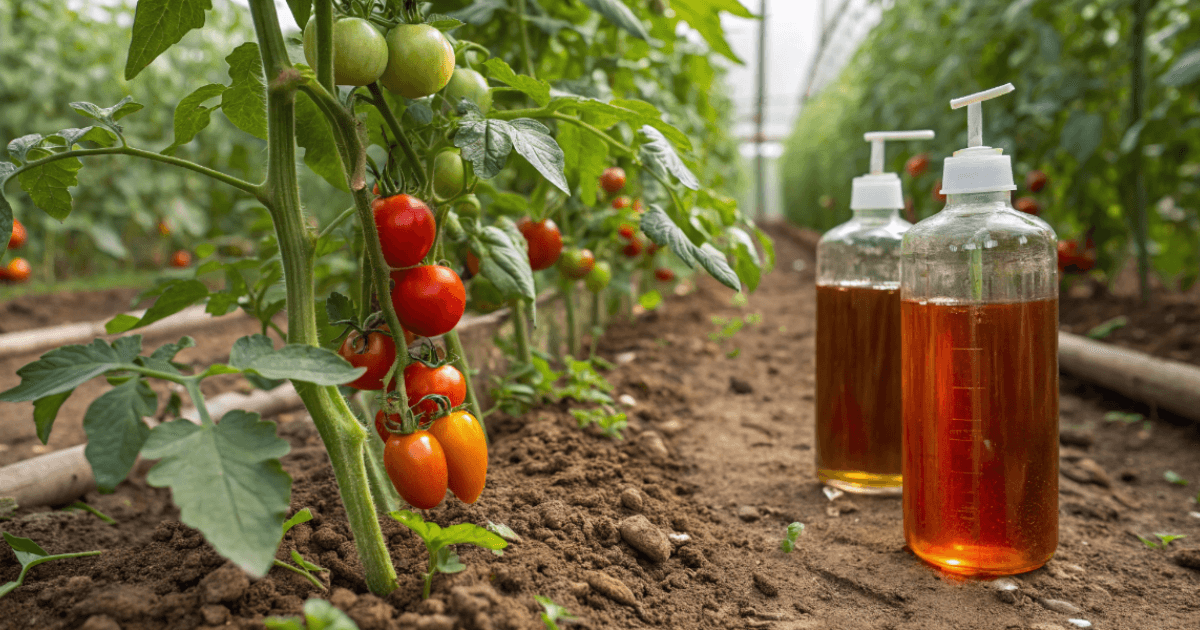
The best fertilizer for tomatoes depends on the plant’s growth stage, soil quality, and growing setup. Tomatoes need more nitrogen early for strong leaf and stem growth, but once flowering begins, they usually perform better with lower nitrogen and increased support for flowering and fruit production.
Tomatoes are heavy feeders, but they do not need constant dumping of fertilizer to grow well. What they actually need is the right balance of nutrients at the right stage of growth. A young tomato plant needs enough nitrogen to build stems and leaves early, but once flowering starts, too much nitrogen often creates huge green plants with surprisingly few tomatoes.
Tomatoes mainly rely on:
- Nitrogen (N) for early leaf and stem growth
- Phosphorus (P) for roots and flowering
- Potassium (K) for fruit development and overall plant strength
If you want a simple starting point, this general approach works well for most home gardens:
- Use compost and a balanced fertilizer at planting
- Feed lightly during early growth
- Reduce nitrogen once flowers appear
- Increase phosphorus and potassium during fruiting
- Feed container tomatoes more often than in-ground plants
A good fertilizer plan should support steady growth, healthy flowering, and consistent fruit production without pushing the plant too hard too early.
If you are still planning your tomato garden, start with my complete guide on how to grow tomatoes before building a fertilizer schedule.
What Is the Best Fertilizer for Tomatoes?
For most home gardens, the best fertilizer for tomatoes is a balanced fertilizer early in the season, followed by a lower-nitrogen fertilizer once flowering and fruiting begin.
A simple approach that works well for most gardeners is:
- Balanced fertilizer (10-10-10 or similar) at planting
- Compost to improve soil quality
- Lower-nitrogen tomato fertilizer during flowering
- Regular feeding for container tomatoes
- Consistent watering to support nutrient uptake
The exact product matters less than matching fertilizer to the plant’s growth stage.
What Fertilizer Should You Use?
Tomatoes usually grow best with a balanced fertilizer early in the season, followed by a lower-nitrogen fertilizer once flowering and fruiting begin.
If you already know your soil is rich in compost or nutrients, lighter feeding is often enough. A basic soil test can also help prevent overfeeding and nutrient imbalance.
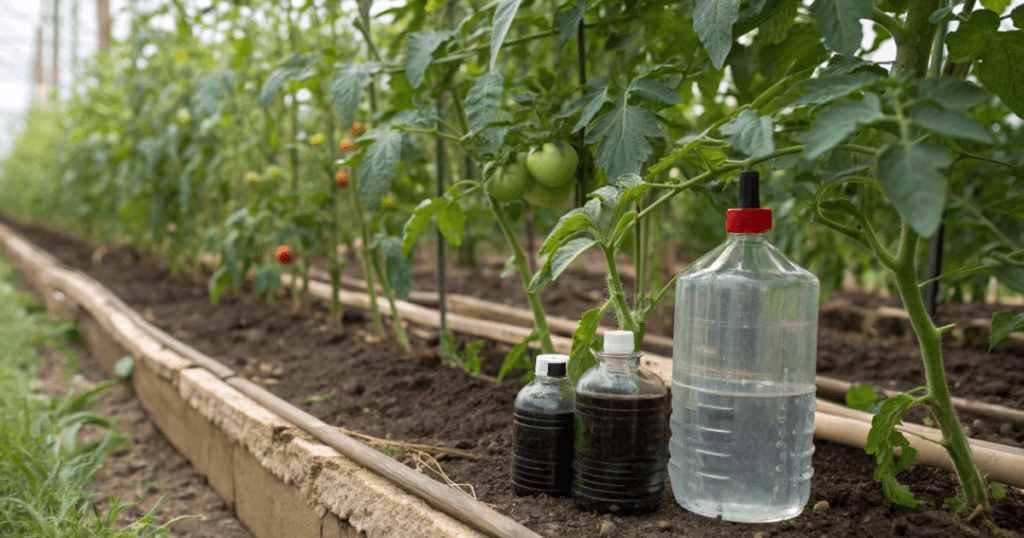
A simple balanced fertilizer like 10-10-10 works well at planting and during early growth, especially if your soil is average or you are not sure what it needs. If your soil is already rich in compost or nitrogen, choose a lower-nitrogen tomato fertilizer instead, such as 5-10-5, 5-10-10, or a similar vegetable fertilizer instead of lawn fertilizer.
Once flowers appear, avoid high-nitrogen fertilizers. At that point, tomatoes need more support for flowering, fruit set, and fruit development than for leafy growth.
Feed container tomatoes more often because nutrients wash out faster
A simple rule many experienced growers follow:
More nitrogen early → less nitrogen later
That one adjustment prevents many common tomato fertilizer problems, especially large leafy plants with few tomatoes.
What Nutrients Tomato Plants Actually Need
Tomatoes use nutrients differently depending on growth stage, weather, soil type, and growing method. Understanding the role of each nutrient helps make fertilizer choices much easier instead of chasing random “best fertilizer” recommendations.
Nitrogen (N)
Nitrogen drives leafy growth. It helps tomato plants develop stems, branches, and healthy foliage during the early vegetative stage.
Young plants with pale leaves or weak early growth sometimes benefit from light nitrogen feeding. But once flowering begins, excess nitrogen often becomes a problem.
Common signs of too much nitrogen include:
- Very dark green leaves
- Thick leafy growth
- Delayed flowering
- Slow ripening
- Few tomatoes despite large plants
This happens often with heavily manured beds or overly aggressive feeding schedules.
Phosphorus (P)
Phosphorus supports root development and flowering. It becomes especially important during transplanting and flower production.
Cool spring soil can temporarily limit phosphorus uptake even when phosphorus is present in the soil. This is one reason young tomato plants sometimes appear stalled after transplanting during cool weather.
Some phosphorus-deficient plants may also develop:
- Slow or stunted growth
- Dark or slightly purple-tinted leaves
- Weak flowering
Bone meal and balanced fertilizers are commonly used to support phosphorus levels early in the season.
Potassium (K)
Potassium plays a major role in fruit development, water regulation, plant stress tolerance, and overall fruit quality.
Tomatoes pulling large amounts of water and nutrients during heavy fruiting often benefit from steady potassium availability. Plants with good potassium levels usually handle summer heat and uneven weather more reliably.
Potassium also supports:
- Better fruit sizing
- Improved ripening
- Stronger plant resilience
- Better drought tolerance
Low potassium sometimes appears as yellowing or browning along older leaf edges, especially during heavy fruit production.
Secondary Nutrients (Often Overlooked)
Some tomato problems are not caused by NPK imbalance alone.
Calcium helps support proper fruit development and is strongly connected to blossom end rot prevention. However, blossom end rot is often triggered by inconsistent watering rather than true calcium deficiency alone.
Magnesium supports chlorophyll production and photosynthesis. Older leaves turning yellow between green veins can sometimes indicate magnesium deficiency, especially in containers or heavily watered soils.
Understanding NPK Ratios
Fertilizer labels can look confusing at first, but the numbers are actually straightforward once you understand what they represent.
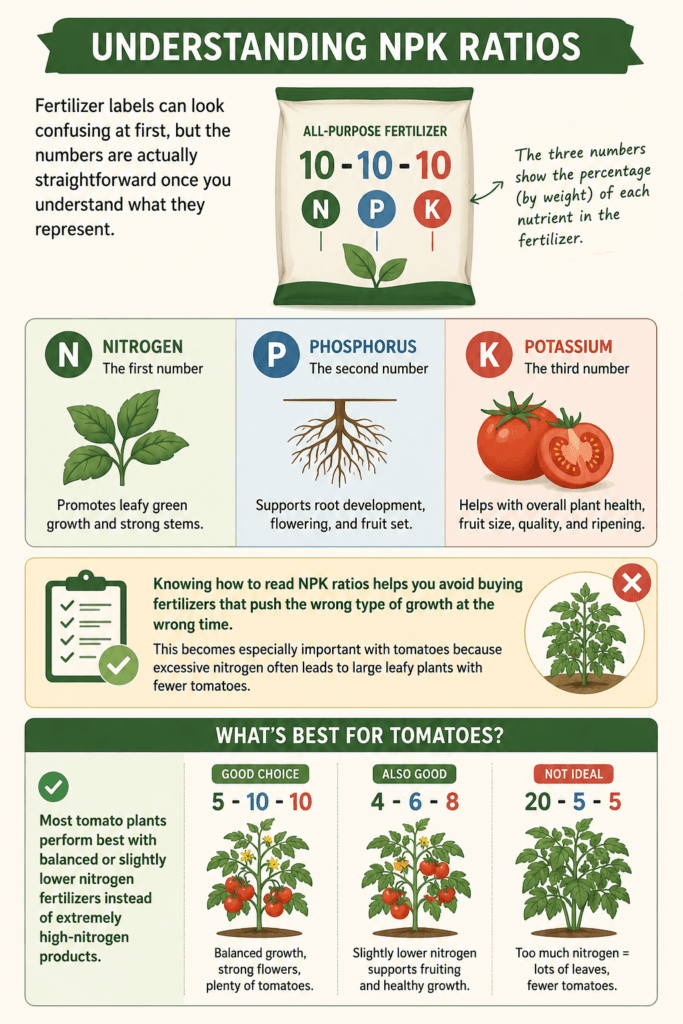
Knowing how to read NPK ratios helps you avoid buying fertilizers that push the wrong type of growth at the wrong time. This becomes especially important with tomatoes because excessive nitrogen often leads to large leafy plants with fewer tomatoes.
Most tomato plants perform best with balanced or slightly lower nitrogen fertilizers instead of extremely high-nitrogen products.
Best NPK Ratio for Tomatoes
For most tomatoes, balanced fertilizers work best early in the season, while lower-nitrogen formulas become more useful after flowering begins.
Common tomato-friendly ratios include:
- 10-10-10
- 5-10-5
- 5-10-10
- 3-4-6
The ideal ratio depends on soil fertility, plant growth stage, and whether tomatoes are growing in containers or garden soil.
What the Numbers Mean
Every fertilizer label shows three numbers.
For example:
- 10-10-10
- 5-10-5
- 3-4-6
These numbers represent:
- First number → Nitrogen (N)
- Second number → Phosphorus (P)
- Third number → Potassium (K)
The numbers show the ratio of nutrients in the fertilizer, not the total amount of fertilizer in the bag or container.
In simple terms:
- Higher nitrogen = More leafy growth
- Higher phosphorus = more root and flower support
- Higher potassium = better fruit development and stress tolerance
Easy Tomato Examples
A balanced fertilizer like 10-10-10 is beginner-friendly and works well for general feeding early in the season.
A lower nitrogen formula like 5-10-5 or 5-10-10 shifts more support toward flowering and fruit production.
Many tomato fertilizers are intentionally designed with lower nitrogen because tomatoes naturally produce enough foliage once established. This is why many “Tomato & Vegetable” fertilizers contain less nitrogen than general lawn fertilizers.
Avoid using lawn fertilizers on tomatoes unless the nutrient ratio is appropriate. Many lawn fertilizers are extremely high in nitrogen and often create excessive leafy growth with poor fruit production.
Best Types of Fertilizer for Tomatoes
Different fertilizer types work well in different situations. Some feed quickly, some slowly improve soil, and some are better suited for containers or raised beds.
| Fertilizer Type | Best Use |
|---|---|
| Compost | Soil improvement and long-term fertility |
| Organic granular fertilizer | Steady season-long feeding |
| Liquid fertilizer | Fast nutrient boost during growth or fruiting |
| Slow-release fertilizer | Low-maintenance feeding |
| Synthetic fertilizer | Precise nutrient control |
| Fish emulsion | Quick organic nitrogen boost |
| Kelp fertilizer | Stress support and trace minerals |
The best choice often depends more on consistency and application timing than on finding a “perfect” product. Many experienced gardeners combine multiple fertilizer types during the season instead of relying on only one.
Organic Fertilizers
Organic fertilizers release nutrients more gradually and improve soil structure over time.
Common options include:
- Compost
- Aged manure
- Bone meal
- Fish emulsion
- Kelp meal
Compost is especially valuable because it improves moisture retention, microbial activity, and overall soil texture in addition to feeding plants. Organic fertilizers also help support beneficial soil life, which can improve long-term soil health over multiple growing seasons.
Aged manure can work very well for tomatoes, but fresh manure is usually too strong and often contains excessive nitrogen that pushes leafy growth instead of fruit production.
Organic feeding tends to be more forgiving. It is usually harder to accidentally overfeed tomatoes with compost-based approaches compared to strong synthetic fertilizers.
Granular Slow-Release Fertilizers
Granular fertilizers provide steady feeding over time and are easy to apply around established plants.
They work especially well for:
- Raised beds
- In-ground gardens
- Busy gardeners who want less frequent feeding
Slow-release fertilizers help reduce nutrient swings that sometimes happen with heavy liquid feeding schedules.
Many gardeners side-dress tomatoes every few weeks during peak growth. Granular fertilizers usually work best when lightly scratched into the soil surface and watered in afterward.
Liquid Fertilizers
Liquid fertilizers act quickly because nutrients become available almost immediately after watering.
They are useful when:
- Plants look nutrient-deficient
- Flowering begins
- Container plants need rapid feeding
- Liquid feeding is especially useful during heavy fruiting or rapid summer growth.
Liquid feeding is common during fruiting season because container tomatoes often exhaust nutrients fast during hot weather.
Containers that stayed moist for days may suddenly dry out daily once temperatures rise and plants become large.
Because liquid fertilizers act quickly, lighter regular feeding usually works better than large concentrated doses.
Synthetic Fertilizers
Synthetic fertilizers provide fast, measurable nutrient delivery and can produce excellent tomato crops when used correctly.
They are especially useful when plants need nutrients quickly or when gardeners want more precise control over feeding.
However, they also increase the risk of:
- Root burn
- Salt buildup
- Excess nitrogen growth
- Overfeeding
This becomes more noticeable in containers where nutrients concentrate faster than in open garden soil.
Used carefully, synthetic fertilizers are effective. Problems usually come from applying too much too often.
Best Fertilizer by Growth Stage
Tomato fertilizer needs change noticeably throughout the season. Matching fertilizer to growth stage usually improves yields more than simply feeding more often.
Plants that receive the right nutrients at the right time usually grow more steadily, flower more reliably, and produce better fruit throughout summer.
At Planting
Planting time sets the foundation for the entire season.
A combination of compost and balanced fertilizer usually works well. Some gardeners also add bone meal to support early root development.
Good planting-stage nutrition helps:
- Reduce transplant stress
- Encourage strong root systems
- Support early establishment
Avoid placing strong fertilizer directly against roots or stems. Newly transplanted tomatoes are often more sensitive to overfeeding while roots are still establishing in the surrounding soil.
Early Growth (Vegetative Stage)
During early growth, tomato plants need enough nitrogen to build strong stems and healthy foliage.
This stage is about developing structure before heavy flowering begins.
Moderate feeding works best here. Overfeeding early often creates oversized plants that become difficult to manage later.
Watch for:
- Fast leafy growth
- Dark green foliage
- Delayed flowering
Those are common signs nitrogen may already be too high.
Healthy vegetative growth should look steady and balanced, not explosive.
Flowering Stage
Once flower clusters begin forming, nutrient priorities shift.
This is usually the point where lowering nitrogen becomes important. Too much nitrogen during flowering often leads to flower drop or delayed fruit set.
At this stage:
- Reduce nitrogen-heavy feeding
- Increase phosphorus support
- Maintain steady watering
Large weather swings can also affect flowering regardless of fertilizer quality. Extremely hot temperatures, cool nights, and sudden stress sometimes reduce fruit set even in healthy plants.
Many gardeners mistakenly increase fertilizer when flowering begins. In reality, excessive feeding at this stage often produces more foliage than fruit. Steady, balanced nutrition usually outperforms aggressive fertilizing.
Fruiting Stage
Heavy fruit production demands steady nutrition and consistent moisture.
Potassium becomes especially important during fruiting because plants are moving large amounts of water and energy into developing tomatoes.
During peak fruiting:
- Maintain regular feeding
- Avoid sudden overfeeding
- Keep watering consistent
- Watch containers closely during heat
Tomatoes stressed by inconsistent watering often crack after heavy rain or sudden deep watering following dry conditions. Fruiting plants are also more likely to develop blossom end rot when watering becomes irregular, especially in containers and raised beds that dry quickly during summer.
How Often to Fertilize Tomato Plants
Feeding frequency depends heavily on soil quality, rainfall, fertilizer type, and whether tomatoes are growing in containers or garden soil.
Rich compost-heavy beds often require less feeding than lightweight container mixes. The weather also changes feeding needs throughout the season. Heavy rain can wash nutrients out of soil, while fast summer growth and heavy fruit production increase nutrient demand.
General Schedule
A simple feeding schedule for most tomato plants looks like this:
- At planting
- 2-3 weeks after transplanting
- At flowering
- During active fruiting
Many experienced gardeners adjust slightly based on plant appearance instead of rigid calendar schedules. Small young plants usually need lighter feeding than large mature plants carrying heavy fruit loads.
Late in the season, heavily feeding plants that are already full-sized often produces more foliage than useful new production.
Liquid vs Granular
Liquid fertilizers usually require more frequent application because nutrients move through the soil faster.
General guideline:
- Liquid fertilizer → Every 1-2 weeks
- Granular fertilizer → Every 2-4 weeks
Always follow label rates instead of assuming more fertilizer equals more tomatoes.
Liquid fertilizers work quickly but also wash out faster after repeated watering or heavy rain. Granular fertilizers usually provide steadier long-term feeding.
Container Tomatoes Need More Feeding
Container tomatoes nearly always need more frequent feeding than in-ground plants.
Why?
- Limited soil volume
- Faster nutrient loss
- Frequent watering
- Faster drying during summer
A large container tomato in July may consume nutrients much faster than the same variety planted in garden soil.
Containers that suddenly begin drying much faster than earlier in the season are often entering peak fruit production and usually need more consistent feeding and watering at the same time.
Avoid fertilizing severely dry or wilted container plants before watering first, since stressed roots are more sensitive to fertilizer burn.
Should You Fertilize Tomatoes Every Time You Water?
Most tomato plants do not need fertilizer every time they are watered.
In-ground tomatoes growing in healthy soil often need much less feeding than beginners expect. Container tomatoes usually require more frequent feeding because nutrients move through the soil faster during repeated watering.
Light regular feeding can work well during heavy fruiting, especially with diluted liquid fertilizers, but constant heavy fertilizing often creates excessive foliage, salt buildup, or reduced fruit production.
Healthy tomato plants usually respond better to steady, balanced feeding than aggressive fertilizing schedules.
How to Apply Fertilizer Correctly
Even good fertilizer can cause problems if applied poorly. Application method matters more than many gardeners realize, especially once tomato plants become larger and more sensitive during flowering and fruiting.
Side Dressing
Side dressing means applying fertilizer around the plant instead of directly against the stem.
A safe approach is:
- Apply several inches away from the stem
- Lightly scratch into the soil
- Water thoroughly afterward
This reduces root burn risk and encourages roots to spread outward instead of staying concentrated near the stem.
Avoid piling granular fertilizer directly against stems or lower leaves, especially with stronger synthetic fertilizers.
Liquid Feeding
Liquid fertilizers should usually be diluted according to label instructions.
Applying concentrated liquid fertilizer too heavily can stress roots quickly, especially during hot weather or in containers where nutrients concentrate faster.
Apply liquid fertilizer at the root zone rather than spraying foliage unless the product specifically recommends foliar feeding.
Early morning or evening feeding is usually safer than applying fertilizer during intense midday heat when plants are already under stress.
Water Before Fertilizing
Dry soil combined with fertilizer is one of the fastest ways to damage roots.
If the soil feels dry:
- Water first
- Fertilize afterward
This is especially important in containers and raised beds during summer heat.
After fertilizing, deep watering helps move nutrients into the root zone more evenly and reduces the chance of concentrated fertilizer sitting near surface roots.
Fertilizing Tomatoes in Containers
A fertilizer plan that works perfectly in garden soil may feel completely insufficient in containers by midsummer. Smaller containers usually require even more attention because they dry out and lose nutrients faster than larger pots or raised planters.
Best Fertilizer for Tomatoes in Containers
Container tomatoes usually perform best when a slow-release fertilizer is combined with regular liquid feeding during flowering and fruiting. Because nutrients wash out faster in containers, consistent feeding often matters more than using a specific fertilizer product.
Many gardeners get the best results from:
- Slow-release fertilizer at planting
- Diluted liquid fertilizer during fruiting
- Compost mixed into potting soil
- Regular monitoring of plant color and growth
Why Containers Need More Feeding
Container soil has limited nutrient reserves. Frequent watering also washes nutrients through the pot faster, especially in fabric grow bags or fast-draining potting mixes.
During heat waves, some large tomato containers may need daily watering. That constant moisture movement gradually pulls nutrients out of the soil.
Heavy fruiting plants can suddenly shift from moderate watering to very high water use once temperatures rise and fruit production accelerates.
Raised Beds Usually Fall Between Containers and In-Ground Soil
Raised beds often hold nutrients better than containers but dry out faster than in-ground gardens, especially during hot summer weather.
Tomatoes in raised beds usually benefit from more frequent feeding than in-ground plants, particularly in newer beds filled with lightweight soil mixes.
Heavy watering, fast drainage, and dense planting can gradually reduce nutrient availability through the season.
Many raised bed gardeners get the best results from:
- Compost added before planting
- Slow-release fertilizer early in the season
- Occasional liquid feeding during heavy fruit production
Best Approach
Many container growers get the best results by combining:
- Slow-release fertilizer in the potting mix
- Regular liquid feeding during fruiting
This creates a more stable nutrient supply without relying entirely on either method alone.
Consistent feeding usually matters more than aggressive feeding. Container tomatoes usually respond better to lighter, more consistent feeding than heavy fertilizer applications.
Occasionally watering deeply until excess water drains from the bottom of the container can also help reduce fertilizer salt buildup over time.
Uneven moisture in containers can quickly affect fruit quality and overall plant performance.
Signs Your Tomatoes Need Fertilizer
Tomatoes often show visible clues when nutrients become limited. The challenge is recognizing nutrient problems early, before production slows significantly.
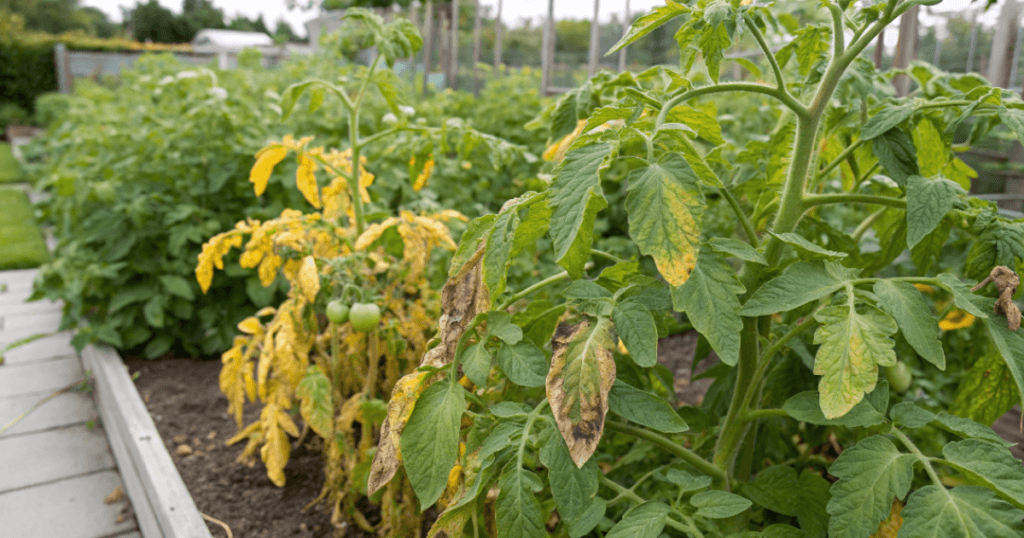
Not every yellow leaf or slow-growing plant automatically means fertilizer is missing. Water stress, cool soil, overcrowding, root damage, and extreme temperatures can create similar symptoms, especially during difficult weather.
Pale or Yellow Leaves
Older, lower leaves yellowing lightly late in the season can be normal as mature plants redirect energy toward fruit production.
But widespread pale growth, especially during active growth stages, may suggest nitrogen deficiency or exhausted soil.
Check:
- Overall plant color
- Growth speed
- Feeding history
- Water consistency
- Whether yellowing starts on older or newer leaves
Nitrogen problems usually appear first on older, lower leaves, while newer pale growth sometimes points toward other nutrient or root issues.
Slow Growth
Tomatoes sitting still for long periods during warm growing weather often indicate either nutrient limitations or root stress.
Plants should steadily expand during the active growing season. If warm weather arrives but plants remain small, pale, or stalled for weeks, nutrients may be running low.
However, compacted soil, cold spring temperatures, root-bound containers, or inconsistent watering can also slow growth even when fertilizer is present.
Weak Flowering or Low Yield
Large, healthy-looking plants with few flowers often point toward excess nitrogen rather than a lack of fertilizer.
Weak flowering can also appear during extreme heat, even in well-fed plants. Tomatoes commonly struggle to set fruit during prolonged temperatures above roughly 90°F (32°C), especially when nights stay warm.
Small fruit size, slow ripening, or reduced production during heavy fruiting can sometimes indicate nutrient depletion later in the season, particularly in containers and heavily watered raised beds.
Common Fertilizing Mistakes
Most tomato fertilizer problems come from overcorrection rather than neglect. Tomatoes usually respond better to steady, balanced feeding than aggressive attempts to “push” faster growth.
Too Much Nitrogen
This is by far the most common issue.
Excess nitrogen causes:
- Huge leafy plants
- Delayed flowering
- Reduced fruit production
- Slow ripening
- Excessively dark green foliage
The plant looks impressive, but performs poorly.
This problem is especially common with heavily manured beds, lawn fertilizers, or repeated high-nitrogen feeding early in the season.
Overfeeding
More fertilizer does not automatically create more tomatoes.
Overfeeding can lead to:
- Salt buildup
- Root stress
- Curled leaves
- Burned roots
- Unbalanced growth
Sometimes plants recover simply by backing off on feeding and watering deeply.
Container tomatoes are especially sensitive because excess nutrients concentrate faster in a limited soil volume.
Feeding at the Wrong Time
Heavy nitrogen feeding during fruiting often reduces production quality. Timing matters almost as much as fertilizer type.
Tomatoes usually need less nitrogen once flowering and fruiting begin. Continuing aggressive early-season feeding deep into summer often creates excess foliage instead of productive fruit growth.
Fertilizing Dry or Stressed Plants
Applying fertilizer to severely dry, wilted, or heat-stressed plants can damage roots surprisingly quickly.
During extreme heat, watering problems often create symptoms that resemble nutrient deficiencies. In many cases, improving watering consistency helps more than adding extra fertilizer.
Ignoring Soil Quality
Fertilizer cannot fully compensate for poor soil structure. Compacted, poorly drained, or lifeless soil limits root performance regardless of the feeding schedule.
Healthy soil makes fertilizer work better. Compost, organic matter, and good moisture retention often improve tomato performance more than simply increasing fertilizer amounts.
Assuming Every Yellow Leaf Needs Fertilizer
Some yellowing lower leaves late in the season are normal, especially once plants begin directing energy into ripening fruit.
Before adding more fertilizer, consider:
- Recent weather
- Watering consistency
- Plant age
- Container size
- Overall plant growth
Adding more fertilizer to stressed plants does not always solve the underlying problem.
Simple Fertilizer Plan for Beginners
Many beginner gardeners overcomplicate tomato feeding. A simple, consistent routine usually works better than switching products every few weeks.
A practical beginner plan:
- Add compost before planting
- Use balanced fertilizer at planting
- Feed lightly again 2-3 weeks after transplanting
- Switch to lower nitrogen fertilizer once flowering starts
- Feed every 1-2 weeks with liquid fertilizer in containers, or every 2-4 weeks with granular fertilizer in garden soil
- Keep watering consistently while plants are flowering and fruiting
- Reduce feeding late in the season when plants are no longer setting much new fruit
This approach works well for most home gardens without requiring complicated schedules or specialty products. The goal is steady growth, regular flowering, and consistent fruit development, not oversized leafy plants.
Can You Use Homemade Fertilizers?
Homemade fertilizers can help tomatoes, but they work best as supplements, not as a complete fertilizer plan. Good compost, balanced organic fertilizer, and steady feeding are usually more reliable than random kitchen-scrap “hacks.”
Compost Tea
Compost tea can provide mild nutrients and microbial activity when made properly. It works best as a light supplement rather than the main source of tomato fertilizer.
Natural Homemade Fertilizers That Actually Work
Some natural fertilizers can be useful when matched to the right growth stage.
Nettle Fertilizer Tea
Fermented nettle fertilizer is often used during early growth because it contains nitrogen and trace minerals.
Use it before heavy flowering begins, and dilute it well before watering. Strong or frequent nettle feeding later in the season can encourage too much leafy growth.
Comfrey Tea
Comfrey tea is often more useful later in the season because it is naturally higher in potassium than nettle.
Many tomato growers use diluted comfrey tea during flowering and fruiting to support fruit development and overall plant vigor.
Fish Emulsion and Seaweed Fertilizers
Fish emulsion gives a quick organic nitrogen boost and can help pale or slow-growing plants early in the season.
Seaweed or kelp fertilizers are usually better as gentle support during transplant recovery, flowering, or stressful weather.
Wood Ash (Use Carefully)
Wood ash contains potassium and can raise soil pH. Use only small amounts, and avoid it if your soil is already neutral or alkaline.
Too much wood ash can make nutrients harder for tomatoes to absorb.
Kitchen Scraps Reality Check
Kitchen scraps do not become instantly available plant food.
Banana peels, eggshells, coffee grounds, and similar materials usually need to break down in compost first. Crushed eggshells, for example, release calcium too slowly to quickly fix blossom end rot during the current season.
What Works Best
The most reliable natural approach is usually:
- Finished compost
- Aged manure
- Balanced organic fertilizer
- Occasional diluted liquid feeds like nettle, comfrey, fish emulsion, or seaweed.
Natural fertilizers work best when they support already healthy soil instead of trying to replace a balanced feeding plan completely.
Signs Your Fertilizer Is Working
Healthy tomato plants usually show steady, balanced growth rather than explosive growth. The goal is not the biggest plant in the garden. It is a plant that keeps growing, flowering, and setting fruit without looking stressed.
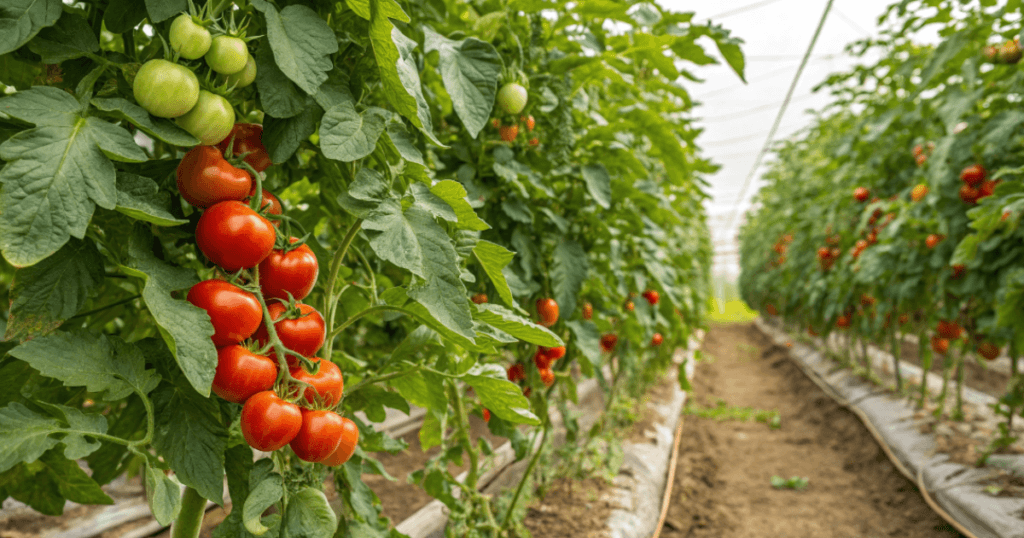
Healthy Green Leaves Not Excessive
Leaves should look evenly green and healthy without becoming overly dense or unusually dark.
Healthy plants usually maintain steady foliage growth while continuing to flower and set fruit through the season.
Steady Growth
Tomato plants should continue producing new leaves, flowers, and developing fruit gradually through the active growing season.
Balanced growth usually looks stable and consistent rather than weak or overly aggressive.
Strong Flowering
Healthy flower clusters forming regularly are usually a good sign that nutrient balance is supporting productive growth.
Flowering should continue steadily alongside foliage growth instead of stopping completely midseason.
Consistent Fruit Development
Productive plants continue setting and sizing fruit steadily instead of producing one early flush followed by a decline.
Fruit development should remain relatively even through the main growing season, especially on healthy, well-established plants.
Conclusion
The best fertilizer for tomatoes depends less on finding one perfect product and more on feeding plants appropriately throughout the season.
Tomatoes need nitrogen early for healthy growth, but they usually perform better with lower nitrogen once flowering and fruiting begin. Compost, balanced fertilizer early in the season, and lower-nitrogen feeding later give most home gardeners a reliable starting point.
Container tomatoes and newer raised beds usually need closer attention because nutrients are used up faster during hot weather and heavy fruiting.
Healthy tomato plants should grow steadily, flower regularly, and continue to size fruit without becoming excessively leafy or stressed. When fertilizer timing matches the plant’s growth stage, yields usually improve naturally without forcing growth.

Leave a Reply