
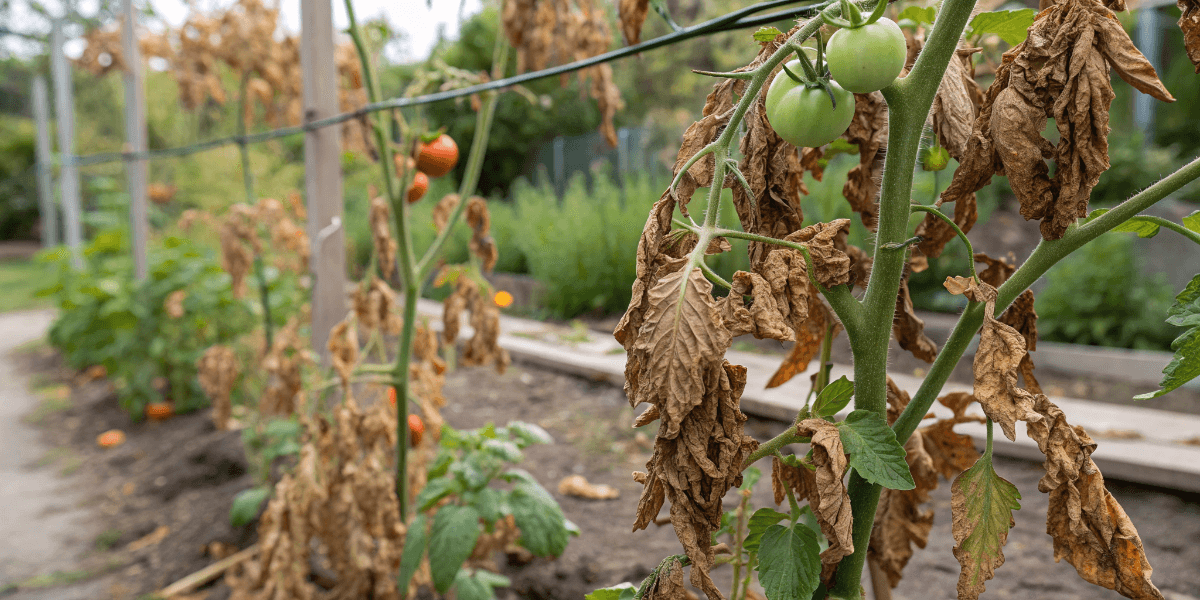
Common tomato plant problems usually start with a few repeat causes: inconsistent watering, heat stress, poor airflow, nutrient imbalance, pests, or disease pressure.
When tomato plants struggle, they often show clear warning signs like yellow leaves, curling growth, dropping flowers, cracked fruit, brown spots, or wilting stems. Learning how to identify common tomato problems early makes them much easier to fix. Many issues are temporary stress responses rather than permanent damage, and plants often recover once the underlying problem is corrected. The key is reading the symptoms carefully before reacting.
Many tomato plant problems are temporary and improve once growing conditions stabilize. Plants often recover once you correct the underlying condition. Start with what you see, check the likely causes, and take the first step that stabilizes the plant.
Quick diagnosis steps:
- Check soil moisture first (too dry or too wet solves many issues)
- Look at where the problem starts (bottom leaves, new growth, fruit)
- Think about recent weather (heat, cold, heavy rain)
- Check how fast it’s spreading (slow = stress, fast = disease/pests)
- Act on the simplest fix first before changing multiple things at once
For a more detailed explanation, read my full article on how to grow tomatoes for beginners.
Tomato Problem Diagnosis Chart
This section helps you quickly connect visible symptoms with likely causes. It’s not about a perfect diagnosis; it’s about narrowing things down so you can take the right first step.
| Problem | Most Likely Cause | First Thing to Check |
|---|---|---|
| Yellow leaves | Water stress, aging, or nutrient imbalance | Soil moisture and where yellowing starts |
| Leaf curl | Heat, drought, watering swings, or pests | Recent weather and new growth shape |
| Wilting plants | Dry soil, heat stress, wet roots, or disease | Whether plants recover by evening |
| Flowers but no tomatoes | Heat, cold nights, poor pollination, or excess nitrogen | Temperature, sunlight, and plant growth |
| Cracked tomatoes | Sudden watering changes after dry soil | Recent rain, drought, or irrigation swings |
| Black bottoms on fruit | Blossom end rot from uneven moisture movement | Watering consistency and root stress |
| Brown leaf spots | Fungal or bacterial leaf disease | Lower leaves, airflow, and wet foliage |
Yellow Leaves
Yellowing is one of the most common signs and often has multiple causes.
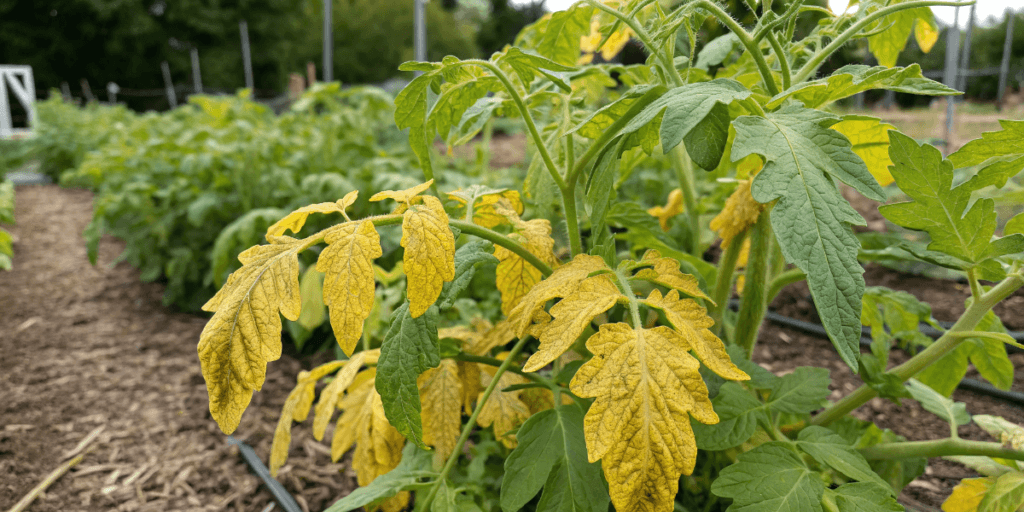
Possible causes: Yellow leaves usually indicate a moisture issue, nutrient stress, transplant shock, natural aging of lower leaves, or disease.
First checks:
- Check soil moisture and where the yellowing starts. Lower leaves turning yellow slowly are often aging or early stress. Yellowing that spreads quickly, especially with spots or wilting, needs closer monitoring.
Curling Leaves
Leaf curl can be harmless or a sign of stress.
Possible causes: Curling leaves are often caused by heat, drought, inconsistent watering, heavy pruning, pests, herbicide drift, or viral disease.
First move:
- Look at the shape of the curl. Thick, rolled leaves are often heat or water-stressed. Twisted, distorted new growth is more concerning and may point to herbicide drift, pests, or a virus.
Wilting Plants
Wilting doesn’t always mean the plant needs water.
Possible causes: Wilting can come from dry soil, heat stress, root damage, wet soil, or wilt disease.
First move:
- Check when the wilting happens. Plants that wilt in afternoon heat but recover by evening are usually stressed, not dying. Plants that stay wilted in the morning may have root trouble or disease.
Flowers but No Tomatoes
This is usually tied to the environment, not plant health.
Possible causes: When tomato plants flower but do not set fruit, the cause is usually heat, cold nights, poor pollination, too much nitrogen, or low sunlight.
First move:
- Focus on temperature and plant growth. Flowers that dry up and drop often mean pollination failed during stressful weather. Very leafy plants with few fruits may be getting too much nitrogen.
Cracked or Split Tomatoes
A classic watering issue.
Possible causes: Cracking usually happens when dry soil is followed by heavy rain after a dry period or irregular watering.
First move:
Stabilize moisture. Mulch, water more evenly, and harvest nearly ripe fruit before heavy rain when possible.
Brown or Black Bottoms on Fruit
These points strongly point to one issue.
Possible causes: Dark, sunken bottoms usually mean blossom end rot. It is commonly triggered by uneven watering, heat, root stress, or too much nitrogen.
First move:
Fix watering consistency first, especially during heat or rapid fruit development. Early fruit is often affected more, but later fruit can improve once the plant is growing under steadier conditions.
Brown Spots on Leaves
Often confused with several diseases.
Possible causes: Brown leaf spots are often linked to early blight, Septoria leaf spot, bacterial spots, wet foliage, or soil splash.
First move:
Remove the worst lower leaves and keep foliage dry. Many small spots often suggest Septoria, while larger spots with rings often point toward early blight.
When Tomato Plants Show Multiple Problems at Once
Tomato plants often show several symptoms at the same time. For example, a plant under heat stress may develop leaf curl, blossom drop, and cracked fruit all within the same week.
This is why it helps to focus on the original stress trigger instead of treating every symptom separately. Watering consistency, soil moisture, airflow, and temperature changes usually affect multiple parts of the plant at once.
How to Diagnose Tomato Problems Before Treating Them
Before reaching for fertilizer or sprays, slow down and observe. Most mistakes happen when you treat the symptom instead of the cause. Tomatoes respond quickly to stress, but they also recover well when you fix the right problem early.
Start With the Symptom, Not the Product
Look at what part of the plant is affected:
- Leaves (color, spots, curling)
- Fruit (cracks, rot, deformities)
- Growth (stalled, leggy, weak)
- Pests or visible damage
This tells you where to focus instead of guessing. Problems that show up on fruit usually started earlier in the plant’s growth, while leaf issues often reflect what’s happening right now.
Check Recent Weather and Watering First
Tomatoes react quickly to environmental swings, often within a few days. Most sudden problems trace back to a recent change rather than a long-term issue.
- Heat waves
- Cold nights
- Dry-to-soaked watering cycles
- Heavy rain after drought
Many problems resolve once conditions stabilize. If the issue appeared suddenly after weather changes, it’s usually stress, not a disease.
Look at Where the Problem Starts
The location of symptoms gives strong clues:
- Lower leaves: often aging, watering issues, or early disease
- New growth: pests, herbicide damage, or nutrient imbalance
- Fruit bottoms: blossom end rot
- One plant vs all plants: isolated vs environmental issue
Also, pay attention to how fast it spreads. Slow changes on older leaves are usually minor. Fast-moving problems, especially climbing upward, need quicker action.
Most Tomato Problems Start at the Roots
Many common tomato plant problems begin below the soil surface long before symptoms appear on leaves or fruit. Roots control water uptake, nutrient movement, temperature response, and overall plant stability.
Cold soil, compacted soil, waterlogged roots, or sudden drying can all trigger symptoms that later appear as yellow leaves, blossom end rot, curling foliage, or slowed growth.
This is why checking soil moisture and root conditions first often solves problems faster than spraying or fertilizing.
Decide Whether It’s Environmental, Pest, or Disease
This step helps you avoid overreacting.
- Environmental stress: most common, often affects multiple plants at once, and follows weather or watering patterns
- Pests: usually visible on close inspection and tend to affect specific areas of the plant first
- Disease: spreads over time, often starts low and moves upward, and doesn’t improve with watering or feeding
If you’re unsure, wait a day or two after correcting watering or stress. Plants that improved were stressed. Plants that continue declining may need closer inspection or removal of affected parts.
Why Tomato Problems Often Look Worse Than They Are
Tomato plants react quickly to stress, especially sudden weather changes, uneven watering, or transplant shock. Leaves may curl, droop, or yellow within days, even when the plant is still healthy overall.
This is why it helps to avoid making multiple changes at once. Overwatering, overfeeding, or spraying unnecessary products often creates additional stress instead of solving the original problem.
Many common tomato plant problems improve once conditions stabilize and the plant resumes steady growth.
Tomato Leaf Problems
Leaves are usually the first place problems show up. Paying attention here helps you act early before it affects fruit production. Most leaf issues are tied to watering, weather, or airflow, not nutrients, so start simple before making changes.
Yellow Leaves on Tomato Plants
Yellow leaves can be harmless or a warning sign.
- Overwatering: soil stays wet, roots struggle, leaves yellow
- Underwatering: dry soil leads to stress and leaf drop
- Nitrogen deficiency: pale yellow, slow growth
- Transplant shock: temporary yellowing after planting
- Natural aging: older bottom leaves yellow and drop
- Disease: yellowing spreads and includes spotting
What to do: Check soil moisture first. If only lower leaves are affected, remove them and monitor. If it’s spreading upward, improve airflow and avoid wetting leaves.
Useful detail: If leaves turn yellow but the veins stay slightly green, it can point to a nutrient imbalance rather than watering, but watering should still be checked first.
Tomato Leaves Curling
Leaf curl is often stress-related and not always serious.
- Heat stress: leaves roll upward to reduce water loss
- Inconsistent watering: causes irregular growth
- Heavy pruning: sudden exposure stresses the plant
- Root disturbance: transplanting or digging nearby
- Pests: aphids or whiteflies on new growth
- Herbicide drift: twisted, distorted new leaves
What to do: Water deeply, then let the top inch of soil dry before watering again. Avoid heavy pruning or other stress while the plant recovers. If new growth looks distorted, inspect closely for chemical drift or pests.
Useful detail: Thick, rolled leaves are usually stress-related. Twisted or misshapen new growth is more serious and should be checked closely.
Brown Spots on Tomato Leaves
Leaf spots usually signal disease or poor conditions.
- Early blight: larger spots with rings
- Septoria: many small spots
- Wet foliage: encourages spread
- Poor airflow: traps humidity
What to do: Remove affected lower leaves, avoid overhead watering, and improve airflow (spacing or light pruning if needed).
Useful detail: If spotting starts low and moves upward gradually, it’s usually fungal. Fast spread during wet weather increases the risk significantly.
Wilting Tomato Plants
Wilting needs quick interpretation.
- Dry soil: plant perks up after watering
- Heat stress: wilts midday, recovers at night
- Root damage: transplant shock or disturbance
- Waterlogged soil: roots suffocate
- Wilt disease: does not recover
What to do: Check the soil first. If moisture is correct but wilting continues, suspect root or disease issues.
Useful detail: Plants that are still wilted early in the morning are more likely to be dealing with root or disease problems, not simple heat stress.
Purple Tomato Leaves
This often shows up early in the season.
- Cold soil: roots can’t absorb nutrients well
- Phosphorus uptake issues: even if the soil has enough
- Seedling stress: a temporary condition
What to do: Wait for warmer soil. Most plants outgrow this without intervention.
Useful detail: This is most common early in the season and rarely affects yield once the plant resumes normal growth.
Tomato Growth Problems
When plants don’t grow properly, the yield suffers later. These issues are best corrected early.
Tomato Plants Not Growing
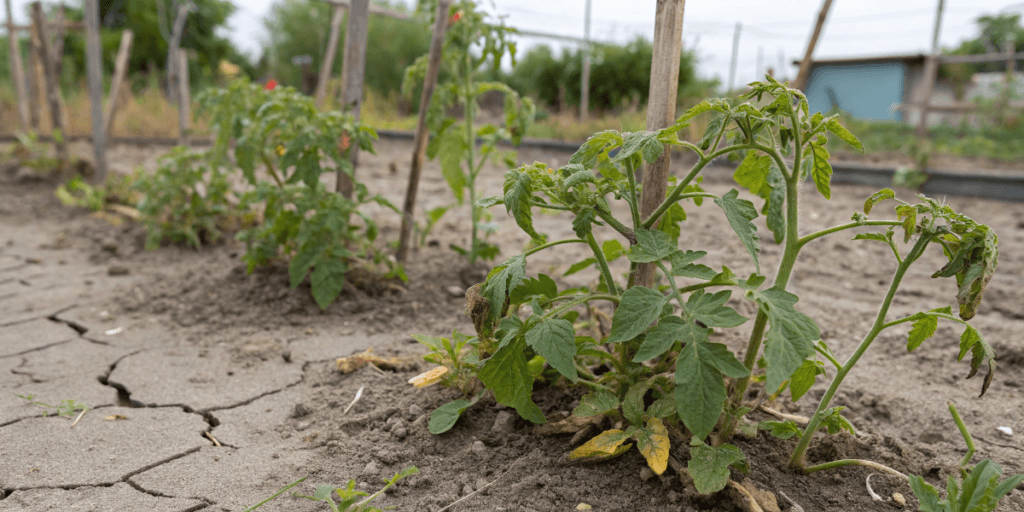
Tomato plants usually stall when the roots are cold, stressed, restricted, or unable to access enough nutrients.
Common causes:
- Cold soil after planting
- Transplant shock
- Poor root development
- Low nutrients
- Compacted soil
- Small containers
- Poor soil conditions, including pH imbalance
Cold air temperatures (not just soil) – slow growth even if the soil is warm.
Fix: Warm soil minimum 60°F (16°C), loosen compacted soil, and give plants 1-2 weeks to settle after transplanting. If growth stays pale or stalled, use a balanced fertilizer every 2-3 weeks during active growth.
Tall, Leggy Tomato Plants
Leggy plants are usually stretching for light or have stayed crowded too long before transplanting.
Common causes:
- Not enough light
- Overcrowded seedlings
- Late transplanting
Fix: Provide stronger light and transplant before the seedlings stretch too much. When transplanting leggy tomatoes, bury 2/3 of the stem to encourage stronger roots.
Weak Stems or Floppy Plants
Weak stems usually come from poor light, shallow planting, soft, fast growth, or lack of support.
Common causes:
- Lack of support
- Low light
- Shallow planting
- Too much top growth
- Fast growth from excess nitrogen
Fix: Add support early with a cage, stake, or trellis. If the plant is still small, planting slightly deeper can help strengthen the base.
Tomato Plants Flowering Too Early
Early flowering usually means the plant was stressed or stayed too long in a small pot before transplanting.
Common causes:
- Root-bound plants
- Delayed transplanting
- Stress before planting
Fix: Transplant on time and reduce stress before flowering. If a very small plant is already flowering, pinch off the first flowers so it can focus on roots and leafy growth.
Tomato Flower and Fruit Set Problems
Flowering doesn’t always lead to fruit. This stage depends heavily on temperature, watering consistency, and how well the plant can pollinate under current conditions.
Tomato Plants Flowering but Not Producing Fruit
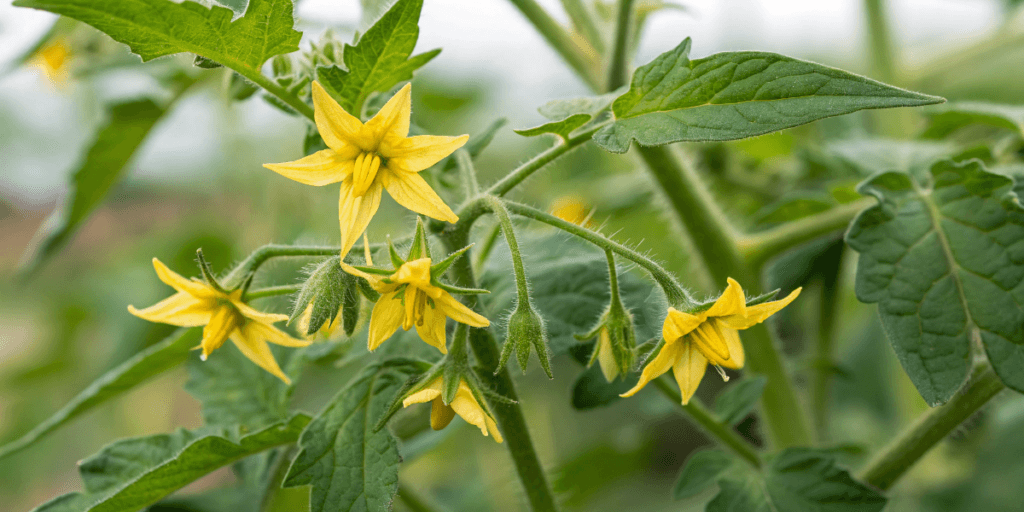
This usually happens when conditions are not right for pollination or fruit set, even if the plant looks healthy.
Common causes:
- High heat (above ~90°F)
- Cold nights (below ~55°F)
- Poor pollination
- Lack of air movement or insect activity
- Too much nitrogen
- Low sunlight
Fix: Focus on steady watering, good sunlight, and avoid high-nitrogen fertilizers once plants start flowering. Lightly shake plants to help pollination, especially in still air. In hot weather, pollinate in the morning when pollen is most viable.
Tomato Flowers Falling Off
Flower drop is usually a response to stress during flowering, especially temperature or moisture swings.
Common causes:
- Temperature swings
- Water stress
- Poor pollination
- High humidity (reduces pollen movement)
Fix: Keep watering consistently and avoid sudden stress like heavy pruning or feeding changes during flowering. Plants often resume setting fruit once conditions stabilize.
Small Tomato Fruits
Small fruit size is often linked to stress, limited resources, or the plant trying to support too many fruits at once.
Common causes:
- Variety traits
- Inconsistent watering
- Weak feeding
- Overcrowding
- Too many fruits per plant (plant spreads energy too thin)
Fix: Maintain steady watering and light feeding during fruit development. If plants are overcrowded or heavily loaded, thin fruit or improve spacing so the remaining tomatoes can size up better.
Tomato Fruit Problems
Fruit issues are often the result of earlier stress. Fixing conditions helps future fruit more than current ones.
Blossom End Rot
Black or sunken bottoms on fruit are usually caused by uneven water movement in the plant. Often shows up on the first fruits of the season.
Common causes:
- Uneven watering
- Root stress
- Heat
- Excess nitrogen
Fix:
- Keep watering consistent
- Add mulch
- Avoid root damage
- Don’t overfeed nitrogen
- Avoid sudden changes in watering rather than just “watering more.”
Calcium sprays are usually not effective if watering is inconsistent.
Cracked or Split Tomatoes
Happens when plants absorb water too quickly after a dry period.
Common causes:
- Rain after a dry period
- Irregular watering
- Heavy watering after dryness (including deep irrigation)
Fix:
- Keep soil evenly moist
- Harvest before heavy rain when possible
- Pick tomatoes slightly early (breaker stage) to reduce splitting
Cracked fruit should be harvested quickly to prevent rot or pests.
Sunscald on Tomatoes
Sunscald appears as pale or damaged patches on fruit that suddenly becomes exposed to strong sunlight.
Common cause:
- Sudden exposure after leaf loss or heavy pruning
Fix:
- Avoid over-pruning
- Maintain enough leaf cover to shade fruit, especially on the south/west side of the plant
- Provide temporary shade during extreme heat if needed
Catfacing or Deformed Tomatoes
Catfacing causes misshapen or scarred fruit, usually due to stress during flowering.
Common causes:
- Cool weather during flowering
- More common in large-fruited varieties
Fix:
- No action needed, this is mainly cosmetic and does not affect taste or safety.
Uneven Ripening or Green Shoulders
Uneven ripening happens when parts of the fruit stay green or firm while the rest ripen.
Common causes:
- Heat stress
- Variety trait
- Dense foliage
- Direct sun exposure on fruit
- Possible potassium imbalance
Fix:
- Improve airflow
- Maintain balanced feeding
- Reduce stress during high heat
Very high temperatures (above ~85-90°F) can slow proper ripening.
Common Tomato Pests
Pests are easier to manage when you catch them early. Check the undersides of leaves, tender new growth, stems, and the soil line at least once a week, especially during warm weather.
Aphids
Aphids are small, soft insects that often gather on tender stems and new growth.
Signs to look for:
- Curled or distorted new leaves
- Sticky residue on leaves
- Clusters of tiny insects under leaves or near growing tips
Fix: Spray them off with water or remove small clusters by hand before they spread.
Whiteflies
Whiteflies are tiny flying insects that usually hide under leaves and scatter when disturbed.
Signs to look for:
- Small white insects flying up when leaves are moved
- Yellowing leaves
- Sticky residue or general plant stress
Fix: Check leaf undersides often and remove heavily affected leaves if the problem is still small.
Tomato Hornworms
Hornworms can strip leaves quickly, but they are usually easy to control if found early.
Signs to look for:
- Large missing sections of leaves
- Dark droppings on leaves or soil
- Thick green caterpillars blend into stems
Fix: Handpick hornworms as soon as you see them.
Spider Mites
Spider mites are more common in hot, dry conditions and can weaken plants fast if ignored.
Signs to look for:
- Fine webbing
- Speckled or dusty-looking leaves
- Yellowing or bronzing foliage
Fix: Rinse leaf undersides with water and improve moisture consistency around stressed plants.
Cutworms
Cutworms usually damage young tomato plants right after planting.
Signs to look for:
- Seedlings cut near the soil line
- Healthy young plants suddenly collapsed
- Damage appearing overnight
Fix: Protect young transplants with a collar around the stem and check the soil surface around damaged plants.
Common Tomato Diseases
Diseases usually develop when leaves stay wet, airflow is poor, or plants are stressed. Most start on lower leaves and move upward, so early removal helps slow the spread.
Early Blight
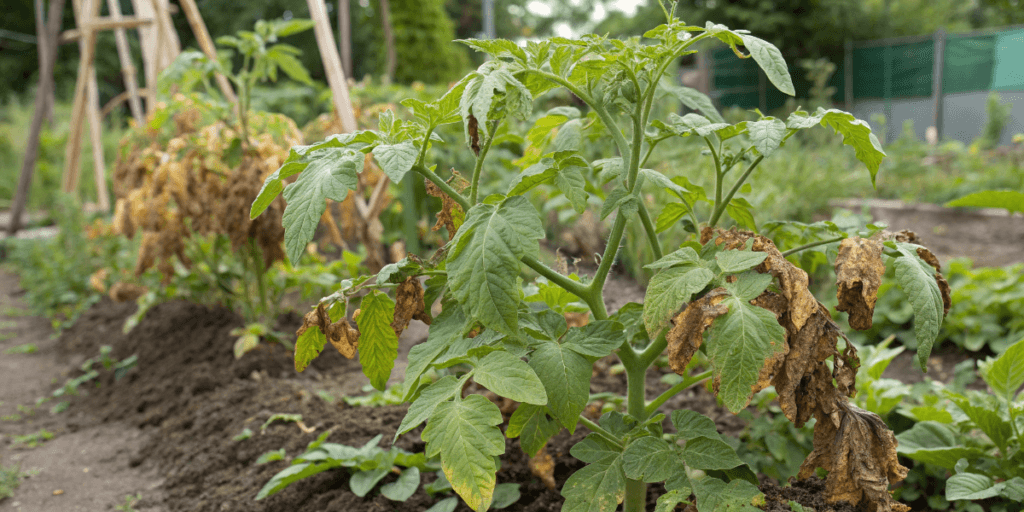
Early blight usually starts on older leaves and spreads upward over time.
Signs to look for:
- Brown spots with faint rings
- Yellowing around spots
- Lower leaves are affected first
Fix: Remove affected lower leaves early and avoid wetting foliage. Improve airflow to slow the spread.
Septoria Leaf Spot
Septoria spreads quickly in humid or wet conditions, especially when leaves stay damp.
Signs to look for:
- Many small, round spots
- Lower leaves are heavily affected first
- Rapid spread in humid weather
Fix: Remove heavily spotted leaves and keep foliage dry. Focus on airflow and spacing.
Fusarium and Verticillium Wilt
These are soil-borne diseases that affect how the plant moves water internally.
Signs to look for:
- Yellowing starting on the lower leaves
- Wilting that does not recover
- Often affects one side of the plant first
Fix: Remove affected plants if symptoms continue to worsen. These diseases do not recover once established.
Late Blight
Late blight spreads quickly in cool, wet weather and can damage plants fast.
Signs to look for:
- Dark, water-soaked spots on leaves
- Rapid leaf and stem damage
- Fruit may also develop dark patches
Fix: Remove affected parts immediately and monitor nearby plants closely. Act fast to limit the spread.
Viral Tomato Diseases
Viral diseases affect plant growth and are often spread by insects.
Signs to look for:
- Twisted or distorted growth
- Mottled or patchy leaf color
- Stunted plants
Fix: Remove affected plants if symptoms are severe. Control insects to prevent further spread.
Environmental Problems Mistaken for Disease
Many tomato problems look serious but are caused by stress, not disease. These often affect multiple plants at once and improve when conditions stabilize.
Heat Stress
Heat stress is common during hot weather and affects both leaves and fruit set.
Signs to look for:
- Leaf curl
- Blossom drop
- Slowed growth
Fix: Keep watering consistently and avoid extra stress like pruning during extreme heat.
Cold Soil or Cold Nights
Cold conditions slow growth and can cause unusual leaf color.
Signs to look for:
- Stunted growth
- Purple or dull leaves
- Slow recovery after planting
Fix: Wait for warmer conditions and avoid planting too early.
Wind Damage
Strong winds can stress plants and cause physical damage.
Signs to look for:
- Torn or broken leaves
- Leaning or bent stems
- Dry, stressed appearance
Fix: Support the tomato plants and protect them from strong, consistent wind where possible.
Herbicide Drift
Herbicide exposure causes distorted, abnormal growth.
Signs to look for:
- Twisted, curled new leaves
- Misshapen growth
- Sudden changes in healthy plants
Fix: There is no direct fix. Monitor growth and avoid further exposure.
Over-Pruning Stress
Removing too many leaves can expose fruit and disrupt plant balance.
Signs to look for:
- Sun-exposed fruit
- Slowed growth after pruning
- Increased stress symptoms
Fix: Avoid heavy pruning and allow the plant to recover naturally.
Watering Swings After Rain or Drought
Sudden changes in moisture affect both leaves and fruit.
Signs to look for:
- Cracked fruit
- Temporary wilting
- Irregular growth
Fix: Return to steady watering and avoid large swings in soil moisture.
Which Tomato Problems Are Serious?
Not every tomato problem requires aggressive treatment. Some issues are temporary stress responses, while others spread quickly and threaten the entire plant.
Usually minor problems:
- Mild leaf curl during heat
- A few yellow lower leaves
- Early blossom end rot on first fruits
- Temporary wilting during hot afternoons
More serious problems:
- Rapid upward disease spread
- Persistent wilting despite moist soil
- Blackened stems
- Distorted new growth across the plant
- Fast-moving leaf spotting during wet weather
When problems spread quickly or continue worsening after conditions improve, closer action is usually needed.
Container Tomato Problems
Growing tomatoes in containers gives you more control, but pots also dry out, heat up, and lose nutrients faster than garden soil.
Plants Drying Out Too Fast
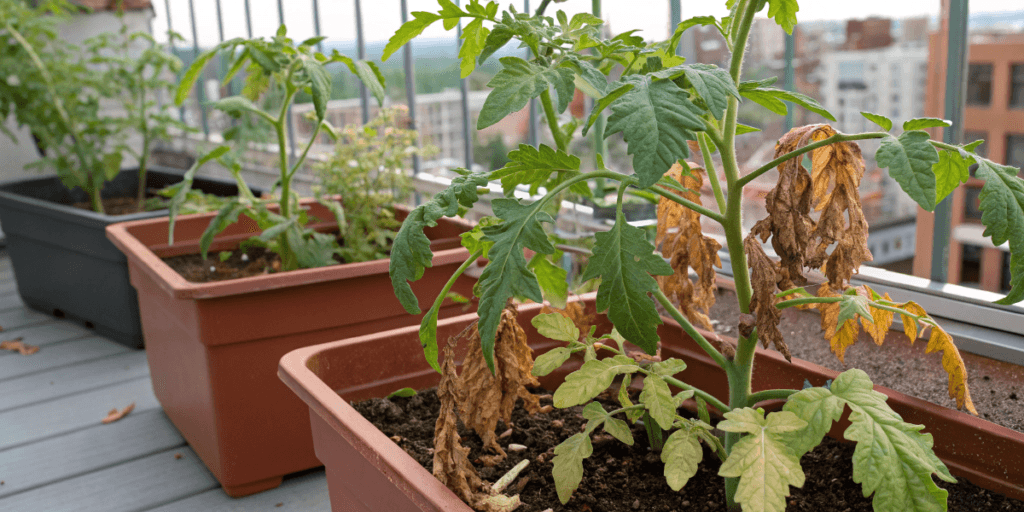
Container tomatoes dry out quickly when pots are too small, temperatures are high, or plants sit on hot patios.
Fix: Use at least a 5-gallon container for compact tomatoes and 10+ gallons for larger indeterminate tomatoes, water deeply, and check moisture daily during hot weather.
Yellow Leaves in Pots
Yellow leaves in containers usually come from too much water, poor drainage, or nutrients washing out after frequent watering.
Fix: Make sure the pot drains well, check soil moisture before watering again, and feed lightly if the plant looks pale.
Nutrients Washing Out
Frequent watering can move nutrients out of the potting mix faster than in-ground soil.
Fix: Use a slow-release fertilizer or feed regularly with a balanced fertilizer during active growth.
Blossom End Rot in Containers
Blossom end rot is often worse in pots because container moisture changes quickly.
Fix: Keep moisture steady, mulch the top of the container, and avoid letting the pot swing from bone-dry to soaked.
Roots Overheating in Dark Pots
Dark pots and hot surfaces can heat the root zone and slow growth.
Fix: Move containers away from hot pavement, use lighter-colored pots, or shade the container during extreme heat.
Raised Bed Tomato Problems
Raised beds warm quickly and drain well, but they can also dry out faster and become crowded if planted too tightly.
Soil Drying Faster Than Expected
Raised bed soil can lose moisture quickly in hot or windy weather.
Fix: Check moisture 2-3 inches deep and water deeply when the bed starts drying out.
Overcrowding in Intensive Layouts
Too many tomato plants in one bed reduces airflow and makes leaf diseases easier to spread.
First response:
Space plants properly and prune only enough lower growth to improve airflow.
Nutrient Depletion
Tomatoes are heavy feeders, and raised beds can need refreshing before each season.
Fix: Add compost before planting and feed during active growth if plants look pale or slow.
Disease Spread From Poor Airflow
Dense planting, wet lower leaves, and limited airflow increase disease pressure.
Fix: Remove diseased lower leaves early and avoid overhead watering.
How to Prevent Most Tomato Problems
Prevention comes down to keeping plants steady: warm soil, consistent moisture, good airflow, and early support.
Start With Warm Soil and Healthy Transplants
Plant after frost risk has passed and the soil is above 60°F. Avoid weak, root-bound, or badly stressed transplants. Healthy transplants should look sturdy, green, and not badly root-bound.
Water Consistently
Water deeply and evenly, aiming for about 1-1.5 inches per week, adjusted for heat, rainfall, soil type, and container size.
Mulch Around Plants
Add mulch after the soil warms to keep moisture steady and reduce soil splash on lower leaves.
Space Plants for Airflow
Give plants enough room so leaves dry quickly after rain or watering. Crowding increases disease pressure.
Support Plants Early
Add cages, stakes, or trellises while plants are still small. This prevents broken stems and improves airflow.
Avoid Overfeeding With Nitrogen
Too much nitrogen creates leafy growth but can reduce flowering and fruiting. Once plants start flowering, switch away from high-nitrogen feeding.
Remove Diseased Leaves Promptly
Remove affected lower leaves early, especially if spots are spreading upward.
Rotate Tomato Planting Areas
Avoid planting tomatoes in the same spot every year when possible. Rotation helps reduce soil-borne disease buildup.
Check Plants Weekly
Look under leaves, check soil moisture, and remove small problems before they spread. Check leaf undersides too, since pests often hide there first.
When to Remove a Tomato Plant
Sometimes removing a tomato plant is the best way to protect the rest of the garden. This is especially true when a plant is declining quickly, showing severe disease signs, or spreading problems to nearby plants.
Remove Plants When Disease Spreads Fast
If leaf spots, wilting, or stem damage spread quickly and the plant keeps declining, removal may be better than trying to save it.
Best move: Remove the plant before the problem spreads to nearby tomatoes.
Remove Plants With Severe Viral Symptoms
Twisted growth, mottled leaves, stunting, and distorted new leaves can point to a serious viral issue.
Best move: Remove severely affected plants, especially if symptoms keep getting worse.
Remove Plants at End of Season
Old tomato plants can carry disease into the next season if they are left in the bed.
Best move: Clear plants, fallen fruit, and diseased leaves after the season ends.
Compost or Trash?
Healthy tomato plants can be composted. Diseased plants are safer removed from the garden, especially if the problem was severe or spread quickly.
Beginner Mistakes That Cause Tomato Problems
Many tomato problems come from a few simple habits that stress plants early or make disease easier to spread.
Planting Too Early
Planting before the soil is warm enough slows root growth and makes plants struggle from the start. Cold soil can leave tomatoes stressed for weeks.
Watering Lightly Instead of Deeply
Shallow watering keeps roots near the surface and makes plants dry out faster. Water deeply so moisture reaches the root zone, then allow the top layer to dry slightly before watering again.
Crowding Plants
Tomatoes need enough space for leaves to dry after rain or watering. Crowded plants have poor airflow, which increases leaf disease risk.
Proper spacing helps leaves dry faster and reduces disease pressure.
Skipping Support
Tomatoes get heavy as they grow, especially once fruit starts forming. Unsupported plants bend, break, and hold leaves closer to the soil.
Over-Pruning
Some pruning helps airflow, but removing too many leaves can stress the plant. It also exposes fruit to sunscald.
Using Too Much Nitrogen
Too much nitrogen encourages leafy growth at the expense of flowers and fruit. This can leave you with a large green plant but fewer tomatoes.
Ignoring Early Leaf Symptoms
Small spots, yellowing, or pest damage are easier to fix early than after they spread.
Most Common Tomato Plant Problems for Home Gardeners
For most home gardeners, the most common tomato plant problems are uneven watering, heat stress, poor airflow, fungal leaf diseases, and nutrient imbalance. Yellow leaves, curling foliage, blossom end rot, cracked fruit, and flower drop are usually linked to environmental stress rather than permanent disease.
The fastest way to improve plant health is usually stabilizing watering, improving airflow, and reducing stress instead of reacting aggressively with sprays or fertilizer.
Conclusion
Tomato problems can look complicated at first, but most of them come down to a few repeat patterns: uneven watering, temperature stress, poor airflow, or simple timing mistakes. Once you learn to recognize those patterns, diagnosing issues becomes much easier.
The key is to start with what you see, check the simplest causes first, and avoid overcorrecting. In many cases, small adjustments, steady watering, better spacing, or removing a few affected leaves are enough to get plants back on track. Not every problem needs a product or a drastic fix.
It also helps to remember that tomatoes are resilient. Even when early fruit is damaged or growth slows for a while, plants often recover once conditions improve. Focus on stabilizing the environment, and future growth will usually be healthier.
With regular checks and a consistent routine, most problems can be caught early and managed before they spread. Over time, this becomes second nature, and growing tomatoes feels much more predictable and rewarding.

Leave a Reply