
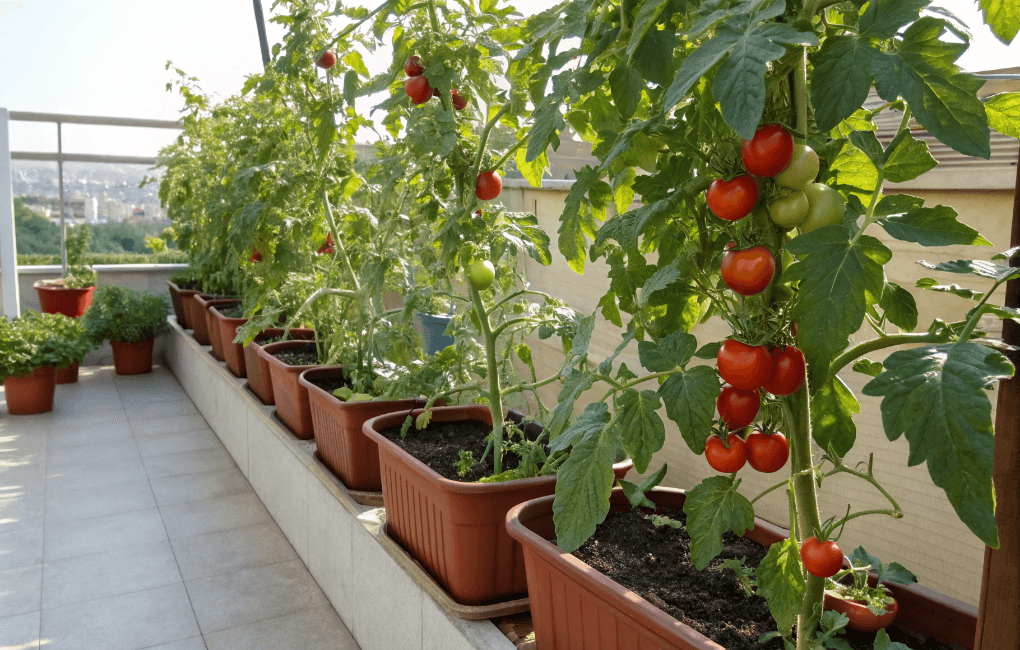
Growing tomatoes in containers is one of the easiest ways to get a high-yield tomato harvest in a small space, as long as container size, watering, and variety choice are handled correctly. If something isn’t working, you can adjust quickly, move the pot, change watering, or improve the soil.
That said, containers are less forgiving than garden beds. The root space is limited, moisture fluctuates faster, and mistakes show up sooner. Most failures come down to a few simple issues: pots that are too small, inconsistent watering, or poor soil choice.
If you get those three things right, container tomatoes can grow strong, stay healthy, and produce surprisingly high yields, even on a small patio or balcony.
Quick Start Summary:
- Use a large container with drainage holes
- Choose a tomato type that matches the pot size
- Use a quality potting mix, not garden soil
- Water consistently and deeply
- Feed regularly once plants are established
- Support the plant early
If you want the full growing process beyond containers, including planting timing, spacing, pruning, and harvest management, see the complete guide on how to grow tomatoes.
Choosing the Right Tomato Varieties for Containers
Not all tomatoes perform equally well in pots. The biggest difference comes down to how the plant grows and how much space it needs.
| Tomato Type | Recommended Pot Size | Best For |
|---|---|---|
| Dwarf / micro | 1-3 gallons | Tiny patios, tabletops, small balconies |
| Cherry / compact bush | 3-5 gallons | Reliable container harvests |
| Medium determinate | 5-7 gallons | Bush plants with steadier yield |
| Large indeterminate | 10-15+ gallons | Experienced growers with strong support and regular care |
You can read my full article about the best tomato varieties
Determinate vs Indeterminate Tomatoes in Pots
Determinate (bush) tomatoes grow to a set size and stop. They’re compact, easier to manage, and generally better suited for containers, especially smaller ones.
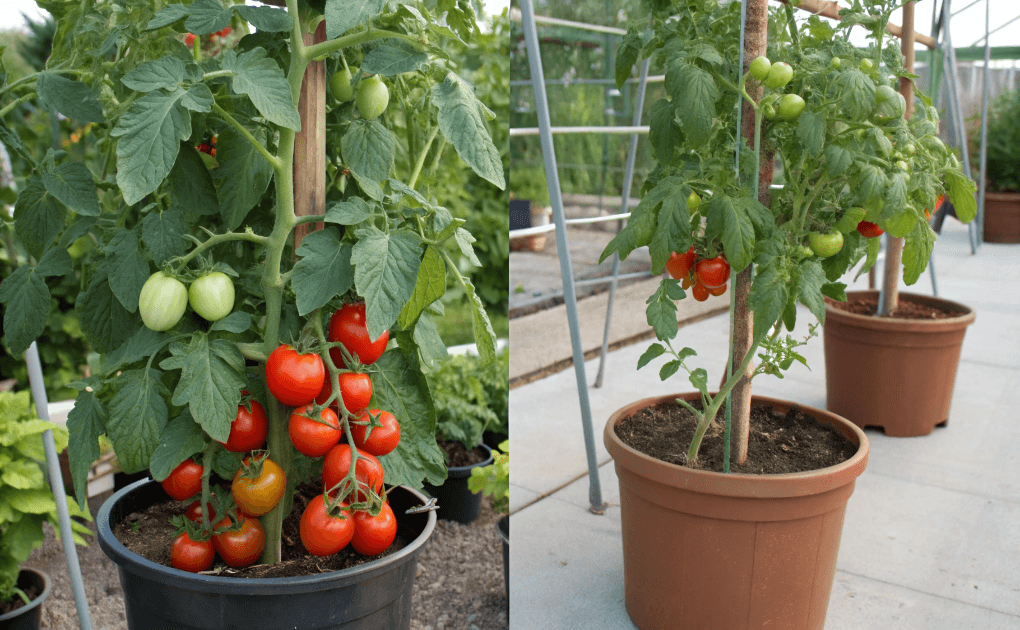
Indeterminate (vining) tomatoes keep growing and producing all season. They can work in containers, but only if you give them enough space, strong support, and consistent care. Otherwise, they quickly outgrow the setup.
If you are new to container tomatoes, determinate, dwarf, and patio varieties are usually the easier starting point because they need less pruning, stay more balanced in pots, and are less likely to become top-heavy in the wind.
Best Tomato Types for Containers
Some types naturally adapt better to restricted root space:
- Dwarf varieties – Bred specifically for small spaces
- Bush types – Compact and manageable
- Cherry tomatoes – Reliable producers even in moderate-sized pots
These tend to handle container conditions better and recover faster from minor stress.
Varieties That Struggle in Containers
Large, vigorous indeterminate varieties, especially beefsteak types, often struggle unless grown in very large containers (10+ gallons). In smaller pots, they become stressed, produce fewer fruits, and are harder to manage.
Match the Variety to the Container Size
This is where most people go wrong. A large, fast-growing plant in a small pot will never perform well, no matter how well you water or feed it.
If you’re working with limited space, it’s better to choose a smaller, productive variety than to force a large one into a tight container.
Recommended Tomato Varieties for Containers
A variety that performs beautifully in the ground can become frustrating in a container if it grows too aggressively, needs more root room, or dries the pot too quickly. In most cases, cherry, dwarf, patio, and compact bush types are the easiest and most dependable choices.
- Patio – Classic compact container tomato that stays relatively small, usually around 2 feet tall, and produces well for its size. A good choice if you want a true patio plant without needing a large setup.
- Better Bush – Strong option for gardeners who want a fuller-sized tomato on a more compact plant. It stays more manageable than large sprawling slicer types and is often a practical choice for pots.
- Bush Early Girl – A more compact Early Girl type that works well in containers and can give a solid yield without needing the space of a large indeterminate plant.
- Husky Red Cherry – Popular choice for flavor and steady production, especially if you want reliable harvests of snack-sized tomatoes from a relatively compact plant.
- Sweetheart of the Patio – Compact cherry tomato variety that is well-suited to pots and known for heavy production on a smaller plant.
- Veranda Red – Another compact patio tomato bred for container growing, with a size that is easier to manage in smaller outdoor spaces.
- Tiny Tim – One of the best-known dwarf container tomatoes. It stays very small, fits well in patio pots and balcony planters, and is a good option for gardeners working with limited space.
- Tumbling Tom – A trailing cherry tomato that works especially well in hanging baskets, raised patio planters, and containers where you want the plant to spill over the edge rather than grow upright.
- Red Robin – Very compact dwarf cherry tomato that suits small pots, patio containers, and even very tight growing spaces.
Best Container Size for Tomato Plants
Container size directly affects plant health, watering stability, and yield. Bigger containers give you a much wider margin for error.
Minimum Container Size by Tomato Type
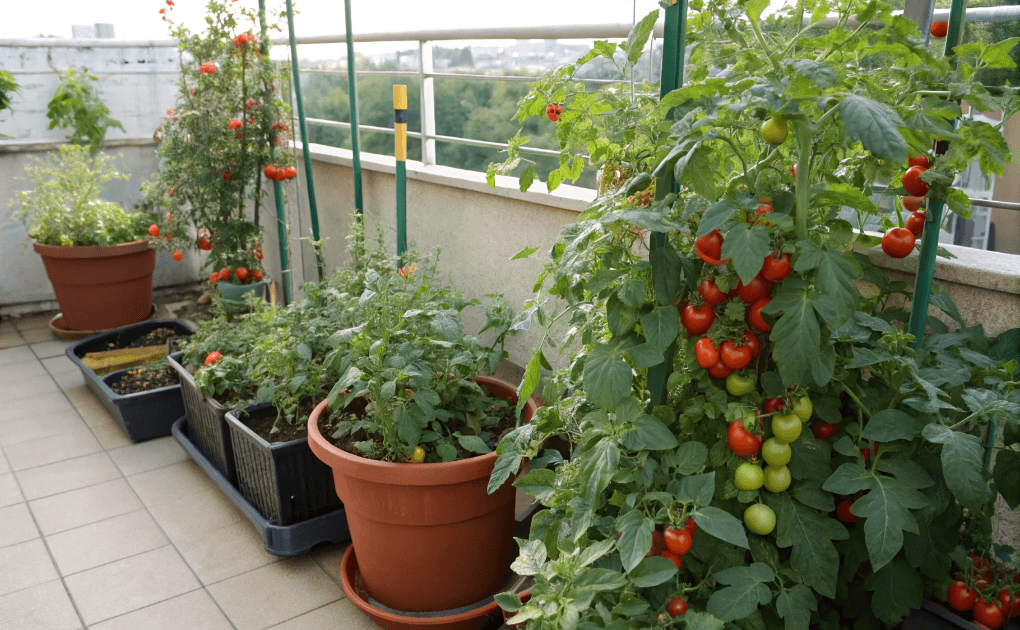
- Small/cherry tomatoes: About 3-5 gallons
- Medium plants: About 5-7 gallons
- Large/indeterminate tomatoes: 10+ gallons
These are minimums. If you can go bigger, do it.
As a practical rule, one tomato plant per container is best unless you are growing a very small dwarf variety. Even when two plants technically fit, the root competition usually lowers yield and makes watering much harder to manage.
Why Bigger Containers Produce Better Yields
Small containers cause several problems at once:
- They dry out quickly and stress the plant
- Roots overheat and stop expanding
- Watering becomes inconsistent
Larger containers hold moisture more evenly, keep roots cooler, and allow stronger root development. The result is more stable growth and better fruit production.
Depth vs Width: What Matters More
Tomatoes benefit from both, but depth matters slightly more because roots grow downward. Aim for at least 12-18 inches of depth. Wider containers help with stability and moisture retention, especially for larger plants.
One Plant Per Pot? When That Rule Matters
For medium to large tomatoes, stick to one plant per container. Crowding leads to competition for water and nutrients, which quickly reduces yield.
Small cherry varieties can sometimes share larger containers, but even then, spacing matters. If in doubt, give each plant its own pot.
Proper spacing matters just as much in containers as in garden beds. If you’re unsure how plant size affects airflow and yield, see this detailed tomato spacing guide.
Choosing the Right Container Type
The material and design of your container affect how quickly it dries out, how stable it is, and how easy it is to manage.
Self-Watering Containers
Self-watering containers can work very well for tomatoes because they reduce moisture swings, which is especially useful in hot weather or on exposed patios.
They are not a shortcut for poor pot size or weak feeding, but they can help prevent the repeated dry-wet cycles that often lead to blossom end rot and fruit cracking.
Plastic vs Fabric vs Clay Pots
- Plastic pots: Retain moisture well, lightweight, good for most situations
- Fabric pots (grow bags): Excellent drainage and airflow, but dry out faster
- Clay/terracotta: Breathable but loses moisture quickly, especially in hot weather
There’s no single best option, just choose based on your climate and how often you can water.
Drainage Is Non-Negotiable
Every container must have drainage holes. Without them, water collects at the bottom, and roots suffocate.
If your pot doesn’t have holes, don’t use it for tomatoes.
Color and Heat Considerations
Dark containers absorb heat, which can overheat the root zone in full sun. In hot climates or exposed balconies, lighter-colored pots help keep roots cooler.
Balcony and Patio Practical Issues
Containers can become heavy once filled with soil and water.
- Weight: Large pots can be difficult to move
- Runoff: Water draining can stain surfaces or drip onto neighbors below
- Stability: Tall plants can tip over in the wind if the container is too light
Plan your setup before planting, it’s harder to fix later.
Best Soil for Growing Tomatoes in Containers
Container soil is one of the most important decisions you’ll make. It affects water retention, root health, and overall plant performance.
Why Garden Soil Should Not Be Used
Garden soil becomes compacted in containers, drains poorly, and restricts root growth. It can also carry pests or diseases.
Use a proper potting mix instead.
What a Good Potting Mix Should Provide
A quality mix should:
- Drain well, but hold enough moisture
- Stay loose and airy over time
- Support steady root growth
Improving Store-Bought Potting Mix
Many store mixes benefit from small improvements:
- Add compost for nutrients
- Add perlite for better drainage
- Mix thoroughly before planting
This creates a more balanced growing environment.
A lightweight, soilless potting mix is usually safer than anything soil-heavy because it keeps roots better aerated in containers.
Refreshing or Replacing Soil Each Season
Container soil breaks down over time. At the end of the season:
- Replace it completely.
- Refresh it with compost and fresh potting mix components, or replace it fully if the previous plant struggled with disease or severe nutrient depletion.
Avoid reusing old soil without improving it, as it leads to weaker plants.
If you want a deeper breakdown of soil structure, pH, and how to improve growing conditions, see this guide on the best soil for tomatoes.
Planting Tomatoes in Containers Step by Step
Planting correctly sets the foundation for the entire season. Small details here make a noticeable difference later.
- Fill the Container Correctly: Fill with pre-moistened potting mix, leaving a few inches at the top. This makes watering easier and prevents runoff.
- Plant Deeply for Stronger Roots: Tomatoes can grow roots along buried stems. Plant deeper than the original root ball, up to the first set of true leaves. This creates a stronger root system.
- Position the Plant Properly: Place the plant in the center of the container and ensure it’s upright. Adjust before filling.
- Firm Soil Gently: Press the soil lightly to remove large air pockets, but don’t compact it.
- Water Thoroughly After Planting: Water until it drains out of the bottom. This settles the soil and ensures good root contact.
Sunlight and Placement for Container Tomatoes
Light is one of the biggest factors affecting yield. Even perfect watering and feeding won’t compensate for poor sunlight.
Minimum Sun Requirements
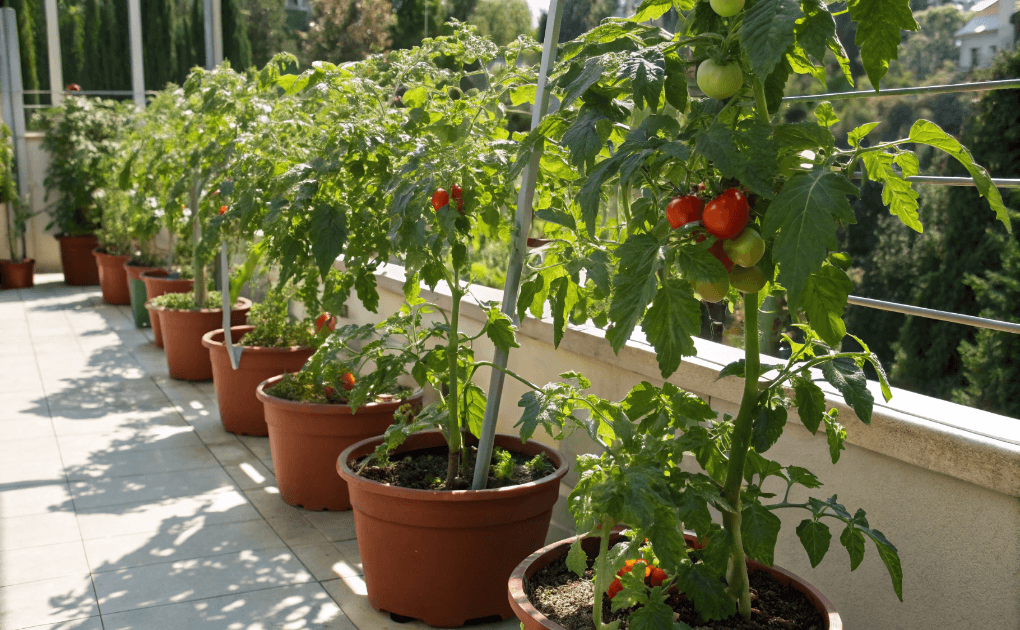
Tomatoes need at least 6-8 hours of direct sun daily. More is better, especially for fruit production.
Moving Containers for Better Conditions
One advantage of containers is flexibility. If a spot isn’t working, move the plant to improve sunlight or reduce stress.
Protecting Plants from Extreme Heat or Wind
In very hot conditions, afternoon shade can prevent stress. Strong winds can damage stems and dry out soil quickly. Place containers in a sheltered area if needed.
Best Placement for Balconies, Patios, and Small Spaces
South-facing spots usually perform best. Avoid corners with poor airflow or constant shade.
Watering Tomatoes in Containers Properly
Watering is where most container setups fail. The goal is consistency, not just frequency.
Why Containers Dry Out Faster
Limited soil volume means less water storage. Sun, heat, and wind accelerate moisture loss.
How Often to Water
Depends on several factors:
- Container size
- Temperature and sun exposure
- Wind and location
Watering needs often jump suddenly once the fruit load increases. A plant that was fine on one watering a day may need morning and evening checks once the container is full of roots and the canopy is carrying fruit.
In warm weather, daily watering is often necessary. During heat waves, even twice a day for smaller pots.
Deep Watering vs Light Watering
Always water deeply until excess drains out. Light surface watering leads to shallow roots and unstable plants.
Signs of Underwatering
- Wilting during the day that doesn’t recover at night
- Dry soil below the surface
- Smaller fruits or flowers drop
Signs of Overwatering
- Yellowing leaves
- Constantly wet soil
- Slow growth
Mulching Containers to Slow Moisture Loss
Adding mulch helps:
- Retain moisture
- Reduce temperature swings
- Stabilize watering needs
Even a thin layer makes a difference.
Feeding Tomatoes in Containers for Continuous Growth
Nutrients wash out of containers quickly, so regular feeding is necessary.
Why Container Plants Need More Frequent Feeding
Every watering removes some nutrients. Over time, the soil becomes depleted.
Basic Feeding Approach
Start feeding once plants are established:
- Use a balanced fertilizer early
- Switch to one higher in potassium when flowering begins
Feed regularly, following product instructions.
When to Increase Feeding
Increase feeding when:
- Plants are actively growing
- Flowers and fruits are forming
Common Feeding Mistakes
- Overfeeding early (leads to leafy growth, fewer fruits)
- Not feeding enough later (results in weak production)
Balance matters.
Supporting Tomato Plants in Containers
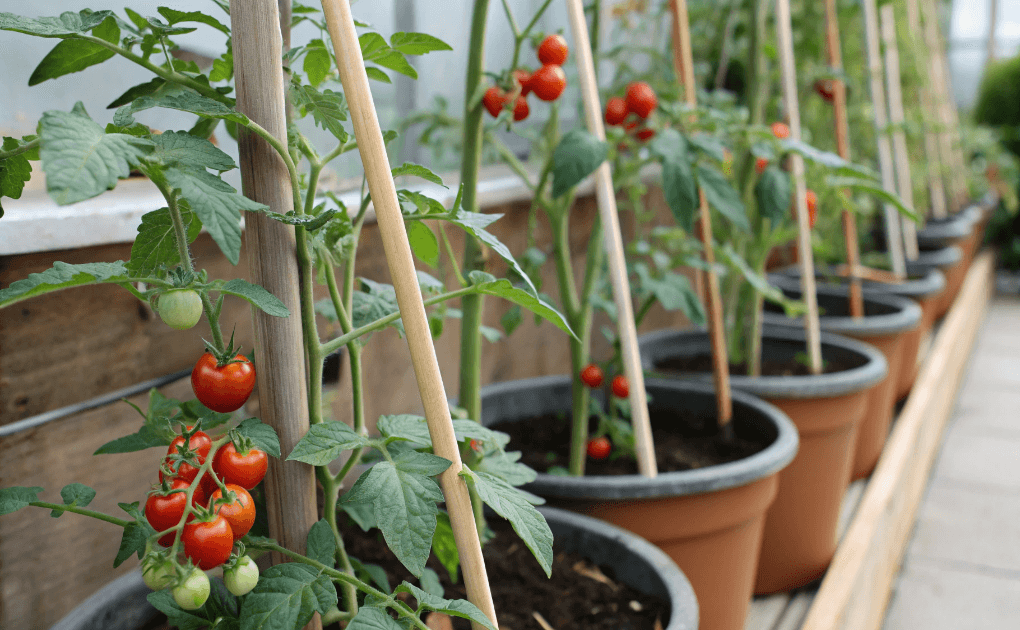
Support keeps plants upright, improves airflow, and prevents damage.
Stakes vs Cages vs Trellis
- Stakes: Simple and space-efficient
- Cages: Good for bush types
- Trellis: Useful for vertical setups
Choose based on plant size and space.
Install Support Early
Install support at planting time. Adding it later can damage roots.
Managing Plant Size in Small Spaces
Prune lightly if needed, especially for indeterminate types. Keep plants manageable without removing too much growth.
Common Problems When Growing Tomatoes in Containers
Container tomatoes tend to show problems faster than in-ground plants because root space, moisture, and temperature change more quickly. The good news is that most container issues are fixable once you identify the cause early.
Plants Drying Out Too Fast
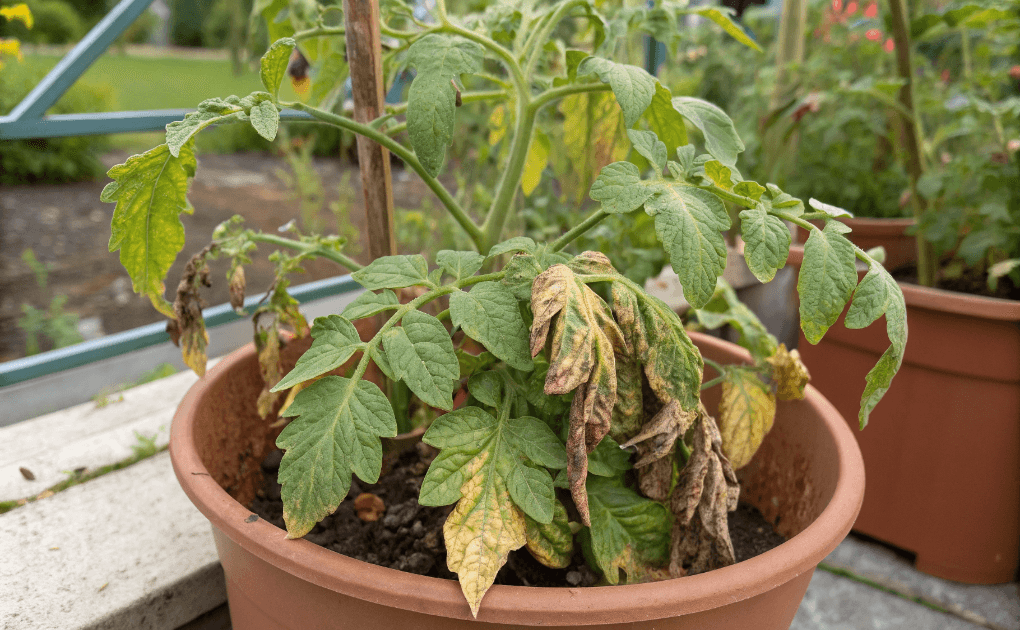
Usually caused by small containers, hot conditions, or the plant being exposed to strong sun and wind all day. A larger pot, mulch, and more consistent deep watering usually solve the problem better than frequent light watering.
Small Plants with Low Yield
When a tomato stays undersized and produces poorly, restricted root space is often part of the problem. Weak feeding, limited sun, or a variety that is too large for the container can also hold the plant back.
Yellow Leaves or Weak Growth
Common causes include overwatering, nutrient deficiency, compacted potting mix, or roots sitting too wet for too long.
Containers Heating Too Fast
Dark pots in direct sun can overheat roots, slowing growth and stressing plants. This slows growth, increases water stress, and can leave plants looking wilted even when the soil is not completely dry.
What to Do During Heat Waves:
During extreme heat, move containers where they still get strong sun but a short break from harsh late-afternoon exposure. Water early, check moisture again in late afternoon, and avoid heavy fertilizer applications during heat stress.
Plants often pause temporarily in extreme heat and recover once conditions moderate.
Blossom End Rot in Containers
- Caused mainly by inconsistent watering
- Not just a calcium issue
- Very common in pots
Keep moisture stable to prevent it.
Large containers, mulch, and steady deep watering are usually more effective than adding random calcium products once symptoms appear.
No Fruit
The most common causes are not enough direct sun, inconsistent or insufficient feeding, or choosing a variety that is too large or slow to produce for the container setup. In some cases, excess nitrogen early on can also lead to lots of leafy growth with very little fruit.
How to Increase Tomato Yield in Containers
Improving yield in containers mostly comes down to reducing stress. When root space, watering, feeding, and sunlight stay consistent, tomato plants can keep growing, flowering, and producing instead of constantly recovering from setbacks.
Use Larger Containers
Larger containers usually produce better yields because they give roots more space and keep moisture more stable. Small pots dry out faster, overheat more easily, and limit root growth, which reduces fruit production.
Keep Watering Consistent
Tomatoes produce better when the soil stays evenly moist. Repeated swings between dry and saturated soil can slow growth, cause blossom drop, and lead to problems like blossom end rot.
Feed Regularly
Container tomatoes use up nutrients quickly, especially once they begin flowering and setting fruit. Regular feeding helps maintain steady growth and supports continued fruit production through the season.
Choose Productive Varieties
Variety choice matters in containers. Cherry, dwarf, and compact bush tomatoes usually produce more reliably in pots because they are better suited to limited root space than large vigorous types.
Give Plants Strong Support and Enough Sun
Tomatoes need plenty of direct sun to keep producing well, and they need support to stay upright and manageable. Good support also improves airflow and light exposure, which helps the plant stay healthier and more productive.
Growing Tomatoes on Balconies and Small Spaces
Tomatoes can grow very well in small spaces if the setup is practical. On balconies and patios, the goal is to use light, vertical room, and container spacing efficiently without creating crowding or making watering harder.
Space Optimization Tips
Use the sunniest spots first and leave enough space between containers for airflow and access. It is usually better to grow fewer plants well than to crowd too many pots into a small area.
Vertical Growing Options
Vertical support helps you grow more in less space and makes plants easier to manage. Stakes, cages, wall trellis, and railing-friendly supports all work well, depending on the plant type and layout.
When Separate Containers Work Better Than Shared Planting
Separate containers usually make watering, feeding, and plant care easier. They also reduce root competition, which matters more in small spaces where container conditions already dry out faster.
End-of-Season Container Care
A little cleanup at the end of the season makes next year easier and helps prevent carryover problems. This is the time to remove tired plants, deal with old potting mix, and clean containers before reusing them.
When to Remove Plants
Remove plants when production has clearly slowed, the vines are declining, or cold weather is ending the season. Keeping weak, exhausted plants in place usually does not improve the harvest and can invite more pest and disease problems.
Reusing or Refreshing Soil
Potting mix can sometimes be reused, but it should not go into the next season unchanged. At minimum, remove old roots and refresh them with compost or a new mix, and replace them fully if the previous plants had serious disease issues or very poor growth.
Cleaning Containers Before Replanting
Clean containers before replanting so you are not carrying over old roots, salt buildup, pests, or disease residue. A simple wash and scrub is usually enough, especially if you plan to use the same pots again next season.
Beginner Mistakes to Avoid
- Using containers that are too small
- Inconsistent watering
- Poor drainage
- Not feeding enough
- Choosing the wrong variety
- Delaying support
- Overcrowding
Quick Container Growing Setup Checklist
- Large container with drainage holes
- Suitable tomato variety
- Quality potting mix
- Support system installed early
- Sunny location (6-8+ hours)
- Consistent watering routine
- Regular feeding plan
Conclusion
Tomatoes can do extremely well in containers when the setup matches the plant. Most problems come back to the same few issues: a pot that is too small, uneven watering, weak feeding, or choosing a variety that quickly outgrows the space. Once those basics are handled, container tomatoes become much more predictable and productive.
The easiest way to get better results is to simplify the system from the start. Use the largest container you can manage, choose a variety suited to pot growing, give it full sun, support it early, and keep water and feeding steady through the season. When those pieces stay consistent, container tomatoes can produce healthy plants and a very worthwhile harvest even in small spaces.
Leave a Reply