
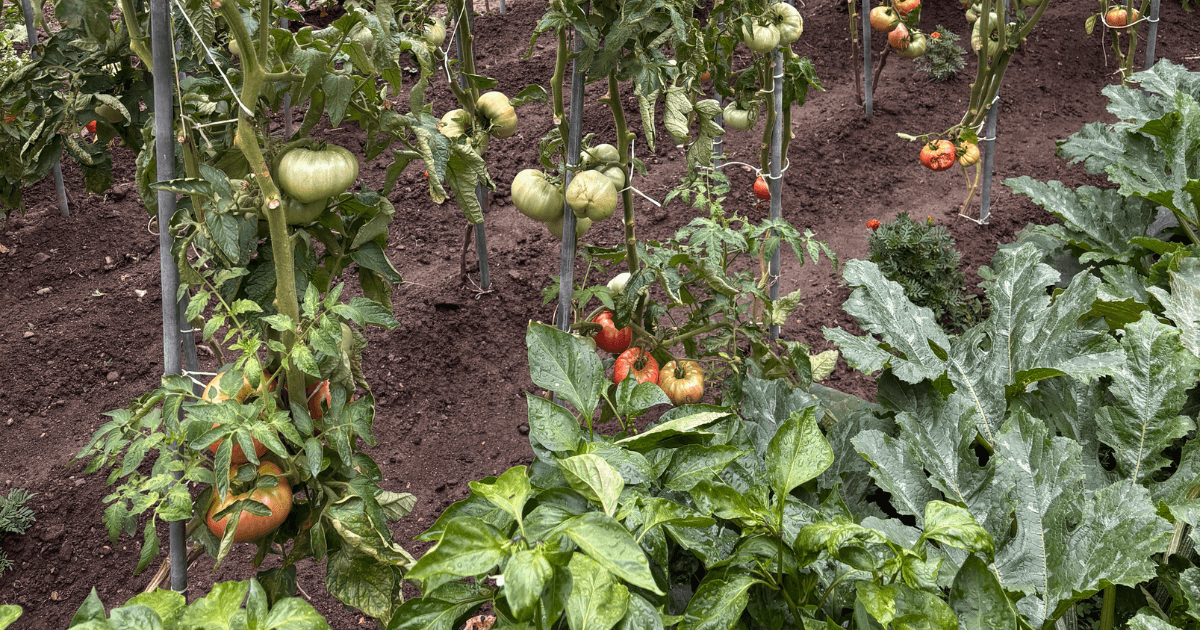
Companion plants for tomatoes can help improve pollination, attract beneficial insects, use garden space more efficiently, and support healthier tomato beds when paired correctly. Basil, marigolds, alyssum, onions, lettuce, and chives are some of the easiest companion plants to grow near tomatoes in raised beds, containers, and in-ground gardens.
At the same time, companion planting is often overstated. It does not replace proper tomato care. Healthy tomatoes still depend mostly on full sun, good airflow, consistent watering, proper spacing, strong support systems, and healthy soil. A crowded tomato bed with poor airflow will still struggle, even with the “right” companion plants nearby.
The most successful tomato companion planting setups usually stay simple. Instead of packing dozens of plants tightly together, use a few well-placed companions around the edges of beds, rows, or containers. Some plants often listed as tomato companions, like mint, squash, cucumbers, peppers, eggplants, and woody herbs, can work in the right setup but need more spacing or careful placement.
Best companion plants for tomatoes at a glance:
- Basil → easy beginner companion for containers and raised beds
- Marigolds → flowers that support pollinators and beneficial insects
- Sweet alyssum → attracts hoverflies and beneficial insects
- Chives and onions → compact border plants
- Lettuce and spinach → early-season space-saving crops
- Nasturtiums → useful near bed edges with room to spread
- Parsley and cilantro → beneficial flowers when allowed to bolt
- Radishes → a fast spring crop between young tomatoes
The best companion plants for tomatoes stay manageable around mature tomato plants instead of overcrowding airflow, roots, or watering space.
If you are still planning your full tomato setup, start with my complete guide on how to grow tomatoes before choosing companion plants.
Best and Worst Tomato Companion Plants
Tomatoes grow best beside compact herbs, shallow-rooted greens, beneficial flowers, and border plants that support the garden without crowding the tomatoes themselves. The goal is balance, not density.
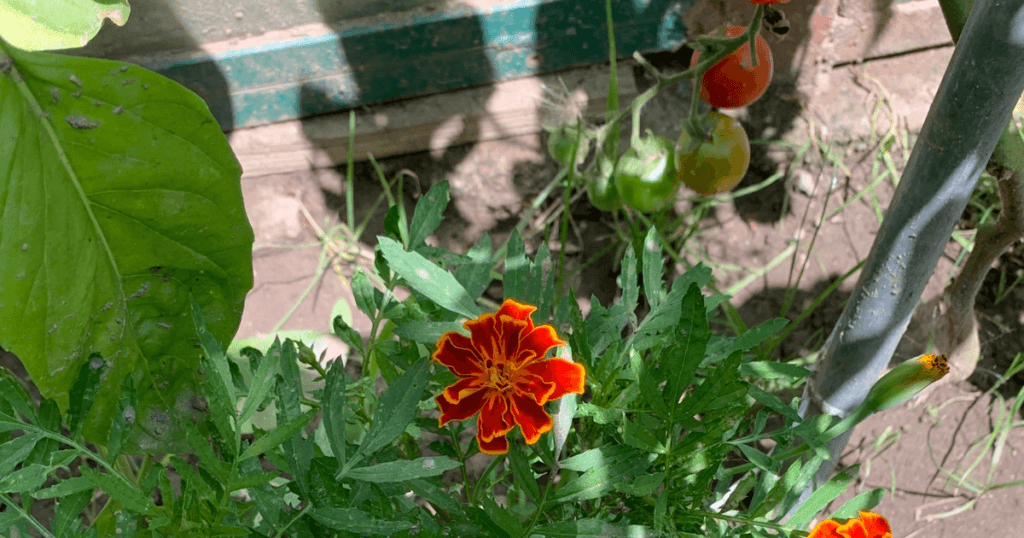
Some companion plants are useful mainly because they fit efficiently into the space. Others help attract pollinators or beneficial insects that naturally patrol garden beds. A few simply help reduce exposed soil around the base of the plants during the early season.
Best Companion Plants for Tomatoes
These are some of the easiest and most reliable tomato companions for most home gardens:
- Basil
- Marigolds
- Sweet alyssum
- Chives
- Onions
- Lettuce
- Parsley
- Cilantro
- Radishes
- Carrots
- Bush beans
- Nasturtiums
- Zinnias
- Cosmos
- Dill
- Borage
Other Companion Plants That Can Work Well
These companions are more situational and usually work best with proper spacing, trimming, or larger garden layouts:
Many of these work best near the edges of beds instead of directly beneath mature tomato plants.
Plants to Avoid Near Tomatoes
Some plants compete too aggressively, crowd airflow, spread heavily, or share similar disease and pest problems with tomatoes.
Use caution with:
- Potatoes
- Fennel
- Corn
- Eggplant
- Brassicas in tight spaces
- Mature dill planted too close
- Mint planted directly in garden beds
Peppers are more situational. They are not automatically bad companions, but they do share similar pests and diseases with tomatoes.
Rule of Thumb
Choose companions that help with pollinators, beneficial insects, spacing efficiency, or light soil coverage without crowding the tomato plant itself.
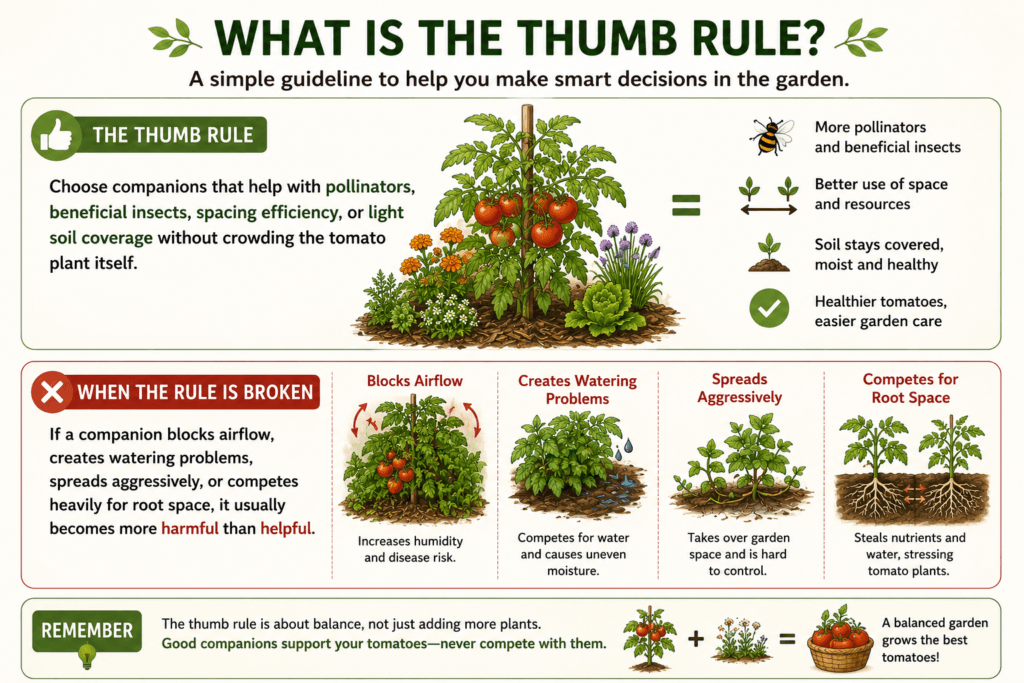
If a companion blocks airflow, creates watering problems, spreads aggressively, or competes heavily for root space, it usually becomes more harmful than helpful.
What to Plant With Tomatoes in a Vegetable Garden
The best plants to grow with tomatoes are usually compact herbs, flowering plants, shallow-rooted vegetables, and early-season greens that support the garden without crowding the tomato plants. Good tomato companions should fit around the layout, not compete with the tomatoes for airflow, sunlight, water, or root space.
- In raised beds, the easiest companions are usually basil, chives, onions, alyssum, marigolds, lettuce, spinach, and radishes planted along bed edges or in open gaps while tomato plants are still young. These plants help use space efficiently without making the center of the bed too crowded once the tomatoes grow larger.
- In containers, companion planting should stay very simple. Basil, chives, small parsley, or low-growing alyssum can work in large tomato pots, but small containers usually perform better with one tomato plant by itself. Tomatoes develop large root systems, and crowded containers dry out quickly during summer heat.
- In row gardens, companion plants often work best along row edges, at row ends, or in nearby sections instead of directly beneath tomato foliage. Flowers such as marigolds, cosmos, zinnias, calendula, and sweet alyssum can support pollinators and beneficial insects, while onions, garlic, basil, and early greens can make good use of open space around young tomato plants.
The main rule is simple: plant companions around tomatoes, not on top of them. If a companion plant blocks airflow, shades the tomato, spreads aggressively, or makes watering harder, it is usually too close or too large for that spot.
What Makes a Good Companion Plant for Tomatoes?
Not every popular companion plant actually works well in real tomato beds. Some combinations sound good on paper but become crowded, difficult to water, or hard to manage once tomato plants reach full size in midsummer.
A good tomato companion should support the growing environment without making maintenance harder. In many gardens, the best companions are simply plants that stay manageable around mature tomato plants instead of competing heavily for space, light, airflow, or moisture.
It Does Not Compete Too Heavily
Tomatoes are heavy feeders with large root systems, especially indeterminate varieties. Large or aggressive neighboring plants can quickly compete for moisture, nutrients, and root space.
This becomes especially noticeable during hot weather. In raised beds and containers, overcrowded roots often lead to faster drying, uneven watering, and stressed tomato growth.
Compact herbs, onions, lettuce, radishes, and shallow-rooted flowers usually coexist more easily than sprawling or fast-growing crops.
It Fits Around Tomato Spacing
Tomatoes need more airflow than many gardeners realize. Once summer humidity rises, dense growth around the base of the plants can increase disease pressure quickly and make pruning, harvesting, and watering harder.
Good companions usually stay:
- Low-growing
- Compact
- Easy to trim
- Positioned along edges or pathways
Plants that become tall, sprawling, or bushy can crowd tomato plants surprisingly fast by midsummer, especially in raised beds.
It Supports Pollinators or Beneficial Insects
Flowering companions can help attract:
- Bees
- Hoverflies
- Lacewings
- Tiny parasitic wasps
- Ladybugs
These insects help support overall garden balance and pollination activity throughout the growing season. Alyssum, cilantro flowers, parsley flowers, borage, cosmos, zinnias, and calendula are especially useful for this.
Even small flower groupings near tomatoes can noticeably increase insect activity during warm weather.
It Helps Reduce Bare Soil
Low-growing companions can help shade exposed soil during early summer, especially in raised beds and containers that dry quickly.
This can slightly reduce:
- Surface evaporation
- Soil crusting
- Weed pressure
Lettuce, spinach, basil, radishes, and alyssum often work well for this purpose early in the season before tomato canopies fully expand.
It Shares Similar Growing Conditions
Tomatoes grow best with companions that prefer:
- Full sun
- Warm temperatures
- Regular watering
- Well-draining soil
Plants with very different moisture, shade, or spacing needs are usually harder to manage together long term. This is one reason why some herbs, sprawling vines, and cool-season vegetables work better near tomato beds than directly inside crowded tomato spacing.
Best Companion Plants for Tomatoes
The best tomato companions are usually practical rather than complicated. Most experienced gardeners settle on a few reliable pairings that fit their climate and garden layout instead of trying to create heavily mixed planting systems.
Basil
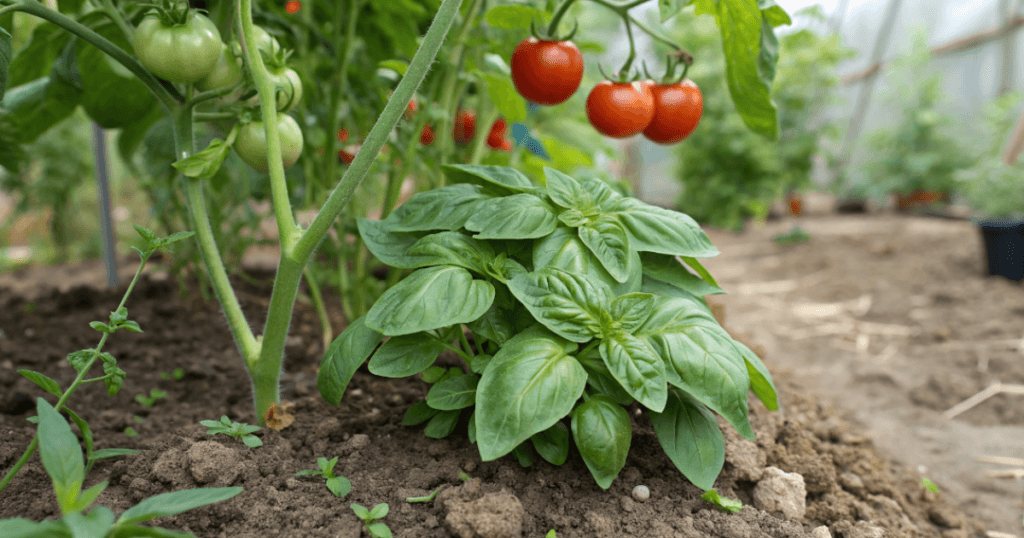
Basil is one of the easiest and most useful tomato companions for containers, raised beds, and smaller gardens.
It stays relatively compact, tolerates similar watering conditions, and is easy to harvest throughout the season. Basil also fits naturally near tomato cages, trellises, or bed edges. Many gardeners also find basil easier to harvest regularly when it grows near tomato pathways or container edges.
Leave a little space between the tomato stem and basil roots instead of planting them directly together. Tomatoes become much larger than many gardeners expect by midsummer.
Oregano and Thyme
Oregano and thyme are compact Mediterranean herbs that can fit well along the edges of tomato beds. Their low growth habit helps preserve airflow better than larger companion plants.
They usually perform best in well-draining soil where soil drains well and watering stays reasonably consistent. In humid climates, leave enough spacing so dense herb growth does not trap moisture near tomato stems.
Rosemary and Sage
Rosemary and sage are usually better treated as nearby herb companions rather than direct tomato bed companions. Both become woody and larger over time, so they fit more naturally along garden borders or separate herb sections instead of crowded tomato spacing.
Oregano can spread outward over time, so occasional trimming may be needed in smaller beds.
They work best in gardens where tomatoes are widely spaced, and airflow remains open through summer.
Best Companion Flowers for Tomatoes
Flowers are some of the most useful tomato companions because they help attract pollinators and beneficial insects while adding diversity around vegetable beds. The best companion flowers for tomatoes stay manageable around mature plants instead of creating dense, overcrowded growth near the base of the tomatoes.
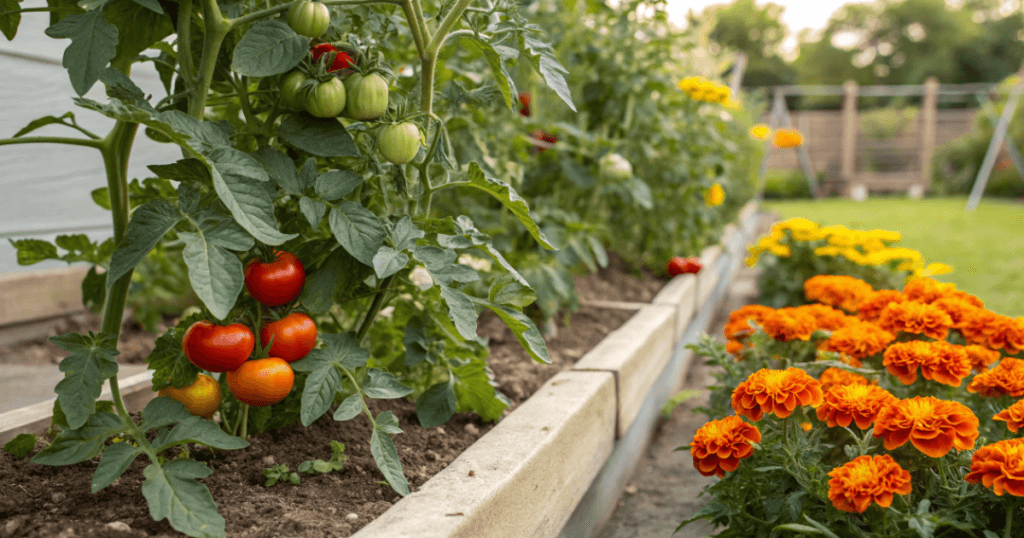
Marigolds, alyssum, zinnias, cosmos, calendula, and nasturtiums are some of the easiest flowers to grow near tomatoes in raised beds, row gardens, and larger containers.
Marigolds, Zinnias, and Cosmos
Marigolds are commonly planted around tomato beds because they add flowers, attract pollinators, and help diversify the planting area.
They work especially well:
- Along borders
- At the bed corners
- Between wider tomato rows
- Near pathways where pollinators can move easily through the garden
Some research suggests basil and marigolds may help reduce thrips pressure in tomatoes, but they should be treated as support plants rather than guaranteed pest control.
Shorter marigold varieties are usually easier to manage than very tall types in smaller beds.
Zinnias and cosmos are also excellent pollinator flowers for tomato gardens. They attract bees and beneficial insects while adding height and seasonal color around vegetable beds.
Because cosmos can become tall later in summer, they are usually best positioned toward the back of beds or near row ends where they will not shade tomatoes.
Zinnias are often easier to manage in smaller gardens because they stay more upright and controlled.
Nasturtiums
Nasturtiums work well near tomato beds when given enough room to spread.
They are often planted:
- Near pathways
- At bed edges
- In nearby containers
They can sprawl surprisingly far during warm weather, especially in fertile soil. In smaller raised beds, occasional trimming may help prevent them from overtaking nearby plants. Keeping them slightly separated from tomato stems helps preserve airflow.
Sweet Alyssum
Sweet alyssum is one of the most practical flowers for tomato beds because it stays low while producing many small blooms that attract beneficial insects.
It works best:
- Along raised bed edges
- Near pathways
- In gaps between larger plants
Avoid letting it form a thick mat directly beneath tomato stems, especially in humid climates where airflow matters more.
Parsley, Cilantro, and Dill
Parsley and cilantro become especially useful once they flower.
Their flowers attract many small beneficial insects that frequently patrol vegetable gardens during summer.
These herbs usually work better:
- Near the outside edges of beds
- Between pathways
- In nearby herb sections
Large tomato plants can shade them heavily once the canopy fills out in midsummer.
Young dill can also help attract beneficial insects early in the season. However, mature dill becomes taller and more competitive, which is why many gardeners keep it slightly farther from mature tomato plants later in summer.
Onions, Garlic, and Chives
Compact alliums fit naturally into tomato layouts because they occupy relatively little space.
Chives are especially easy in raised beds and containers. Onions and garlic work well along borders or row edges where they do not interfere with tomato roots.
Virginia Cooperative Extension and other extension resources commonly list onion-family plants as good tomato companions because of their compact growth habits and compatible spacing.
Chives are often the easiest option for smaller raised beds because they stay compact through the season.
Lettuce and Spinach
Lettuce and spinach work best as early-season companions.
They can make excellent use of open space while tomato plants are still small in spring and early summer. Once temperatures rise and tomatoes fill out, the greens are usually harvested before heavy shading becomes a problem. In warmer climates, they often finish naturally before tomatoes reach peak summer growth anyway.
This approach works especially well in raised beds where space efficiency matters.
Celery
Celery can grow near tomatoes when spacing stays open and moisture remains consistent, though the pairing usually works better in larger beds than tight raised bed layouts.
In smaller raised beds, celery and tomatoes together can become crowded by midsummer because both appreciate regular watering and fertile soil.
Radish
Radishes work well as fast early-season companions while tomato plants are still small. They mature quickly, make use of open soil space, and are usually harvested before tomatoes fully expand. Many gardeners succession sow radishes early, then clear the space once tomato growth accelerates.
They are especially useful in raised beds where gardeners want to avoid leaving bare soil early in the season. Keep radishes lightly spaced instead of densely sowing them directly around tomato stems.
Carrots
Carrots can work well with tomatoes when the soil stays loose and uncrowded.
Avoid sowing carrots too densely around tomato root zones. Heavy tomato roots and frequent watering can sometimes lead to uneven carrot growth in compacted soil.
In deeper raised beds with loose soil, the pairing usually works more smoothly.
Beets can work similarly when spacing is respected, and soil stays loose enough for root development. They usually perform better in deeper raised beds than in compacted in-ground soil.
Avoid overcrowding beets around mature tomato root zones, especially once summer watering increases.
Bush Beans
Bush beans can grow near tomatoes if spacing is managed carefully.
They generally work better:
- Beside tomato rows
- In neighboring sections
- In alternating bed zones
Directly crowding them beneath mature tomatoes often becomes too dense later in the season. Bush types are usually easier to manage near tomatoes than pole beans in smaller gardens.
Cucumbers
Cucumbers can grow near tomatoes if vertical support and spacing are carefully managed. Without trellising, both crops can quickly overcrowd smaller gardens and reduce airflow.
In raised beds, cucumbers usually work better on separate trellises instead of directly sharing the same support system as tomatoes so both crops still receive airflow and harvesting access.
This pairing usually works best in larger gardens rather than crowded raised beds.
Squash
Squash can grow near tomatoes in larger gardens, but sprawling vines often compete for space and reduce airflow around tomato plants. This becomes more noticeable later in summer once squash leaves fully expand.
Many gardeners keep squash in neighboring beds or separate rows rather than directly mixing it into tomato spacing.
Mint
Mint can work near tomatoes, but it is usually safest in separate containers because of how aggressively it spreads. Once established in garden beds, mint can be difficult to remove completely.
Many gardeners place pots of mint near tomato beds instead of planting it directly in the soil.
Container-grown mint can still attract pollinators and beneficial insects nearby without competing heavily with tomato roots.
Asparagus
Asparagus and tomatoes are often mentioned together in traditional companion planting layouts because they occupy different growing periods and root zones. This pairing works best in larger gardens where asparagus beds are permanent and tomatoes can be rotated nearby seasonally.
In small raised beds, the combination is usually less practical because asparagus needs long-term dedicated space.
Borage and Calendula
Borage and calendula are useful for biodiversity, pollinator support, and overall garden biodiversity
Borage can become fairly large, so placement matters. Calendula stays more manageable in smaller gardens.
Both are usually best positioned where they can attract insects without restricting airflow around tomato foliage.
Plants You Should Avoid Growing Near Tomatoes
Not every vegetable belongs beside tomatoes, especially once plants reach full size in midsummer. Some pairings create unnecessary competition, crowd airflow, or increase shared pest and disease pressure over time.
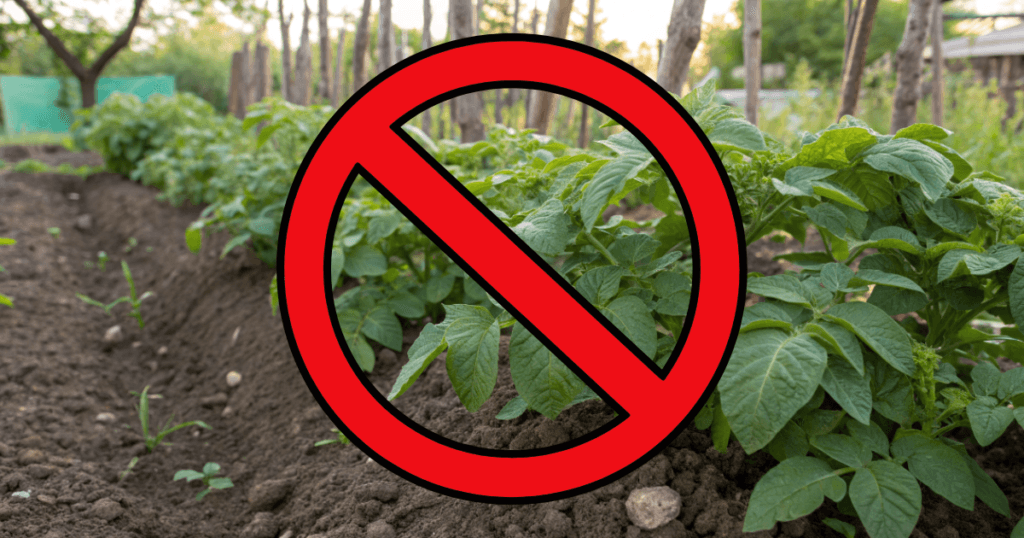
In many home gardens, spacing problems become more noticeable than compatibility problems. Plants that seem manageable in spring can quickly overcrowd tomato beds once summer growth accelerates.
Potatoes
Potatoes and tomatoes share many of the same disease risks because they belong to the same plant family.
Blight problems can spread more easily when they are grown close together, especially during humid weather. Many gardeners prefer keeping potatoes in a completely separate section of the garden.
Fennel
Fennel is widely considered a poor companion for most vegetables.
It tends to interfere with nearby plant growth and usually performs best in its own dedicated area rather than mixed vegetable beds.
Corn
Corn competes heavily for:
- Sunlight
- Nutrients
- Root space
Tall corn rows can also trap humidity and reduce airflow around tomatoes. This combination often becomes crowded quickly by midsummer, especially in smaller gardens.
Both crops are also heavy feeders, which can make watering and fertilizing more difficult in shared growing space.
Brassicas
Cabbage, broccoli, cauliflower, kale, and Brussels sprouts can compete heavily with tomatoes in tight spaces.
They are usually easier to manage in separate cool-season beds instead of crowded summer tomato beds. In smaller raised beds, the combination often becomes difficult to space and maintain once both crops mature.
Dill Near Mature Tomato Plants
Young dill can attract beneficial insects and often works well temporarily near tomatoes.
Mature dill is different. Once it grows tall and dense, it can begin competing with nearby tomatoes for light and airflow, especially in raised beds or narrow rows.
Mint in Garden Beds
Mint can spread aggressively through underground runners and quickly take over nearby planting space.
Many gardeners grow mint near tomatoes successfully, but it is usually safer in separate containers rather than directly inside vegetable beds. Once established, mint can be difficult to remove completely.
Can Peppers and Tomatoes Grow Together?
Peppers and tomatoes can grow together when they have generous spacing, strong airflow, and enough room for their roots to develop. They both like warm weather, full sun, regular watering, and fertile soil, so they are not automatically bad companions.
The main concern is that peppers and tomatoes share many of the same pests and diseases. In crowded beds or humid climates, this can increase disease pressure and make problems spread faster between plants.
This pairing works best when tomatoes and peppers are spaced well apart, monitored regularly, and not packed tightly into small raised beds or containers.
Can Eggplants Grow Near Tomatoes?
Eggplants can grow near tomatoes in larger gardens, but they are better treated as conditional companions rather than automatic tomato companions. Like peppers, eggplants need warmth, sun, fertile soil, and consistent moisture.
The issue is that eggplants and tomatoes also share similar pest and disease problems. In small raised beds, they can become crowded once both plants mature, especially if tomato foliage starts shading nearby eggplants.
This pairing works best when plants are spaced generously, airflow stays open through summer, and gardeners stay consistent with pruning, watering, and disease monitoring.
Does Companion Planting Increase Tomato Yield?
Companion planting can improve the growing environment around tomatoes, but it is not usually the main factor behind large harvests.
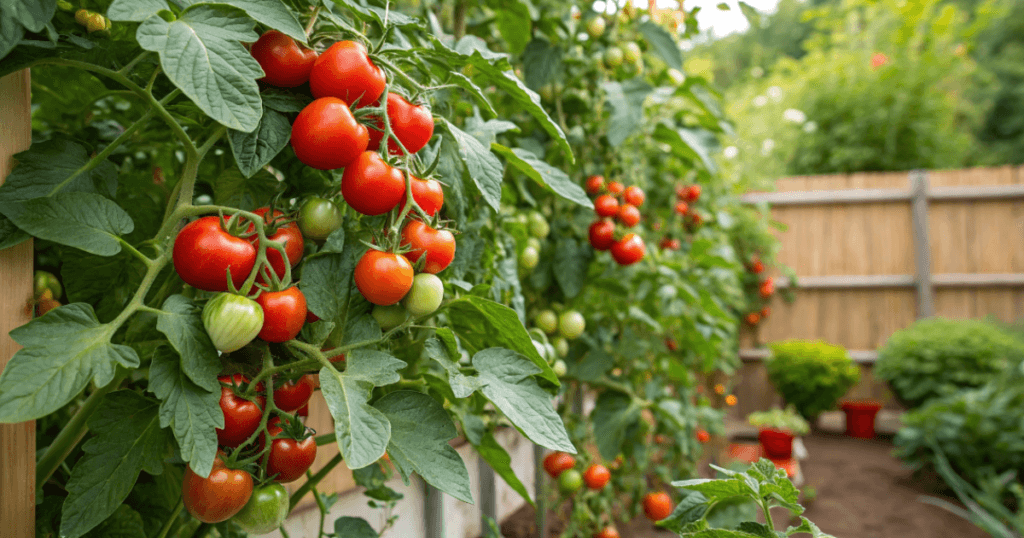
Strong yields still depend mostly on sunlight, watering consistency, soil quality, support systems, and proper spacing. A well-spaced tomato plant in healthy soil will usually outperform an overcrowded companion planting setup every time.
What It Can Improve
Companion planting may help support:
- Pollinator activity
- Beneficial insect presence
- Space efficiency
- Soil coverage
- General garden biodiversity
These small improvements can indirectly support healthier tomato growth over time, especially in diverse garden beds where flowers and herbs attract regular insect activity throughout the season.
What It Cannot Fix
Companion plants cannot compensate for:
- Poor watering habits
- Weak soil
- Too little sun
- Overcrowding
- Weak support systems
A stressed tomato plant surrounded by flowers will still struggle. In many gardens, spacing and watering consistency affect tomato performance far more than companion combinations themselves.
Most Tomato Companion Planting Problems Come From Overcrowding
Many companion planting layouts look spacious in spring but become surprisingly crowded once midsummer growth begins. Tomatoes expand quickly during warm weather, especially in raised beds with fertile soil and regular watering.
As plants enlarge, airflow often becomes the main issue. Dense foliage slows leaf drying after rain, increases humidity around the base of the plants, and makes pruning, harvesting, and watering harder. In containers and smaller raised beds, overcrowded roots can also cause soil to dry out much faster during heat waves.
In many home gardens, spacing problems create more tomato stress than poor companion choices themselves.
Practical Takeaway
Companion planting works best as a support strategy rather than the primary reason tomatoes succeed.
Simple layouts with good spacing usually outperform crowded “companion-packed” beds. The best companion planting setups typically feel open, manageable, and easy to maintain throughout summer instead of being densely packed from edge to edge.
Tomato Companion Planting in Raised Beds
Raised beds make companion planting easier because spacing is more controlled and soil conditions are often better. At the same time, limited space means overcrowding happens faster if too many companions are added.
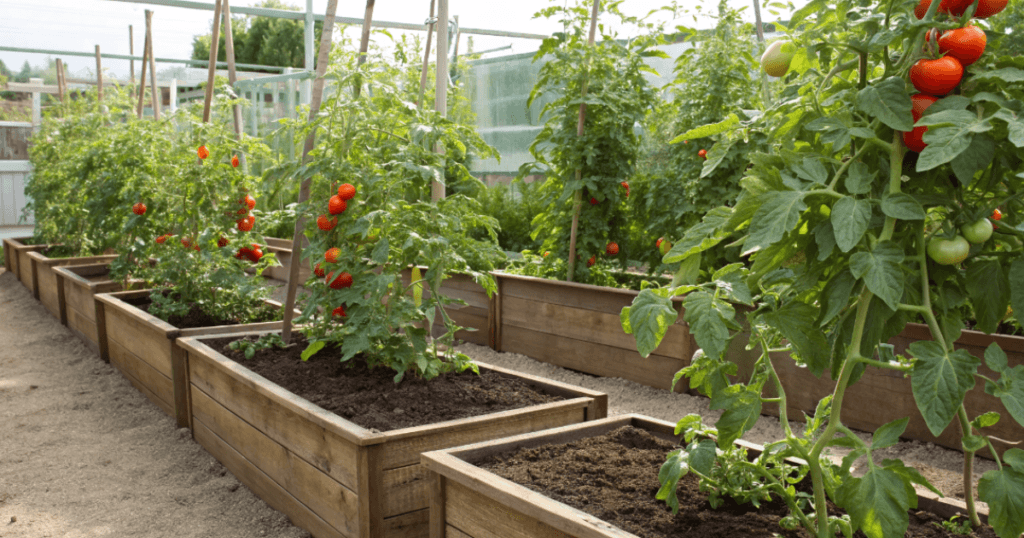
Tomatoes usually become much larger than they appear early in the season. A bed that looks sparse in May can feel crowded by July, especially once lower leaves, support systems, and companion plants all begin filling the same space.
Start With Tomato Placement First
Always position the tomatoes before adding companions.
Focus first on:
- Mature plant width
- Trellis or cage placement
- Airflow
- Walking access
Once tomatoes are positioned correctly, companion plants can fill remaining edges and gaps more naturally.
Use the Edges of the Bed
The edges are usually the best place for companion plants.
Good edge companions include:
- Basil
- Alyssum
- Marigolds
- Onions
- Chives
- Lettuce
This keeps the tomato root zone more open while still supporting pollinators, beneficial insects, and light soil coverage around the bed.
Use Early Crops Before Tomatoes Fill Out
Lettuce, spinach, radishes, and small herbs often perform well early in the season before tomato canopies expand.
Many gardeners harvest these crops before summer heat and tomato shading increase. This approach helps use spring growing space efficiently without overcrowding mature tomato plants later.
Avoid Overcrowding the Root Zone
Raised beds are highly productive, but root competition builds quickly in limited soil volumes.
If watering suddenly becomes difficult or plants dry unevenly during heat waves, overcrowded roots are often part of the problem. This is especially common in smaller raised beds where tomatoes, flowers, herbs, and companion vegetables all mature at the same time.
Companion Planting Tomatoes in Containers
Container companion planting works best in larger pots. Small containers dry quickly and leave very little room for multiple mature root systems, especially once summer heat arrives.
In many cases, one healthy tomato plant alone will outperform an overcrowded mixed container. Containers that look balanced in spring can become crowded surprisingly fast once tomatoes begin active summer growth.
Use Large Containers Only
For companion planting, use containers at least:
- 10-15 gallons for most tomatoes
- Larger for indeterminate varieties
Small containers usually perform better with a single tomato plant only. Large tomato varieties can fill an entire container by midsummer, including both the root zone and upper foliage.
Best Container Companions
The easiest container companions include:
- Basil
- Chives
- Small parsley
- Low-growing alyssum
These plants stay manageable without overwhelming the container. Compact companions also make watering, pruning, and harvesting easier throughout the season.
When Separate Pots Are Better
Separate pots are often the smarter choice:
- For indeterminate tomatoes
- In very hot climates
- When containers dry quickly
- When tomatoes already fill most of the pot
During midsummer heat, crowded containers can become difficult to water consistently. In smaller pots, aggressive companions may also compete for nutrients faster than expected.
Simple Tomato Companion Planting Layouts
Simple layouts usually perform better than heavily mixed plantings. The easiest systems prioritize airflow, harvesting access, and maintenance first, then add companion plants around the edges.
Beginner Raised Bed Layout
A simple beginner setup might include:
- Tomatoes spaced through the center
- Basil and chives along edges
- Alyssum or marigolds at corners
- Early lettuce between young plants
This stays manageable as tomatoes mature and still leaves enough room for airflow and harvesting access later in summer.
In-Ground Row Layout
For row gardens:
- Tomatoes stay in the main row
- Onions or basil run along borders
- Flowers are grouped near row ends
- Bush beans grow in neighboring rows
This layout keeps airflow more open while making watering and harvesting easier.
Container Layout
A practical container layout often includes:
- One tomato plant
- One basil plant
- Optional chives near the edge
Anything larger usually becomes crowded later. In hot weather, simpler containers are also easier to water evenly.
Small-Space Layout
Small gardens benefit most from compact companions:
- Basil
- Chives
- Alyssum
- Lettuce early in the season
Avoid sprawling or oversized companions in tight spaces. In smaller beds and balcony containers, simple combinations usually stay healthier and easier to manage long term.
Common Tomato Companion Planting Mistakes
Many companion planting problems come from overcrowding rather than bad plant choices.
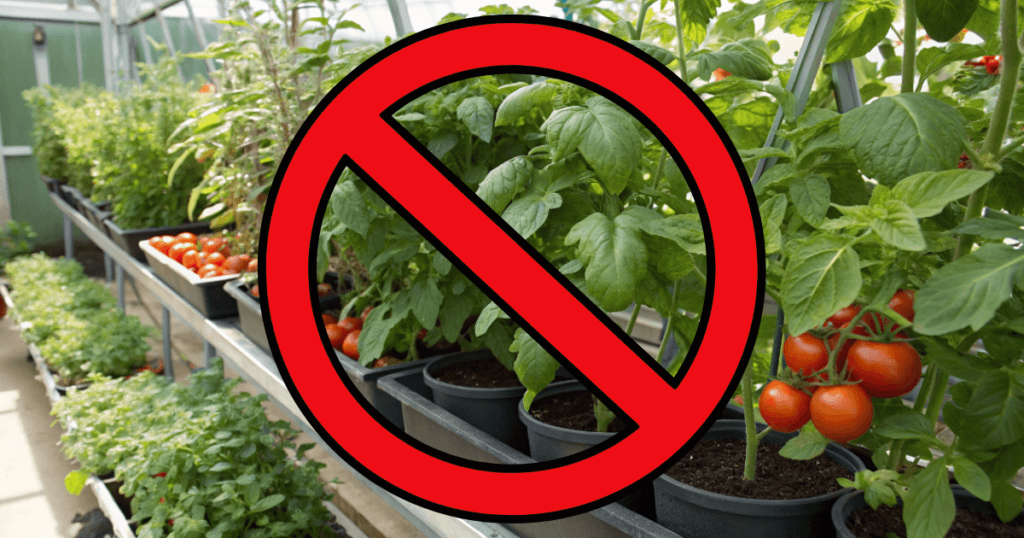
A layout that looks balanced in spring can become surprisingly dense by midsummer once tomato foliage, support systems, flowers, and companion plants all begin filling the same space.
Planting Too Close to the Tomato Stem
Crowding the base of the plant reduces airflow and makes watering, pruning, and harvesting more difficult later in the season.
Keep companions slightly outside the immediate stem area instead of packing plants tightly around the base.
Adding Too Many Companions
Trying to grow too many species together usually creates maintenance problems later.
Simple pairings are easier to manage, easier to water consistently, and often healthier overall than heavily packed companion layouts.
Ignoring Mature Plant Size
Small seedlings become large summer plants surprisingly quickly.
This is especially common with:
- Nasturtiums
- Dill
- Borage
- Large marigolds
- Squash
- Cucumbers
Beds that feel open in early spring can become crowded by midsummer if companion plants spread faster than expected.
Mixing Plants With Different Water Needs
Some herbs prefer drier soil while tomatoes need more consistent moisture.
Grouping plants with similar watering needs simplifies care and helps prevent both overwatering and drought stress in shared beds or containers.
Expecting Companion Plants to Fix Poor Care
Companion planting cannot compensate for:
- Poor spacing
- Weak soil
- Irregular watering
- Lack of support
- Too little sunlight
Healthy tomato care still matters most. Companion plants work best when the tomatoes themselves already have strong growing conditions.
Signs a Companion Plant Is Hurting Your Tomatoes
Sometimes companion plants simply outgrow the available space. In many gardens, the first signs of trouble appear gradually once summer heat and rapid growth begin at the same time.
The earlier you notice crowding problems, the easier they are to correct before tomato growth slows down significantly.
Tomato Growth Slows Down
If tomatoes suddenly stall despite warm weather and regular watering, heavy root competition may be part of the issue.
This often becomes more noticeable in raised beds and containers where root space is limited.
Airflow Becomes Dense Around the Base
Dense lower growth traps humidity and slows leaf drying after watering or rain.
This becomes especially noticeable during humid summer weather or after periods of heavy rainfall.
Watering Becomes Difficult
Overcrowded beds can become frustrating to water evenly.
You may notice:
- Dry pockets
- Constant wilting
- Uneven moisture
- Faster drying during heat waves
In containers and smaller raised beds, dense root systems can also make soil dry out much faster than expected.
Companion Plant Starts Shading the Tomato
Tall or sprawling companions can eventually block light from lower tomato growth.
Trim or remove companion plants before crowding becomes severe, especially once tomatoes begin flowering and setting fruit heavily.
Best Tomato Companion Plants by Goal
Different companion plants solve different problems. Matching the plant to the purpose usually works better than trying to grow every popular companion in the same space.
Best for Beginners
Reliable beginner choices include:
- Basil
- Marigolds
- Chives
These stay manageable, fit most layouts easily, and typically do not create significant spacing issues.
Best for Pollinators and Beneficial Insects
Strong options include:
- Alyssum
- Cilantro flowers
- Parsley flowers
- Marigolds
- Calendula
- Borage
- Zinnias
These plants help attract regular insect activity without requiring complicated layouts.
Best for Small Spaces
Compact choices work best:
- Basil
- Chives
- Early lettuce
- Alyssum
Low-growing companions are usually easier to maintain in tight raised beds and balcony containers.
Best for Raised Beds
Raised beds often benefit from:
- Basil
- Alyssum
- Onions
- Lettuce
- Marigolds
These companions make efficient use of edge space without crowding tomato roots too aggressively.
Best for Containers
Container-friendly companions include:
- Basil
- Chives
- Small parsley
- Alyssum in large pots
Compact companions are usually easier to water and maintain consistently in containers throughout the summer.
Quick Tomato Companion Planting Chart
Sometimes a quick reference is easier than sorting through full garden layouts during planting season. Use this chart as a practical guide, but adjust it for spacing, airflow, and container size as needed.
Good Companions
- Basil – compact herb, easy pairing
- Marigolds – border flower, pest support
- Alyssum – beneficial insects
- Nasturtiums – useful near edges with room to spread
- Onions/garlic/chives – compact border plants
- Lettuce/spinach – early-season space use
- Radishes – fast early-season crop
- Carrots – efficient use of loose soil
- Bush beans – nearby planting with spacing
- Parsley/cilantro – beneficial when allowed to flower
- Young dill attracts beneficial insects
- Borage/calendula – pollinator support
- Oregano/thyme – compact herb borders
Use With Caution
- Mint – best in containers; spreads aggressively in beds
- Rosemary/sage – better nearby than inside crowded tomato beds
- Beets – workable in loose soil with spacing
- Celery – needs consistent moisture and room
- Cucumbers – workable with trellising and airflow
- Squash – better nearby than crowded into tomato beds
- Peppers/eggplants – manageable but shared pest and disease pressure
- Mature dill can become tall and competitive
- Brassicas in tight spaces – competition and crowding
Avoid Near Tomatoes
- Potatoes → shared disease risk
- Fennel → poor companion for most vegetables
- Corn → competition, shade, and airflow issues
Conclusion
Tomato companion planting works best when it stays practical and balanced. The goal is not to crowd as many plants together as possible, but to create a healthier growing environment that supports airflow, pollinators, beneficial insects, and efficient use of space.
For most home gardens, simple combinations usually work best. Basil, marigolds, alyssum, chives, lettuce, onions, and a few carefully placed flowers or herbs are often easier to manage than heavily mixed companion beds. Good spacing, strong sunlight, healthy soil, and consistent watering will always matter more than complicated planting combinations.
The most successful tomato companion planting setups usually feel open, manageable, and easy to maintain throughout summer. If companion plants begin crowding the root zone, blocking airflow, or making watering difficult, thinning or repositioning them early is often the best solution.
Start simple, observe how your garden behaves through the season, and adjust your layout over time. In most cases, a few well-chosen companions placed thoughtfully around healthy tomato plants will outperform overcrowded planting schemes every time.

Leave a Reply