
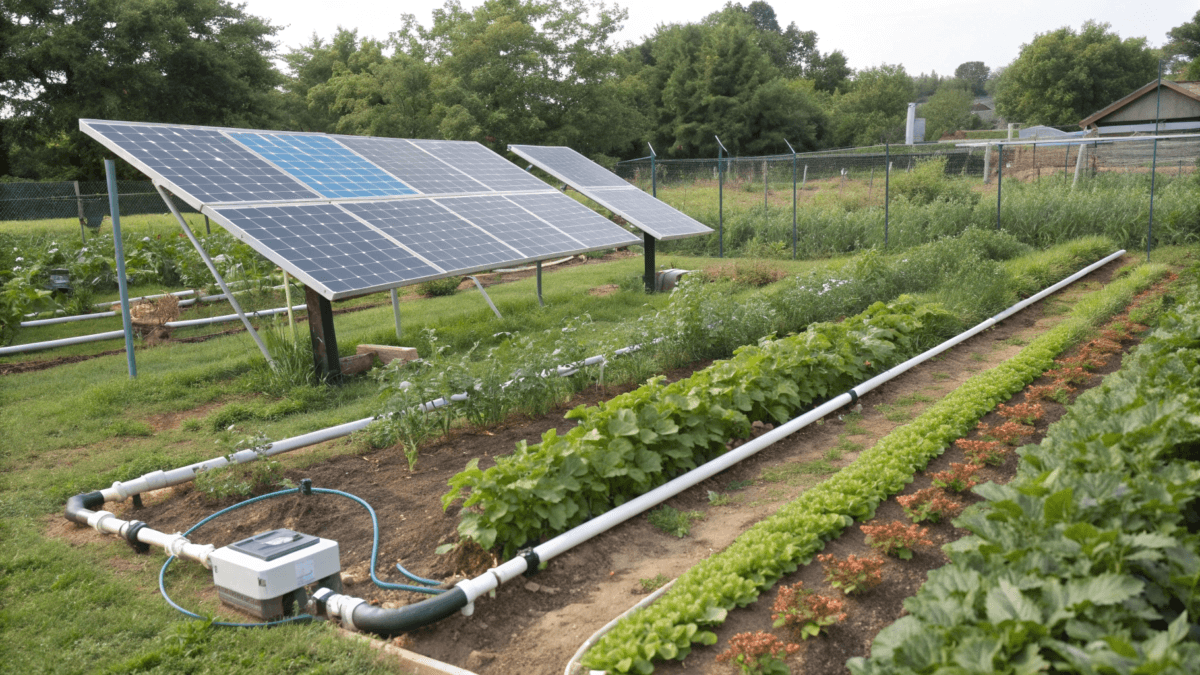
Watering is one of the most common weak points in vegetable gardening. It’s not usually about forgetting, but it’s about inconsistency. A few hot days without water can cause lettuce to bolt, spinach to turn bitter, and tomatoes to drop blossoms. Overwatering can be just as damaging.
Solar drip irrigation systems are designed to solve that problem by delivering slow, steady water directly to the root zone using sunlight for power. No tap connection. No extension cords. No daily watering routine.
But not all solar irrigation kits are built equally, and not all are designed for real outdoor vegetable gardens.
In this review, we’ll look closely at the most relevant systems from your list and break down:
- How each system works
- What it includes
- Who it’s best for
- Where it falls short
- Which one offers the best value for vegetable gardeners
Quick Answer: Which Solar Drip Irrigation System Is Best?
- Best Overall for Vegetable Gardens: RAINPOINT Programmable Solar Automatic Drip Irrigation System
- Best for Larger Layouts: RAINPOINT Automatic Watering Dripline Irrigation System
Now let’s look at them properly.
RAINPOINT Programmable Solar Automatic Drip Irrigation System
If you’re growing vegetables in containers, raised beds, or grow bags, this is the most practical option from your list.

Unlike spike-style watering kits, this system uses a proper drip tubing layout with a main line and branch lines. That matters in vegetable gardens because crops have deeper root systems and higher water demand than decorative plants.
Why It’s Suitable for Vegetables
Vegetables require:
- Consistent soil moisture
- Even water distribution
- Adjustable watering duration
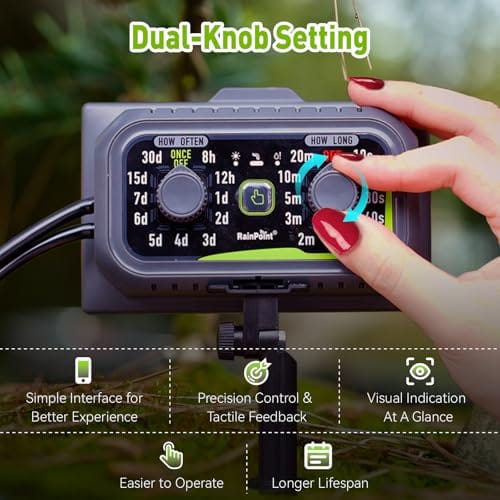
This RAINPOINT system offers programmable watering cycles, which is important when you’re growing mixed crops like lettuce, peppers, and tomatoes together.
The distribution design (main + branch tubing system) helps maintain more stable water pressure across multiple emitters. That reduces the common problem of the first plants getting soaked while the last ones stay dry.
Key Features for Vegetable Use
- Solar-powered with a rechargeable battery
- Programmable watering intervals
- Designed for 10 plants (expandable beyond that)
- Filter included to reduce clogging
- Low water auto shutoff protection
- Suitable for buckets or water tanks
Ideal For
- 10-20 vegetable plants
- Raised beds
- Grow bags
- Patio vegetable setups
- Mixed crop layouts
Where It Performs Best
This system performs especially well when:
- The solar panel gets full sun exposure
- Tubing runs are kept clean and organized
- The water reservoir is at least 15-20 gallons
For most vegetable gardeners looking for solar automation, this is the strongest overall choice.
RAINPOINT Automatic Watering Dripline Irrigation System
If your vegetable garden includes multiple rows, larger grow bag setups, or extended container lines, this dripline-focused system is better suited than compact kits.
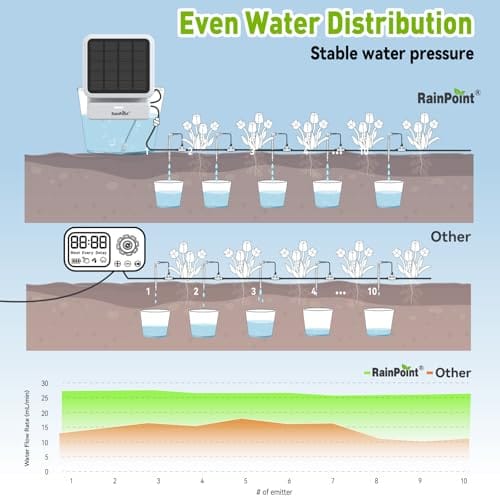
It is built to support longer tubing runs and more emitters while maintaining a more balanced distribution.
Vegetables are heavier water users than flowers. A dripline configuration handles that demand better than spike-based watering systems.
Why It’s Suitable for Vegetables
Vegetable gardens often expand over time. This system is more adaptable for:
- 20+ plant setups
- Multi-bed layouts
- Semi-permanent container arrangements
It’s designed for structured layouts rather than single-pot watering.
Key Features for Vegetable Use
- Solar-powered pump
- Dripline-focused layout
- Expandable tubing design
- Better suited for longer distribution runs
- Designed for outdoor durability
Ideal For
- Larger vegetable gardens
- 20+ plants
- Multi-row grow bag systems
- Semi-permanent raised bed irrigation
Where It Performs Best
This system performs best when:
- Tubing layout is planned in advance
- A larger water reservoir (20+ gallons) is used
- The solar panel receives strong direct sunlight
If you’re scaling beyond a small patio setup, this is the better vegetable-focused option.
Comparison Table
| Feature | RAINPOINT Programmable | RAINPOINT Dripline |
|---|---|---|
| Power Source | Solar + rechargeable battery | Solar + rechargeable battery |
| Programmable Control | Yes – adjustable watering cycles | Preset watering cycles |
| Plant Capacity | 10-20 plants (expandable) | 20+ plants (layout dependent) |
| Best For | Mixed vegetable crops | Larger vegetable layouts |
| Setup Difficulty | Moderate | Moderate |
| Expandability | Yes | Yes |
What Most People Get Wrong
- Using too small a water reservoir
- Placing a solar panel in partial shade
- Running tubing in long, tangled layouts
- Expecting sprinkler-style water output
Solar drip irrigation is about slow root saturation, not surface soaking.
Is Solar Drip Irrigation Worth It?
For container and small vegetable gardens, yes, especially if consistency is your challenge.
It reduces:
- Moisture swings
- Daily maintenance
- Plant stress
It improves:
- Root development
- Water efficiency
- Yield consistency
For large in-ground gardens, traditional tap-connected systems may be better.
Conclusion
For most vegetable gardeners, the RAINPOINT Programmable Solar System offers the best overall balance of control, expandability, and safety features.
For larger layouts, choose the RAINPOINT Dripline System.
Choose based on garden size, sunlight exposure, and how much control you want, not on the longest feature list.

Leave a Reply