
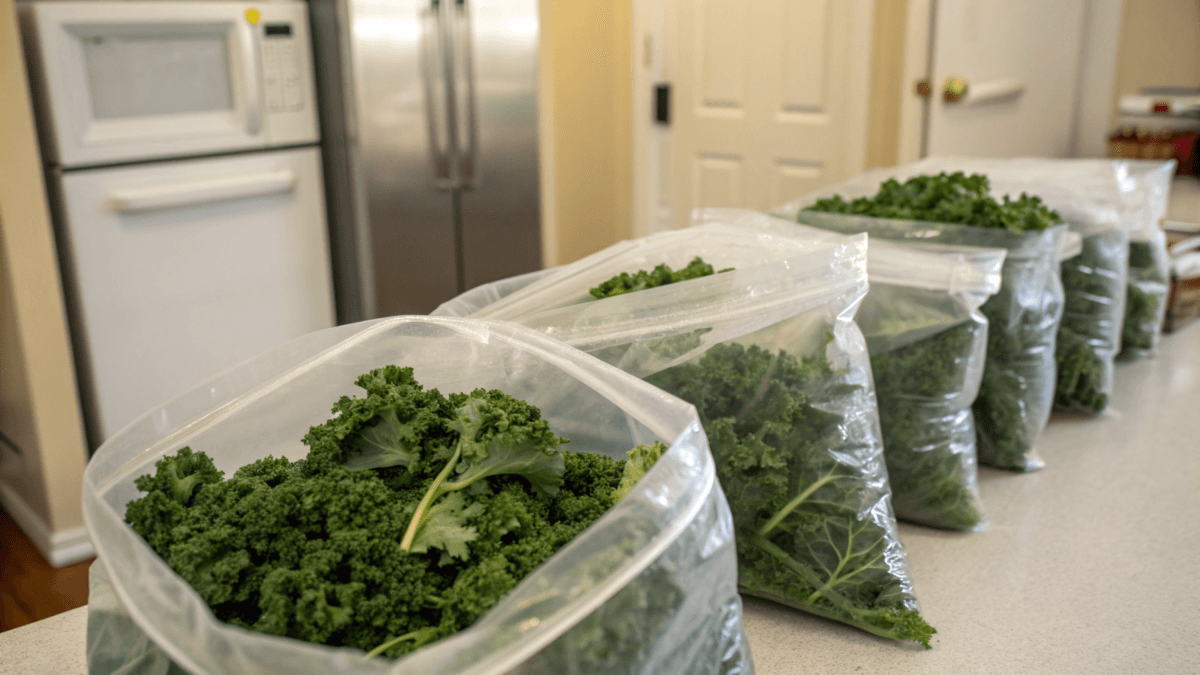
How to store fresh kale properly comes down to managing moisture and airflow so the leaves stay crisp, mild, and usable instead of wilting or turning slimy.
Fresh kale stores well compared to a lot of greens, but only if you manage moisture and airflow. In practice, that means keeping leaves dry on the surface, lightly protected from drying fridge air, and not packed so tightly that they sweat.
This guide covers short-term refrigerator storage, how long kale lasts, how to prep it so it holds up, and the freezing method that actually works (without ending up with bitter, limp greens).
Quick answer (best method):
Store kale unwashed, loosely wrapped in a dry paper towel, inside a partially closed bag or vented container, in the crisper drawer. For longer storage, blanch and freeze in portioned bags.
If you’re growing your own, this storage guide pairs well with how to grow kale, from planting to harvesting.
Why Proper Storage Matters for Kale
Kale is tougher than spinach, but it’s still a leaf. Once it’s cut from the plant, it slowly loses water and uses up sugars.
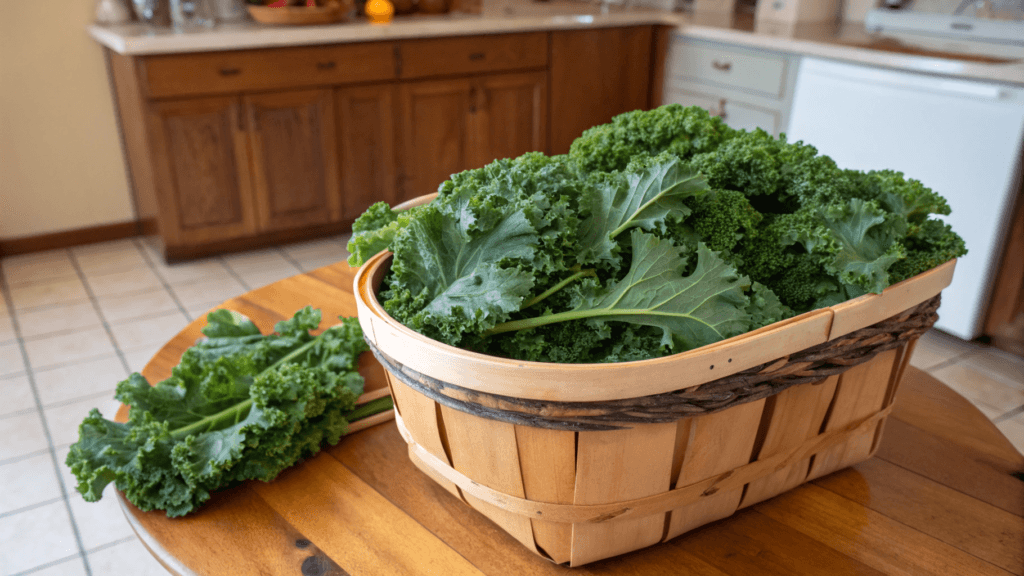
How Storage Affects Freshness, Texture, and Flavor
When kale is stored well, it stays:
- Crisp (leaves hold their shape and bite)
- Mild and sweet (less sharp bitterness)
- Clean-tasting (no fridge odor, no sour notes)
When storage is off, kale tends to go one of two ways:
- Wilting and drying from exposure to cold, dry fridge air
- Slimy and smelly from being too wet or sealed too tightly
Why Kale Wilts or Spoils Faster When Stored Incorrectly
Most kale problems in the fridge come from these conditions:
- Dry air and time pull moisture out of the leaves, especially cut edges.
- Water on the leaves (from washing or condensation) invites bacteria and speeds rot.
- No airflow (tight bags, packed containers) makes kale “sweat,” leading to slimy patches.
- Ethylene gas from certain fruits can age kale faster (more on that later).
How to Store Fresh Kale Short-Term (Refrigerator Storage)
If you’re going to use kale within the next few days, up to a week, refrigerator storage is the move. The trick is setting it up so the leaves don’t dry out and don’t stay wet.
Best Place in the Fridge
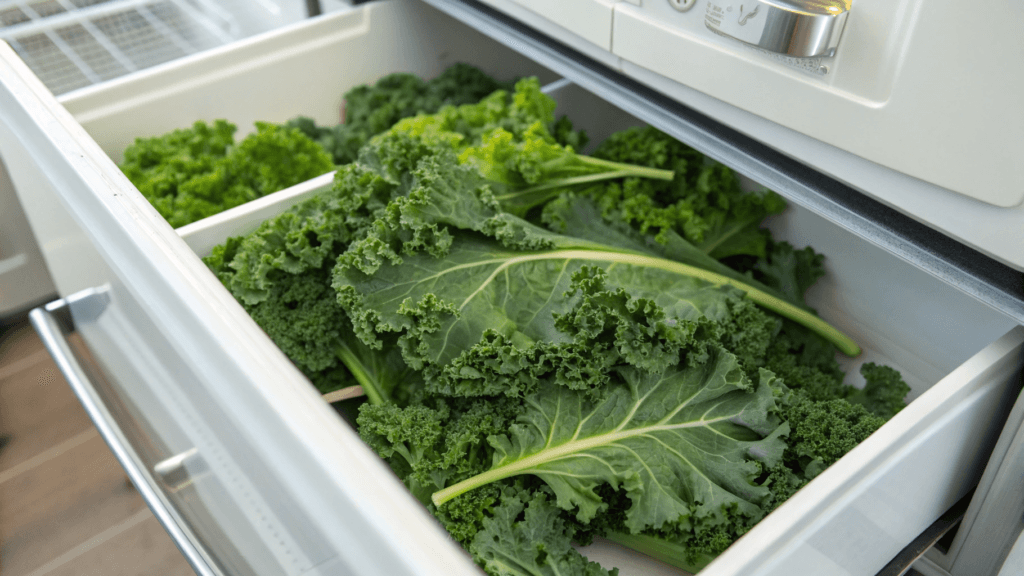
The best place for kale is the crisper drawer, ideally the one you can set to higher humidity.
Why it helps: Crispers reduce airflow and hold humidity better, so leaves lose water more slowly. Kale stored on an open shelf dries out faster, especially near the back where the fridge blasts cold air.
If your fridge runs cold, avoid pushing kale against the back wall. That’s where it can partially freeze, then thaw into limp, water-soaked leaves.
Whether to Wash Kale Before Storing
Don’t wash kale before storing unless you have to. Unwashed kale keeps longer. If you harvested it yourself and it’s clean, store it dry and wash it right before cooking.
If you bought muddy kale or you know you won’t have time later, you can wash it first, but only if you dry it extremely well. A few damp spots left in the folds are enough to start slimy decay.
But if you choose to wash first:
- Rinse in cool water, swish well.
- Spin in a salad spinner.
- Lay leaves on a towel for 10-20 minutes until they feel dry to the touch.
- Then store with a fresh dry paper towel.
How to Keep Leaves From Wilting
You’re aiming for a “gentle humid bubble,” not a sealed sauna.
A reliable home method:
- Keep kale unwashed and dry.
- Wrap the bunch loosely in a dry paper towel (or place a towel in the container).
- Put it into a partially closed bag or a produce bag you twist loosely.
- Store in the crisper.
If you prefer containers, use one that isn’t airtight, or crack the lid slightly. Airtight containers tend to trap moisture and encourage slime unless the kale is bone-dry.
If you’re storing chopped kale, it’s more delicate because the cut edges lose moisture faster. Chopped kale does best:
- Very dry
- Packed loosely
- With a paper towel
- Used within a few days
How Long Does Kale Last in the Refrigerator?
Kale can last longer than most greens, but there’s a practical “best quality” window. After that, it may still be safe, just less enjoyable.
| Storage Method | Prep Needed | Best Quality Window | Best Use |
|---|---|---|---|
| Unwashed whole leaves | No prep (store dry) | 5-7 days (up to 10 if very fresh) | Salads or cooking |
| Washed & fully dried leaves | Thorough drying + paper towel | 3-5 days | Quick meals |
| Chopped kale | Very dry + paper towel | Up to 3 days | Cooking only |
| Blanched & frozen kale | Blanch, cool, dry | 8-12 months | Soups, stews, sautés |
Typical Shelf Life of Fresh Kale
These are realistic ranges in a home fridge:
- Whole, unwashed kale (best storage): 5-7 days, sometimes up to 10 if very fresh
- Washed kale: 3-5 days
- Chopped kale: 3-5 days (closer to 3 if it’s very thinly sliced)
- Bagged “ready to eat” kale: Often 3-5 days after opening (sometimes less)
Garden-harvested kale stored quickly and dry usually lasts longer than store-bought kale, which is often already a few days old.
Factors That Shorten or Extend Freshness
Freshness depends more on handling than on luck. The big factors:
- Starting condition: Kale with bruised spots or yellowing edges won’t last long.
- Temperature: Kale lasts longer at true fridge temps (around the mid-30s °F). Warm fridges shorten life quickly.
- Moisture management: Wet leaves rot; dry air wilts.
- Packing: Packed too tightly, the kale sweats; left too open, it dries out.
- What it’s stored near: Ethylene-producing fruits can speed aging.
Produce that releases a lot of ethylene includes apples, pears, ripe bananas, and avocados. You don’t need to panic, but if kale is always dying early in your crisper and you keep fruit there too, it’s worth separating them.
Signs Kale Is Still Usable vs Past Its Prime
Kale doesn’t go from perfect to terrible overnight. It fades in stages, and you can decide what it’s still good for.
Still usable:
- Leaves are slightly limp but not slimy
- Color is mostly deep green (a little dullness is fine)
- Smell is neutral or lightly “green”
- Stems are firm
Past its prime when:
- Slimy patches or a slick surface
- Sour, funky, or “fermented” odor
- Blackened mushy spots spreading
- Significant yellowing (especially if paired with limp texture)
If only a few leaves are questionable, strip and discard those and use the rest right away in cooked dishes. But if the bunch smells off or feels slick in multiple places, compost it.
How to Revive Wilted Kale (When It’s Still Safe)
If kale is limp but not slimy or smelly, it can often be revived.
Soak the leaves in a bowl of ice-cold water for 10-20 minutes. The cold water helps the cells rehydrate and restores firmness. After soaking, dry the leaves thoroughly before storing or cooking.
This works only for wilted kale. If leaves feel slick, smell sour, or show spreading dark spots, discard them.
Best Way to Prepare Kale for Storage
A little prep right when you bring kale home (or harvest) makes it store better and reduces waste.
Kale harvested at peak freshness stores better, which is why proper harvesting timing and technique matter.
Removing Damaged Leaves
Before storing, take 30 seconds to check the bunch. Remove:
- Torn leaves
- Leaves with bruises or blackened creases
- Yellowing leaves at the base
- Anything with soft, wet spots
One damaged leaf can spread decay in a bag because it releases moisture and microbes. If you’re harvesting from the garden, harvest in the cool part of the day and avoid bruising. Kale that gets crushed in a harvest basket won’t store as long.
Handling Stems vs Leaves
For storage, whole leaves last longer than chopped or heavily prepped kale.
If you want to prep ahead without sacrificing too much shelf life:
- Strip leaves from stems, but leave them whole (not chopped).
- Store leaves with a towel as described earlier.
- Store stems separately if you plan to slice them for stir-fries or soups.
Keeping Moisture Balanced
As mentioned earlier, moisture balance is the whole game:
- Too wet: Slime and rot
- Too dry: Brittle edges and limp leaves
The paper towel trick works because it does two jobs:
- It buffers humidity (keeps the air around the kale slightly moist)
- It absorbs excess condensation, so leaf surfaces stay dry
Swap the paper towel if it becomes damp. One quick towel change can buy you several more days.
Freezing Kale: When and Why It Makes Sense
Freezing is what I do when the garden is producing faster than I can eat it, or when a big bunch is about to turn. Frozen kale isn’t for salads, but it’s excellent in the right dishes.
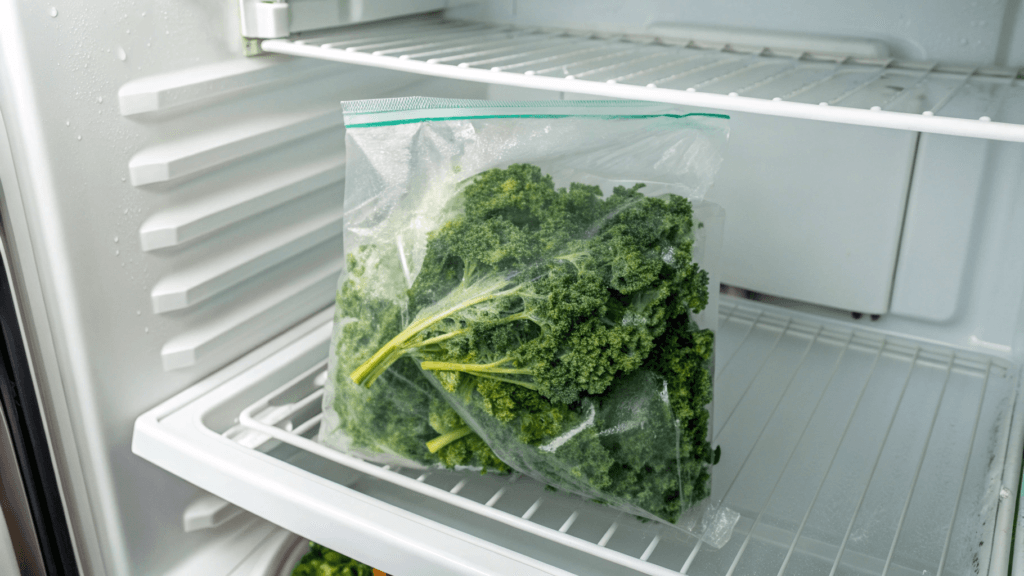
When Freezing Is a Good Option
Freezing makes sense when:
- You have more kale than you’ll use within a week
- Leaves are still healthy, but starting to soften
- You want quick greens for winter soups and weeknight cooking
- You’re harvesting a lot at once and want to preserve peak flavor
If kale is already slimy, smells off, or has spreading rot, don’t freeze it. Freezing doesn’t “reset” spoiled food; it locks in the problem.
How Freezing Affects Texture and Flavor
Frozen kale will be:
- Softer after thawing
- Better for cooked uses than raw
- Often milder if blanched first (blanching can reduce harshness)
Blanching is the difference between frozen kale you’ll actually use and frozen kale that sits in the back of the freezer, tasting stale and bitter.
Best Uses for Frozen Kale
Frozen kale shines in:
- Soups, stews, chili
- Sautéed dishes (added straight from frozen)
- Egg bakes, quiche, frittatas
- Pasta sauces
- Smoothies (especially if you don’t mind a deeper “green” flavor)
It’s not ideal for salads or anything where you want a crisp texture.
How to Freeze Kale Step by Step
You can freeze kale without blanching, but the quality drops quickly. If you’re going to the trouble of freezing, blanching is worth it.
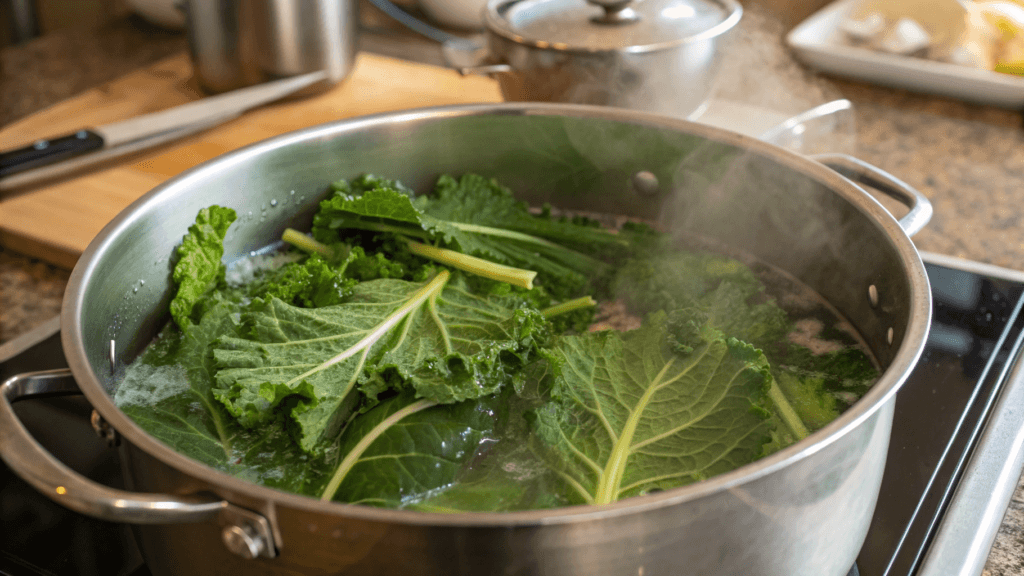
Blanching Kale Before Freezing
Blanching means briefly boiling, then chilling quickly. It slows enzyme activity that causes:
- Off flavors
- Color fading
- Tougher texture over time in the freezer
Simple blanching steps:
- Bring a large pot of water to a strong boil.
- Prep a large bowl of ice water on the side.
- Wash kale and shake off excess water.
- Remove tough stems if you prefer (optional, but helpful).
- Blanch kale for 2 minutes (start timing once it’s submerged).
- Scoop out quickly with tongs or a spider and move straight into ice water.
Kale shouldn’t be cooked fully. You’re aiming for “bright green and slightly softened,” not tender.
Cooling and Drying Kale Properly
Cooling fast stops cooking and keeps the color nice.
- Keep kale in the ice bath for 2-3 minutes, until it feels cold.
- Drain well.
- Squeeze gently in handfuls to remove water.
- Spread on a clean towel for a few minutes.
Drying matters more than people think. Excess water turns into surface ice that leads to freezer burn and clumping.
A practical home test: grab a handful and squeeze. If water runs out easily, it needs more draining.
Packaging Kale for the Freezer
You’ve got a few good options depending on how you cook.
For flexible portions:
- Pack into freezer bags in 1-2 cup portions.
- Press flat, squeeze out air, and seal.
- Label with date and portion size.
For quick add-ins:
- Chop after blanching and drying, then freeze flat in a bag.
- Break off chunks as needed.
For smoothies:
- Pack into small bags or containers in smoothie-sized amounts.
If you want to avoid clumping, you can do a quick tray freeze:
- Spread dried blanched kale on a sheet pan.
- Freeze until firm (about 1-2 hours).
- Transfer to bags.
This creates loose pieces instead of one frozen brick, but either way works.
How Long Does Frozen Kale Last?
Frozen kale is safe for a long time if kept frozen, but its quality does decline.
Expected Freezer Shelf Life
For best flavor and color:
- Blanched frozen kale: 8-12 months
- Unblanched frozen kale: Best used within 2-3 months
If your freezer is open often or runs warm, aim for the shorter end. Deep freezers usually preserve quality longer.
How to Tell if Frozen Kale Is Still Good
Frozen kale is still good when:
- Color is still reasonably green
- It smells fresh/neutral once warmed
- There’s minimal frost inside the bag
It’s past peak quality (and sometimes unpleasant) when:
- The bag has lots of ice crystals or visible freezer burn
- The kale looks gray-green or tan
- It smells stale or “cardboard-like” after heating
Freezer-burned kale won’t usually make you sick, but it can taste flat and unpleasant. In soups with strong flavors, you can sometimes still use it.
Common Kale Storage Mistakes
Most kale waste comes from a few predictable mistakes. Fix these, and you’ll notice a big difference.
Storing Kale Wet or Sealed Too Tightly
The classic problem is washing kale, tossing it into a tight bag, and sealing it. That traps moisture and creates a perfect environment for slime.
If kale is wet, either:
- Dry it thoroughly before storing, or
- Store it loosely wrapped with a towel and some airflow
Leaving Kale Exposed to Dry Fridge Air
Kale left loose in the fridge dries out, especially at the cut ends. You’ll see:
- Curled edges
- Dull color
- Leaves that feel papery
- Stems that get rubbery
A loose bag with a towel fixes this fast.
Freezing Kale Without Blanching
You can freeze raw kale in a pinch, but it tends to:
- Develop a stronger, sometimes bitter flavor
- Fade in color
- Get a “stale freezer” taste sooner
Blanching takes a few minutes and makes frozen kale much more useful.
Tips to Make Kale Last Longer
Good kale storage is mostly small habits. None of them is complicated, but they add up.
Small Habits That Extend Shelf Life
- Store kale unwashed and dry whenever possible.
- Use a paper towel to manage condensation.
- Keep the bag not fully sealed (or use a container with slight ventilation).
- Put kale in the crisper, not the door or open shelf.
- Keep kale away from fruit that’s ripening fast.
- Check the bunch midweek and remove any leaves that are starting to go.
If you harvest from your garden, one of the best habits is cooling it quickly. Even 30 minutes in a hot kitchen shortens storage life. Get it inside, out of the sun, and into the fridge promptly.
How to Avoid Food Waste
If kale is fading but not spoiled, shift it into the “cook it” category instead of waiting for the perfect moment.
Good rescue moves:
- Sauté with garlic and a pinch of salt
- Toss into the soup near the end
- Blend into pesto or a green sauce
- Add to scrambled eggs or an omelet
If you’re down to a handful, freeze that handful in a small bag for soups. Small saves add up over time.
Conclusion
To store fresh kale well, keep it dry on the surface, protected from dry fridge air, and not packed so tightly that it sweats. In practice, that means unwashed kale, paper towel, loose bag/container, and crisper drawer.
You’ll usually get about a week of good quality, sometimes longer if the kale is very fresh. When you have more kale than you can use, blanch and freeze it in portioned bags so it’s easy to grab later.

Leave a Reply