
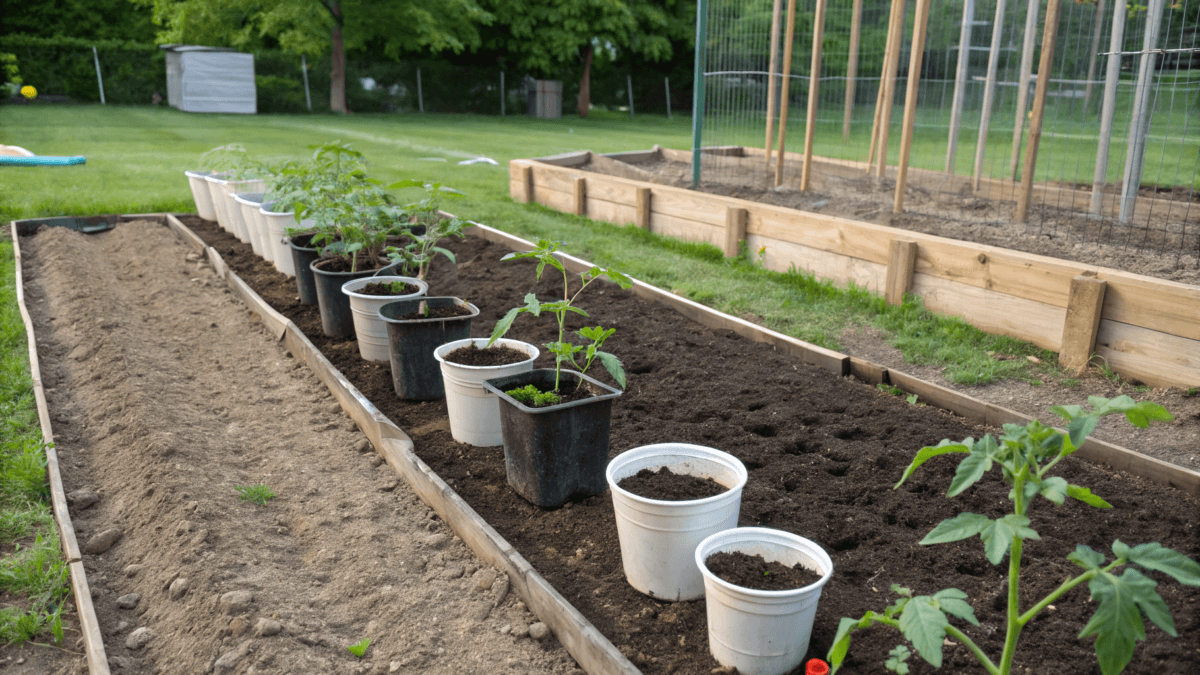
Tomatoes grow better in loose, well-drained, nutrient-rich soil that holds consistent moisture while still allowing roots to expand deeply. The best soil for tomatoes is slightly acidic, usually with a pH between 6.0 and 6.8, and rich in organic matter that supports steady growth throughout the season.
Many gardeners focus heavily on fertilizers later in summer, but tomato success actually begins before planting, with soil structure. Slow growth, blossom end rot, weak stems, poor flowering, and inconsistent fruit production often trace back to soil that drains poorly, lacks organic material, or becomes compacted around developing roots.
When tomato soil is prepared correctly, plants establish faster, tolerate heat better, and produce more reliable harvests with fewer problems.
For full guidance on transplanting depth, spacing, watering, and seasonal care, see the complete guide on how to grow tomatoes.
Why Soil Quality Determines Tomato Success Months Before Harvest
Healthy tomato plants above ground almost always reflect healthy soil below them. Because tomatoes grow quickly and produce heavy fruit loads, small soil limitations early in the season tend to become major problems later.
| Factor | Ideal Range |
|---|---|
| pH | 6.0-6.8 |
| Soil Type | Loamy, well-drained |
| Compost | 2-4 inches annually |
| Root Depth | 12-18+ inches |
| Moisture | Even, never waterlogged |
Understanding what happens underground helps gardeners prevent issues instead of reacting to them mid-season.
Tomatoes Are Deep-Rooted, Heavy-Feeding Plants
Tomatoes naturally develop extensive root systems when the soil allows it. In good conditions, roots commonly reach 18-36 inches deep and spread widely beyond the planting hole.
Although tomato roots can reach 18-36 inches in ideal conditions, most active nutrient uptake happens within the top 12 inches of soil. This makes topsoil preparation especially important before planting.
Deep rooting matters because it allows plants to:
- Access stable moisture during hot weather
- Support large foliage and fruit production
- Recover faster from temporary stress
- Maintain steady nutrient uptake
Shallow or dense soil restricts this development. Plants may look acceptable early but struggle once fruit production begins, when demand increases rapidly.
Hidden Soil Problems That Reduce Tomato Yields
Many yield problems start weeks before gardeners notice symptoms.
Common hidden issues include:
- Compacted soil prevents root expansion
- Waterlogged soil reduces oxygen around roots
- Very sandy soil is drying too quickly between waterings
- Nutrient imbalance, especially excess nitrogen, produces leafy plants with fewer tomatoes
These problems rarely correct themselves during the season.
What “Ideal Tomato Soil” Actually Means
Ideal tomato soil is not about richness alone. It is a balance between several factors working together:
- Soil drains excess water but never turns hard or dry
- Organic matter supports microbial activity
- Nutrients are released gradually instead of all at once
- Roots can move easily through the soil profile
The Core Soil Characteristics Tomatoes Need
Before improving soil, it is helpful to recognize the specific qualities that tomatoes depend on the most. These characteristics influence nearly every growing decision afterward.
Soil Texture – Finding the Right Balance Between Drainage and Moisture
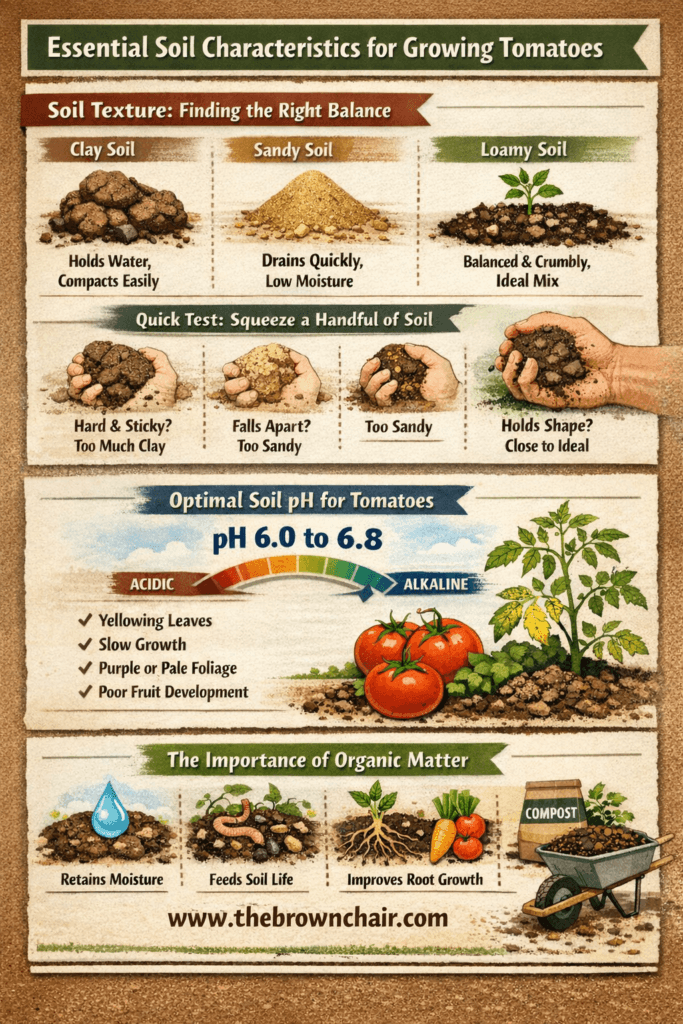
Tomatoes perform best in loamy soil, which simply means a balanced mix of mineral particles and organic matter.
In practical terms:
- Clay soil holds water well but compacts easily.
- Sandy soil drains quickly but struggles to retain moisture.
- Loam maintains airflow while holding consistent moisture.
A simple home texture check works well: Moisten a handful of soil and squeeze it.
- If it forms a hard, sticky lump, it is too much clay
- If it falls apart immediately, it is too sandy
- If it holds shape but crumbles easily, it is close to ideal
Most gardens improve dramatically once compost is added regularly, gradually moving soil toward this balanced structure.
Soil pH and Why Tomatoes Prefer Slight Acidity
Tomatoes grow best when the soil pH stays between 6.0 and 6.8. Within this range, essential nutrients remain available to roots.
When pH drifts outside this range, gardeners may notice:
- Yellowing leaves despite fertilizing
- Slow growth
- Purple or pale foliage
- Poor fruit development
Soil testing becomes worthwhile if tomatoes repeatedly struggle despite good care, or when starting a new garden area.
Minor adjustments usually work best gradually rather than trying to correct pH in a single season.
The Role of Organic Matter in Tomato Soil
Organic matter often determines whether tomato plants merely survive or truly thrive.
Finished compost improves soil by:
- Increasing moisture retention without waterlogging
- Feeding beneficial soil organisms
- Improving root penetration
- Stabilizing nutrients over time
Unlike fertilizers, compost improves soil year after year. Even established beds benefit from annual additions.
Soil Structure vs Fertilizer: Why Structure Comes First
Many gardeners attempt to correct poor tomato performance by adding more fertilizer. However, fertilizer cannot fix compacted soil, poor drainage, or restricted root development.
Tomatoes respond more to soil structure than to nutrient concentration. Even fertile soil produces weak plants if roots cannot expand freely. Building structure first and adjusting fertility second produces stronger long-term results.
Choosing the Best Soil Depending on Where Tomatoes Grow
Tomatoes adapt well to different growing systems, but soil preparation changes depending on location. The goal remains the same: stable moisture, airflow, and long-term fertility.
Best Soil for In-Ground Tomato Gardens
Native soil usually performs better when improved rather than replaced.
Start by working 2-4 inches of compost into the top soil layer where roots will establish. Heavy clay soils may also benefit from repeated seasonal amendments rather than drastic one-time changes.
Major correction may be needed if:
- Water sits after rain
- Soil forms hard clods when dry
- Roots struggle to penetrate deeper layers
In these cases, gradual rebuilding with organic matter produces more lasting results than importing new soil.
Best Soil Mix for Raised Beds
Raised beds naturally improve drainage, making them excellent for tomatoes when filled correctly.
A reliable raised bed mix often includes:
- ~40% quality topsoil
- ~40% compost
- ~20% aeration material (coarse compost, leaf mold, or similar structure builders)
Over time, raised beds settle and compact slightly, so adding compost each season keeps the structure open and productive.
Best Soil for Tomatoes in Containers and Pots
Garden soil rarely works well in containers because it compacts and drains poorly.
Container soil should never be reused without refreshing. Over time, nutrients deplete, and the structure breaks down, reducing airflow and water balance.
Container tomatoes need a lightweight mix that:
- Drains quickly
- Holds moisture evenly
- Allows airflow around roots
Look for potting mixes containing compost, coco coir or peat, and perlite or bark components.
Container depth matters more than many gardeners expect. Most tomatoes perform best in containers at least 12-18 inches deep, with larger varieties benefiting from even more root space.
Container gardening requires a different approach to soil than in-ground beds. See this full guide on growing tomatoes in containers to understand potting mixes and drainage.
How to Prepare Tomato Soil Before Planting
Soil preparation determines how quickly tomatoes establish after transplanting. Taking time here often prevents weeks of slow early growth.
When to Prepare Soil for the Best Results
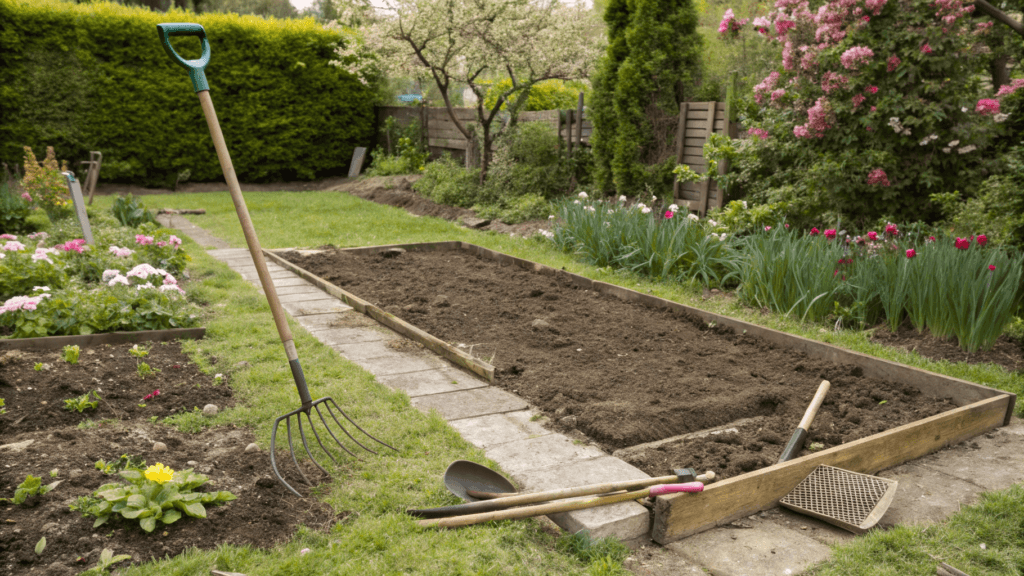
Fall preparation allows organic matter to integrate naturally, but spring preparation still works well if done early.
Avoid working the soil when it is wet. Cultivating wet soil compresses the structure and creates long-lasting compaction.
A simple test:
- If soil sticks heavily to tools or boots, wait a few days.
Soil temperature also matters. Tomatoes establish best once the soil consistently reaches about 60°F (15-16°C) or warmer.
Building a Tomato Planting Area That Supports Deep Roots
Ideally, productive tomato soil extends at least 12-18 inches deep to support full root development. Instead of aggressive tilling, focus on deep loosening.
Good preparation includes:
- Loosening soil 10-12 inches deep
- Breaking compact layers below planting depth
- Mixing compost throughout the root zone
Many gardeners also use trench planting, laying part of the stem horizontally to encourage additional root formation along buried stems.
Smart Pre-Plant Nutrient Additions
Before planting, the soil benefits from steady nutrient sources rather than strong, quick fertilizers.
Useful additions include:
- Finished compost
- Balanced organic fertilizer
- Moderate calcium sources if soil tests indicate deficiency
Excess nitrogen early encourages large leafy plants but delays flowering, which often reduces early harvests.
Calcium and Blossom-End Rot Clarification
Blossom-end rot is often blamed on calcium deficiency, but inconsistent watering usually prevents proper calcium transport within the plant.
Soil that drains well and maintains steady moisture reduces this risk more effectively than simply adding calcium supplements.
Soil Moisture Management
Watering problems are frequently soil problems in disguise. Well-structured soil reduces the need for constant correction during hot weather.
How Soil Structure Affects Watering Frequency
Soil rich in organic matter absorbs water evenly and releases it slowly.
Poor structure causes extremes:
- Soil dries rapidly after watering
- Or stays wet long enough to stress roots
Tomatoes perform best with consistent moisture, not cycles of drought followed by heavy watering.
Mulching and Soil Protection After Planting
Mulch stabilizes soil conditions once plants begin active growth.
Benefits include:
- Reduced evaporation
- Cooler soil temperatures during heat
- Prevention of soil splash that spreads disease
- Less surface compaction from rain
Straw, shredded leaves, or untreated grass clippings work well once the soil has warmed.
Signs Your Tomato Soil Is Holding Too Much or Too Little Water
Watch plant behavior rather than watering schedules.
Too much moisture:
- Persistent drooping despite wet soil
- Yellow lower leaves
- Slow growth
Too little moisture:
- Midday wilting that worsens daily
- Dry soil several inches below the surface
- Fruit cracking after heavy watering
Consistent soil moisture prevents many common tomato disorders.
Common Soil Mistakes That Cause Tomato Problems
Many tomato issues appear months after the original mistake was made. Recognizing these patterns helps prevent repeat problems.
Using Fresh Manure or Unfinished Compost
Fresh organic material continues decomposing in soil, competing with plants for nutrients and sometimes damaging roots. Always use fully finished compost.
Over-Fertilizing Early Growth
Heavy feeding early produces tall plants with weak flowering. Tomatoes generally need steady nutrition rather than aggressive early fertilization.
Planting Tomatoes in Cold Spring Soil
Cold soil slows root activity even when air temperatures feel warm. Plants often remain stalled for weeks and never fully recover their early momentum.
Cold soil also slows microbial activity responsible for releasing nutrients. Even fertile soil performs poorly until temperatures are warm enough for root and microbial activity to increase.
Reusing Depleted Soil Year After Year
Repeated tomato planting without soil renewal leads to nutrient imbalance and declining yields. Containers especially require annual soil refreshing.
Ignoring Drainage in Raised Beds or Containers
Even raised systems fail if water cannot escape freely. Poor drainage increases root disease risk quickly during warm weather.
Maintaining Healthy Tomato Soil Throughout the Growing Season
Once tomatoes begin growing actively, soil care shifts toward stability rather than major changes.
Feeding Soil Instead of Feeding Plants
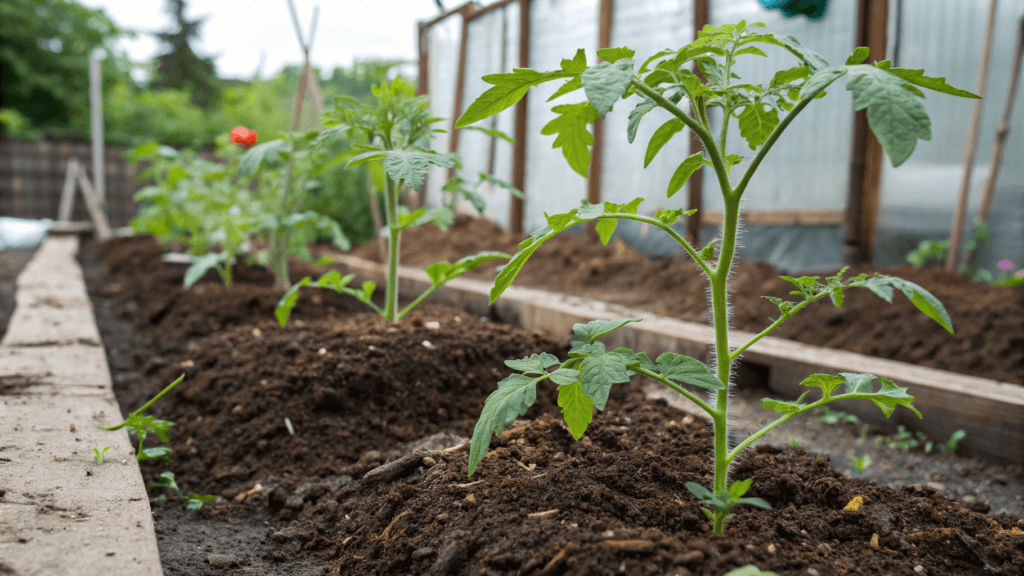
Top-dressing beds with compost during the season supports gradual nutrient cycling.
A light compost layer around plants:
- Feeds soil organisms
- Improves moisture retention
- Maintains fertility without overstimulation
Mid-Season Soil Support Without Overfertilizing
Additional feeding may help when plants show true depletion signs, such as slowed growth after heavy fruit set or pale foliage developing mid-season.
At this stage, moderate feeding works better than strong fertilizer applications.
Preventing Soil Compaction Around Growing Plants
Compaction often develops unintentionally.
Reduce pressure around roots by:
- Keeping walking paths separate from planting areas
- Avoiding frequent cultivation near stems
- Allowing mulch to absorb rainfall impact
Healthy root zones remain loose throughout the season.
Crop Rotation and Soil Recovery After Tomatoes
Tomatoes are demanding crops that remove significant nutrients from the soil. Recovery planning improves future harvests.
Why Tomatoes Deplete Soil Faster Than Many Vegetables
Long growing seasons combined with heavy fruit production place continuous demand on soil nutrients and microbial activity.
Without recovery time, soil performance declines noticeably.
What to Plant After Tomatoes
Good follow-up crops include:
- Beans or peas
- Leafy greens
- Root vegetables
Avoid planting tomatoes or related crops in the same location immediately the following year when possible.
Rebuilding Soil for Next Season
After harvest:
- Remove plant debris
- Add compost or aged organic matter
- Consider cover crops to restore structure
Winter soil improvement often determines next year’s success.
How Soil Quality Influences Pests, Diseases, and Plant Resilience
Healthy soil quietly strengthens plants against many common tomato problems.
Soil Health and Disease Resistance
Plants growing in balanced soil develop stronger cell structure and recover faster from stress, making them less attractive to pests and less vulnerable to disease pressure.
Drainage and Fungal Disease Pressure
Poor drainage increases humidity near roots and encourages fungal problems such as root rot and wilt diseases. Well-aerated soil significantly reduces these risks.
Supporting Beneficial Soil Life Naturally
Microbial life improves nutrient cycling and root protection.
Gardeners support this naturally by:
- Adding compost regularly
- Avoiding excessive chemical inputs
- Keeping soil covered with mulch or living plants
Over time, soil becomes easier to manage and more productive.
Conclusion
The best soil for tomatoes is not created through fertilizers alone but through structure, balance, and preparation long before planting begins. Loose, well-drained soil enriched with organic matter allows roots to grow deeply, access steady moisture, and support heavy fruit production throughout the season.
When soil is prepared thoughtfully, many common tomato problems never appear. Plants establish faster, tolerate weather changes better, and produce more consistent harvests with less intervention.
Improving tomato soil is also cumulative. Each season of adding compost, protecting soil structure, and rotating crops builds a stronger growing environment, making future tomato harvests easier and more reliable year after year.

Leave a Reply