
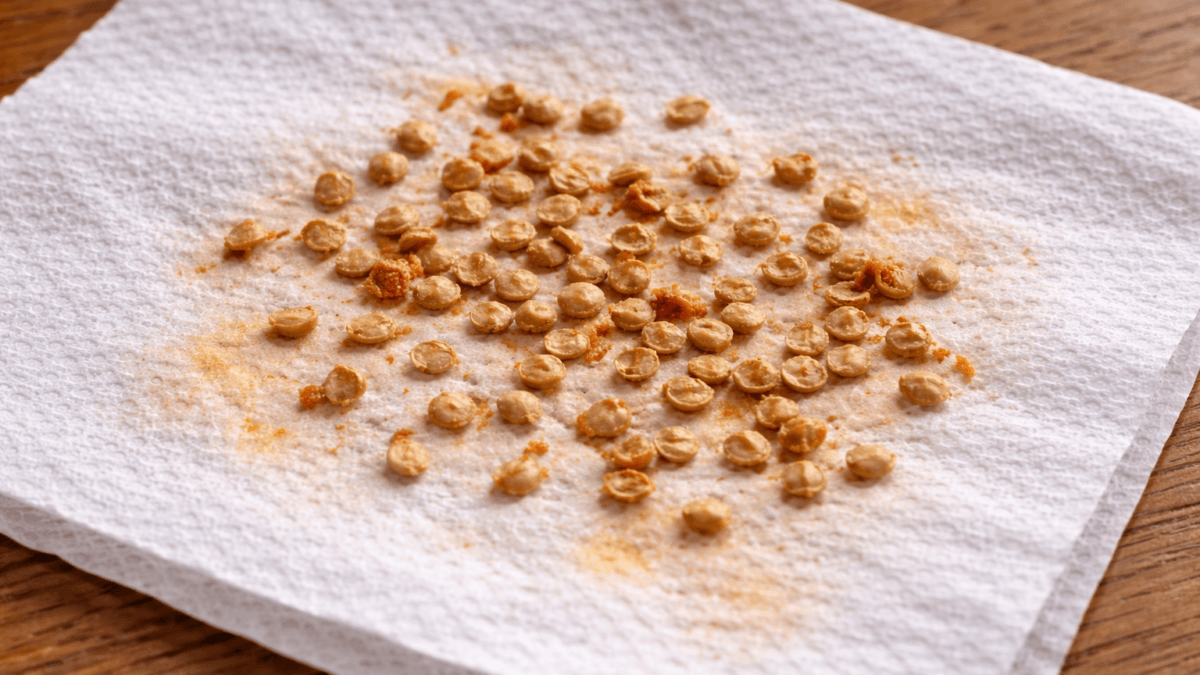
Growing tomatoes from seed is straightforward once timing, light, and early root development are managed correctly. Tomato seeds usually germinate easily, and most failures actually happen after sprouting, when seedlings stretch toward weak light, sit in cold soil, or outgrow their containers before outdoor conditions are ready.
Tomatoes are best started 6-8 weeks indoors before your last frost date, planted ¼ inch deep in warm soil (70-80°F), and grown under strong overhead light until outdoor soil reaches at least 60°F. With steady moisture and proper light, most seeds germinate within 5–8 days.
When the early stages are managed well, tomatoes are one of the most reliable crops to start from seed.
If you want detailed guidance on planting location, spacing, watering, pruning, and harvesting after seedlings move outdoors, see the complete guide on how to grow tomatoes.
Quick Success Overview
Successful tomato seedlings depend on a few early decisions:
- Start seeds 6-8 weeks before the last frost, not earlier
- Provide strong overhead light immediately after germination
- Keep soil warm for germination, slightly cooler after sprouting
- Pot up seedlings deeply as they grow
- Harden plants off slowly before moving outdoors
Once these pieces are in place, tomatoes tend to grow steadily with very few complications.
Why Grow Tomatoes From Seed Instead of Buying Plants
Starting tomatoes from seed isn’t required, but it offers advantages that become clear once you’ve done it a season or two.
The biggest benefit is control. Seed-grown tomatoes adapt early to your growing conditions rather than recovering from greenhouse stress or crowded nursery containers.
Advantages of Starting From Seed
- Access to hundreds of varieties rarely sold as seedlings
- Stronger early root systems
- Lower cost when growing multiple plants
- Ability to time planting perfectly for your climate
- Healthier plants with less transplant setback
Many experienced gardeners also notice that seed-started plants catch up quickly and often become more productive by midseason.
When Buying Seedlings Still Makes Sense
Buying plants can be practical if:
- You missed the seed-starting window
- You only need one or two plants
- Indoor lighting space is limited
- Your growing season is extremely short
Both approaches work, but learning seed starting gives long-term flexibility.
When to Start Tomato Seeds
Timing influences nearly every problem gardeners experience with seed starting. Plants started too early struggle indoors, while late starts shorten the harvest season.
How Many Weeks Before Last Frost to Start Seeds
Tomatoes should move outdoors after frost risk passes and soil warms, not simply when air temperatures improve. The standard starting window is 6-8 weeks before your last spring frost date.
This timing works because tomatoes grow quickly once conditions are right. Starting earlier rarely produces earlier harvests; it usually produces stressed plants.
Starting too early often leads to:
- Tall, weak seedlings searching for light
- Roots circling containers
- Stress before transplanting
- Plants flowering before transplanting
- Growth slowdown after planting outside
In cooler climates, staying closer to 6 weeks often produces sturdier plants. Warmer regions with early springs can safely stretch toward 8 weeks if strong lighting is available.
Ideal Seed Starting Timeline
Cold climates
- Start seeds 7-8 weeks before the last frost
Moderate climates
- Start 6 weeks before the last frost
Warm climates
- Start 4-6 weeks before outdoor planting
A useful rule to follow: Match plant size to outdoor readiness, not calendar enthusiasm.
Indoor vs Outdoor Seed Starting Reality
Tomatoes are warm-season plants. In most climates, seeds are started indoors because outdoor soil temperatures remain too cold during early spring.
Direct sowing outdoors only works reliably in:
- Frost-free or tropical climates
- Very long growing seasons
- Regions where soil warms early and consistently
For most home gardens, indoor starting gives a major advantage by protecting young plants during unstable weather.
Signs Seeds Were Started Too Early or Too Late
Seedlings quickly reveal timing mistakes.
Started too early:
- Long, thin stems (legginess)
- Plants touching lights or windows quickly
- Roots filling containers weeks before transplant time
Started too late:
- Small plants at planting time
- Delayed flowering
- Later harvest compared to the season potential
Healthy timing produces plants about 6-10 inches tall when planting day arrives.
Choosing the Right Tomato Seeds
Nearly all tomatoes grow well from seed, but variety choice affects how easy early growth feels. Some types forgive minor mistakes better than others.
Seed choice affects plant size, care needs, and spacing later in the season.
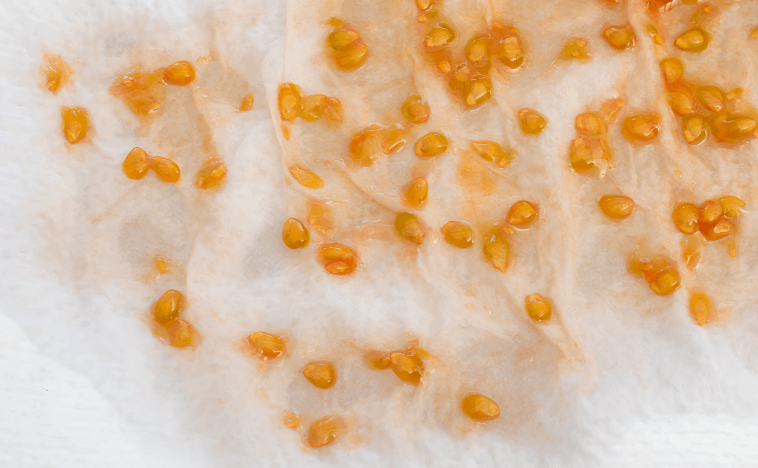
Seed Viability and Seed Age
Tomato seeds remain viable for several years (4-6) when stored cool and dry, but fresher seed often germinates faster and more evenly.
Determinate vs Indeterminate
The difference mainly affects planning rather than germination.
Determinate tomatoes
- Grow to a fixed height
- Produce fruit over a shorter period
- Easier for containers or small gardens
Indeterminate tomatoes
- Continue growing all season
- Require staking or trellising
- Benefit from earlier seed starting in shorter climates
Seed starting itself is similar, but indeterminate types especially benefit from careful early care.
Good Tomato Types for Beginners
Some tomatoes consistently germinate fast and grow vigorously indoors.
Good beginner choices include:
- Roma or paste tomatoes
- Cherry tomatoes
- Early or short-season hybrids
- Medium salad tomatoes
- Disease-resistant cultivars
They germinate consistently and recover quickly from small mistakes.
Hybrid vs Heirloom Seeds
Both grow well from seed when conditions are stable, but they behave slightly differently.
Hybrid varieties
- Very consistent germination
- Often stronger disease resistance
- Predictable growth
Heirloom varieties
- Excellent flavor diversity
- Wider growth variation
- Sometimes slower early development
Supplies Needed for Starting Tomato Seeds
Having the right setup prevents most beginner problems before they begin.
You’ll need:
- Seed trays, cell packs, or small containers
- Quality seed starting mix
- Grow lights or a very bright indoor setup
- Spray bottle or a gentle watering can
- Plant labels
- Optional heat mat
- Humidity dome (useful during germination only)
Simple setups work well as long as drainage and light are adequate.
Setting Up the Right Seed Starting Environment
This stage determines whether seedlings stay compact and strong or struggle from the beginning. Tomatoes respond quickly to environmental quality, especially light and temperature.
Containers That Prevent Early Root Problems
Tomatoes dislike sitting in waterlogged soil, so drainage matters more than container type.
Common options:
- Seed cell trays
- Small nursery pots
- Soil blocks
- Recycled containers with drainage holes
Cell trays work well early because they control moisture and root space.
If reusing containers, wash them thoroughly to reduce disease risk carried over from previous seasons.
The Best Seed Starting Mix for Tomatoes
Seedlings behave very differently from mature plants. Garden soil that works outdoors usually fails indoors.
A proper seed-starting mix matters because young roots need oxygen as much as moisture.
A good seed starting mix should:
- Drain easily
- Stay evenly moist
- Contain fine particles for seed contact
- Allow oxygen around roots
Lightweight seed mixes encourage rapid root expansion, which directly affects later plant strength.
Can You Use Regular Potting Soil?
Potting soil can work if sifted and lightened, but many mixes stay too wet for tiny seedlings. Seed-starting mix remains the safest choice.
Pre-Moistening Soil Correctly
Before planting:
- Add water gradually
- Mix until the soil feels like a wrung-out sponge
- Avoid muddy or dripping texture
Pre-moistened soil allows even germination.
Ideal Germination Conditions
Tomato seeds germinate best when soil temperatures stay between 70-80°F (21-27°C).
After germination, slightly cooler temperatures help prevent rapid stretching. Many growers lower temperatures to around 60-65°F (16-18°C) to encourage compact, sturdy growth.
Below this range, germination slows dramatically.
Heat mats help when:
- Indoor rooms stay cool
- Starting seeds in basements or garages
- Early spring temperatures fluctuate
Once seeds sprout, warmth becomes less important than light quality.
Why Tomatoes Germinate But Fail Later
Tomato seeds rarely fail during germination. Most problems appear 2-3 weeks later when light is insufficient, or roots become restricted. Seedlings that look healthy at first can weaken quickly if light intensity drops or containers remain too small.
Germination is the easy part. Building strong root systems and thick stems is what determines long-term success.
Light Setup and Early Seedling Lighting
Insufficient light causes more tomato seed failures than anything else. Window light alone is rarely strong enough during early spring.
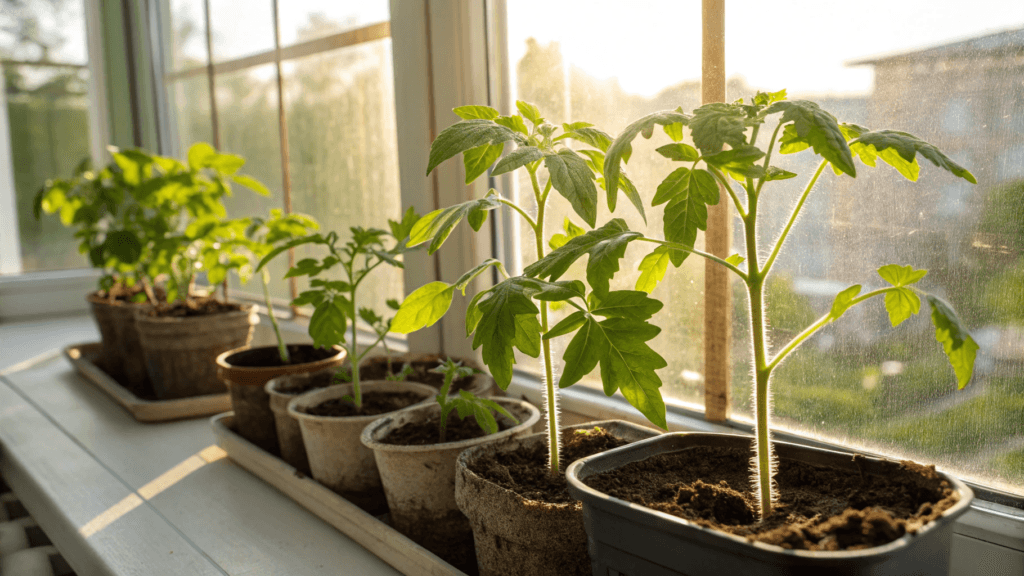
Many beginners assume warmth solves weak growth. In reality, light intensity matters more than temperature once seeds sprout. Warm conditions without strong light create tall, fragile stems.
For sturdy seedlings:
- Place grow lights 2-3 inches above seedlings
- Provide 14-16 hours of light daily
- Raise lights gradually as plants grow
- Keep lighting directly overhead
Strong overhead light keeps stems thick and compact from the start.
Young seedlings need consistent light immediately. Keep lights close enough that plants do not stretch. If stems begin leaning or elongating, the light source is too far away.
Seedlings quickly become weak when light is inconsistent, which is why daily lighting consistency matters more than short periods of intense light.
Using Grow Lights Correctly
Place lights:
- 2-3 inches above seedlings
- On for 14-16 hours daily
Raise lights as plants grow.
How to Plant Tomato Seeds Step by Step
Planting itself is simple. Precision matters more than complexity.
Seed Depth and Spacing
Tomato seeds should be planted:
- About ¼ inch deep
Planting deeper than ¼ inch often delays or prevents germination because small tomato seedlings struggle to reach the surface.
Then lightly cover the seeds and gently firm the surface.
Many growers place:
- 2 seeds per cell for reliability
- Then thin of the strongest plant
This approach prevents empty cells caused by occasional non-germination.
Proper Watering After Planting
Water carefully so seeds stay in place. Bottom watering works well once trays are filled. Seeds need consistent moisture but not saturated soil.
Best practice:
- Moisten soil before planting
- Water gently or bottom water afterward
- Keep soil evenly damp, not wet
- Cover the seeds for humidity during early days
How Long Does Germination Normally Take
Under proper warmth, tomatoes usually germinate in 5-8 days.
Slower germination may indicate:
- Cool soil
- Dry surface layer
- Older seeds
Variation of a few days is normal and rarely a concern.
Early Seedling Care That Builds Strong Plants
After germination, small environmental differences quickly influence the strength of seedlings.
First appear:
- Cotyledons (seed leaves)
- Followed by true tomato leaves
Growth accelerates once true leaves form.
When to Remove Humidity Domes
Humidity domes help retain moisture before sprouting, but should be removed quickly afterward.
Leaving domes on too long can cause:
- Fungal growth
- Weak stems
- Poor airflow
Remove humidity domes as soon as seedlings emerge. Overly wet soil reduces oxygen around seeds and slows emergence.
Preventing Leggy Tomato Seedlings
Strong seedlings develop when:
- Light stays close
- Temperatures remain moderate
- Plants are not overcrowded
Short, thick stems indicate proper lighting.
Why Gentle Air Movement Creates Strong Stems
Indoor seedlings grow in still air, unlike outdoor plants.
A small fan running nearby:
- Encourages thicker stems
- Reduces fungal risk
- Improves overall resilience
Air movement acts like mild outdoor wind training.
Watering Young Tomato Seedlings Correctly
After seedlings establish, watering habits begin shaping long-term plant stability.
Watch for:
- Soil surface drying slightly before watering again
- Firm stems
- Steady leaf expansion
Warning signs of overwatering include drooping despite wet soil and slow growth.
Bottom Watering vs Top Watering
Bottom watering helps:
- Encourage deeper roots
- Prevent stem rot
- Reduce fungal problems
Allow trays to absorb water, then remove excess.
Signs of Overwatering
- Yellowing leaves
- Slow growth
- Constantly wet soil surface
Signs Seedlings Need Water
- Slightly lighter soil color
- Containers feeling lighter
- Mild leaf drooping late in the day
Thinning, Potting Up, and Root Development Decisions
This stage often confuses beginners because seedlings suddenly outgrow their starting space.
When and How to Thin Seedlings
Once true leaves appear, select the strongest seedling in each cell.
Instead of pulling extras, snip them at soil level. Pulling can disturb neighboring roots.
Choose plants with:
- Thick stems
- Upright growth
- Healthy green color
Overcrowding causes:
- Weak stems
- Slower development
- Uneven growth
When Seedlings Need Bigger Containers
Tomatoes benefit from gradual container upgrades.
Repot when:
- Plants have several true leaves
- Roots visible through drainage holes
- Soil drying very quickly
- Growth is slowing despite good light
Usually 2-3 weeks after germination.
Transplanting Into Larger Pots
Most seedlings move from cells into 3-4-inch pots filled with fresh potting mix before transplanting outdoors.
Water gently after transplanting.
Planting Tomatoes Deeper for Strong Roots
Tomatoes naturally form roots along buried stems.
When repotting:
- Remove lower leaves
- Bury part of the stem below soil level
- Leave only the upper leaves exposed
This produces stronger, more drought-resistant plants later.
Feeding Tomato Seedlings Without Causing Weak Growth
Seed starting mix contains little nutrition, but seedlings don’t need fertilizer immediately.
When Seedlings Actually Need Fertilizer
Seedlings rely on stored seed energy until true leaves develop.
Begin feeding only after:
- Several true leaves appear
- Active growth is visible
Earlier feeding rarely improves growth.
Best Type of Fertilizer for Young Tomatoes
Use a diluted balanced liquid fertilizer, typically at half strength every 7-10 days. Gentle feeding supports steady growth without forcing soft stems.
Consistent light remains more important than fertilizer strength.
Signs of Nutrient Imbalance
Watch plant appearance rather than feeding schedules.
Possible indicators:
- Pale leaves → mild nutrient shortage
- Rapid stretching → excess nitrogen or weak light
- Leaf tip burn → fertilizer too strong
Adjust gradually rather than correcting aggressively.
Hardening Off Tomato Seedlings Before Transplanting
Indoor conditions protect plants from stress. Outdoor environments introduce sun intensity, wind, and temperature swings that seedlings must learn to tolerate.
Why Hardening Off Matters
Hardening strengthens:
- Leaf structure
- Stem resilience
- Temperature tolerance
Why Indoor-Grown Plants Struggle Outside
Without preparation, seedlings experience:
- Sunburn from direct light
- Rapid moisture loss
- Stem damage from wind
Hardening off allows plants to adapt safely.
Simple 7-10 Day Hardening-Off Process
A gradual exposure schedule works best.
Typical approach:
- Day 1-2: 1-2 hours outdoors in shade
- Day 3-5: Increase exposure daily
- Day 6-8: Introduce morning sun gradually
- Day 9-10: Bring plants inside at night initially if temperatures drop
By the end, plants should tolerate full outdoor conditions.
Weather Conditions That Delay Hardening Off
Delay outdoor exposure if:
- Soil remains cold
- Night temperatures drop below 50°F (10°C)
- Strong winds, heavy rain, or storms are expected
Warm soil matters more than warm air when transplanting tomatoes.
When Tomato Seedlings Are Ready for the Garden
Plant readiness matters more than calendar dates.
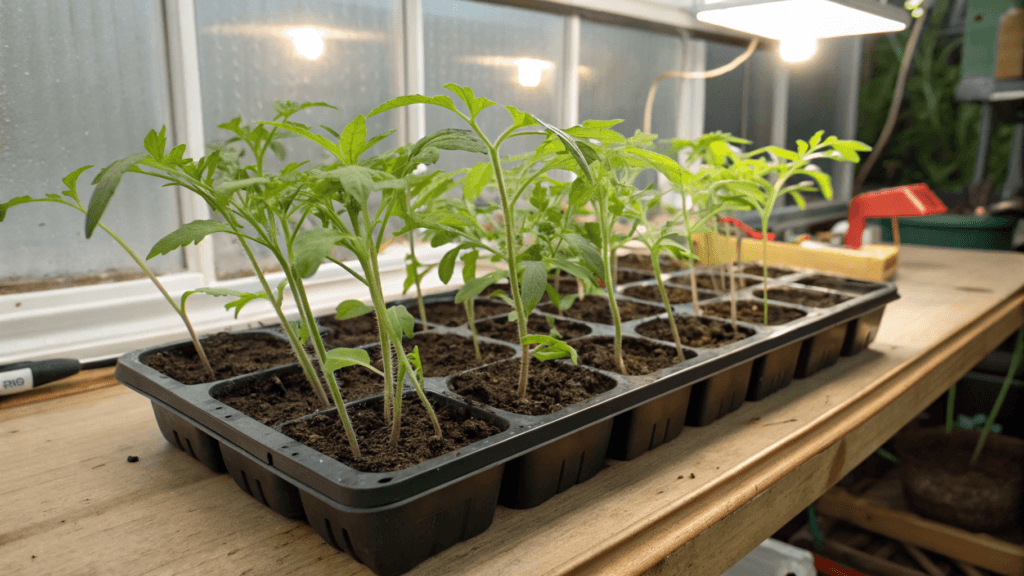
Ideal Seedling Size and Age
Healthy transplant candidates are typically:
- 6-10 inches tall
- 6-8 weeks old
- Stocky rather than tall
- Developing multiple true leaves
Compact growth usually performs best after planting.
Soil Temperature Matters More Than Air Temperature
Tomatoes grow best once soil reaches a minimum of 60°F (15°C) or warmer. Cold soil often causes stalled growth even when weather feels warm.
Root System Signs of Readiness
Check roots when watering or potting up.
Healthy seedlings show:
- White, branching roots
- Soil held together lightly
- No dense root circling
Roots should fill the container without becoming crowded.
What Strong Tomato Seedling Roots Should Look Like
Healthy roots should be white or cream-colored and branch outward rather than circle tightly. Brown or mushy roots indicate overwatering, while tightly circling roots suggest plants have stayed in containers too long.
Root health at transplant time strongly influences how quickly plants establish outdoors.
Mistakes That Set Tomatoes Back After Transplanting
Common setbacks include:
- Planting into cold soil
- Skipping hardening off
- Leaving seedlings root-bound too long
Early stress often delays growth for weeks.
Common Problems When Growing Tomatoes from Seed (And Fixes)
Even experienced gardeners encounter occasional issues. Most problems trace back to the environment rather than seed quality.
Leggy Seedlings
Cause:
- Insufficient light
- Excess warmth
Fix:
- Move lights closer
- Reduce temperature slightly
- Pot up deeply to stabilize stems
Seeds Not Germinating
Cause:
- Cold soil
- Old seed
- Dry starting mix
Fix:
- Maintain steady moisture
- Increase warmth
Seedlings Falling Over (Damping Off)
This fungal issue appears as stems collapsing near soil level.
Prevention:
- Good airflow
- Clean containers
- Avoid constantly wet soil
- Remove humidity domes early
Prevention works far better than treatment.
Slow or Stalled Growth
Evaluate conditions systematically:
- Light intensity
- Root space
- Feeding level
- Temperature stability
Most stalled seedlings recover once root space or light improves.
Transplanting Seed-Grown Tomatoes Outdoors
Transplanting sets the foundation for the entire season.
Moving Seedlings Into Garden Beds or Containers
When soil warms and frost risk passes, seedlings move into:
- Raised beds
- In-ground gardens
- Large containers
At transplant time, tomatoes are typically planted deeply again to expand root systems. Bury part of the stem or plant sideways in shallow trenches. New roots develop along buried sections.
Spacing Considerations
Proper spacing improves airflow and future yield. (See my Tomato Spacing Guide for full planning.)
Watering After Transplanting
Water deeply immediately after planting to settle soil around roots.
Early Growth Expectations After Transplanting
Tomatoes often pause growth for about a week while roots adjust. This short adjustment period is normal.
New leaf growth signals successful establishment.
First Support
Soon after transplanting:
- Install stakes or cages early
- Maintain airflow between plants
- Avoid crowding young tomatoes
Planning support early prevents root disturbance later.
Beginner Mistakes When Starting Tomato Seeds
Many tomato problems trace back to a few common decisions.
Avoid:
- Starting seeds too early
- Relying on window light alone
- Keeping the soil constantly wet
- Transplanting into cold soil
- Skipping hardening off
Correcting even one of these dramatically improves results.
| Stage | Typical Timing |
|---|---|
| Seed Planting | 6-8 weeks before last frost |
| Germination | 5-10 days |
| Potting Up | 2-3 weeks after sprouting |
| Hardening Off | 7-10 days before transplant |
| Outdoor Transplant | After soil reaches 60°F (15°C) |
Conclusion
Growing tomatoes from seed becomes predictable once timing, light, and root development are managed intentionally. Instead of rushing germination, focus on building compact, resilient seedlings prepared for outdoor conditions.
When plants reach the garden already strong and adapted, the rest of the tomato season tends to fall into place naturally.
Once you understand this early stage, growing tomatoes from seed becomes one of the most predictable and rewarding parts of the gardening season.

Leave a Reply