
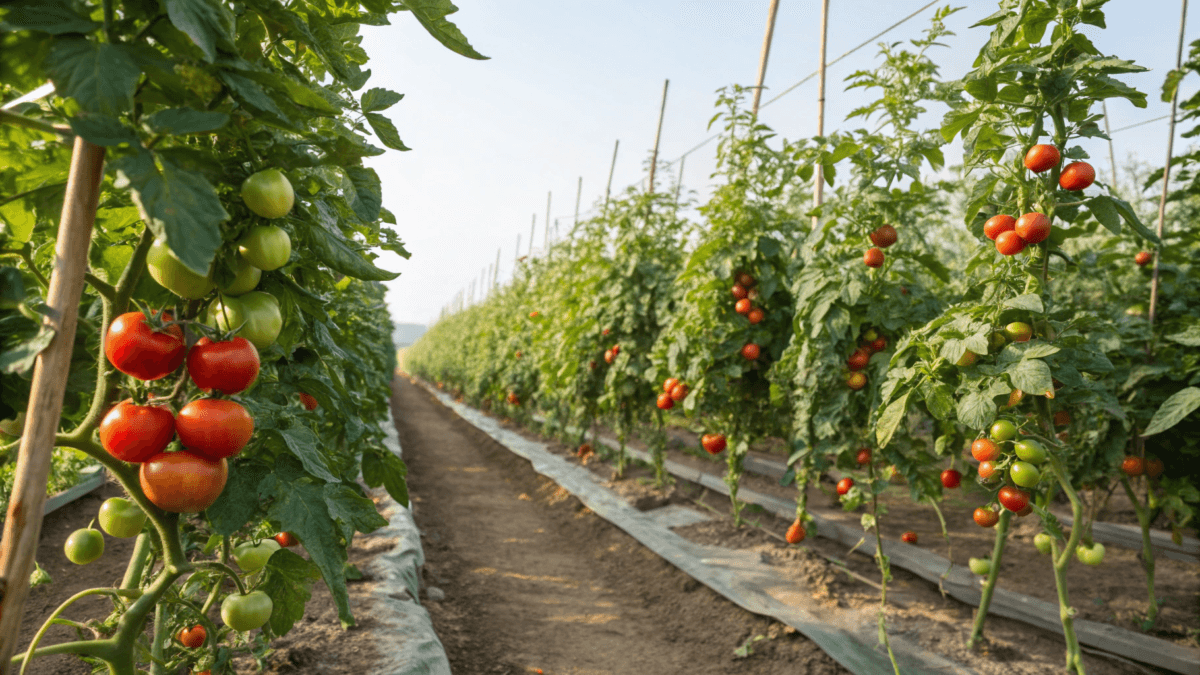
Tomato spacing affects far more than how many plants fit into a garden bed. Proper spacing determines airflow, disease resistance, root development, and ultimately how much fruit each plant produces. Most tomato problems that appear later in summer, such as yellowing leaves, fungal disease, small harvests, or stressed plants, often begin when plants are set too close together at planting time.
There isn’t one universal spacing number for tomatoes. The right distance depends on plant type, support method, pruning style, and growing setup.
A compact bush tomato behaves very differently from a tall vining variety trained vertically, and spacing should reflect that difference before plants ever go into the soil.
Quick Tomato Spacing Reference
Use this as a starting point before adjusting for your garden setup:
- Determinate (bush) tomatoes: 18-24 inches apart
- Indeterminate (vining) tomatoes: 24-36 inches apart
- Rows: 3-4 feet apart for airflow and access
- Containers: One plant per container (minimum 10-15 gallons)
- Staked or single-stem plants: Can sometimes be spaced closer (18-24 inches)
These distances work for most home gardens, but spacing often changes depending on pruning, support systems, and climate conditions.
Proper spacing is only one part of successful tomato growing. If you want the complete planting, watering, feeding, and harvesting process, see the full guide on how to grow tomatoes.
Why Tomato Spacing Matters
Tomatoes grow slowly at first, which makes close planting feel harmless in spring. The real impact appears months later when plants reach full size and begin competing for light, air, water, and nutrients.
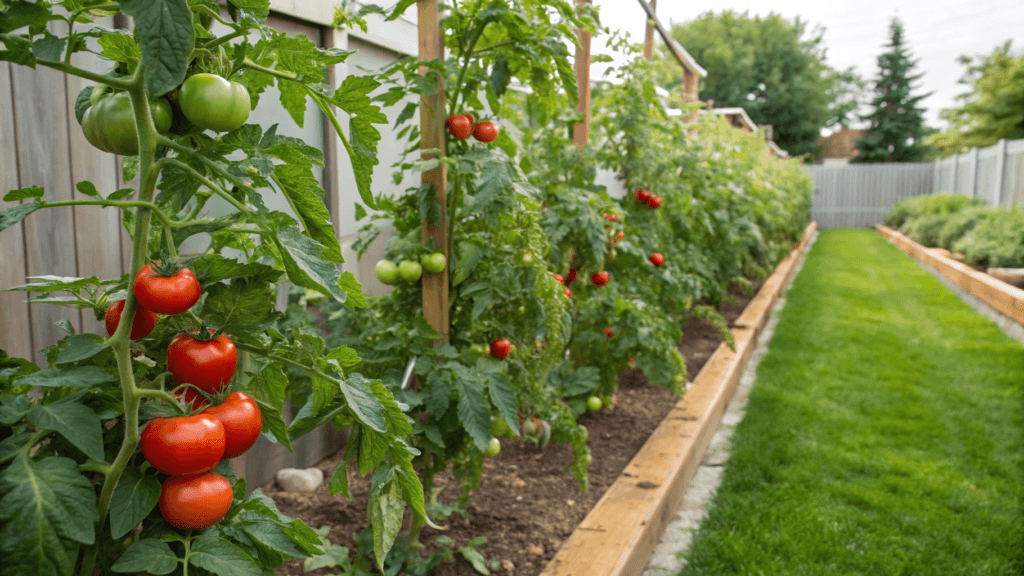
Spacing decisions made on planting day largely determine how manageable or difficult the growing season becomes.
Proper spacing also allows wind to move through plants gently, strengthening stems and helping foliage dry faster after rain.
The Hidden Problems Caused by Crowded Tomato Plants
When tomato plants grow too close together, several issues develop gradually:
- Reduced airflow that encourages fungal diseases like early blight and leaf spot
- Plants compete heavily for soil moisture and nutrients
- Limited root expansion beneath the soil surface
- Dense leaf canopies that shade flowers and developing fruit
Crowding also keeps foliage wet longer after rain or watering, one of the main triggers for fungal disease.
How Proper Spacing Improves Yield
It often feels counterintuitive, but wider spacing usually increases production.
Well-spaced plants tend to produce:
- Stronger branching and more flowering sites
- Better pollination due to airflow and light movement
- Larger fruit size and steadier ripening
- Easier pruning, watering, and harvesting access
A single healthy tomato plant frequently outperforms two stressed plants competing in the same space.
How Big Tomato Plants Actually Get (What Gardeners Underestimate)
Tomato spacing mistakes often happen because seedlings look small at planting time. A tomato transplant that is only 10-12 inches tall can easily grow into a plant 3-4 feet wide and over 6 feet tall within two months.
Indeterminate tomatoes, especially as side branches develop and fruit weight increases, tend to expand outward. What looks like extra space in spring often disappears completely by midsummer.
Planning spacing based on mature plant size instead of transplant size prevents most airflow and disease problems later in the season.
Determinate vs Indeterminate Tomatoes
Most spacing mistakes begin before planting because gardeners don’t adjust spacing based on growth habit. Tomato varieties grow in fundamentally different ways, and spacing must match how the plant matures.
Determinate Tomatoes (Bush Types)
Determinate tomatoes grow to a predetermined height, usually between 3 and 4 feet, then focus on fruit production rather than continued vine growth.
Because plants remain relatively compact:
- Typical spacing: 18-24 inches apart
- Plants fill outward rather than climbing continuously
- Often grown in cages or small garden beds
- Popular for sauces and concentrated harvests
These varieties naturally stop expanding once mature size is reached, so tighter spacing works well when airflow is still maintained.
Indeterminate Tomatoes (Vining Types)
Indeterminate tomatoes continue growing and producing fruit until frost. Many easily reach 6-10 feet tall when supported.
This ongoing growth significantly changes spacing needs.
- Recommended spacing: 24-36 inches apart
- Require vertical support or pruning
- Produce dense foliage over time
- Airflow becomes critical by mid-season
Even when plants start small, they eventually occupy much more space than beginners expect.
Semi-Determinate and Dwarf Varieties
These categories often confuse gardeners because they fall between standard rules.
Dwarf and semi-determinate tomatoes typically need:
- 20-28 inches spacing, depending on variety
- Moderate support
- Careful observation during early growth
Seed packets sometimes underestimate mature width, so allowing slightly more room usually prevents later crowding.
Recommended Tomato Spacing by Growing Method
Growing setup changes spacing just as much as plant type. The goal is always the same: enough room for light, airflow, and root expansion while keeping maintenance practical.
Spacing Tomatoes in Garden Rows
Traditional row planting allows the best airflow and working space.
Typical layout:
- Plants: 24-36 inches apart
- Rows: 36-48 inches apart
Wider rows become especially valuable in humid climates where disease spreads quickly. Extra walking space also prevents accidentally brushing wet foliage, which can transfer disease between plants.
Spacing Tomatoes in Raised Beds
Raised beds often encourage planting too densely because the soil quality is high and space feels limited.
In reality, airflow still matters more than plant count.
Practical raised bed layouts:
- 4-foot wide bed → single center row or staggered planting
- Indeterminate tomatoes → about 24-30 inches apart
- Determinate tomatoes → 18-24 inches apart
Avoid filling every square with tomatoes. Leaving open airflow lanes dramatically improves plant health later in summer.
Spacing Tomatoes in Containers
Containers simplify spacing decisions because root space becomes the limiting factor.
General rule:
- One tomato plant per container
Minimum container sizes:
- Determinate varieties: 10 gallons
- Indeterminate varieties: 15-20 gallons preferred
Multiple plants sharing one container almost always struggle due to restricted root systems and rapid moisture depletion.
High-Density Planting: When It Works and When It Fails
High-density planting can work under controlled conditions, but often causes problems in home gardens.
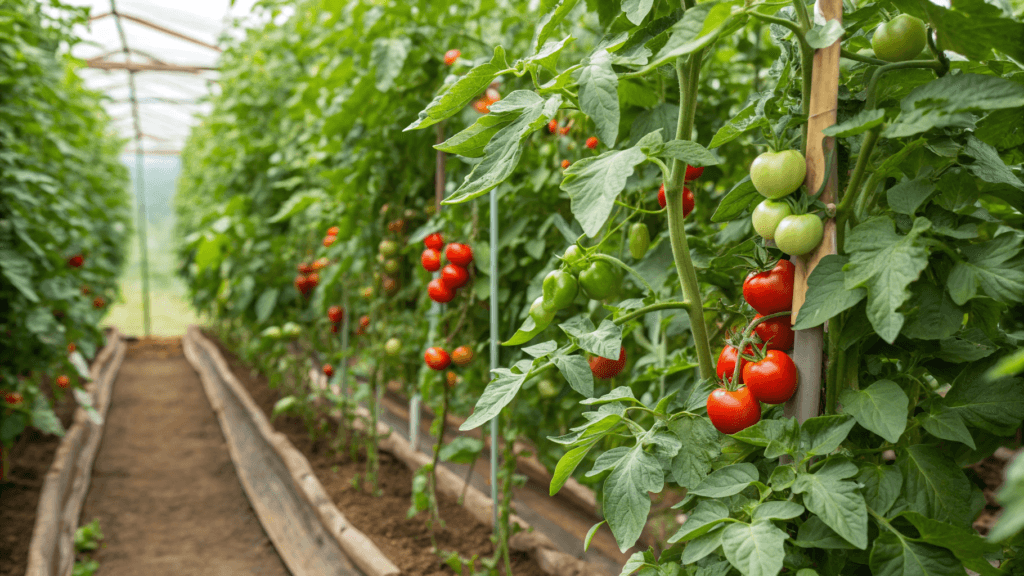
It may succeed when:
- Plants are heavily pruned
- Vertical trellising is used
- Climate is dry with strong airflow
- Gardeners monitor plants frequently
It usually fails when beginners allow plants to grow naturally without ongoing pruning or support adjustments.
How Support Systems Change Spacing Requirements
Support choice directly influences how wide tomato plants grow. Many spacing recommendations assume a specific support method, even if it isn’t clearly stated.
Tomato Cages
Caged tomatoes grow outward as much as upward.
Spacing guideline:
- 24-30 inches between plants
Cages work best with determinate or moderately sized indeterminate varieties. Large vigorous vines often outgrow standard cages and crowd neighboring plants.
Many spacing problems occur when cages themselves begin touching mid-season. Even correctly spaced plants can lose airflow if support structures overlap, so cage width should be considered part of plant spacing.
Staking and Single-Stem Pruning
When tomatoes are pruned to one main stem and tied vertically, plants occupy far less horizontal space.
This system allows:
- Spacing as close as 18-24 inches
- Improved airflow
- Easier harvesting
Market gardeners frequently use this approach to maximize production while maintaining plant health.
Trellis or String Systems
Trellising or string training keeps growth vertical and controlled.
Advantages include:
- Excellent airflow
- Efficient use of garden space
- Cleaner fruit and reduced disease pressure
Home gardeners adapting greenhouse-style systems can safely plant tomatoes closer together as long as pruning remains consistent.
Soil, Root Growth, and Underground Competition
Spacing decisions aren’t only about what happens above ground. Tomato roots spread much wider than many gardeners realize.
How Tomato Roots Actually Spread
Tomato roots expand laterally through the top soil layers where oxygen and nutrients are available.
A mature plant commonly spreads roots 2-3 feet outward from the stem under good conditions.
When plants sit too close together, root zones overlap heavily, increasing competition for water during hot weather.
Deep Planting and Its Effect on Plant Spacing
Tomatoes form roots along buried stems when transplanted deeply.
Deep planting strengthens plants but also expands the underground root network, which reinforces the need for adequate spacing between plants.
Signs Roots Are Competing Too Closely
Watch for these mid-season indicators:
- Plants are drying out unusually fast
- Slower vertical growth despite feeding
- Smaller fruit development
- Increased wilting during warm afternoons
These symptoms often appear even when soil fertility is adequate.
Timing Decisions That Affect Final Plant Size
Spacing should account for how large plants will eventually become, not how they look at transplanting time.
Early vs Late Planting Differences
Early-planted tomatoes typically grow larger because they establish roots before heat stress arrives.
Earlier planting often means:
- Wider canopy development
- Greater branching
- Need for slightly wider spacing
Late-planted tomatoes usually remain somewhat smaller but still require airflow.
Fertility and Growth Vigor
Rich soil encourages aggressive vegetative growth.
High nitrogen conditions can cause plants to spread wider than expected, making tighter spacing problematic. Gardens amended heavily with compost often benefit from adding a few extra inches between plants.
Climate and Humidity Considerations
Climate strongly influences spacing success.
- Humid regions: Wider spacing reduces disease pressure
- Dry climates: Slightly tighter spacing may work safely
When unsure, choosing wider spacing almost always leads to fewer problems.
Tomato Spacing Adjustments for Different Garden Goals
Spacing can also change depending on what you want from your tomato harvest.
For maximum production per plant: Allow wider spacing and minimal competition.
For small gardens: Vertical training and pruning allow slightly closer spacing.
For disease-prone climates: Increase spacing beyond the minimum recommendations to improve airflow.
For beginner gardeners: Wider spacing usually leads to easier plant management and fewer problems during summer.
Companion Planting Without Creating Overcrowding
Companion planting works best when secondary crops occupy unused space temporarily rather than competing long-term.
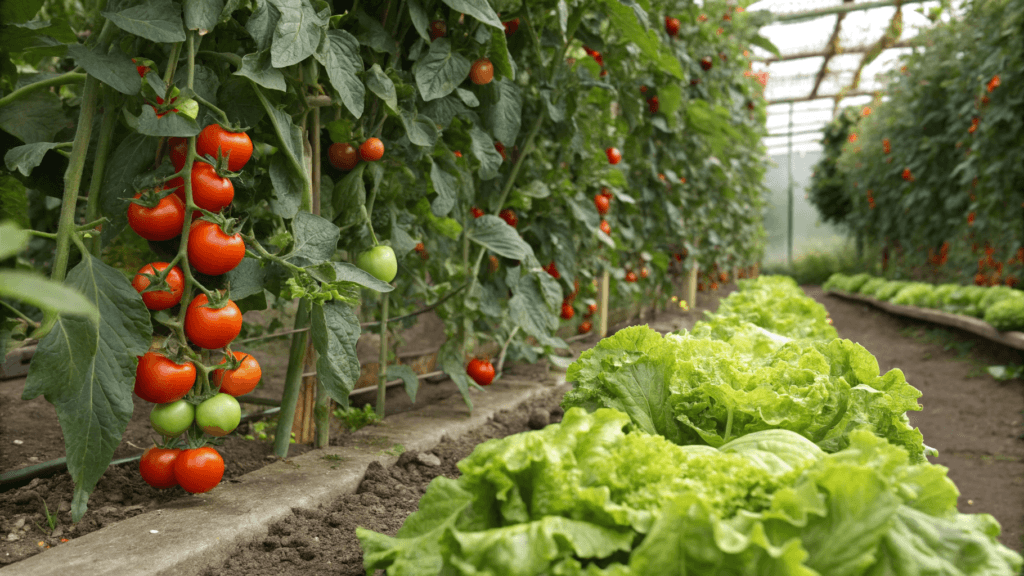
Good Companion Plants That Fit Tomato Spacing
These plants coexist well without major competition:
- Basil planted near but not touching stems
- Lettuce can be grown early, before tomatoes expand
- Green onions or shallow-root herbs
These companions mature or remain small before tomato canopies fully close.
Plants That Compete Too Aggressively
Avoid planting nearby crops that demand similar space or nutrients:
- Large brassicas like cabbage or broccoli
- Corn creates shade and airflow blockage
- Sprawling squash or melon vines
Competition increases quickly once tomatoes reach peak growth.
Using Underplanting Safely
Underplant companions early in the season and remove or harvest them before tomato foliage fills the area. Timing prevents overcrowding while still making efficient use of space.
Common Tomato Spacing Mistakes Beginners Make
Spacing problems usually come from reasonable assumptions rather than poor gardening practices.
Following Square Foot Gardening Numbers Too Strictly
Square-foot charts often prioritize plant quantity rather than airflow. Tomatoes frequently need more room than simplified diagrams suggest.
Planting Based on Seedling Size Instead of Mature Size
Young transplants appear small and manageable, but mature plants expand dramatically within weeks.
Forgetting Future Pruning or Support Systems
Spacing should match how plants will be trained later. Changing support methods mid-season often leads to crowding.
Underestimating Airflow Needs in Summer
Spring gardens feel open. By July, dense foliage traps humidity unless spacing was planned correctly from the start.
How to Fix Tomatoes That Were Planted Too Close Together
Crowded tomatoes can often be improved even after planting.
When Thinning Is Still Possible
If plants are newly transplanted, removing one plant early usually saves the remaining ones and improves overall harvest.
Strategic Pruning to Improve Airflow
Selective pruning helps reduce canopy density:
- Remove excessive side shoots
- Maintain defined plant structure
- Prevent foliage overlap between neighbors
Pruning cannot fully replace spacing, but it can reduce disease risk.
Removing Lower Leaves to Reduce Disease Spread
Removing lower leaves once plants establish helps prevent soil-borne disease splash during watering or rain.
Managing Water and Feeding in Crowded Beds
Closely planted tomatoes require more consistent watering and balanced feeding since roots compete heavily for resources.
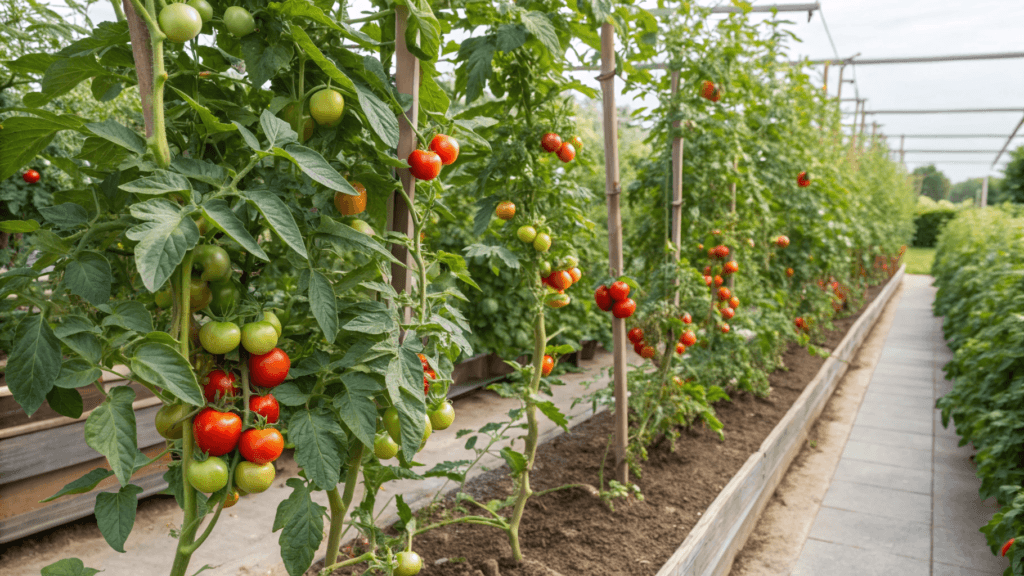
What Properly Spaced Tomato Plants Should Look Like Mid-Season
Healthy spacing becomes obvious by mid-summer.
Healthy Canopy Structure
Plants should touch lightly at maturity but not form a solid wall of foliage. Individual plants remain visually distinguishable.
Light Reaching Interior Leaves
Sunlight should still reach the inner leaves and developing fruit clusters during part of the day.
Normal Growth Expansion Benchmarks
Well-spaced indeterminate tomatoes typically reach:
- 5-7 feet tall with support
- Strong lateral branching
- Continuous flowering along vines
Plants that remain open and airy tend to stay productive longer into the season.
Harvest Expectations Based on Spacing Choices
Spacing decisions influence not only plant health but also harvest quality.
Yield Per Plant vs Yield Per Area
Closer planting may increase early yield per area, but properly spaced plants usually outperform crowded beds over the full season.
Fruit Size Differences
Adequately spaced plants commonly produce:
- Larger tomatoes
- More evenly ripened fruit
- Fewer cracked or stressed fruits
Disease Pressure Late in the Season
Crowded gardens often decline earlier due to disease buildup, while well-spaced tomatoes continue producing until cooler weather arrives.
Quick Tomato Spacing Cheat Sheet
Determinate tomatoes: 18-24 inches
Indeterminate tomatoes: 24-36 inches
Single-stem pruning: 18-24 inches possible
Raised beds: 24-30 inches ideal
Containers: One plant per container
Humid climates: Add extra spacing
Conclusion
Correct tomato spacing is one of the simplest decisions that leads to healthier plants and better harvests months later. Instead of focusing on how many plants fit into a space, successful gardeners plan for mature plant size, airflow, and root expansion from the beginning.
When spacing matches plant type, support system, soil fertility, and climate conditions, tomatoes grow stronger, require less intervention, and remain productive longer through the season.
If there’s uncertainty, choosing slightly wider spacing is almost always the safer decision. Tomatoes rarely suffer from having too much room, but they frequently struggle when planted too close together.

Leave a Reply