
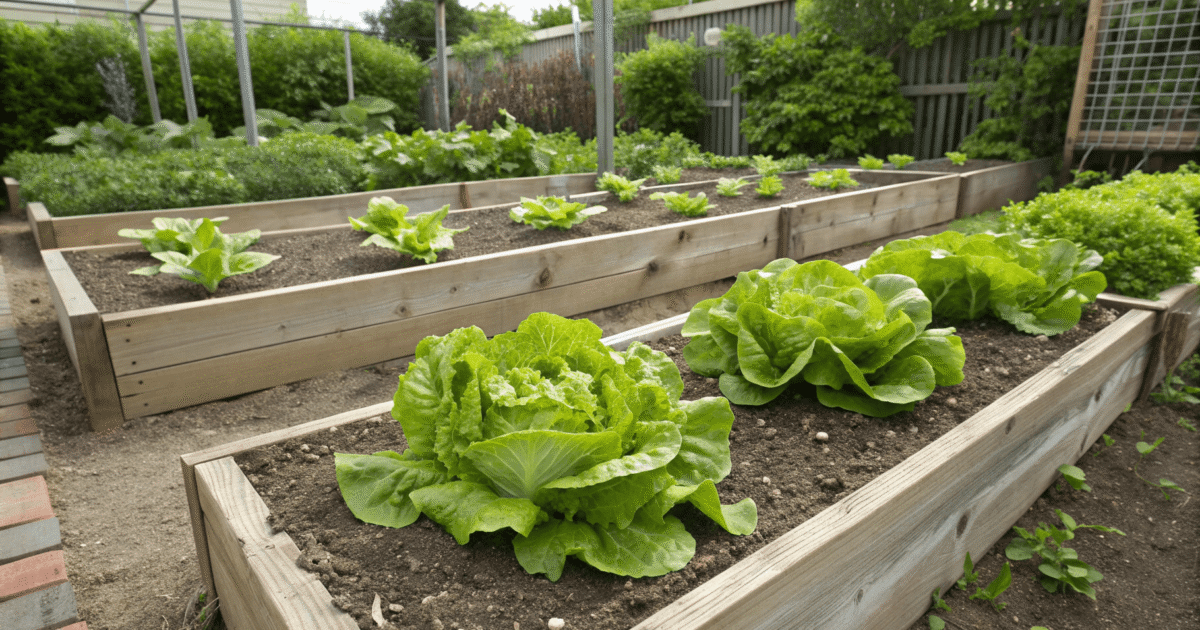
If you’re dreaming of a productive garden but feel overwhelmed by where to start, raised beds are one of the easiest, most beginner-friendly ways to grow vegetables, herbs, and flowers.
This guide focuses specifically on raised bed gardening for vegetables, including how to build, fill, plant, and maintain raised beds for food production, not ornamental plants.
Raised bed gardening gives you better control over soil quality, reduces weeds, makes growing easier on your back and knees, warms up earlier in the spring, and produces higher yields, even in small spaces.
If you’re completely new, start with our Vegetable Gardening for Beginners guide for the basics.
What Is a Raised Bed?
A raised bed is a garden bed built above ground level, usually enclosed by a frame of wood, metal, stone, or composite materials. Instead of relying on your native soil, you fill the bed with a growing mix designed specifically for vegetables.
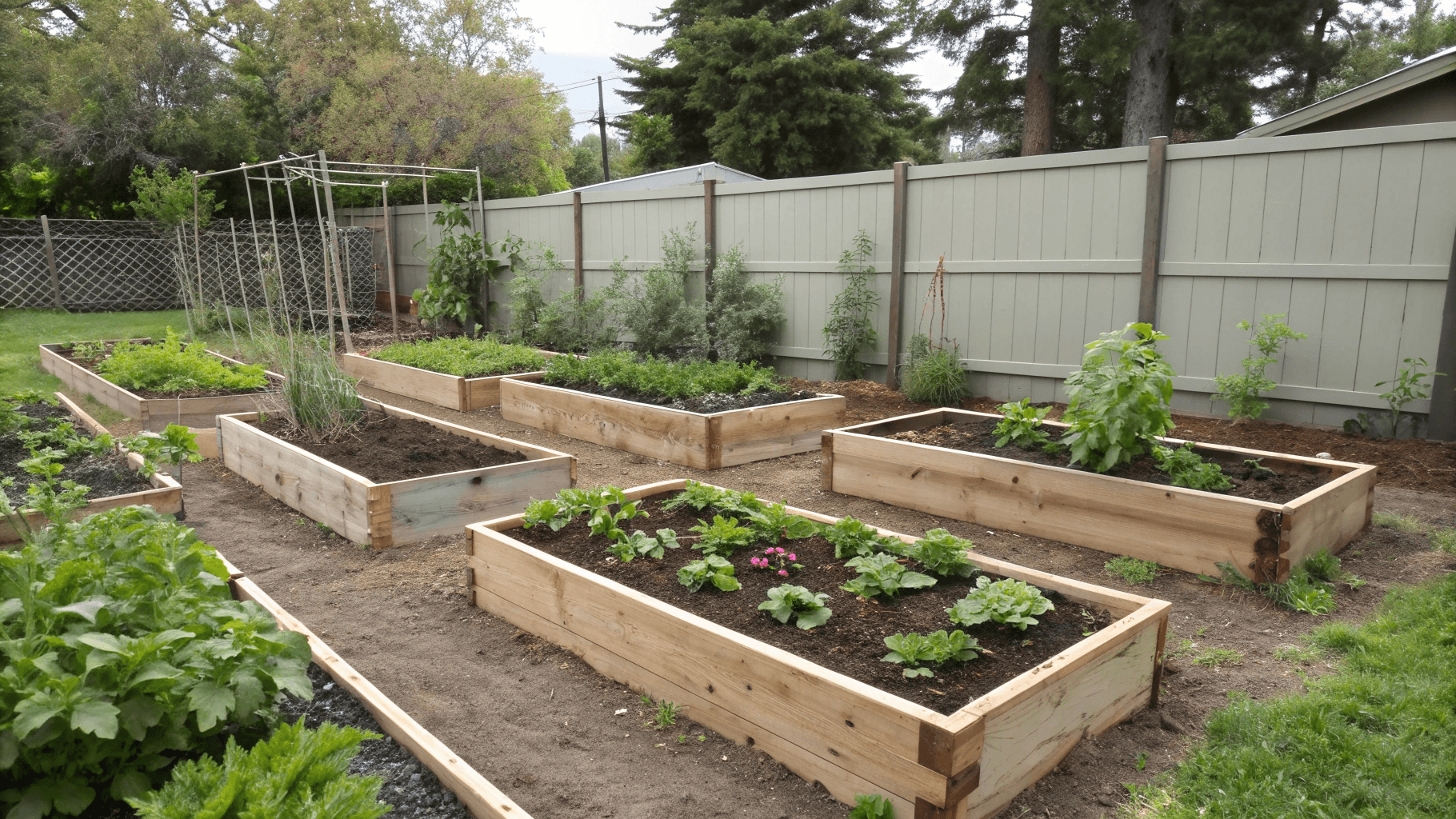
Benefits of Raised Bed Gardening:
- Better soil from day one, no rocks, no clay, no guessing.
- Earlier planting and faster growth, raised beds warm up sooner in spring and drain better.
- Fewer weeds, the contained area makes weed control dramatically easier
- Higher yields in small spaces, loose soil encourages strong root growth.
- Easier to reach, perfect for people who prefer gardening without kneeling or bending too much.
Materials of Raised Beds
Choosing the right raised bed material affects durability, soil health, and long-term maintenance, especially when growing vegetables.
Wood Raised Beds
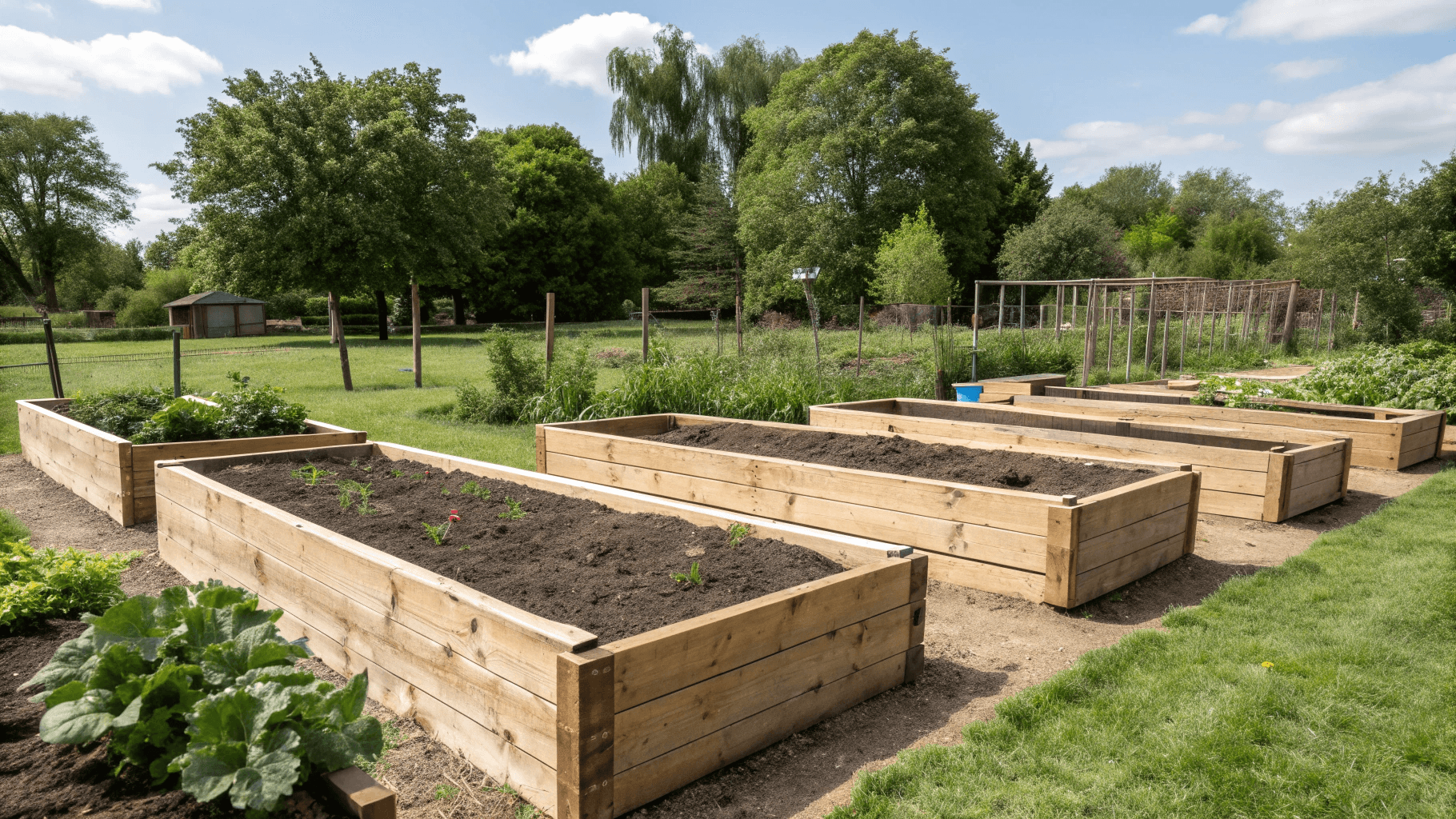
Pros: Affordable, natural look, easy to build.
Cons: Wood breaks down over time.
Best Wood Choices
- Cedar (top choice, naturally rot-resistant)
- Redwood
- Untreated pine (budget-friendly but shorter lifespan)
Metal (Galvanized Steel) Raised Beds
These are becoming the #1 choice among gardeners for durability and style.
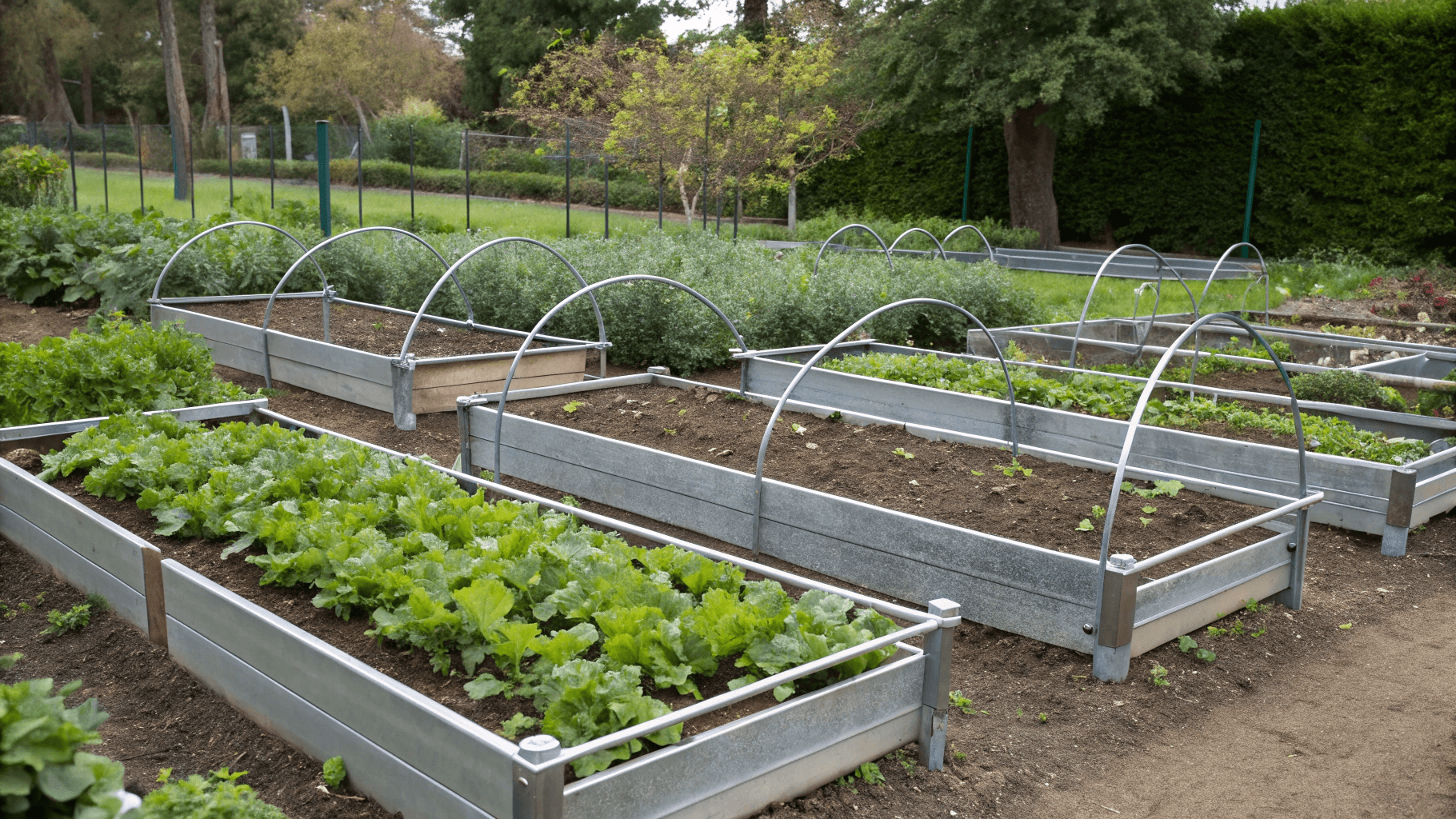
Pros: Extremely long-lasting, great for moisture control, and never warps.
Cons: Can heat up slightly in full sun (but rarely an issue with soil inside).
You can check some options on Amazon!
Plastic/Composite Raised Beds
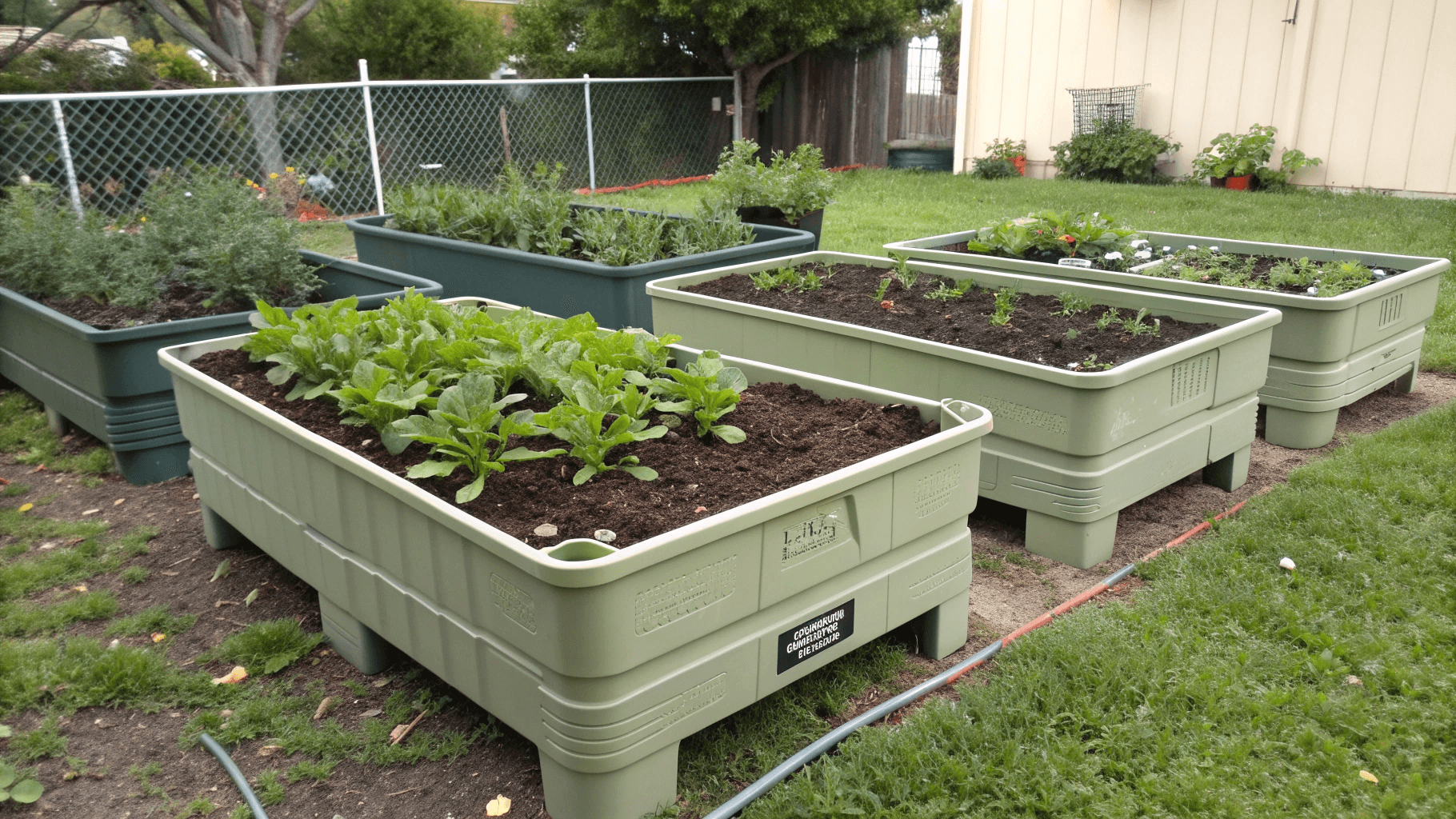
Pros: Lightweight, weather and rot-resistant, easy to assemble.
Cons: Can fade in harsh sun; price varies widely.
Fabric Raised Beds (Grow Bags)
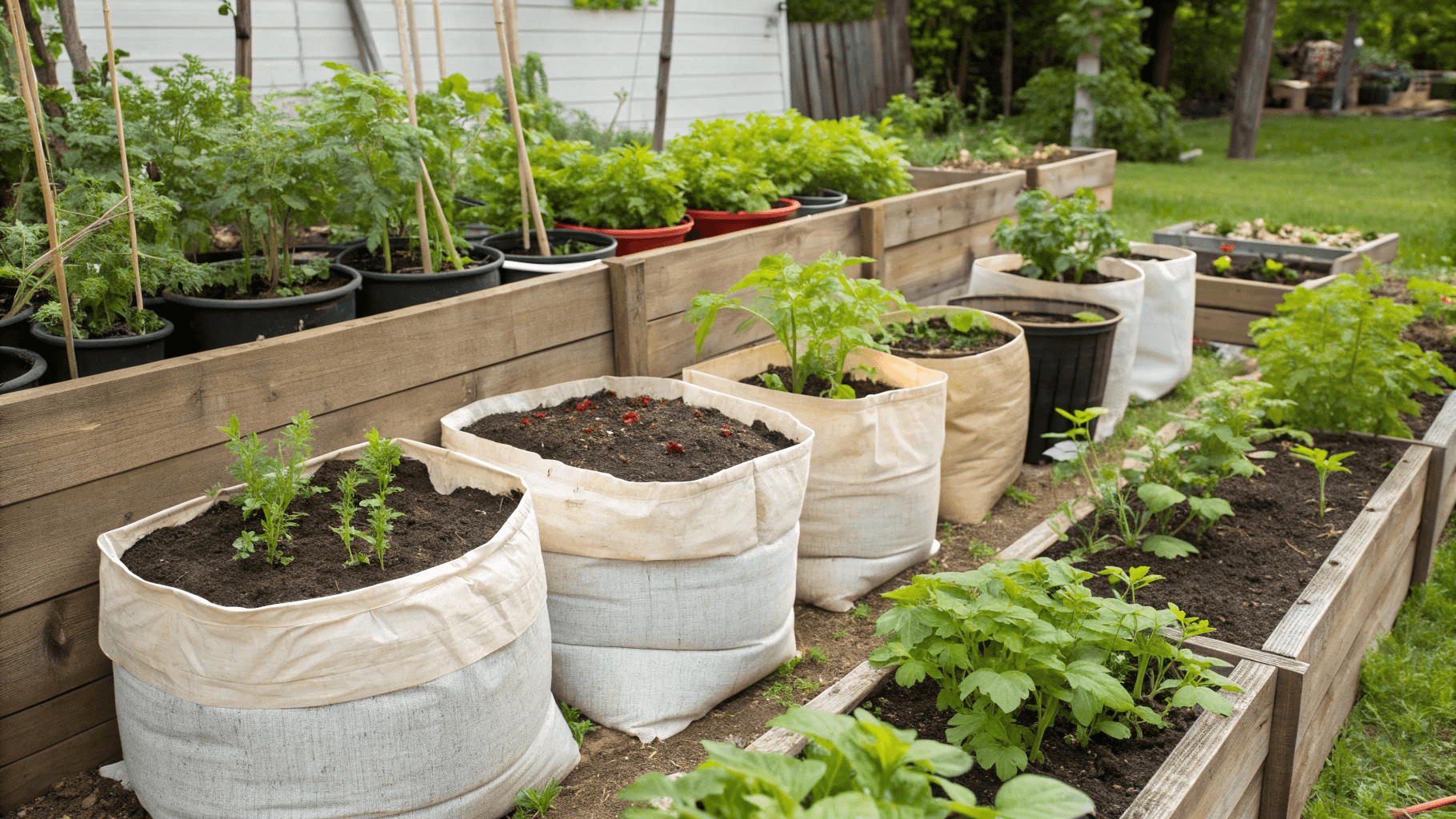
Pros: Affordable, breathable, portable, great for patios.
Cons: Shorter lifespan, dries out faster.
Fantastic for people renting, gardening on a driveway, or experimenting.
These can also be found on Amazon.
DIY/recycled (Pallet Wood, Brick, Cinder Block, Logs, Repurposed Lumber)
A fun option if you’re handy or want to reuse materials.

Pros: Customizable, creative, often free, but be cautious of wood treatments.
Cons: Time-consuming; some materials may leach lime or chemicals (e.g., railroad ties).
Avoid pressure-treated wood or railroad ties where food is grown.
Stone or Brick Raised Beds
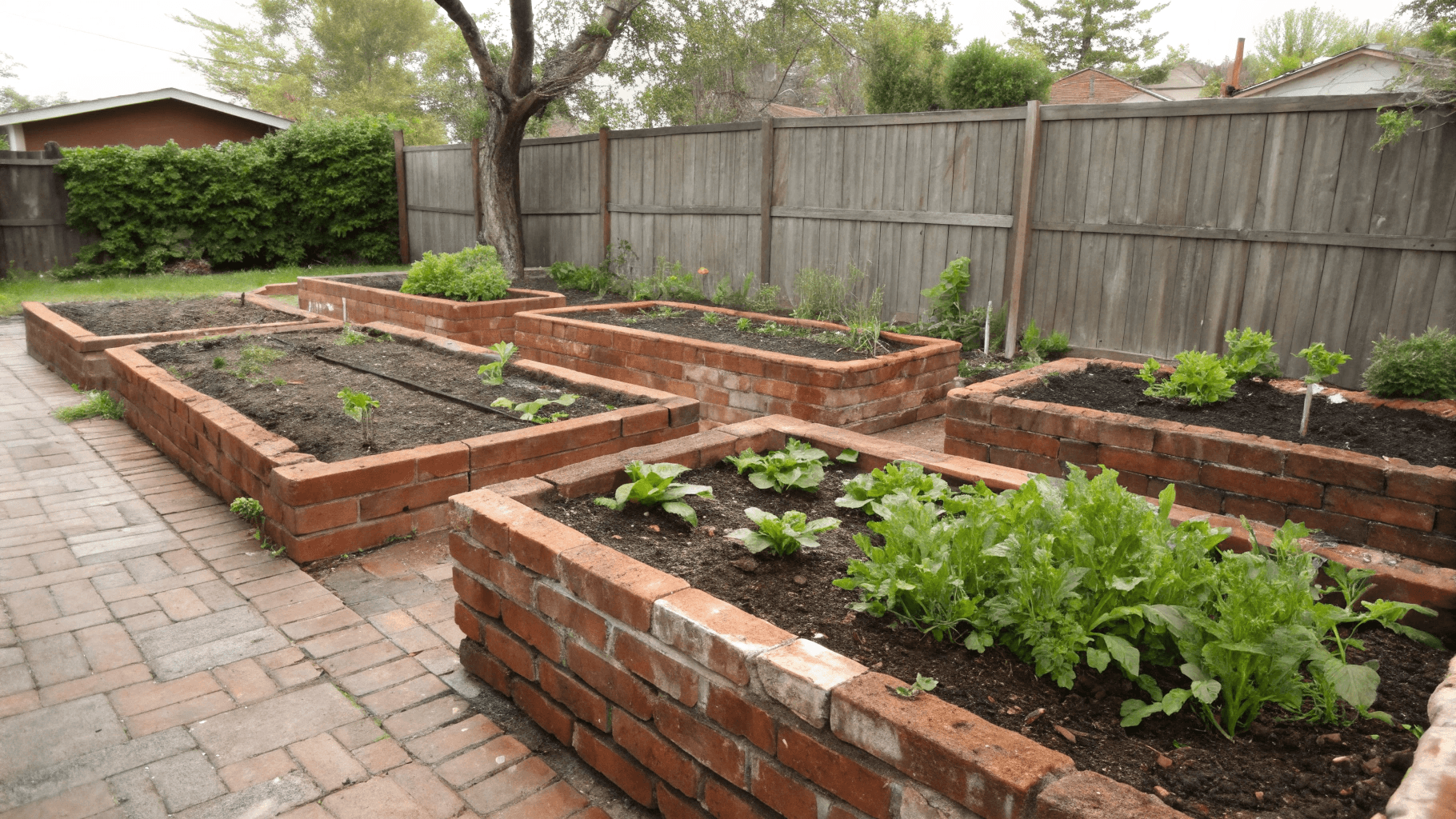
Pros: Extremely durable, excellent heat retention and can handle tall.
Cons: Expensive, labor-intensive to build and can overheat in hot climates.
Types of Raised Beds for Vegetable Gardening
Raised Beds Offer:
- Better soil control
- Faster spring warm-up
- Fewer weeds
- Improved drainage
- Easy access for planting and harvesting.
Downsides: They can dry out faster and require upfront costs for building and soil.
In-Ground Gardens are:
- Cheaper (no materials or purchased soil).
- Less watering is needed (soil moisture lasts longer).
- More space for deep-rooted or sprawling plants.
- Flexible layout, easy to expand or reshape.
- Better ecosystem integration (worms, fungi, microbes already present).
Downsides: Harder to improve soil if you have heavy clay, rocks, sand, or poor fertility. Weed seeds are already in the native soil and can have drainage problems.
Elevated Beds (off the ground, waist-height)
- Great for patios, balconies, and paved areas.
- Ideal for mobility/accessibility.
- Less access for slugs, rabbits, and ground insects.
Downsides: Usually shallower soil (6-10 inches) and dries out the fastest. Need the strongest materials to hold soil weight.
Planning Your Raised Bed Garden
A great raised bed starts with smart planning.
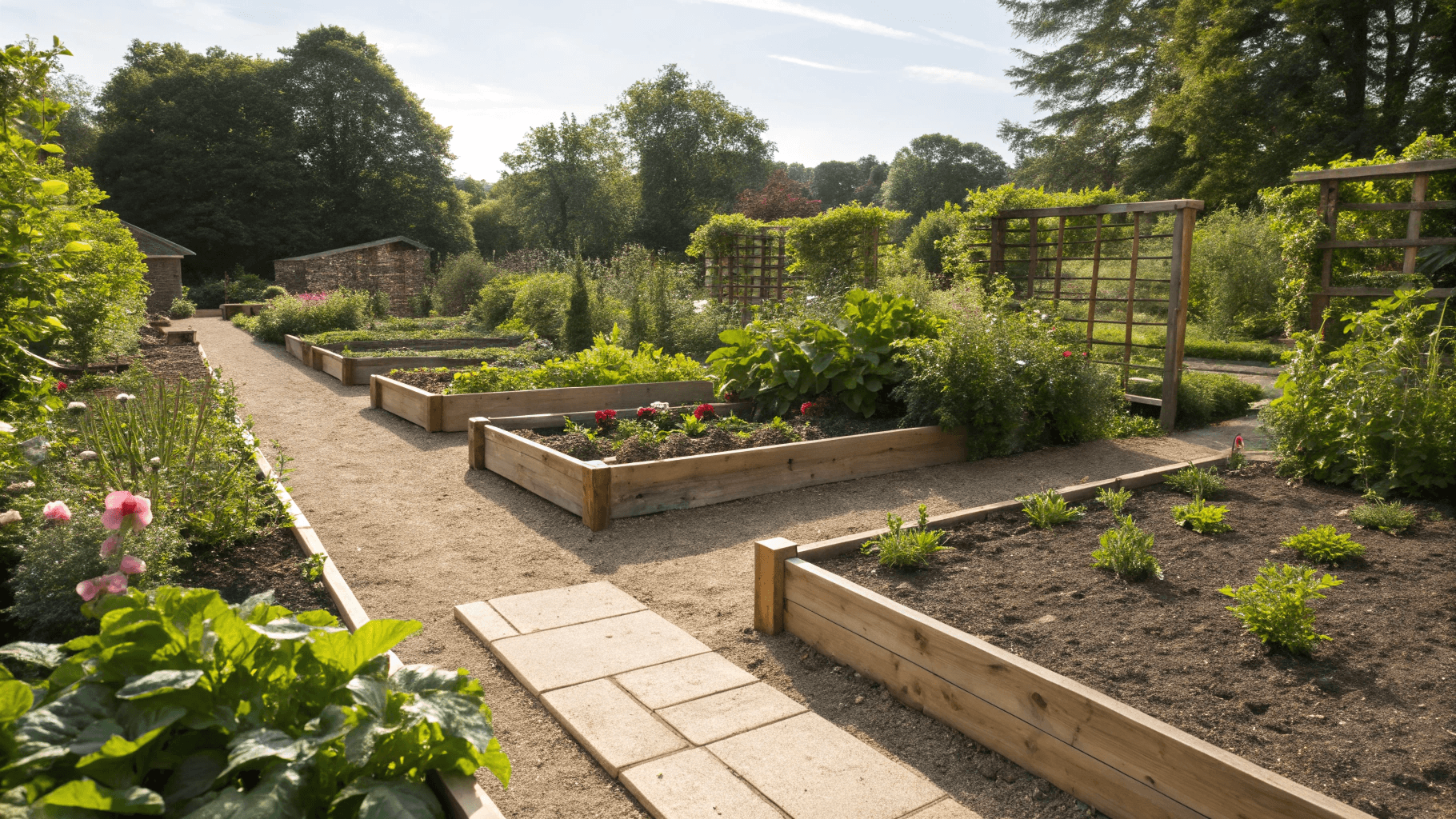
1. Choosing the Best Location
- Sunlight: 6-8 hours minimum for vegetables.
- Drainage: Avoid low areas where water pools.
- Wind: Some wind is fine, but strong gusts stress plants.
- Water Access: Close to a hose = consistent watering.
- Level Ground: Saves time during construction.
2. Ideal Raised Bed Dimensions
For most vegetables, deeper beds also reduce watering stress during summer.
- Width: 4 ft (1.2 m) is ideal; you can reach the center from either side without stepping inside.
- Length: 4-12 ft, depending on space. Long enough for planting rows without being overwhelming.
- Depth: For herbs/leafy greens, 6-12 inches is enough, 12-24 inches for root plants; deeper beds (18-24 inches) help for most root crops and places with very poor soil.
Tip: If you’re placing a bed on concrete or a deck, go for 12+ inches, so roots have full depth.
More: How Deep Should a Raised Bed Garden Be?
3. Choosing Materials
- Cedar: 10-15 years of life; pricier but worth it.
- Pine: Cheap but lasts only a few years.
- Metal (galvanized steel): Durable and dries quickly in spring.
- Composite: Middle ground, long-lasting but heavier.
4. Layout Tips
Small yards: Use 1-2 beds, 4 ft wide, placed parallel for easy access.
Large yards: Create a grid layout with 3-4 ft walking paths. Add a central walkway for wheelbarrows or hose reels.
Building a Raised Bed
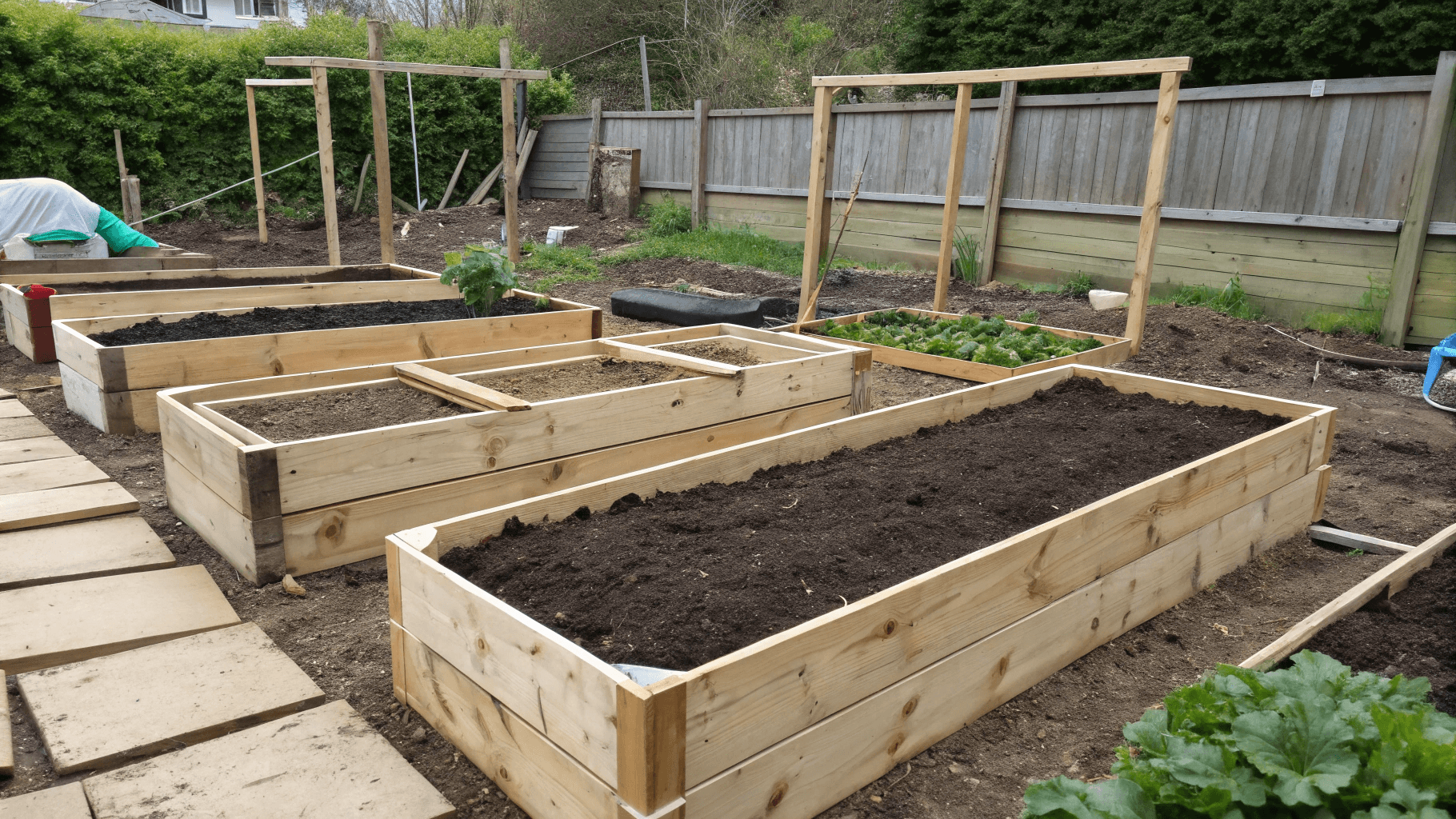
1. Ground Preparation
- Remove grass or weeds.
- Level the area so the frame sits flat.
- Optional: Lay cardboard to suppress remaining weeds.
2. Build the Bed Frame
- Measure twice, cut once.
- Assemble corners with exterior screws.
- Add corner braces if the bed is longer than 8 ft to prevent bowing.
3. Consider Lining the Bottom
In organic vegetable gardening, cardboard is often preferred because it suppresses weeds while breaking down naturally and feeding soil life.
Depending on your situation:
- Weed barrier fabric: Helps if you’re fighting aggressive weeds.
- Cardboard: Great biodegradable option.
- Gravel layer: Improves drainage in wet climates.
- Wire mesh: Blocks burrowing pests like gophers.
4. Fill With the Right Soil Layers
A simple layering method:
- Bottom: sticks, old leaves, or coarse compost (optional).
- Middle: bulk topsoil.
- Top: nutrient-rich compost or a premium raised bed mix.
Related content: How to Build a Raised Garden Bed on a Budget
How to Fill a Raised Bed
Healthy soil is the real secret behind raised bed success. Unlike ground soil, which may be compacted or nutrient-poor, raised bed soil can be customized to support strong, vigorous growth.
Related content: How to Fill a Raised Garden Bed for Cheap
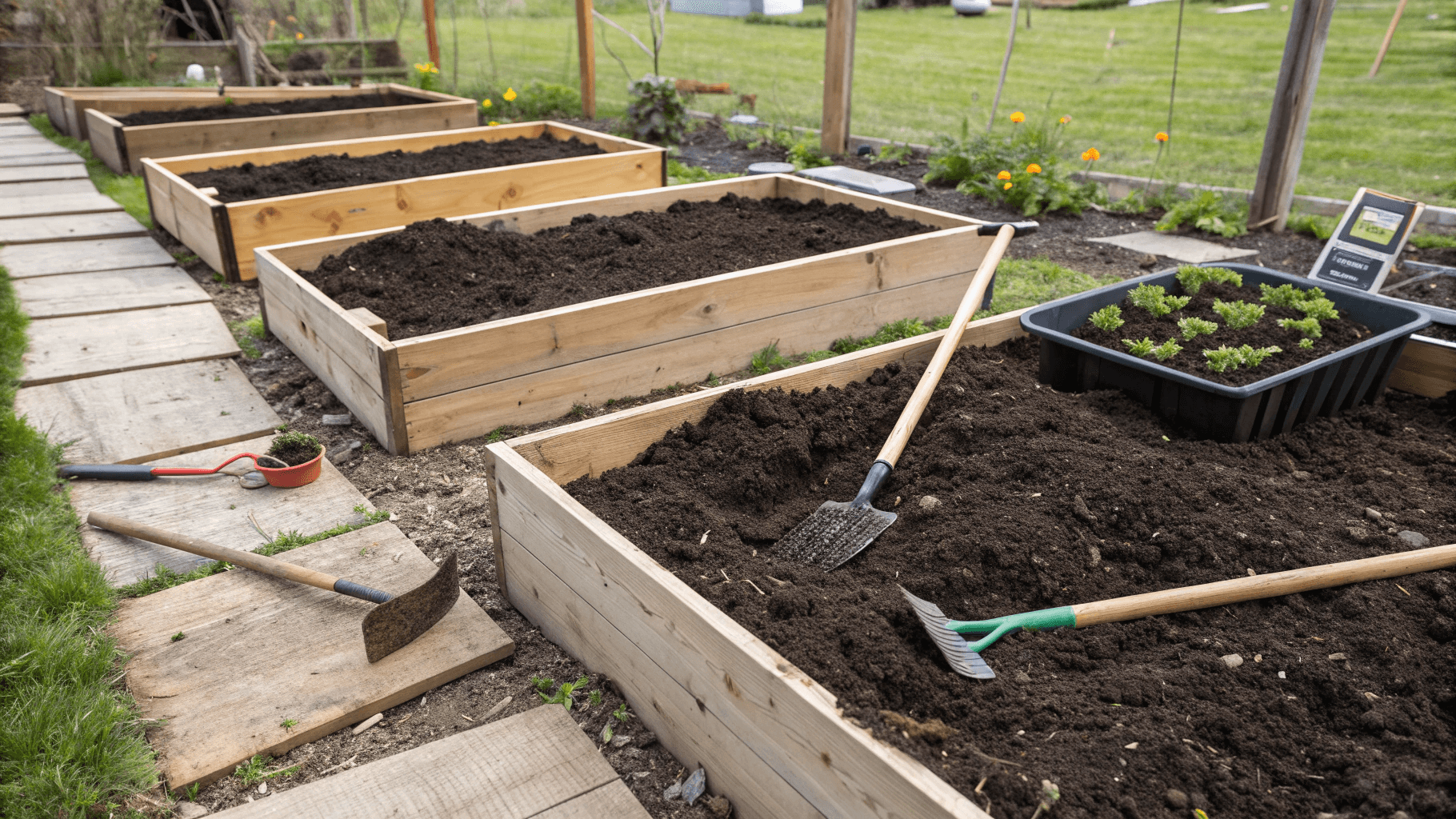
What Makes a Good Raised Bed Soil?
In raised beds, soil quality matters more than fertilizer because roots rely entirely on the soil you provide.
- Good drainage to prevent root rot
- Light texture to support root expansion
- Lots of organic matter to feed plants
- Proper aeration for oxygen flow
Related content: Best Soil Mix for Raised Beds Recipes
Best Budget-Friendly Soil Mix
- 40% compost (homemade, store-bought, or a mix)
- 40% topsoil
- 20% aeration material (perlite, pumice, coarse sand, or fine pine bark)
This creates a loose, fertile, well-draining mix that plants love.
If you want a premium mix, aim for a blend of:
- Compost
- Coconut coir or peat moss (to help retain moisture)
- Vermiculite or perlite
- A slow-release organic fertilizer (like a balanced 4-4-4) to give you a strong start
Related content: Make the Best Seed Starting Soil Mix at Home
Do NOT fill your raised bed with only
- Bagged garden soil alone is too dense
- Potting mix alone is too fluffy and dries quickly
- Straight compost is too rich; plants may burn or flop
Layering Method (Hugelkultur Option)
If your beds are tall (18-24 inches), you can save money by filling the bottom with:
- Logs
- Sticks
- Leaves
- Grass clippings
Then add your soil mix on top. This improves drainage and reduces the amount of soil you need.
Adjusting Soil pH and Texture
- Add lime to raise the pH if your soil is too acidic.
- Add sulfur to lower the pH for acid-loving crops like blueberries.
- Add compost to improve texture and fertility anytime.
Seasonal Soil Refreshing
Each spring:
- Mix in 1-2 inches of compost.
- Break up surface crusts.
- Top off the bed if soil settled over winter.
Watering, Irrigation, and Fertilizing
Raised beds dry faster than in-ground gardens because the soil is looser and elevated. That’s great for drainage, but it also means consistent watering is important.
Watering
- Spring: Every 2-3 days, depending on rainfall.
- Summer: Usually once a day, or twice in extreme heat.
- Fall: Every few days as temperatures cool.
My favorite test: Stick a finger 2-3 inches into the soil. If it feels dry, it’s time to water.
Morning watering is ideal because it prevents fungal diseases.
Irrigation Options
- Manual watering: Fine for small beds; use a gentle wand.
- Soaker hoses: Affordable, beginner-friendly, and reduce water waste.
- Drip systems: Best long-term option; delivers slow, steady moisture directly to roots.
Fertilizing
Raised beds are often nutrient-rich at first, but nutrients need to be replenished each season.
- At planting: Mix in a balanced organic fertilizer (4-4-4 or similar)
- Mid-season: Add compost or give a light top-dressing of fertilizer
- Heavy feeders (tomatoes/peppers): Feed monthly during peak growth
Organic fertilizers release nutrients slowly, which prevents overfeeding.
What to Plant in Raised Beds
Raised beds are especially well-suited for vegetables with shallow to moderate root systems.
They are perfect for vegetables, herbs, and even flowers. If you’re starting, choose plants that grow quickly and reliably.
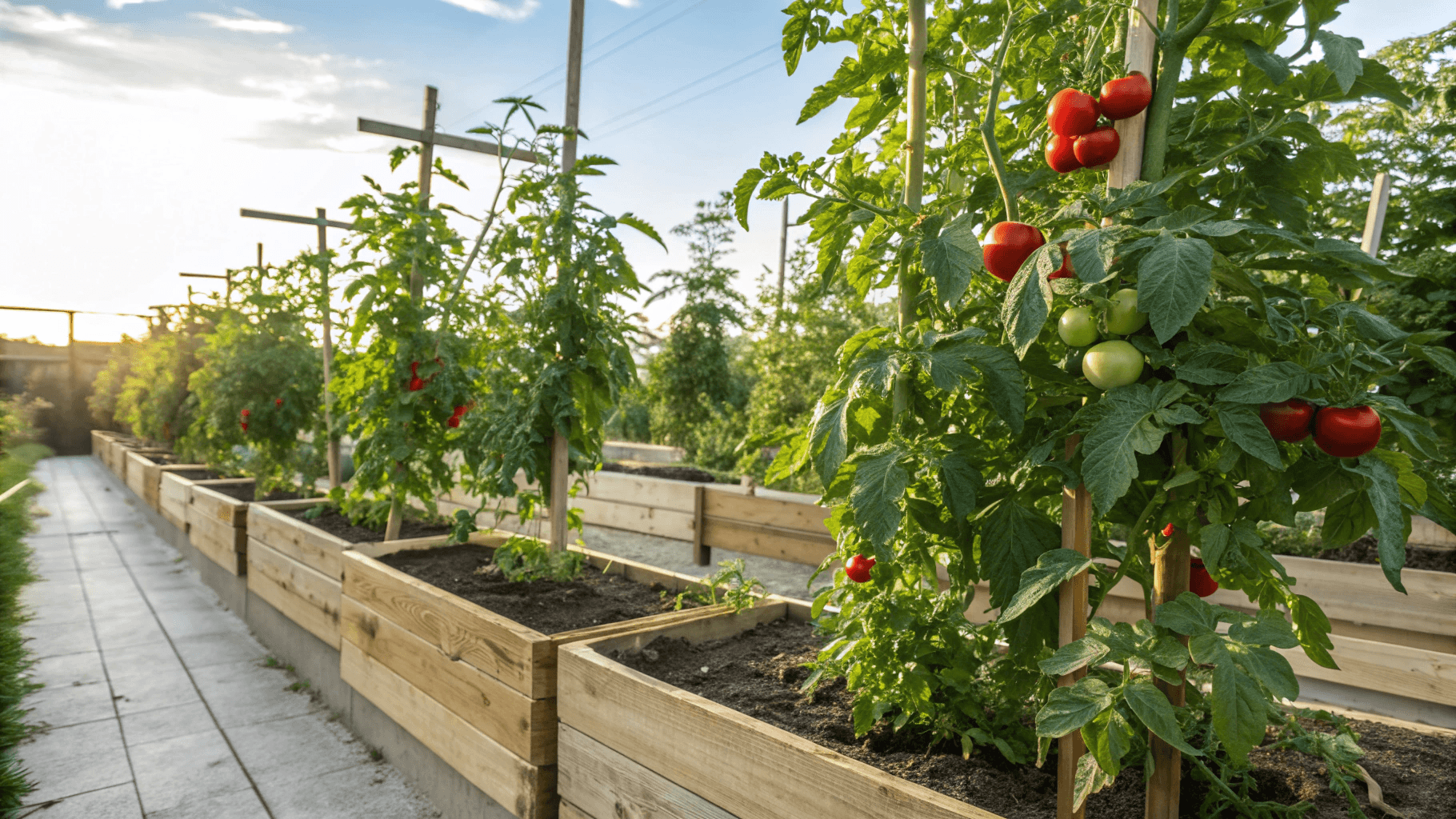
Best Vegetables for Raised Beds
- Tomatoes and cherry tomatoes
- Peppers
- Lettuce and leafy greens
- Carrots and root crops
- Beans
- Cucumbers
- Squash and zucchini
- Radishes
- Strawberries
- Garlic
- Onions
- Potatoes
Best Herbs
- Basil
- Thyme
- Dill
- Parsley
- Oregano
- Rosemary (prefers a drier corner of the bed)
- Mint (plant in a pot inside a bed to contain it)
Flowers
- Marigolds (natural pest control)
- Zinnias
- Nasturtiums (edible and great companions)
Succession Planting Example
Try this cycle for one bed:
- Spring: Lettuce + radishes
- Summer: Bush beans
- Fall: Spinach
What NOT to plant in a small raised bed
- Corn (too tall, too nutrient-hungry)
- Asparagus (perennial, permanent)
- Potatoes (better in containers to prevent disease spread)
- Large perennial bushes
- Pumpkins
- Watermelon
Seasonal Care and Maintenance
Raised beds thrive when they’re cared for a little at a time throughout the year. Instead of big, overwhelming tasks, seasonal care focuses on small adjustments that keep soil healthy and plants productive.
Spring
- Add 1-2 inches of fresh compost to the top
- Check for soil settling and top up if needed
- Loosen the soil with a hand fork
- Start planting cool-season crops early (lettuce, peas)
Summer
- Water consistently
- Mulch with straw or shredded leaves to retain moisture
- Harvest often to encourage new growth
Fall
- Remove old plants
- Add a layer of compost
- Plant cool-season crops if your zone allows
- Cover beds if frost is early in your region
Winter
- Cover beds with leaves, straw, or mulch.
- Leave root systems in place to feed the soil (optional)
- Add a winter cover crop (rye, clover) to enrich the soil. Cover with a tarp or frost cloth if you want to protect the soil
Common Problems and Solutions
Even well-built raised beds can develop issues over time. Below are the most frequent issues gardeners run into and the practical solutions that keep raised beds healthy and productive.
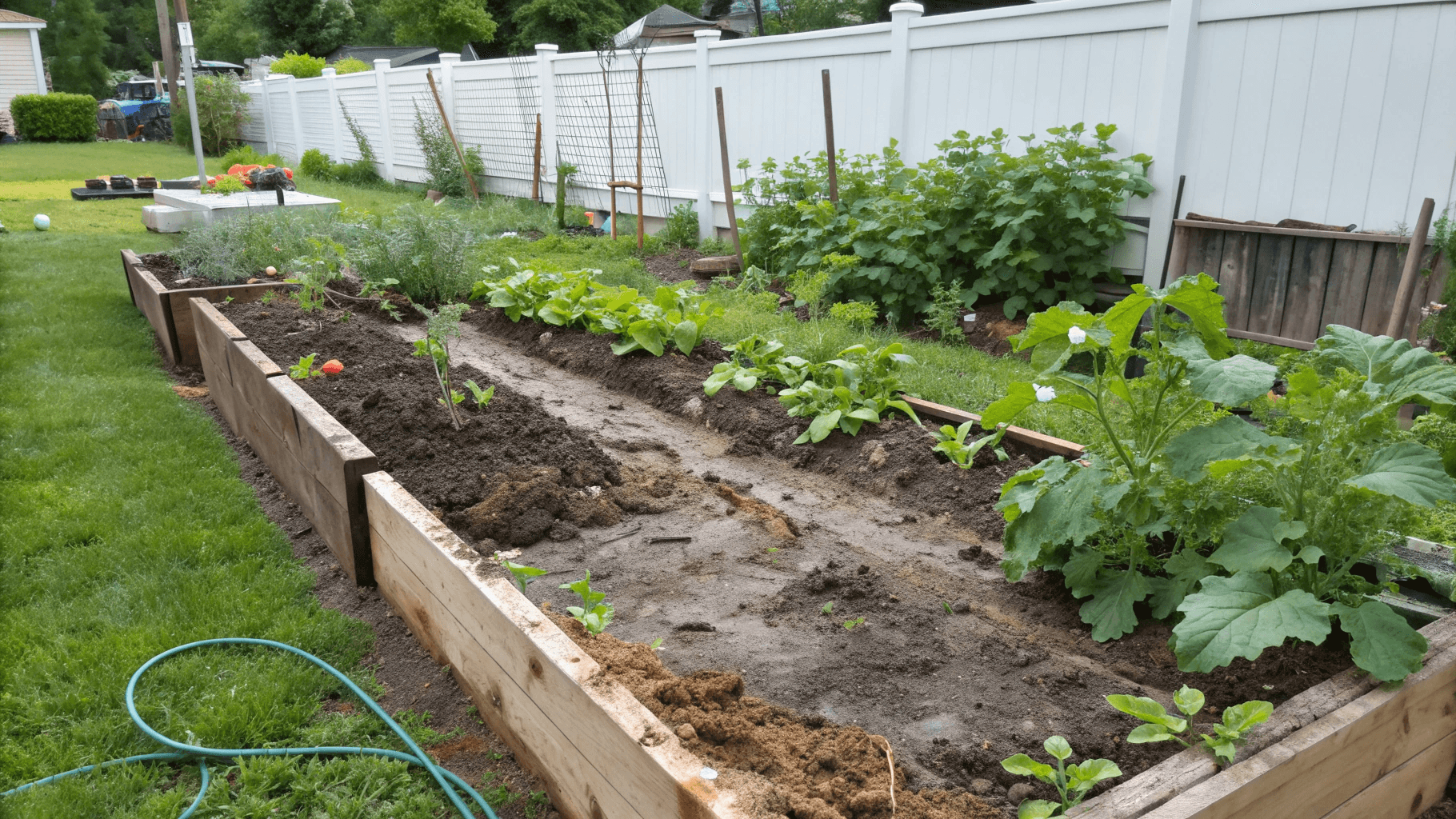
1. Soil Level Drops Every Season
Solutions: Normal! Soil breaks down over time. Loosen gently with a garden fork, add 2-3 inches of compost, and avoid stepping in the bed.
2. Poor Drainage
Solutions: Mix in coarse sand or perlite; check that the bed isn’t sitting in a low spot.
3. Yellow Leaves
Solutions: Add compost or use a balanced organic fertilizer.
This is often nutrient-related.
4. Soil Dries Out Too Fast
Solutions:
- Add compost to improve moisture retention
- Mulch the surface
- Incorporate coconut coir
- Increase watering frequency
5. Pests Getting Into The Bed
Solutions:
- Use floating row covers or hand-pick at dusk
- Install mesh around the bed
- Plant pest-repelling herbs like basil, mint, and chives
Raised Bed Gardening Options
Raised beds work in many different situations, even when space, soil, or mobility is limited. Whether you’re gardening on a balcony, dealing with poor native soil, or need easier access, choosing the right type of raised bed can make gardening more comfortable and far more successful.
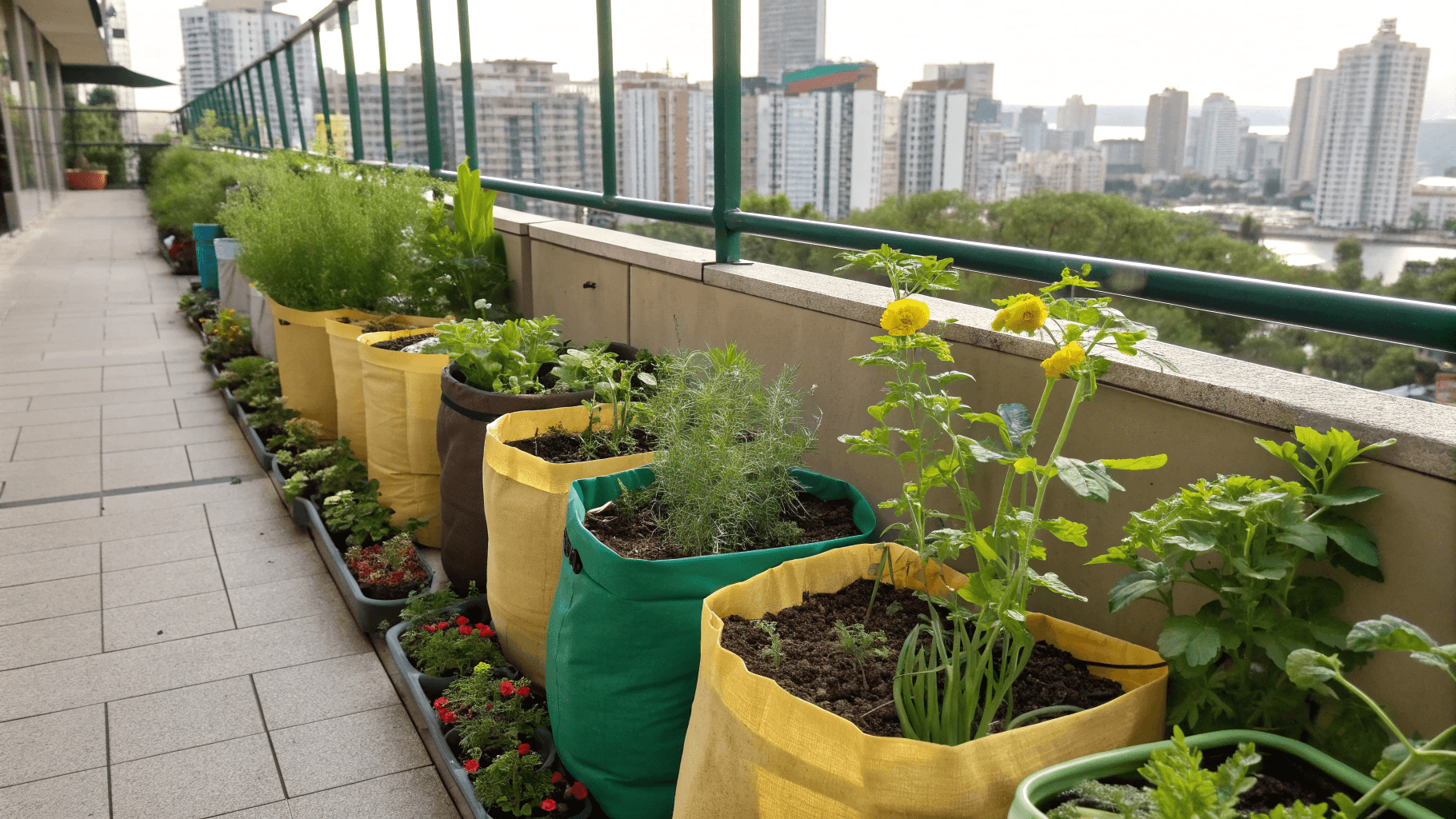
Small Spaces (Balconies and Patios)
Use elevated beds, grow bags, or narrow metal beds. Choose dwarf or compact vegetable varieties.
Poor Native Soil
Raised beds are the perfect solution; your crop roots will never touch the problematic ground soil.
Accessibility and Mobility Needs
Choose raised beds that are:
- 24-36 inches tall
- Narrow enough to reach the center
- Placed near water access
- Set on level ground or patios
Real-World Tips for Raised Bed Vegetable Gardening
Raised beds reward consistency more than perfection. In the first year, focus on learning how quickly your beds dry out, how your soil settles, and which vegetables thrive in your setup.
Each season improves soil quality, making raised beds easier to manage over time.
Conclusion
Raised bed gardening is one of the easiest ways to grow your own food, whether you’re working with a big backyard, a city patio, or soil that’s basically concrete. With better control, fewer weeds, and more productive plants, raised beds set you up for gardening success from day one.
Now that you know how to plan, build, fill, plant, water, and maintain a raised bed, you’re ready to start your first one this season.

Leave a Reply