
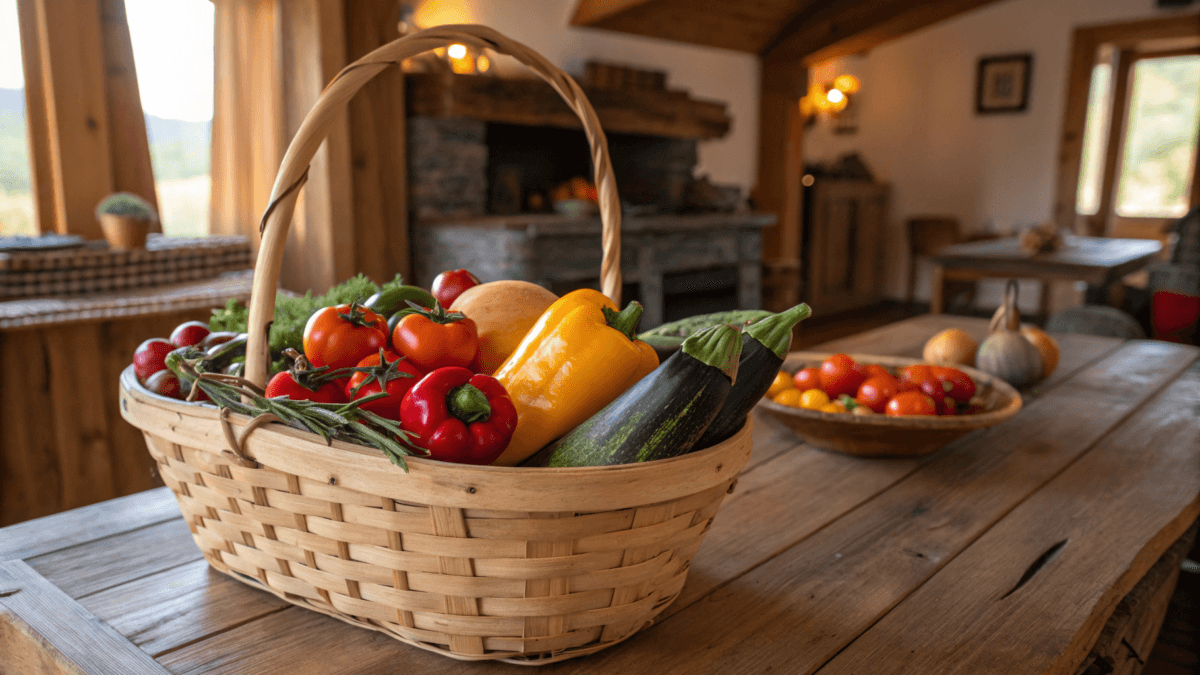
Fruiting vegetables are the crops you grow for the fruit that forms after flowering. Unlike leafy greens or root crops, the edible part develops above ground after the plant blooms. Tomatoes, cucumbers, beans, squash, peppers, and corn all fall into this category.
These crops usually need more sun, more warmth, and more feeding than leafy vegetables. They are often planted after the risk of frost has passed and the soil has warmed, and require steady watering during flowering and fruit development.
If you want larger yields and summer-long production, fruiting vegetables are where most of that productivity happens.
If you’re new to growing food, start with the basics in Vegetable Gardening for Beginners, then come back here to choose which fruiting crops fit your space and climate.
Quick Overview: Fruiting Vegetables at a Glance
• Grown for fruits that develop after flowering
• Require full sun (6-8+ hours daily)
• Planted after soil warms in spring
• Need steady watering during flowering and fruiting
• Often benefit from support (stakes, cages, or trellises)
Fruiting vegetables are typically the most space-demanding but also the most calorie-dense crops in a home garden.
What Are Fruiting Vegetables?
Fruiting vegetables are plants grown mainly for the edible fruit that develops from the flower. Once pollinated, the flower forms the edible portion we harvest. The fruit contains seeds and is usually harvested when mature but not overripe.
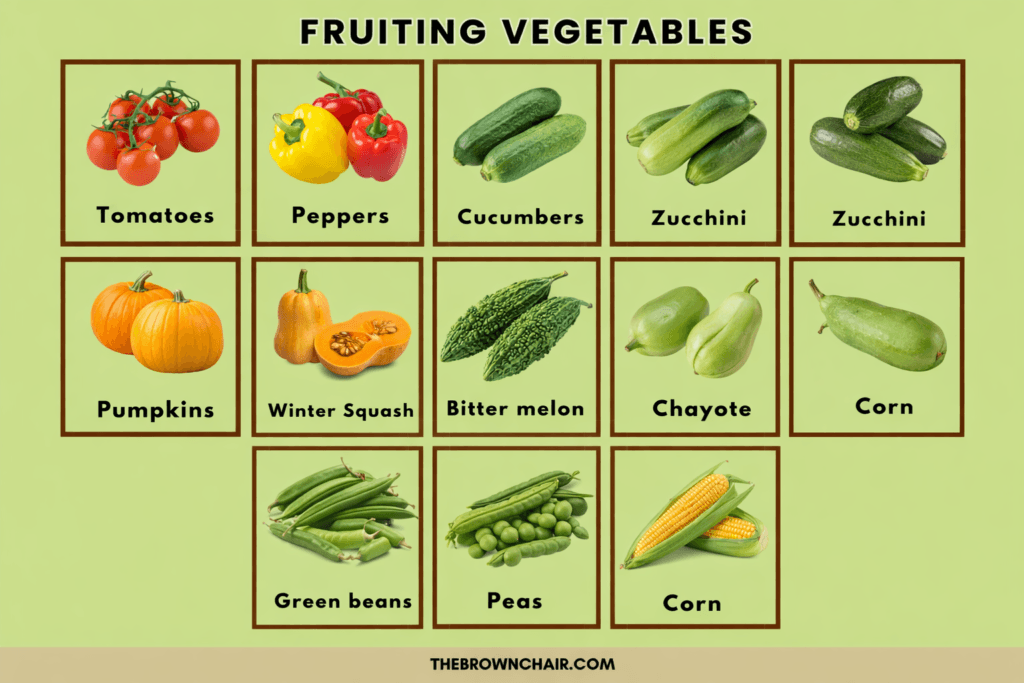
In gardening, we call them vegetables because we cook and use them in savory dishes, even though botanically they are fruits.
Fruiting vs Leafy vs Root
- Leafy vegetables are grown for their leaves
- Root vegetables are grown for underground storage parts
- Fruiting vegetables are grown for fruits that form from flowers
This distinction matters because care requirements are different. Fruiting crops need enough energy, light, and stability to move from leaf growth into flowering and fruit production.
Fruiting vegetables generally require:
• More direct sunlight
• Warmer soil temperatures
• Higher nutrient availability
• Stable moisture during flowering
Leafy crops focus on foliage growth, and root crops focus on underground development. Fruiting crops must successfully transition from leaf growth to flowering and fruit set, which makes environmental stability especially important.
Examples of Fruiting Vegetables
Tomatoes, peppers, cucumbers, zucchini, pumpkins, winter squash, green beans, peas, fava beans, eggplant, okra, corn, tomatillos, bitter melon, and chayote are among the most commonly grown fruiting vegetables in home gardens.
Common Fruiting Vegetables to Grow at Home (Table)
| Crop | Season | Space Needed | Support | Days to Harvest | Pollination Type | Container Friendly |
|---|---|---|---|---|---|---|
| Tomatoes | Warm | Compact–Large | Yes | 60–90 | Self-pollinating | Yes (5+ gal) |
| Peppers | Warm | Compact | Sometimes | 60–85 | Self-pollinating | Yes (3–5 gal) |
| Eggplant | Warm | Compact | Sometimes | 70–90 | Self-pollinating | Yes (5 gal) |
| Tomatillos | Warm | Large | Yes | 75–100 | Cross-pollinated | Yes (7+ gal) |
| Cucumbers | Warm | Vining | Yes | 50–70 | Cross-pollinated | Yes (5+ gal) |
| Zucchini | Warm | Large | No | 45–60 | Cross-pollinated | Yes (10 gal) |
| Pumpkins | Warm | Large | No | 90–120 | Cross-pollinated | No |
| Winter Squash | Warm | Large | Optional | 90–110 | Cross-pollinated | Limited |
| Green Beans | Warm | Compact–Vining | Sometimes | 50–65 | Self-pollinating | Yes |
| Peas | Cool | Vining | Yes | 55–70 | Self-pollinating | Yes |
| Okra | Warm | Compact | No | 55–65 | Self-pollinating | Yes (5 gal) |
| Corn | Warm | Large | No | 70–100 | Wind-pollinated | No |
Fruiting Vegetable Categories
Some fruiting vegetables grow upright, some spread on long vines, and others form pods.
Nightshades (Warm-Season Crops)
Nightshades grow upright and thrive in consistent heat. They are moderate to heavy feeders and benefit from staking or support. Because they are closely related, they share similar pests and disease patterns, making crop rotation important.
- Tomatoes – Highly productive plants that need support and steady watering
- Peppers (Sweet & Hot) – Slow to start but thrive in sustained heat
- Eggplant – Requires warm nights and patience for strong yields
- Tomatillos – Vigorous plants that often require more than one plant for reliable pollination
Cucurbits (Vining & Sprawling Crops)
Cucurbits grow on vines or large bushy plants. Most plants produce separate male and female flowers and rely heavily on pollination. They need warm soil and benefit from steady moisture and space.
- Cucumbers – Grow best on a trellis for airflow and straighter fruit
- Zucchini & Summer Squash – Fast, heavy producers; frequent harvesting increases yield
- Pumpkins – Long-season plants that require significant space.
- Winter Squash – Long-season growers that store well after harvest
- Calabash – Vigorous climber that needs strong support
- Chayote – A very vigorous vine in warm climates with long production
Legumes (Pods Are the Fruit)
Legumes are grown for edible pods or seeds. Many tolerate slightly cooler temperatures than other fruiting vegetables. They grow as bush or climbing plants and generally require less feeding than heavy fruiting crops.
- Green Beans – Easy and productive, ideal for beginners
- Peas – A cool-season crop that benefits from support
- Fava Beans – Sturdy cool-season crop suited to mild spring conditions
Other Fruiting Crops
Some fruiting crops do not fit neatly into the main groups but are still valuable additions to the garden.
- Okra – Thrives in heat; frequent picking improves production
- Corn – Grown for kernels (seeds); plant in blocks to improve pollination
Pollination and Fruit Set (Why Flowers Don’t Always Become Fruit)
Fruiting vegetables depend on successful pollination to produce fruit. Without pollination, flowers drop, and no fruit develops.
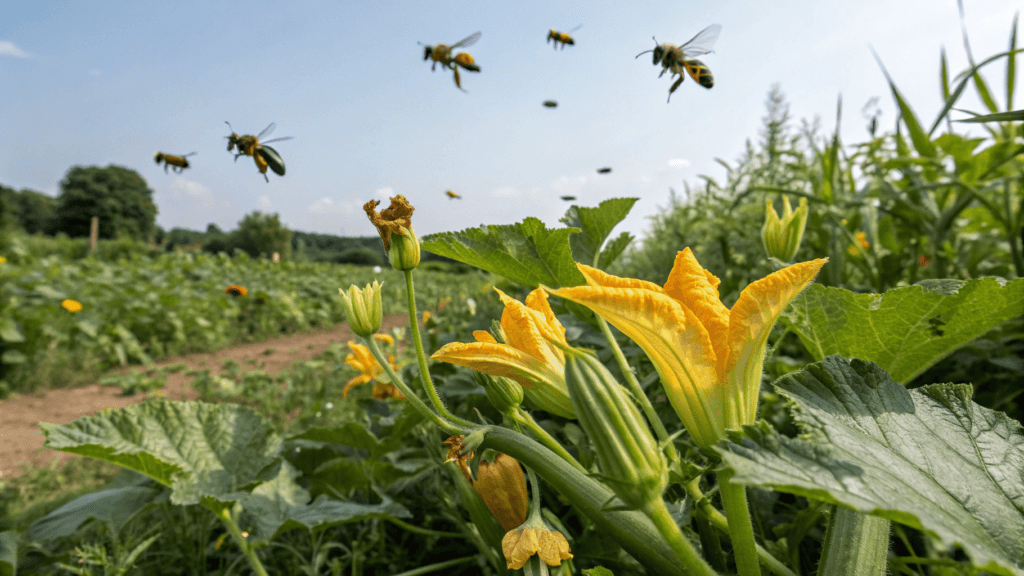
There are two main pollination patterns:
- Self-pollinating crops
Tomatoes, peppers, and eggplant can pollinate themselves, though airflow and insects improve yields.
2. Cross-pollinated crops
Cucurbits (cucumbers, squash, pumpkins) and corn rely heavily on insects or wind.
Common pollination issues:
• Few bees in the garden
• Rain during flowering
• Extreme heat or cold
• Corn planted in a single row instead of blocks
For heavy fruit set, encourage pollinators and avoid spraying during bloom.
How to Grow Fruiting Vegetables (General Basics)
Most fruiting vegetables follow similar growing patterns. The details differ by crop, but the decisions are often the same.
Stress during flowering, such as extreme heat, cold nights, inconsistent watering, or nutrient imbalance, often reduces fruit set.
Sun
Full sun is essential. Aim for at least 6-8 hours of direct sunlight daily.
Less sun usually means:
- Fewer flowers
- Slower fruit development
- Smaller yields
If your garden has partial shade, place fruiting crops in the sunniest location and reserve shadier areas for leafy greens.
Water
Fruiting crops need even moisture throughout their growing season. Large swings between dry soil and heavy watering can lead to cracking, blossom-end rot, or bitter fruit.
A simple check: push your finger 1-2 inches into the soil. If it feels dry, water deeply rather than lightly.
Mulching helps regulate soil moisture and temperature. In containers, expect to water more frequently, especially during hot weather.
Soil and Feeding
Fruiting vegetables perform best in compost-rich, well-draining soil. Poor soil leads to smaller fruit, blossom drop, and reduced yields. Before planting, mix in finished compost to improve structure and fertility.
For best fruit production:
• Aim for well-draining soil with good organic matter
• Avoid excessive nitrogen once flowering begins
• Add potassium-rich compost if flowering is weak
• Maintain soil pH appropriate for the crop (most fruiting vegetables prefer 6.0-6.8)
Heavy feeders like tomatoes and squash may require mid-season feeding, especially in containers or sandy soil.
Early in the season, balanced nutrients support healthy leaf growth. Once flowering begins, avoid excessive nitrogen. Too much nitrogen causes strong leafy growth but fewer flowers and fruits.
If plants look dark green and vigorous but are not setting fruit, reduce nitrogen and focus on consistent watering and full sun exposure.
Spacing and Support
Crowding reduces airflow and increases disease risk. It also limits light reaching the interior of the plant, which reduces fruit production.
Follow recommended spacing for each crop. When in doubt, give slightly more space rather than less.
Install cages, stakes, or trellises at planting time. Adding support later can damage roots and disturb developing fruit.
Common Problems With Fruiting Vegetables
These are the most frequent issues gardeners face with fruiting vegetables.
- Flowers but no fruit – Insufficient sun, temperature stress, or poor pollination
- Blossom-end rot (tomatoes, peppers) – Inconsistent watering
- Powdery mildew (cucurbits) – Improve airflow and avoid wetting leaves late in the day
- Pests (aphids, beetles, hornworms) – Inspect weekly and remove early
- Fruit cracking or bitterness – Prevent watering swings and reduce heat stress where possible
Early detection prevents larger crop loss.
If plants grow well but don’t produce fruit, check:
• Sun exposure (less than 6 hours is often insufficient)
• Excess nitrogen fertilizer
• Night temperatures below 55°F (tomatoes & peppers struggle)
• Pollination access
Fruiting vegetables rarely fail without a reason. Most problems trace back to light, temperature, or watering stability.
If plants are leafy but not producing, the issue is usually related to sunlight, temperature, or feeding balance rather than plant health.
Companion Planting for Fruiting Vegetables
Companion planting can help manage pests and improve garden layout.
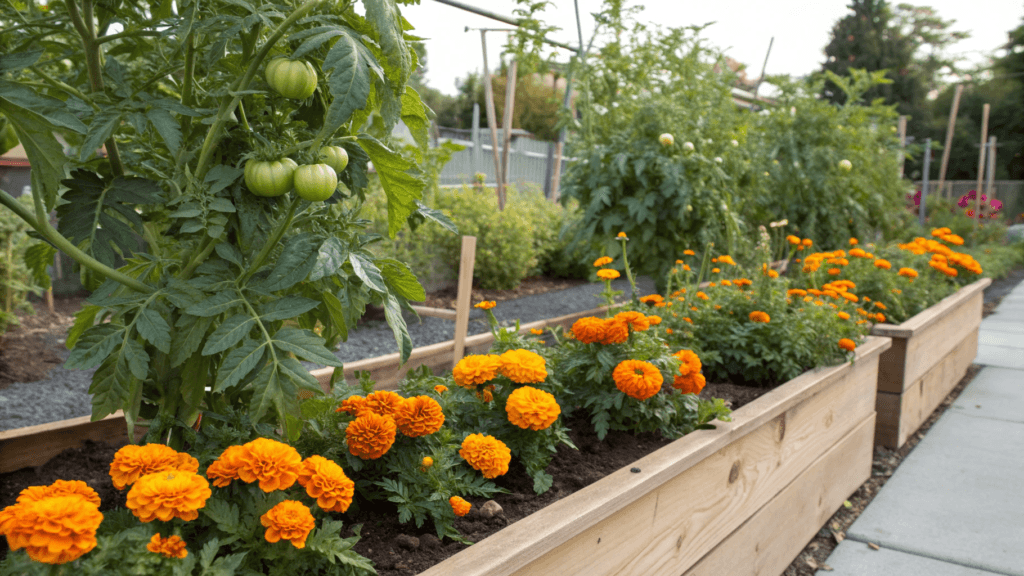
Common companions:
- Basil near tomatoes
- Marigolds around beds
- Onions or garlic nearby to deter certain pests
Avoid overcrowding heavy feeders, and rotate nightshades yearly to reduce the buildup of soil-borne diseases.
Harvesting Fruiting Vegetables
Harvest timing affects both flavor and continued production.
Many fruiting vegetables produce more when harvested regularly. Zucchini, beans, cucumbers, and okra especially benefit from frequent picking. Leaving mature fruit on the plant signals it to slow production.
Signs fruit is ready:
- Full color for tomatoes and peppers
- Firm but not hard squash skins
- Young, tender pods for beans and okra
- Filled-out ears and dry silks for corn
Harvest gently to avoid breaking stems or damaging the plant.
Storage Varies
- Tomatoes and peppers store short-term at cool room temperature
- Winter squash and pumpkins store longer in dry, cool conditions
- Beans and zucchini are best used fresh
Climate Planning for Fruiting Vegetables
Because most fruiting vegetables are warm-season crops, timing is critical.
Important planning factors:
• Last frost date
• Soil temperature (should be above 60°F for most warm crops)
• Length of growing season
• Summer heat intensity
In short growing seasons, choose fast-maturing varieties.
In hot climates, choose heat-tolerant varieties and provide afternoon shade if needed.
Growth Timeline
Fruiting vegetables vary in how quickly they mature.
- Fast growers (50-60 days): Zucchini, bush beans
- Moderate growers (60-80 days): Cucumbers, peppers
- Long-season crops (90-120+ days): Pumpkins, winter squash
Choosing crops based on your climate and season length improves success.
Where to Grow Fruiting Vegetables
In-Ground Gardens
Best suited for large crops such as pumpkins and corn. Deep soil and space allow full vine development.
Raised Beds
Offer controlled soil conditions and improved drainage. Excellent for tomatoes, peppers, eggplant, and cucumbers.
Containers
Many fruiting crops grow well in containers when the pot size is sufficient.
- Minimum 5-gallon container for tomatoes and peppers
- 10 gallons or larger for vigorous plants
- Ensure strong drainage
Containers require more frequent watering and feeding.
What to Expect From Fruiting Vegetables
Fruiting crops are high-output plants compared to leafy or root vegetables.
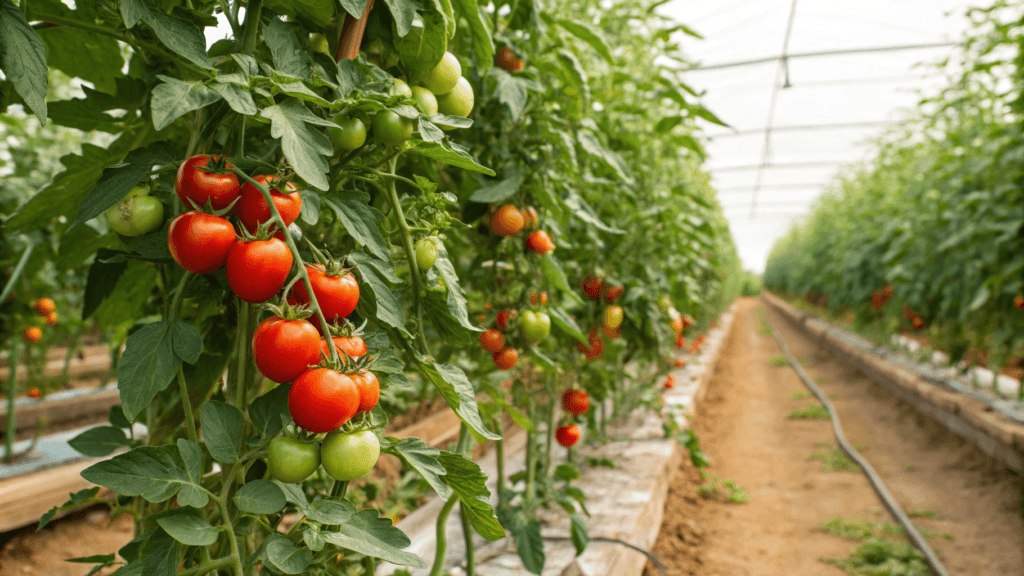
Examples:
• One zucchini plant can produce 10-20 fruits in a season
• One tomato plant can yield 10-30 pounds, depending on variety
• One cucumber plant can produce dozens of fruits
• A small block of corn can produce multiple ears per plant
Yields depend heavily on sunlight, spacing, and watering consistency.
Conclusion
Fruiting vegetables are the highest-yielding crops in most home gardens. They demand more warmth and sunlight than leafy or root crops, but they reward you with full meals from relatively few plants.
They require warmth, sunlight, steady watering, and balanced feeding. When those needs are met, they reward you with heavy harvests and full meals from a few plants.
Start with one or two crops that match your climate and space. Focus on sunlight, spacing, and consistent watering. Once those basics are steady, fruiting vegetables become some of the most productive and satisfying plants you can grow.

Leave a Reply