
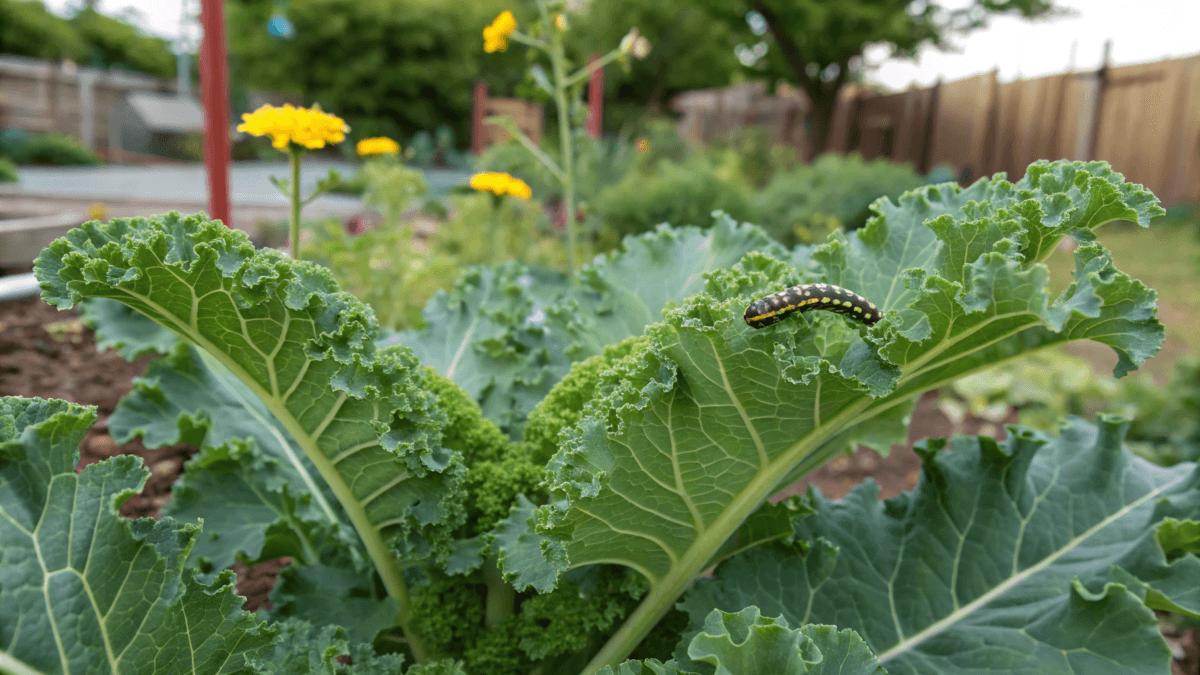
If your kale leaves are full of holes, look puckered and curled, or feel sticky, you’re almost certainly dealing with one of a small handful of common kale pests, usually aphids, cabbage worms, or flea beetles.
You can identify which one is causing the trouble in a couple of minutes, and most infestations can be handled naturally with simple steps like hand-picking, strong water sprays, row covers, and a few organic-approved treatments used correctly.
This guide walks you through what to look for, where to look, and what to do, using practical methods that work in real gardens, not just in theory.
Pest control works best when kale is grown well from the start. For the full growing process, see how to grow kale.
2-Minute Kale Pest Diagnosis:
- Tiny round “shot holes” = usually flea beetles
- Big irregular holes + dark green crumbs = usually cabbage worms/caterpillars
- Sticky leaves + curled new growth = usually aphids
- If you’re not sure, flip leaves and check the undersides and the crown first.
Why Kale Attracts Pests
Kale is a brassica (like cabbage, broccoli, collards, and Brussels sprouts). Brassicas are famous for attracting insects because:
- They’re nutrient-dense and tender, especially during active growth.
- They contain sulfur compounds that brassica pests have evolved to find.
- They’re often planted in blocks (a whole bed of kale), which makes it easy for pests to settle in and multiply.
Once pests find kale, they tend to stick around because the plant keeps producing fresh leaves, basically a steady buffet.
How Young vs Mature Plants Are Affected
Kale can take some damage and keep going, but age matters.
- Young seedlings and transplants are the most vulnerable. A few days of heavy flea beetle feeding can stunt them or kill them outright.
- Medium and mature plants can usually outgrow moderate chewing, but they’re more likely to suffer from aphids tucked into new growth or worms hiding in the canopy.
- Older plants sometimes become less appealing, but if they’re stressed (heat, drought, poor fertility), pests can hit harder and recovery is slower.
A simple rule: Protect kale early, and you’ll fight far fewer battles later.
How to Identify Pest Damage on Kale
Before you can control pests on kale, you need to know what kind of damage you’re actually seeing.
Chewed Leaves, Stippling or Curling
Different pests leave different “signatures.” If you learn these, you’ll rarely guess wrong.
Chewed holes (ragged edges or missing chunks):
- Usually, cabbage worms or other caterpillars
- Holes may be large, irregular, and appear quickly
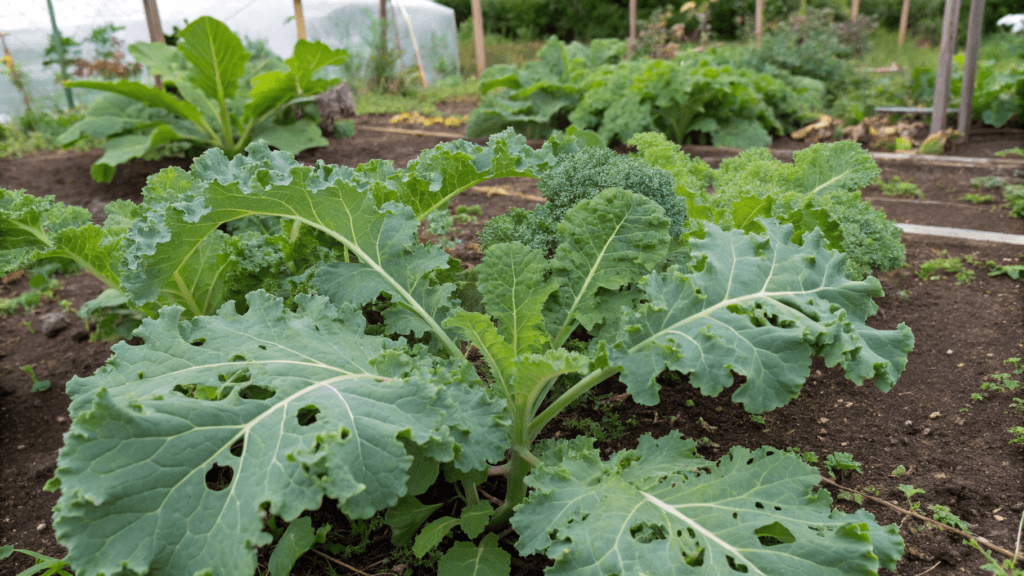
“Shot holes” (tiny round holes like someone used a hole punch):
- Classic flea beetle damage
- Often concentrated on small plants and new leaves
Stippling (tiny pale dots), yellowing, or a dusty look:
- Often aphids (especially if there’s stickiness)
- It can also come from other sap-suckers, but aphids are the most common
Curling, puckering, or twisted new growth:
- Frequently, aphids feeding in tender tips
- Sometimes shows up before you notice the insects themselves
Where to Look on the Plant
A fast inspection (less than 2 minutes) usually tells the story.
- Undersides of leaves: Aphids, eggs, small larvae, and feeding damage.
- New growth at the crown (center): Aphids love it; caterpillars hide nearby.
- Along leaf veins and stems: Aphids cluster here.
- Soil line and lower leaves: Eggs, pupae, and hiding spots; also, slug/snail damage if holes are big and slimy.
If you only look at the top of the plant, you’ll miss most early infestations.
Why Early Identification Matters
With kale pests, timing is everything.
- Aphids and worms multiply fast; what looks “minor” can become a mess in a week.
- The earlier you act, the more you can rely on low-impact controls.
- Early action also prevents the common trap of escalating to repeated sprays that wipe out beneficial insects.
Not all leaf damage is caused by insects; this guide on Common Kale Diseases explains how to spot disease-related problems.
Aphids on Kale
Aphids are one of the most common kale pests, especially during cool weather and periods of fast growth.
What Aphids Look Like
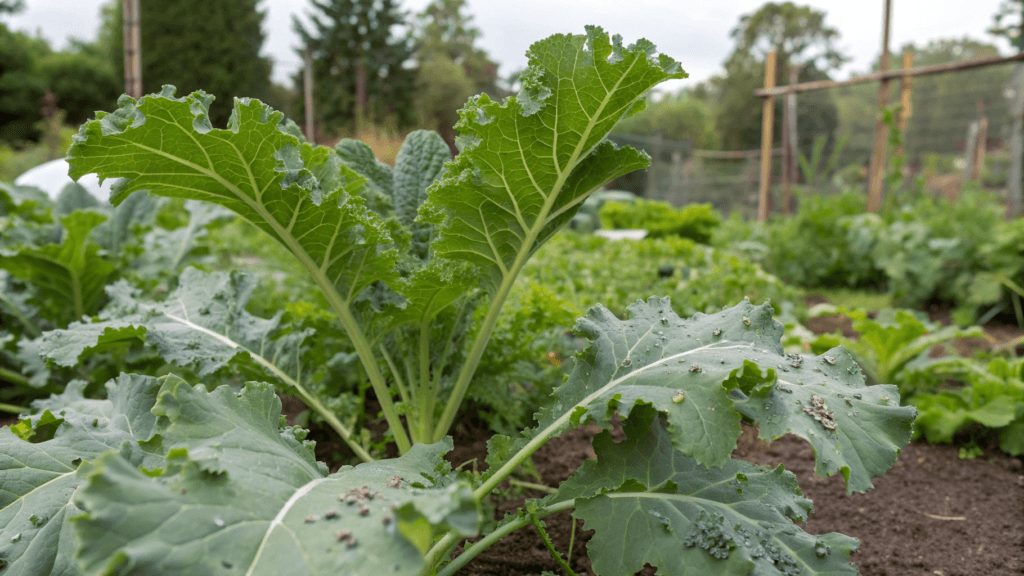
Aphids are tiny, soft-bodied insects that cluster in groups. On kale, they’re often:
- Green, gray-green, or pale yellow
- Sometimes waxy or “dusty” looking (cabbage aphids can look like they’re sprinkled with powder)
- Usually found packed together rather than scattered
If you see a tight cluster that looks like living grains of rice, it’s probably aphids.
Common Signs of Aphid Infestation
Aphids don’t chew holes. They pierce the plant and drink sap. Common signs:
- Sticky leaves (honeydew)
- Shiny residue on leaves or nearby surfaces
- Leaf curling or puckering, especially on new growth
- Yellowing or a tired, limp look, even when watered
- Ants climbing the plant (ants “farm” aphids for honeydew)
Rub the underside of a leaf. If it feels sticky and you see tiny insects, you’ve got them.
Where Aphids Usually Hide
Aphids avoid open, exposed leaf surfaces. Look here:
- Undersides of leaves, especially along veins
- Deep in the crown, where new leaves are forming
- On flower stalks, if kale is bolting
- On sheltered leaves closer to the center of the plant
If you see curling at the top but nothing on the leaves you checked, look deeper into the crown.
Cabbage Worms on Kale
Cabbage worms are among the most destructive pests on kale because they feed constantly and hide well.
What Cabbage Worms Look Like
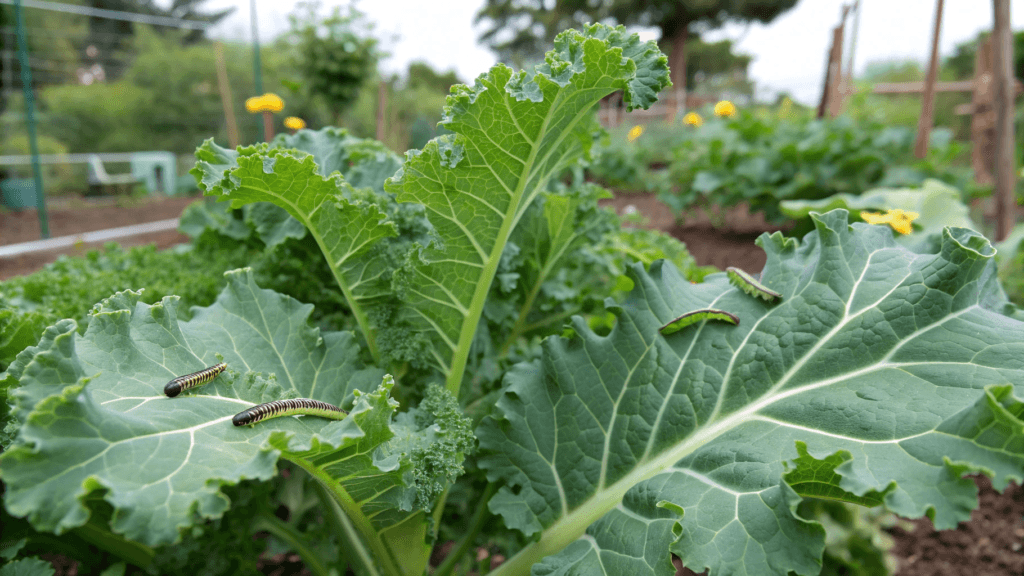
Most gardeners use “cabbage worm” to describe the green caterpillars that attack brassicas. On kale, you may see:
- Small, velvety green caterpillars (often blending perfectly into leaves)
- Tiny white eggs (sometimes single, sometimes scattered) on leaf undersides
- White butterflies fluttering around brassicas (a sign eggs are being laid)
If you see white butterflies hovering and repeatedly landing on kale, assume caterpillars are on the way.
Typical Feeding Damage
Cabbage worms chew. Signs include:
- Irregular holes, often starting small and getting bigger fast
- Leaf edges chewed
- Dark green droppings (frass) on leaves, this is the giveaway
(If you see frass, the caterpillar is nearby, even if you don’t see it immediately.)
Damage often begins on the inner leaves where caterpillars hide and feed.
How Fast Damage Can Spread
Caterpillars grow quickly. A few small larvae can turn into heavy feeders in short order.
What this looks like in the garden:
- Day 1-2: Tiny holes you barely notice
- Day 3-5: Leaves look peppered, and frass appears
- Day 7+: Big holes, ragged leaves, and damage expanding to multiple plants
If you’re harvesting baby leaves or want clean bunches, you want to catch worms early, before the frass gets everywhere.
Flea Beetles on Kale
Flea beetles are small insects that can cause outsized damage, especially on young kale plants.
How to Recognize Flea Beetle Damage
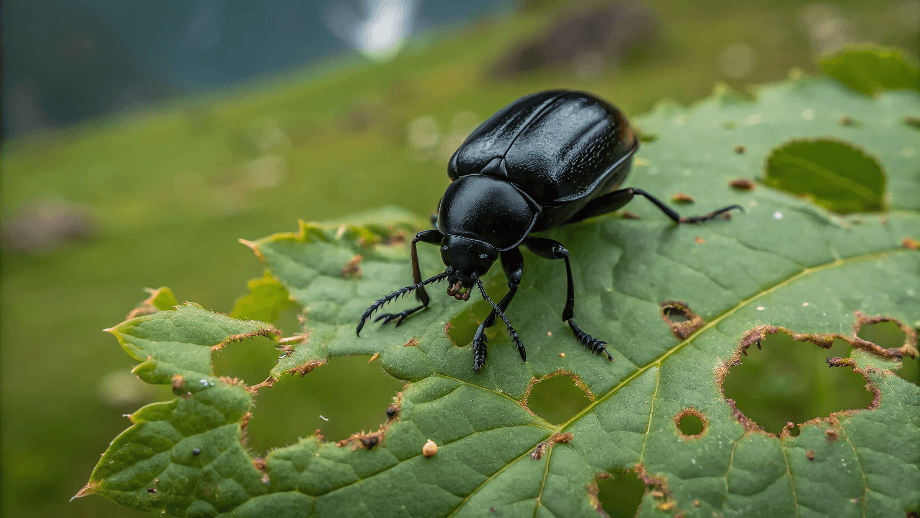
Flea beetles make kale look like it was hit with fine gravel.
- Many tiny, round holes (“shot-hole” damage)
- Leaves may look lacey when pressure is high
- Damage is usually worst on seedlings and new transplants
You might also see the beetles themselves: tiny, dark, shiny insects that jump when disturbed.
Why Flea Beetles Prefer Young Plants
Young kale leaves are thinner and easier to puncture. Flea beetles can also stunt plants by repeatedly damaging the small leaf area the plant needs to grow.
On mature kale, the plant often tolerates flea beetle feeding. On seedlings, the same feeding level can stop growth cold.
When Flea Beetles Are Most Active
In many gardens, flea beetles spike during:
- Warm, dry weather
- Early season as seedlings emerge
- Late summer/early fall, when conditions are still warm, and you’re starting new plants
If you’re direct-seeding kale during warm periods, expect flea beetles unless you use a barrier.
Harlequin Bugs (Stink Bugs on Brassicas)
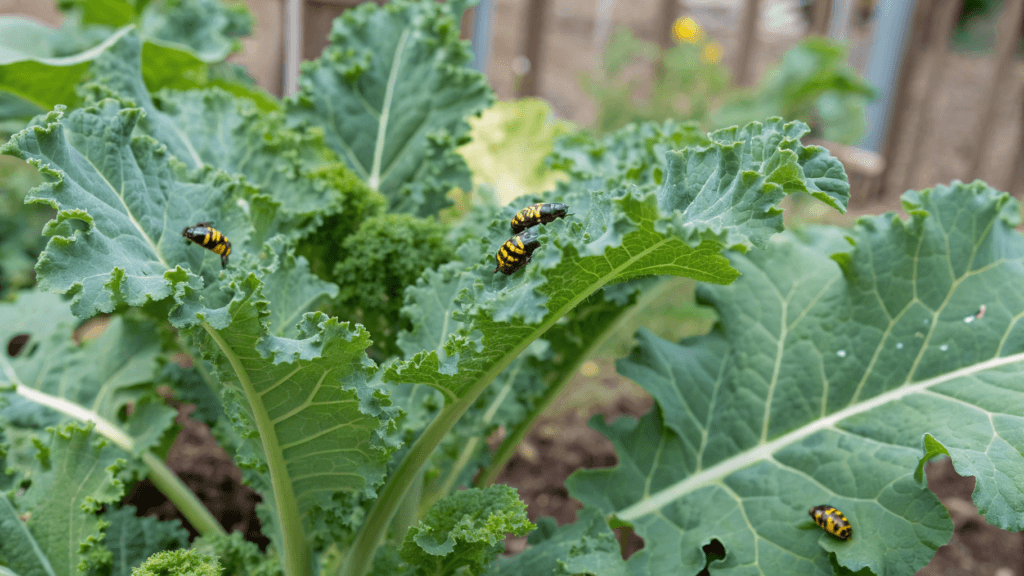
Harlequin bugs are shield-shaped bugs that pierce leaves and create pale, speckled, or blotchy spots that turn brown over time. You’ll often find them clustered on stems and the undersides of leaves.
Best natural control:
Hand-pick into soapy water early in the morning, remove egg clusters from leaf undersides, and use row cover on young plantings before bugs arrive.
Whiteflies
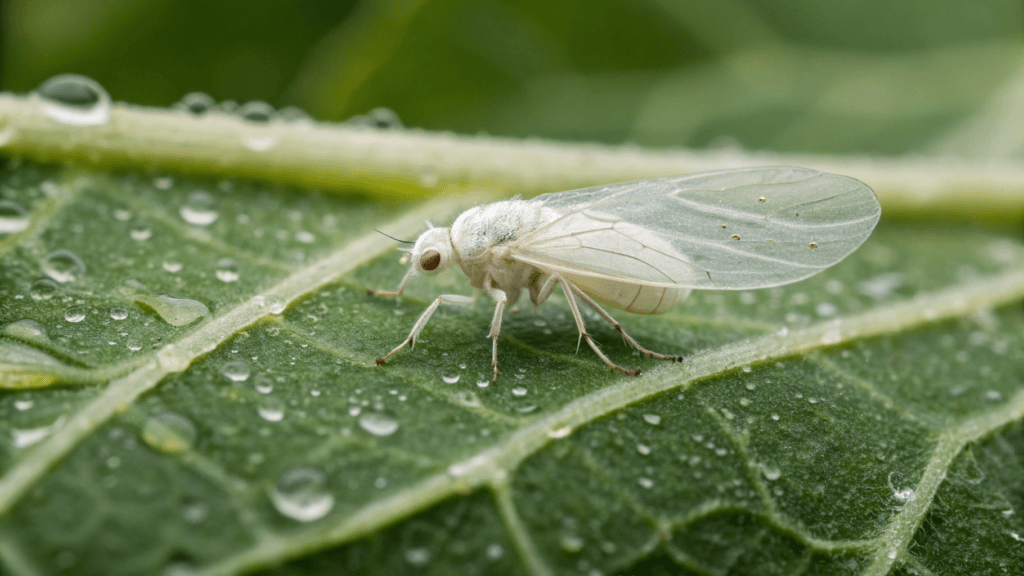
Whiteflies live under leaves and multiply in warm weather. When you bump the plant, a small cloud of tiny white insects may lift off. Leaves can yellow and feel sticky from honeydew.
Best natural control:
Spray the undersides with water, remove the worst leaves, and use insecticidal soap only when you can hit the insects directly.
Organic Control Methods for Kale Pests
Natural control works best when you use the right tool for the right pest, and when you aim for consistency over intensity.
Hand Removal
This is underrated because it’s simple, but it’s extremely effective for kale.
Best for:
- Cabbage worms/caterpillars
- Egg clusters
- Small aphid colonies on a few leaves
How to do it fast:
- Check plants in the morning or evening when insects are less active.
- Flip leaves and look for frass; it leads you right to caterpillars.
- Pinch caterpillars off or knock them into a cup of soapy water.
- If a leaf is heavily infested with aphids, remove the whole leaf and discard it.
If you do a quick hand-check 2-3 times a week during peak pest season, you’ll prevent most blow-ups.
Water Sprays
A strong spray of water is one of the best “first moves” for aphids.
Best for:
- Aphids
- Light infestations before leaves curl tightly
How to do it:
- Use a hose with a spray nozzle.
- Aim at the undersides of leaves and the crown.
- Spray hard enough to dislodge insects, not shred leaves.
- Repeat every 2-3 days for a week, then weekly as needed.
Why it works: Aphids are slow movers. Once knocked off, many don’t make it back up.
After spraying, check again in 10 minutes. You’ll often find aphids pooled on lower leaves or the soil. A second quick spray finishes the job.
Organic-Approved Treatments (High Level, Not Brand-Heavy)
When water and hand removal aren’t enough, these are common organic options. Use them carefully; more isn’t better.
Insecticidal soap
- Works well for aphids
- Must contact the insect to work
- Spray leaf undersides; repeat as needed
- Avoid spraying in hot sun to reduce leaf burn
Neem oil (or other horticultural oils)
- Can help with aphids and soft-bodied pests
- Works best as a consistent program, not a one-time fix
- Don’t spray when plants are heat-stressed
- Avoid spraying open flowers to protect pollinators
Bt (Bacillus thuringiensis var. kurstaki)
- Targeted for caterpillars (cabbage worms)
- Very effective when applied early (small larvae)
- Needs to be eaten by the caterpillar, so coverage matters
- Reapply after rain or heavy overhead watering
Diatomaceous earth (food-grade)
- Sometimes used for flea beetles
- Needs to stay dry to work
- Can affect beneficial insects too, so use sparingly and as a barrier method rather than dusting everything
Reapply only as a targeted soil/bed-edge barrier after rain, not as a routine dusting on the whole plant.
A practical approach:
- Aphids: Start with water – soap if needed – oil only if persistent
- Cabbage worms: Hand pick – Bt if ongoing pressure
- Flea beetles: Barriers and timing are usually more effective than sprays
Preventing Pests on Kale Plants
Preventing pests on kale is usually easier than trying to control an established infestation.
Physical Barriers (Row Covers, Netting)
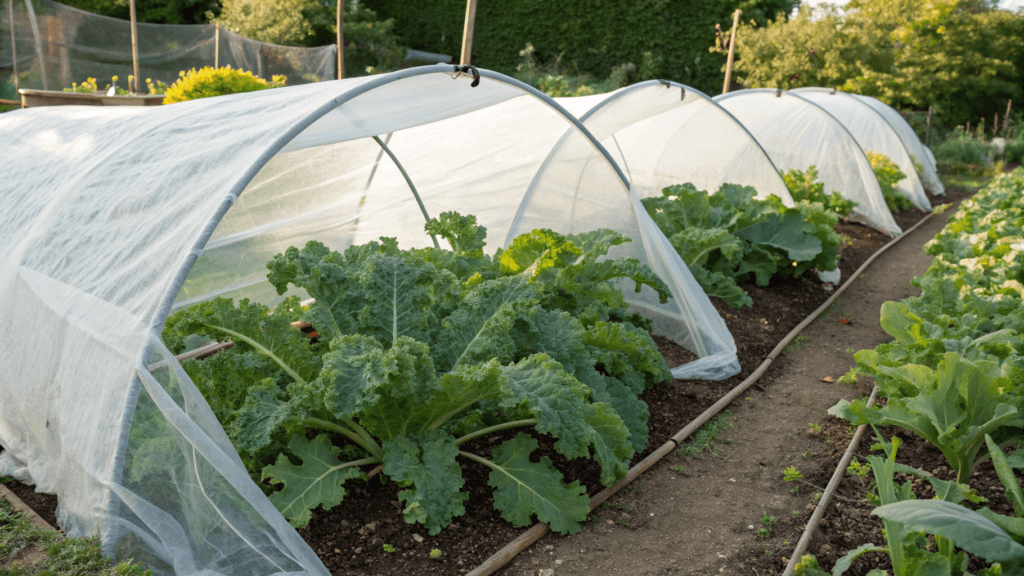
If you want the most reliable, low-drama pest control for kale, use a barrier.
- Lightweight row cover keeps out butterflies (worms) and flea beetles.
- Install it at planting time, not after you see damage.
- Seal edges with soil, boards, or pins so insects can’t crawl under.
- Remove temporarily if you need to weed, thin, or harvest, then put it back.
Row cover works best when watering stays consistent underneath it. See how often to water kale if you’re unsure how to keep moisture steady.
Row cover is especially helpful for:
- Direct-seeded kale
- Fall starts when flea beetles are still active
- Gardens where cabbage worms show up every year
Use Decoy or Diversion Planting (Optional but Effective)
If flea beetles are a yearly problem, planting a small “decoy patch” of a more attractive leafy brassica away from your kale can pull early pressure off your main bed.
This works best combined with row cover on the kale itself.
Plant Health And Stress Reduction
Stressed kale gets hit harder and rebounds slower.
What actually helps in bed:
- Keep moisture steady. Kale doesn’t like dry-wet cycles.
- Avoid overdoing nitrogen. Soft, lush growth can attract aphids.
- Light feeding can help pale, slow-growing plants recover.
If your kale keeps getting aphids after heavy feeding, your fertilizer timing may be the trigger. See the best fertilizer for kale for a steady schedule that avoids overly soft growth.
A quick field check:
- If leaves are thin and tight, correct water and fertility first.
- If leaves are lush and floppy, ease feeding and focus on airflow and aphid control.
Garden Hygiene Practices
This section matters more than it sounds, especially if you grow brassicas every season.
- Remove and discard heavily infested leaves; don’t compost if it’s crawling.
- Clear old brassica stems and leaf piles at the end of the season; pests overwinter in debris.
- Rotate brassicas to a different area if possible.
- Keep weeds down, especially wild mustard-type weeds that host the same pests.
If you always plant kale in the same bed and leave old stems around, pests show up earlier each season.
Encourage Beneficial Insects
You don’t need to “buy” beneficials to benefit from them. You just need to avoid wiping them out and give them something to stick around for.
Helpful allies in kale beds:
- Lady beetles and lacewings (aphid control)
- Parasitic wasps (caterpillar control)
- Hoverflies (aphid control)
What supports them:
- Avoid broad, frequent sprays, especially oils and soaps applied repeatedly.
- Add a few nearby flowering plants or blooming herbs.
- Leave mulch or undisturbed areas for overwintering predators.
When Pest Damage Becomes a Serious Problem
Not all pest damage on kale requires intervention, but there are times when action is necessary.
How Much Damage Kale Can Tolerate
Kale is tougher than it looks. As a rough guide:
- Mature plants can often handle 10-20% leaf loss without much impact.
- Seedlings and small transplants struggle once you see damage on most leaves or the growing tip is hit.
- Aphids become a serious problem when they’re in the crown, and new growth is deformed.
If you’re harvesting baby greens, your tolerance is lower because cosmetic quality matters.
When Intervention Is Necessary
Step in more aggressively when:
- You see active caterpillars and new holes appearing daily
- Aphids are clustered in the crown, and leaves are curling tightly
- Flea beetles are causing stunting (new leaves stay small; plant stops putting on size)
- The plant is under added stress
For kitchen-use kale, I’m usually fine with a little chewing. For slow-growing seedlings, I act quickly.
Why Overreacting Can Cause More Harm
Over-treating is a common way to turn a manageable issue into a season-long cycle.
- Repeated sprays can reduce beneficial insects that naturally keep aphids and caterpillars in check.
- Overuse of soaps/oils can stress plants, especially in heat.
- Dusting everything (like heavy diatomaceous earth use) can also knock back helpful predators.
The goal is control, not perfection. A few holes are not a crisis.
Common Mistakes When Dealing With Kale Pests
Most kale pest problems get worse because of timing or missteps, not because the pests are impossible to control.
Waiting Too Long to Act
Kale pests rarely improve on their own once they’re established.
A good habit:
- Do a quick check twice a week during warm months.
- Look under leaves and in the crown.
- Catch it early, and you’ll often solve it with water or hand picking.
Treating Without Identifying the Pest
Spraying for aphids won’t help cabbage worms, and Bt won’t touch aphids.
Before you do anything:
- Identify the damage pattern (shot holes vs big holes vs curling/sticky)
- Flip leaves and confirm what’s actually there
Two minutes of checking saves a lot of frustration.
Overusing Treatments
More spray, more often, is not better.
Better approach:
- Use the lightest effective method first (hand/water/barrier).
- If you use a treatment, apply it correctly and repeat only as needed.
- Re-check after 24-48 hours and adjust based on what you see.
Conclusion
Most kale pest problems come down to a few usual suspects: aphids, cabbage worms, and flea beetles. Once you learn the damage patterns and where the insects hide, control gets straightforward.
Start with physical checks, hand removal, and strong water sprays. Use row cover early if pests are predictable in your garden, and save targeted organic treatments like Bt or insecticidal soap for when they’re truly needed.
Kale can tolerate some damage, but the earlier you respond, the gentler your fixes can be, and the nicer your harvest will look.

Leave a Reply