

Common kale disease symptoms include leaf spots, yellowing, wilting despite moist soil, and white or dusty coatings on leaves. Each symptom points to a different cause, and identifying the pattern is the fastest way to fix the problem.
The good news is that most kale disease issues can be prevented with a few repeatable habits: just keep leaves dry as much as you reasonably can, keep plants spaced for airflow, avoid soggy soil, and clean up infected debris early.
Unlike insect pests, kale diseases are usually driven by moisture, airflow, and soil conditions rather than chewing or sap-feeding damage. If your main issue is holes, sticky residue, or visible insects, that’s a pest problem. This guide focuses on diseases and environmental issues that affect kale even when pests aren’t present.
In this guide, I’ll walk you through the most common kale diseases gardeners run into, what they look like, what triggers them, and what to do right away.
Most kale diseases start with basic growing conditions like poor drainage, crowding, or wet leaves. For the full foundation, see How to Grow Kale.
Why Kale Gets Diseases
Kale is tough, but it’s still a leafy brassica. That means it’s prone to leaf diseases when conditions stay damp, and it can crash fast in poorly drained soil. Most disease trouble shows up when several small stresses stack together.
Moisture and Airflow Issues
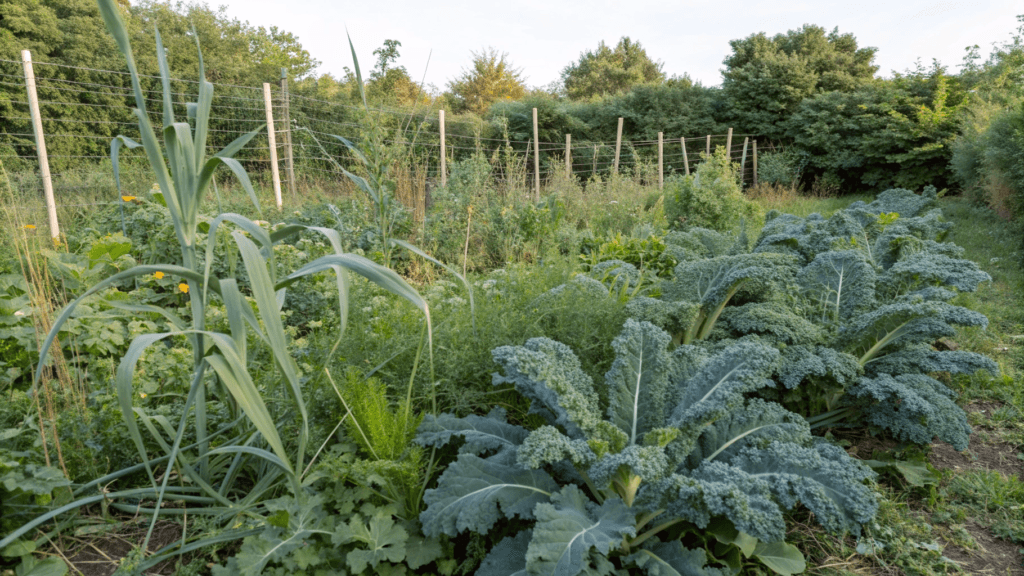
This is the big one. Many kale diseases need leaf moisture to get started, dew that lingers all morning, frequent overhead watering, or rain followed by still air.
Common “setup” conditions:
- Dense plant spacing so the center never dries
- Tall weeds or nearby crops are blocking airflow
- Watering late in the day so leaves stay wet overnight
- Beds tucked against a fence or wall with little breeze
Remember, if your kale leaves stay wet for long stretches, disease pressure goes up.
Soil Conditions
Kale roots want moisture, but they don’t want to sit in it. Heavy soil, compacted beds, or containers without good drainage set the stage for root problems.
Red flags in the garden:
- Puddles that linger after rain
- Soil that stays shiny-wet a day after watering
- Roots that smell sour when you pull a plant
Repeated Stress
Stressed plants get picked off first. Kale that’s constantly bouncing between too dry and too wet, or struggling with low fertility, is more likely to develop leaf spotting and mildew.
Stressors that matter most:
- Irregular watering (drought – soak – drought)
- Crowding and low light
- Overharvesting the same plant hard, repeatedly
- Nutrient imbalance (especially nitrogen swings)
Cool-Season Disease Pressure
Kale is happiest in cool weather, and so are a lot of the diseases that hit it. Spring and fall often bring:
- Cool nights and heavy dew
- Shorter days, slower drying
- Frequent light rains
That’s why kale can look perfect in early summer (in some climates) and then spot up quickly when fall moisture returns.
Leaf Diseases That Affect Kale
Most kale leaf diseases fall into two practical groups: spotting diseases that spread through wet leaves, and mildew diseases that thrive in still, humid air.
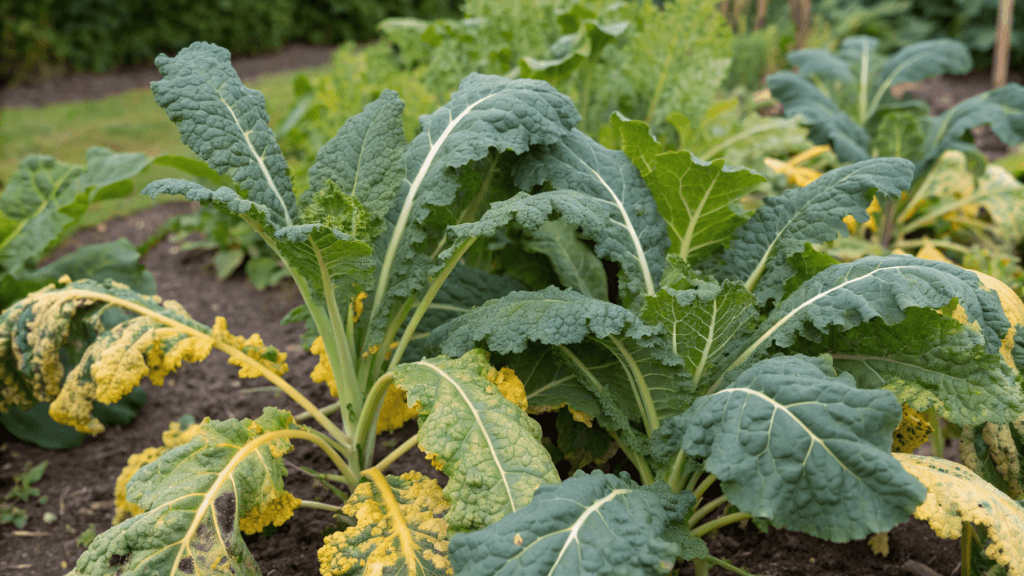
Leaf diseases are what most gardeners notice first because they’re looking at the leaves every time they harvest. The key is catching them early and stoppingthe spread, not trying to “cure” every leaf.
Leaf Spot Diseases
Leaf spot on kale is a category more than a single thing. Several pathogens cause similar symptoms: small spots that expand, sometimes with yellow halos, sometimes with dark centers. The management approach is basically the same: keep foliage dry, improve airflow, and remove infected material early.
What Gardeners Notice First
Most people spot it while harvesting:
- Peppery dark specks are scattered on older leaves
- Round or irregular brown spots that slowly expand
- Spots that dry and turn papery in the center
- Yellowing around spots, especially on lower leaves
As it progresses, leaves can look “freckled,” then ragged. On heavily infected plants, the lower leaves may yellow and drop.
Quick check: Flip the leaf over. If the underside looks about the same as the top (just spots, no fuzzy growth), leaf spot is likely. If you see fuzzy, dusty, or webby growth, think mildew.
Conditions That Trigger Them
Leaf spot loves:
- Long periods of wet leaves (dew, rain, overhead watering)
- Crowded plants with poor airflow
- Splashing soil onto leaves (bare soil and rain)
- Repeated harvest with wet hands/tools spreading spores
I see it most often after a stretch of cool, wet weather, especially when plants are big and touching.
How To Prevent Spread
Start with the simplest steps that make the biggest difference:
In the garden (do this first):
- Remove the worst leaves first. Don’t pick off a few spots here and there; take the whole leaf if it’s clearly infected.
- Harvest from clean plants first, infected plants last. This one habit slows the spread a lot.
- Avoid working plants when they’re wet. Wet leaves and handling, easy spread.
- Mulch bare soil. Straw, shredded leaves, or fine bark reduces soil splash.
- Thin or prune for airflow. If leaves are overlapping heavily, remove some lower leaves and consider pulling the weakest plants.
If it keeps spreading:
- Stop overhead watering entirely if you can.
- Water at the base early in the day.
- If you’re using a sprinkler, switch to a drip or a soaker hose.
What I don’t do: I don’t try to “save” heavily spotted leaves. They won’t improve, and leaving them on the plant just keeps the disease active.
Powdery Mildew
Powdery mildew looks alarming, but it’s usually manageable if you catch it early. Unlike some leaf spots, powdery mildew doesn’t always need free water on the leaf. It often shows up when days are warm, nights are cool, and airflow is poor.
Early Symptoms
Look for:
- Pale patches on the upper leaf surface that look dusty
- A thin white film that wipes off on your fingers
- Leaves that dull and lose their deep green sheen
- Slow, steady spread across multiple leaves
In early stages, it can be subtle, almost like flour dusting near the leaf veins.
Why It Appears
Powdery mildew tends to show up with:
- Crowded plants and still air
- Shade and slow leaf drying
- Warm days and cool nights (heavy dew helps)
- Late-season growth, where plants are large and dense
It often hits older leaves first, especially the interior leaves that don’t get much sun or breeze.
Prevention Strategies
In the garden:
- Space kale so leaves don’t overlap heavily. If they do, thin or harvest more.
- Keep plants in full sun. Even a little more sun can reduce mildew.
- Water at the base, early. Avoid evening watering.
- Remove the first infected leaves. Don’t wait until it’s everywhere.
Simple, practical habit: When you harvest, take a moment to open up the center of the plant. If the interior feels humid and packed, remove a few lower leaves to get air moving.
Kitchen note: Light powdery mildew can be washed off, but leaves with a heavy coating often have a stale taste and texture. I compost those only if my compost gets hot; otherwise, I discard them to avoid reintroducing problems.
Soil-Related Kale Diseases
If kale is wilting while the soil stays wet, always check the roots before assuming a leaf disease.
When kale collapses from the bottom up, wilting even though the soil is wet, think roots first. Leaf problems are visible, but root problems can be faster and more destructive.
Root Rot
Root rot isn’t one single disease either; it’s a common result of roots sitting in wet, oxygen-poor conditions. The fix is mostly about drainage and watering habits.
Typical Signs
You’ll notice:
- Wilting during the day that doesn’t perk up at night
- Yellowing starting from the lower leaves
- Stunted growth even with feeding
- Plants that feel “loose” in the soil (roots not anchoring well)
If you pull the plant:
- Roots look brown instead of creamy white
- Roots may be slimy or stringy
- Soil smells sour or swampy
Why It Happens
Root rot usually comes from:
- Overwatering (especially in containers)
- Heavy clay soil or compacted beds
- Low spots where water collects
- Mulch piled too high against the stem, keeping the crown wet
A common beginner trap: Watering on a schedule instead of checking soil moisture. Kale likes steady moisture, but it hates waterlogged conditions.
Prevention Through Drainage
Better drainage beats “treatments.” Once roots are rotting, there’s no quick spray that fixes it.
Try this:
- Do the squeeze test. Grab a handful of soil from 2-3 inches down.
- If it forms a ball that stays shiny-wet and doesn’t crumble, it’s too wet.
- If it crumbles easily, you’re in a better zone.
- Raise the planting area. Even a 4-6 inch raised bed helps in heavy soil.
- Add organic matter over time. Compost improves structure, but it’s not instant. A little every season is better than a huge dump once.
- Use containers with drainage holes. Don’t let pots sit in saucers of water.
- Water deeply, then wait. Aim for fewer, deeper waterings rather than daily sprinkles.
If a plant is mildly affected and you catch it early, improving drainage and letting the soil dry slightly can help it stabilize. If it’s wilting nonstop and roots are brown and mushy, removal is usually the best call.
Clubroot (High-Level Only)
What It Is
Clubroot is a serious soil-borne disease of brassicas (kale, cabbage, broccoli, and relatives). It causes roots to swell and deform, which blocks water and nutrient flow.
Why Prevention Matters More Than Treatment
Because clubroot management is long-term and location-specific, confirmation matters before changing your entire rotation plan.
Once clubroot is established in the soil, it can stick around a long time. There isn’t a quick cure you can apply after you see symptoms. That’s why preventing introduction and spread matters most.
When To Avoid Planting Kale In Affected Soil
Avoid planting kale (and other brassicas) if:
- You’ve had brassicas that suddenly wilt even with adequate moisture
- You pull plants and see swollen, clubby, distorted roots
- The problem repeats in the same bed season after season
If you suspect clubroot:
- Don’t move soil from that bed to other areas.
- Clean tools and boots.
- Rotate out of brassicas for multiple years and focus on non-brassica crops.
(If you want a confident ID, local extension offices or a trusted garden lab can help. It’s worth confirming because it changes how you plan rotations.)
Kale Problems Often Mistaken For Disease
A lot of “kale disease” questions turn out to be water stress, nutrition issues, or temperature swings. These don’t spread plant-to-plant like disease, and the fixes are different.
Yellowing From Water Stress
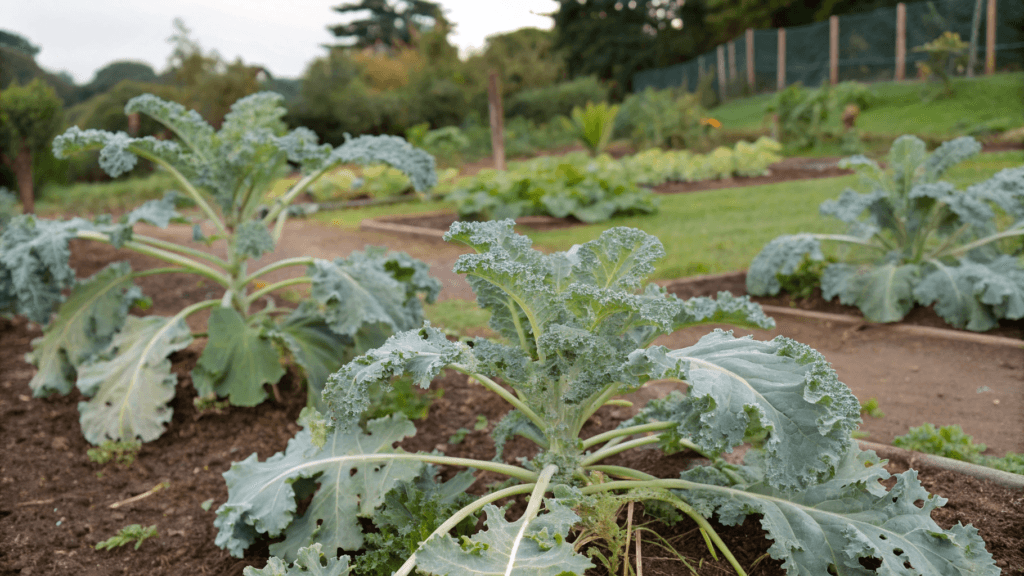
Yellowing from water stress is one of the most common kale problems and is often mistaken for disease.
What it looks like:
- Lower leaves are yellowing evenly (not spotty)
- Leaves droop during hot afternoons
- Plants perk up after watering or overnight
Common causes:
- Soil drying too much between waterings
- Shallow watering that never reaches deeper roots
- Overwatering in heavy soil (yes, this can also cause yellow leaves)
Fix:
- Check moisture 2-3 inches down before watering.
- Water deeply at the base.
- Add mulch to slow evaporation (but keep it off the stem).
Nutrient-Related Leaf Issues
Kale is a steady feeder, especially if you harvest often.
Signs that point to nutrition:
- Pale overall color and slow growth (often low nitrogen)
- Older leaves yellow first, while new growth is smaller
- Leaf edges browning in a uniform pattern (can be potassium stress, or inconsistent watering)
Fixes that work:
- Side-dress with compost around the plant (not touching the stem).
- Use a balanced organic fertilizer if growth is clearly stalled.
- If you’re in containers, feed lightly, but regularly, pots leach nutrients fast.
Practical tip: If you just had a stretch of heavy rain, nutrients often wash down or out. Light feeding after the soil drains can help kale rebound.
Nutrient stress can weaken kale and increase disease pressure; Best Fertilizer for Kale covers how to feed without overdoing it.
Temperature-Related Stress
Kale is hardy, but sudden swings can cause leaf issues that look like disease.
Common patterns:
- Heat waves: Leaves get tougher, bitter, sometimes with marginal scorch
- Sudden cold snaps: Leaves may look bruised or slightly translucent in spots
- Big day/night swings: Slower growth and more susceptibility to leaf problems
Fix:
- Provide consistent water during heat.
- Harvest smaller leaves during hot periods (they stay tender).
- Use shade cloth in extreme heat if kale is your main leafy crop.
Insects actually cause some kale issues that look like disease; this guide on Common Kale Pests helps you tell the difference quickly.
How To Prevent Kale Diseases
Prevention is mostly about stacking a few small habits that keep leaves dry, roots healthy, and stress low. Here’s what’s worth doing consistently.
Drainage And Soil Structure
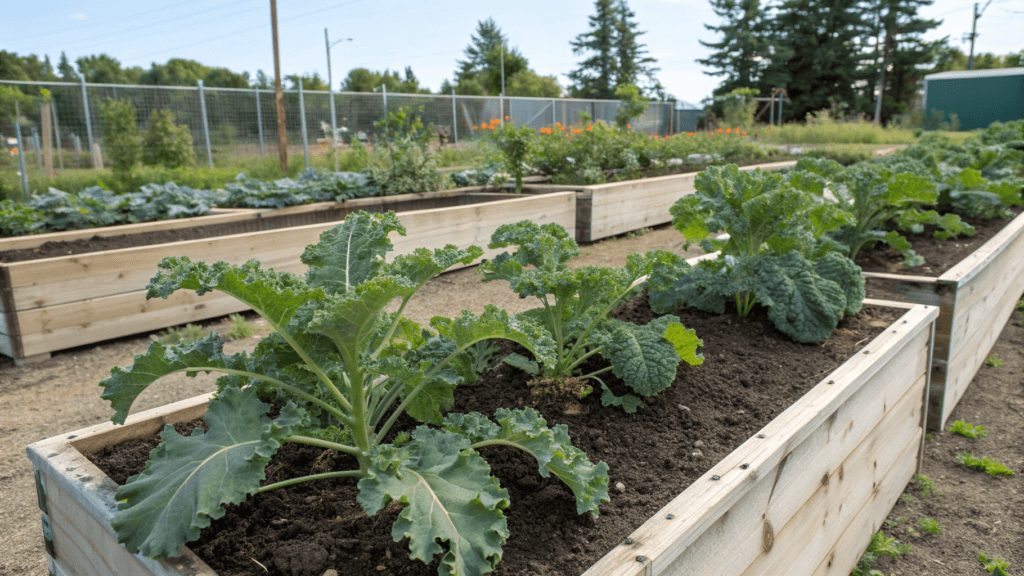
- Plant in raised beds if water lingers after rain.
- Avoid compacting soil; don’t work beds when they’re muddy.
- Add compost regularly to improve the structure over time.
- In containers, use a well-draining mix and make sure drainage holes stay open.
Proper Spacing And Airflow
Crowded kale is an invitation for leaf disease.
- Give plants enough room that mature leaves don’t form a solid mat.
- Weed regularly; tall weeds block airflow and keep humidity trapped.
- Harvest lower leaves to open the plant canopy.
If you can’t easily see the soil around the stem because the leaves are layered thick, thin it out.
Watering Timing
- Water early in the day
- Water at the base, not over the leaves
- If you must overhead water, do it early enough that the leaves dry quickly
Sanitation (Plant Debris)
This matters more than people think.
- Remove diseased leaves and take them out of the garden.
- Clean up old brassica stumps and roots at season’s end.
- Don’t compost heavily diseased leaves unless your compost reliably heats up.
Crop Rotation Basics
Rotate kale and other brassicas to reduce disease buildup.
- Don’t plant kale in the same spot where you grew other brassicas recently.
- Rotate with non-brassica crops (beans, tomatoes, peppers, squash, etc.).
- Even in small gardens, moving brassicas to a different bed helps.
Simple habit that pays off: Keep a bucket with you when you harvest. Anything questionable goes in the bucket, not on the ground.
When To Remove A Diseased Plant
Sometimes the best management is removal. It feels harsh, but it protects the rest of the bed and saves you time.
Signs Recovery Is Unlikely
Remove the plant if you see:
- Rapid spread of leaf spotting across most leaves
- Persistent wilting with wet soil (especially if roots are brown/mushy)
- Stunting that doesn’t improve after correcting water and feeding
- Severe mildew coating most of the plant
Why Removal Protects The Rest Of The Bed
Diseased plants are spore factories. Leaving them in place increases the chance that:
- Neighboring kale gets infected
- Spores overwinter in debris
- You carry the problem on your hands and tools during harvest
Disposal Tips
- Bag and trash heavily diseased material when in doubt.
- If you compost, only compost lightly affected leaves in a hot, active pile.
- Don’t leave infected leaves in paths or between rows.
If you remove a plant due to suspected root disease, avoid replanting kale in that exact spot right away. Let the soil dry and settle, and rotate to something unrelated.
Seasonal Disease Patterns
Knowing the season helps you anticipate problems and adjust your habits before symptoms show up.
Spring Moisture Issues
Spring kale often looks great until a rainy stretch hits.
Watch for:
- Leaf spots after cool rain and slow drying
- Root stress in heavy soil that never warms up
Spring habits that help:
- Mulch early to reduce soil splash
- Keep spacing generous as plants size up
- Avoid overhead watering in cool spells
Summer Stress-Related Problems
In warm weather, kale disease may slow down, but stress problems show up.
Common issues:
- Wilting and yellowing from inconsistent watering
- Bitter, tough leaves from heat stress
- Powdery mildew in crowded, shaded beds
Summer habits that help:
- Water deeply and consistently
- Harvest smaller, tender leaves more often
- Keep airflow open as plants get large
Fall Humidity And Airflow Risks
Fall is prime time for leaf disease in many gardens.
Watch for:
- Heavy dew and long wet mornings
- Leaf spots returning as nights cool
- Mildew creeps in when plants are big and close together
Fall habits that help:
- Thin and harvest to keep plants open
- Remove spotted leaves quickly
- Water only at the base, early
Conclusion
Most kale diseases come down to two things: wet leaves and stressed roots. If you keep your kale spaced for airflow, water at the base early, and avoid soggy soil, you’ll prevent the majority of leaf spot, mildew, and root trouble before it starts.
When problems do show up, act early, remove infected leaves, reduce leaf wetness, and don’t be afraid to pull a plant that’s clearly losing the fight.
Healthy kale is easy to maintain once your routine supports dry foliage, steady moisture at the roots, and a clean bed.
Leave a Reply