
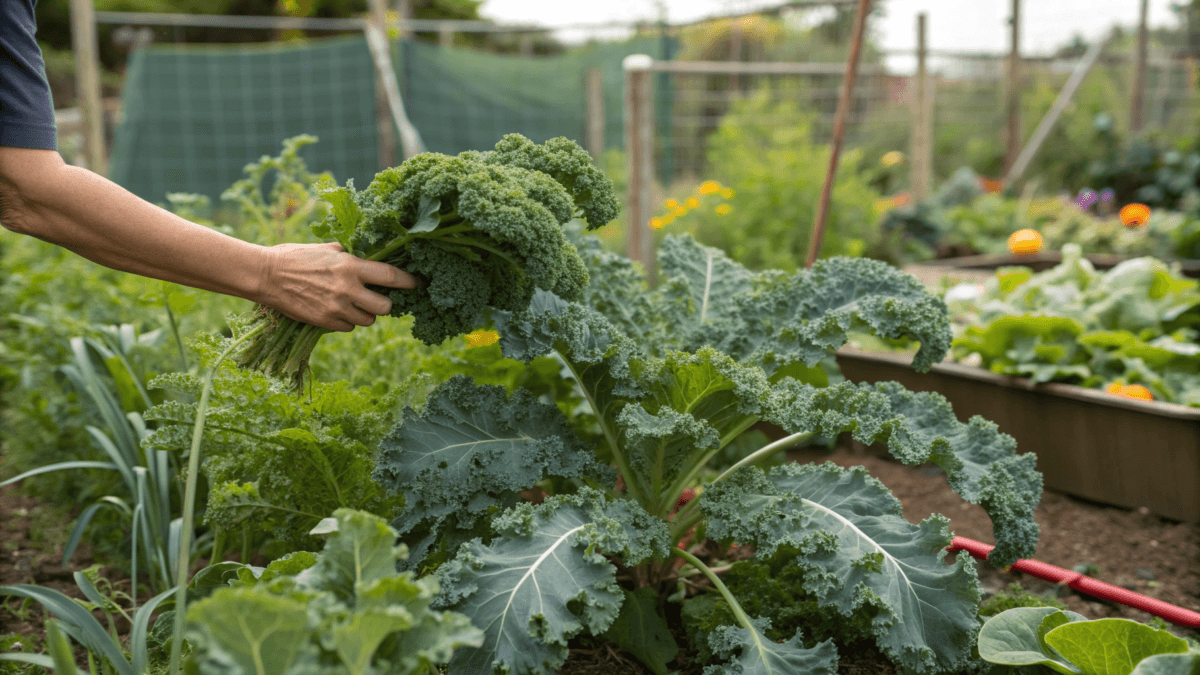
How to harvest kale so it keeps growing comes down to removing the right leaves, at the right time, while leaving the plant’s center untouched. If you harvest kale the right way, one plant can feed you for months. Harvest it the wrong way, and it can stall, turn tough, or bolt far earlier than it should.
Harvest kale once the leaves are big enough to use. Always take the outer leaves first, and never damage the center growing point. Done consistently, kale responds by growing more leaves instead of shutting down.
This article walks through exactly how kale grows, how to judge leaf size and timing, and how to harvest in a way that encourages steady regrowth.
For a complete overview of planting, spacing, soil, and care, see How to Grow Kale.
How Kale Grows and Regrows
Kale is naturally a long-season, leaf-producing plant. Unlike head-forming crops, it’s designed to keep growing leaves over time as long as conditions stay favorable.
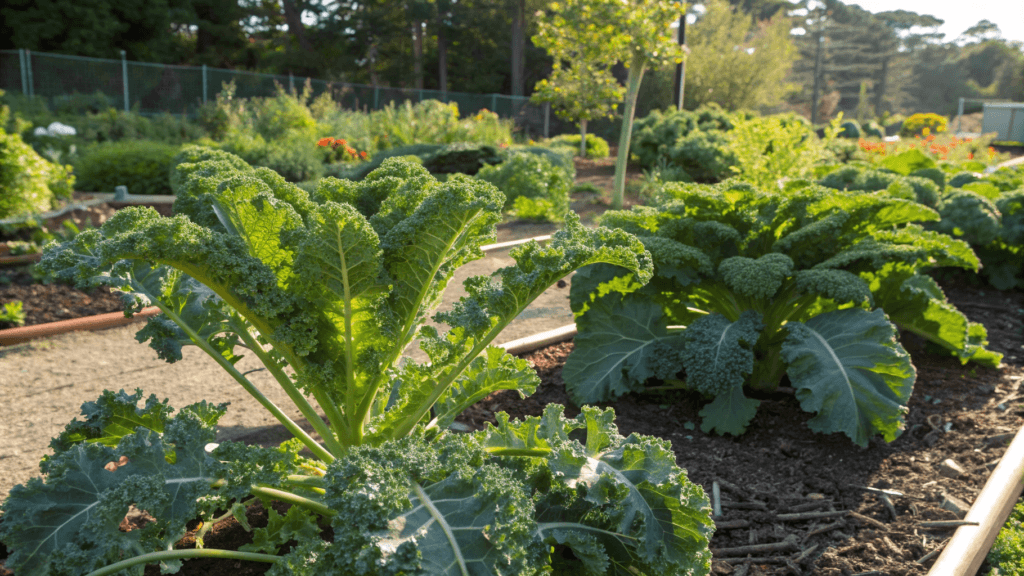
Each plant grows upward from a central stem, producing new leaves from the top while older leaves sit lower on the stem. When harvested correctly, kale simply replaces the leaves you remove.
Kale will continue producing leaves until heat stress or age triggers bolting, which regular harvesting helps delay.
Center Growth Point Explanation
At the very top of the plant is the central growth point, sometimes called the crown or terminal bud. This is where all new leaves form.
As long as this center stays intact:
- The plant continues producing fresh leaves
- Regrowth stays steady and balanced
- The plant maintains its shape and vigor
If the center is cut or damaged:
- Growth slows or stops
- The plant may bolt or produce side shoots instead
- Overall yield drops sharply
This single point explains nearly every kale harvesting rule that matters.
Does Kale Grow Back After You Pick It?
Kale regrows from the center of the plant. If the center is protected, new leaves replace harvested ones within days.
How to Know When Kale Is Ready to Harvest
Kale doesn’t have one perfect harvest moment. Instead, it offers a wide window where leaves are usable, but quality depends on timing.
Visual Signs Kale Is Ready
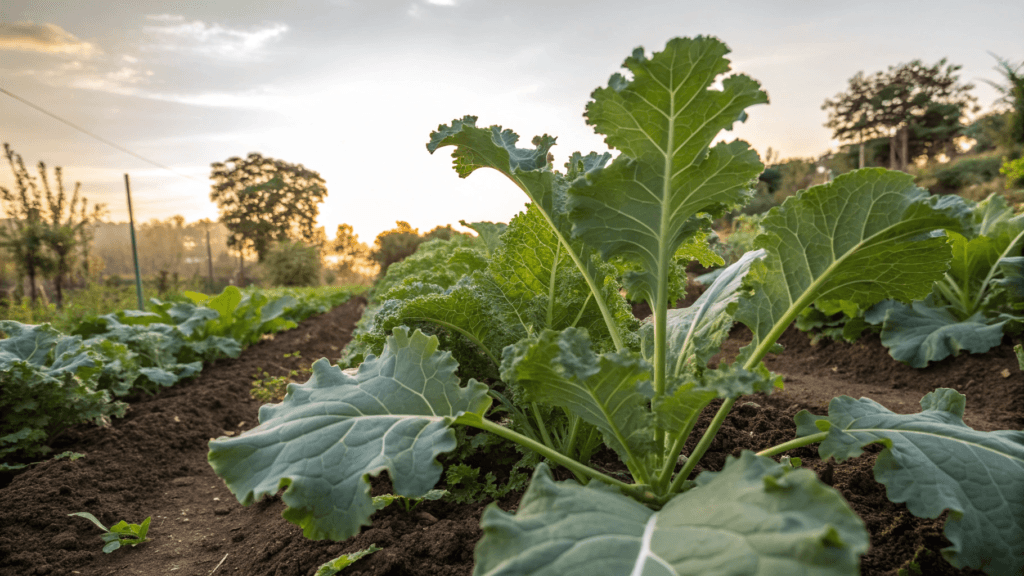
Kale leaves are ready to harvest when:
- Leaves are at least the size of your hand
- The leaf surface looks fully expanded, not puckered or tightly curled
- Leaf color is deep green (or full color for red/purple varieties)
- The plant has at least 6-8 total leaves
You do not need to wait for full maturity. Early harvesting actually improves long-term production.
Why Timing Matters for Flavor and Tenderness
Kale leaves get tougher and more bitter as they age, especially in warm weather. Regular harvesting:
- Keeps leaves tender
- Reduces bitterness
- Encourages steady new growth instead of oversized, leathery leaves
Waiting too long doesn’t give you more food; it usually gives you lower-quality leaves and a stressed plant.
Can You Continuously Harvest Kale?
Yes. Kale is a cut-and-come-again crop that produces new leaves as long as only outer leaves are removed and the plant isn’t overharvested.
Leaf Size Indicators for Harvesting Kale
Leaf size is one of the easiest and most reliable ways to decide when to harvest.
Ideal Leaf Size for Best Taste
For most home gardens, the best-tasting kale comes from leaves that are:
- 6-10 inches long
- Fully formed but still flexible
- Easy to bend without cracking the stem
At this size, leaves have a strong flavor without excessive toughness.
Small, Medium, Large Leaves Explained
Different leaf sizes have different best uses:
Baby Kale (2-4 inches):
- Mild, tender, almost sweet
- Best for raw salads
- Often harvested from dense plantings or thinnings
Medium Leaves (6-10 inches):
- Balanced flavor and texture
- Ideal for sautéing, soups, and roasting
- Best size for regular harvesting
Large Leaves (10+ inches):
- Stronger flavor
- Thicker stems
- Better cooked longer or chopped finely
Large leaves are still edible, but they’re less forgiving in the kitchen.
When Leaves Become Too Tough
Leaves are past their prime when:
- The midrib feels thick and woody
- The leaf resists folding
- Flavor is noticeably bitter, even when young leaves taste mild
At that point, harvesting sooner next time will improve both taste and plant health.
How to Harvest Kale Leaves Correctly
Harvesting technique matters more than many gardeners realize. Small differences add up over a long season.
Where to Cut or Snap Leaves
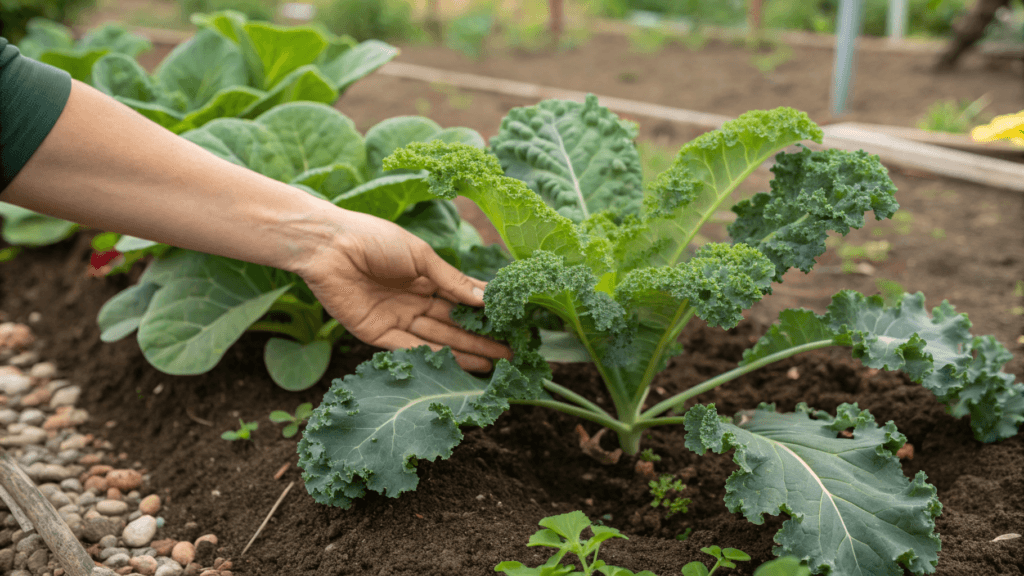
Always remove leaves:
- From the outside and bottom of the plant
- Close to the main stem, without tearing it
- One leaf at a time
Never cut the top of the plant unless you are ending the harvest. A clean cut at the stem heals faster, reduces disease entry, and keeps regrowth steady.
Tools vs Hand-Harvesting
Both work well if done properly.
Hand-harvesting:
- Fine for young, tender leaves
- Quick and convenient
- Snap downward gently at the base
Using scissors or pruners:
- Better for thick stems
- Cleaner cuts
- Less stress on the plant
If stems resist snapping, use tools. Forcing leaves off does more harm than good.
The Cut-and-Come-Again Method for Kale
Kale is one of the best vegetables for cut-and-come-again harvesting.
How the Method Works
Instead of harvesting the whole plant:
- Remove only the outer leaves
- Leave the center untouched
- Harvest repeatedly over weeks or months
Each harvest triggers new leaf growth from the center.
Why Kale Responds Well to Repeated Harvesting
Kale evolved to survive grazing. Removing older leaves:
- Redirects energy into new growth
- Keeps the plant vegetative longer
- Delays flowering and bolting
How to Keep the Plant Productive
To maintain steady production:
- Harvest consistently, not all at once
- Water well after harvest
- Avoid letting leaves grow oversized
Plants that are ignored for long stretches often stall when harvesting resumes.
How Do You Cut Kale So It Continues to Grow?
Cut or snap outer leaves at the base of the stem while leaving the center growth point intact. Never cut the top of the plant unless ending the harvest.
How Often to Harvest Kale
There is no fixed schedule, but there are clear guidelines.
Under good conditions, most plants can be harvested every 5–10 days without slowing regrowth.
Growth speeds up in cool, mild weather and slows during heat, cold snaps,
or drought.
Instead of following the calendar, watch the plant:
- Cool weather: Slower growth, sweeter leaves – harvest less often.
- Warm weather: Faster toughening – harvest smaller leaves more often.
How Growth Rate Affects Harvest Timing
Growth speeds up when:
- Temperatures are cool to mild
- Soil moisture is steady
- Plants are well-established
Growth slows during:
- Heat stress
- Cold snaps
- Drought or nutrient shortages
Harvest less during slow growth to avoid stressing the plant.
Signs the Plant Needs a Break
Ease off harvesting if:
- New leaves are smaller than usual
- Center growth slows noticeably
- Leaves lose color or look thin
A short pause often restores vigor.
Harvesting Kale Continuously Without Stressing the Plant
Harvesting kale over a long season is less about how often you pick and more about how much pressure you put on the plant each time you pick. Long-term productivity depends on restraint.
How Many Leaves to Remove at Once
A good rule:
- Never remove more than one-third of the plant at a time
- Usually 2-4 leaves per harvest for mature plants
Smaller, frequent harvests are better than large, infrequent ones.
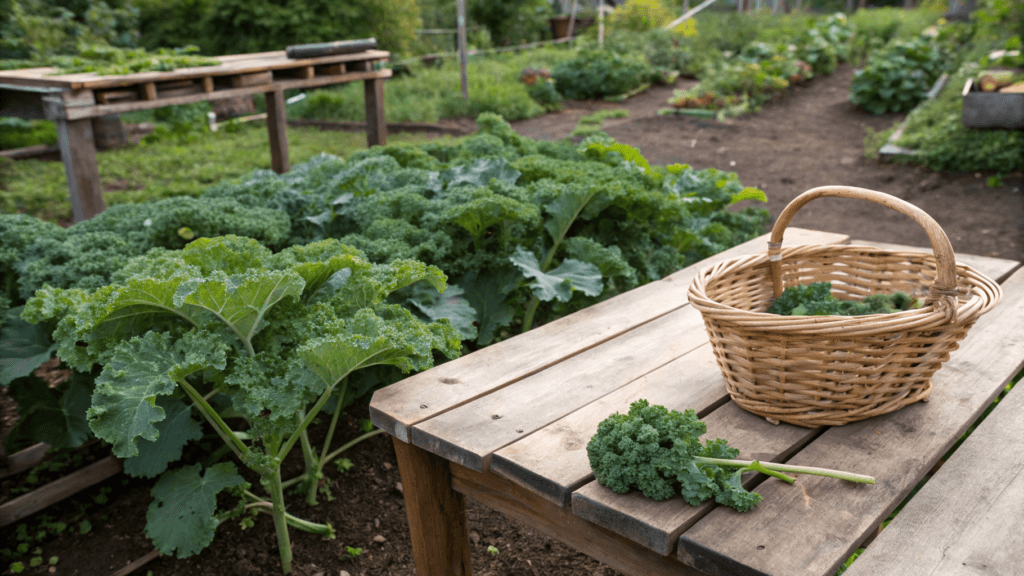
The center growth point is where new leaves form. Protecting it is what keeps kale producing instead of staling or bolting.
Balancing Yield and Plant Health
High yield comes from:
- Regular but moderate harvesting
- Healthy leaves left behind to photosynthesize
- Avoiding extremes in either direction
Kale rewards consistency more than intensity.
How to Keep Kale Producing?
Harvest regularly, avoid removing more than one-third of the plant, keep soil moisture steady, and don’t let leaves grow oversized.
Common Mistakes When Harvesting Kale
Even though kale is forgiving, a few harvesting habits can quietly reduce yield and shorten the plant’s productive life.
Waiting Too Long Between Harvests
This leads to:
- Oversized, tough leaves
- Slower regrowth
- Increased bitterness
Taking Too Many Leaves at Once
Overharvesting causes:
- Stress and slowed recovery
- Smaller future leaves
- Greater vulnerability to pests and disease
If you need a large harvest, spread it across multiple plants.
Harvesting Only the Largest Leaves
This can leave:
- Too many aging leaves at once
- Imbalanced growth
- A tall, bare stem with few active leaves
Rotate your harvest so no single area is neglected.
What to Expect After Harvesting Kale
After harvesting kale, the plant’s response can tell you a lot about whether your timing and technique were right.
How Quickly New Growth Appears
In good conditions:
- New leaves show within 3-7 days
- Full-size leaves develop in 1-3 weeks
Cool weather slows growth but improves flavor.
What Healthy Regrowth Looks Like
Healthy regrowth is:
- Upright and centered
- Evenly colored
- Similar in size to previous leaves
Distorted or stunted growth usually points to stress, not harvesting alone.
Conclusion
Harvesting kale so it keeps growing isn’t complicated, but it does require attention and restraint. Take leaves early, harvest often, and always protect the center of the plant.
When harvested correctly, kale becomes one of the most reliable, forgiving, and productive crops in the garden. A single planting can provide steady harvests across seasons, with better flavor and texture than store-bought leaves.
If there’s one habit that makes the biggest difference, it’s this: don’t wait for perfection. Harvest when leaves are ready, not when they’re overdue.

Leave a Reply