
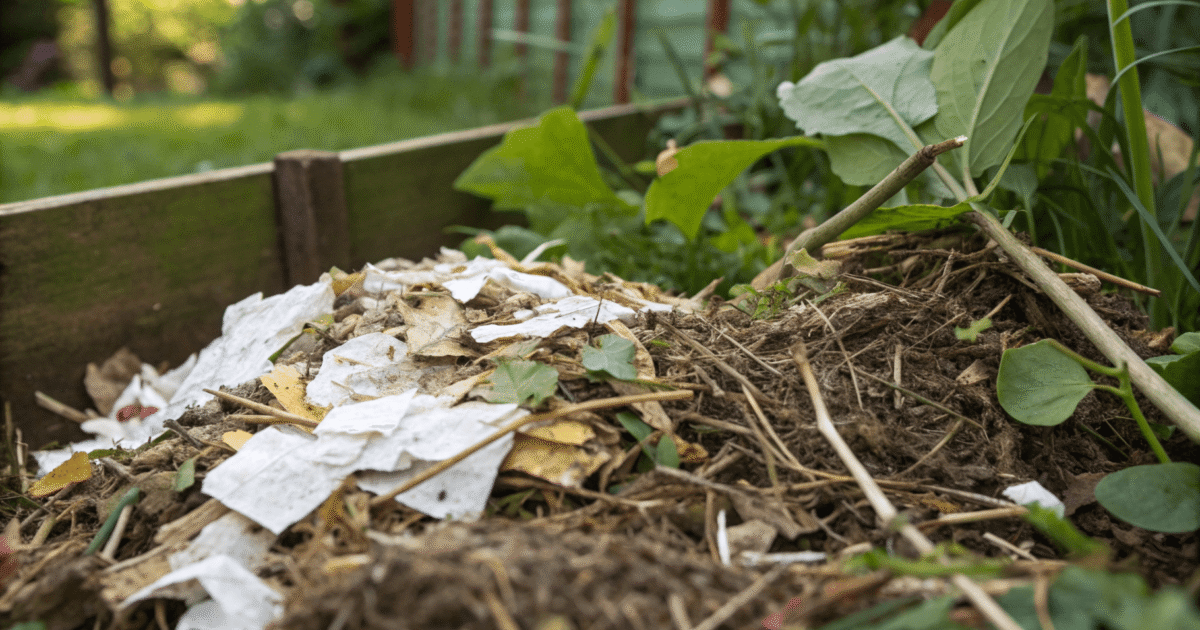
Composting paper is an easy way to reduce household waste and improve your compost. From junk mail and cardboard to paper towels, many paper products can be composted safely if you know which ones to use and which to avoid.
Why Compost Paper?
I realized how much paper my household was tossing out. Bills, mail, printer paper, those endless Amazon packages, it was a mountain! Recycling felt like the right move, but then I learned composting paper could do even more for the environment.
Recycling is still the best option for clean, dry paper that hasn’t been contaminated. But once paper is food-soiled, wet, or used as a paper towel, composting is usually the better choice. Those items can’t be recycled, but they break down perfectly in a compost pile.
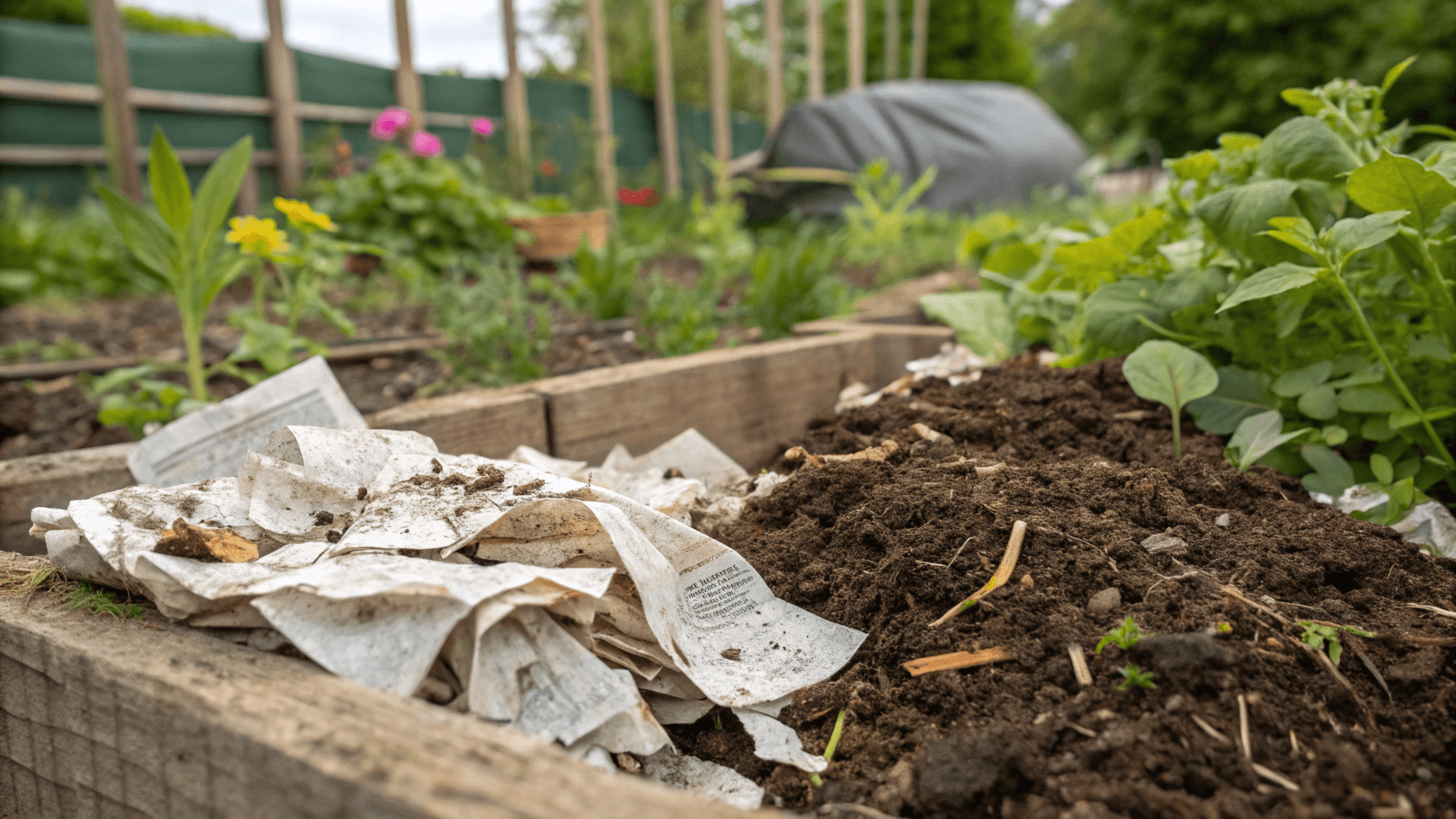
When you compost paper, you’re keeping it out of landfills, where it’d just sit there, releasing methane (a nasty greenhouse gas). Plus, paper is a “brown” material, think carbon-rich stuff that balances out the “green” stuff like veggie scraps or grass clippings. It’s like the yin and yang of composting.
The result? Rich, crumbly compost that your plants will love. Who doesn’t want that?
If you’re completely new to growing food, you may also want to start with my Vegetable Gardening for Beginners guide to learn the basics before planting.
Is Paper Compostable? What You Can and Can’t Compost
Not all paper is compost-friendly, and I learned this the hard way when I tossed in some glossy wrapping paper and ended up with a weird, plasticky mess in my compost bin.
Most paper, though, is fair game because it’s made from wood pulp, which breaks down naturally.
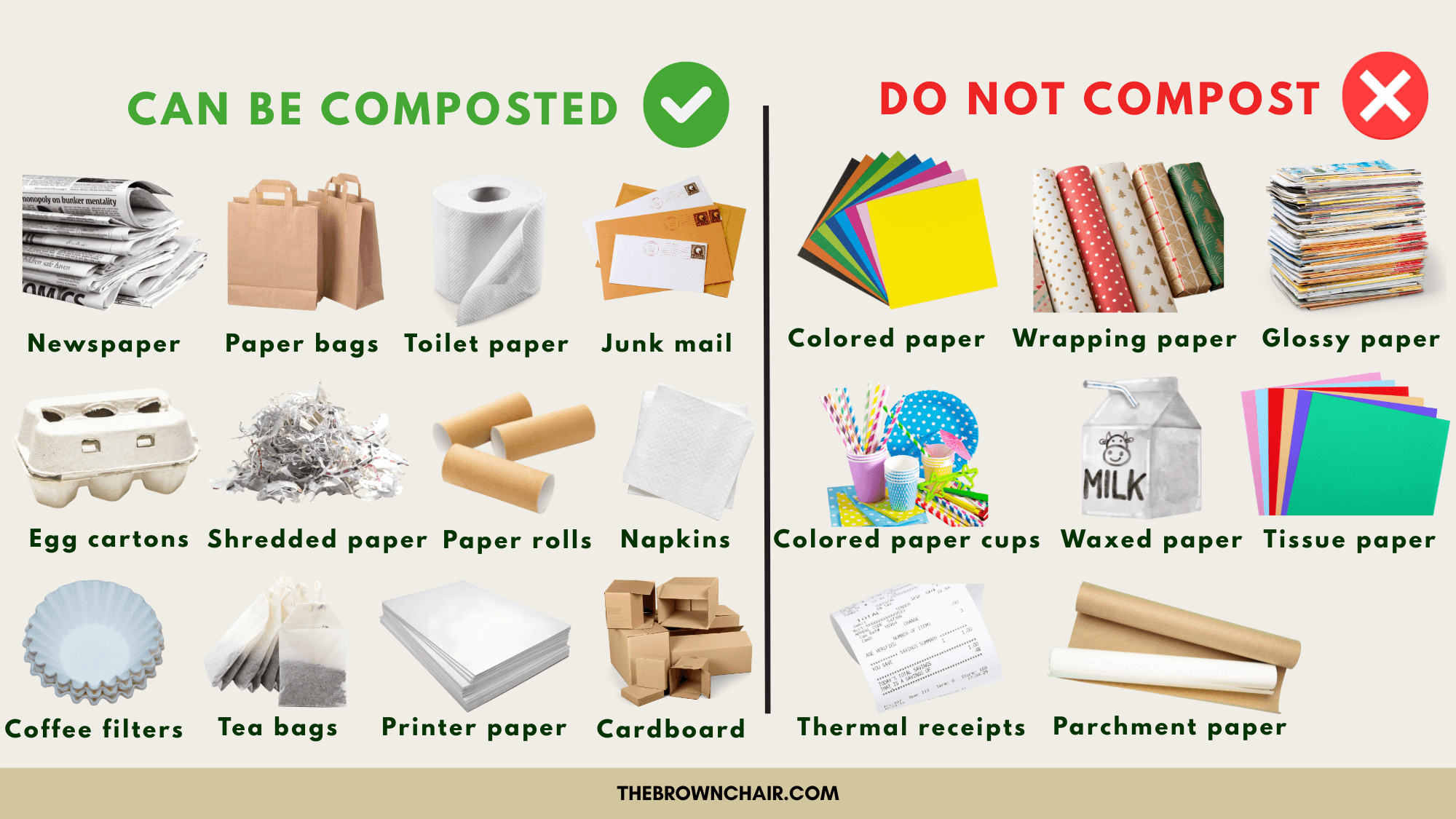
Compostable (When Plain and Uncoated)
These paper products break down safely in compost when prepared properly:
- Shredded paper – (Check shredders on Amazon)
- Newspaper (in small amounts, modern inks are usually soy-based and safe)
- Paper bags
- Egg cartons
- Toilet paper and paper towel rolls
- Coffee filters and tea bags (if the bag isn’t plastic mesh)
- Napkins and paper towels (if not greasy)
- Cardboard (pizza boxes, cereal boxes, but cut out the greasy bits)
- Plain old paper (printer paper, junk mail, or notebook scraps; black-and-white, non-glossy)
Tip: Tear or shred paper into small pieces before composting, which helps it decompose faster and mix well with “green” materials (like food scraps).
Avoid Composting
Avoid composting these paper products, as they contain coatings or chemicals that won’t break down:
- Glossy or coated paper (magazines, shiny gift wrap, flyers, brochures)
- Colored or heavily inked paper (especially neon or metallic inks)
- Paper cups and plates with coatings
- Wrapping paper with shine, foil, glitter or stickers
- Paper with plastic linings (some coffee cups, waxed paper)
- Parchment paper (silicone-coated, does not break down well in home compost)
- Waxed or laminated paper (like frozen food boxes, milk cartons)
- Thermal receipts (often printed on thermal paper that contains BPA/BPS)
- Tissue paper with dyes or perfumes
Here’s a trick I use: the “scrunch test.” Ball up the paper. If it stays crumpled, it’s probably compostable. If it pops back like it’s got a mind of its own, skip it.
Can You Compost Paper with Ink?
Nobody wants toxic tomatoes, right? But after some digging, I found out most inks these days are safe. Most modern inks are soy-based or water-based and are safe for composting. These inks break down naturally and won’t harm your compost or garden soil.
Avoid paper with metallic, neon, or glossy inks, as these may contain coatings or chemicals that don’t break down well.
Composting Paper Towels
Paper towels are tricky because what they’re used for matters more than the paper itself.
So, Can You Compost Paper Towels?
The answer depends entirely on what they were used for:
- Wiping up water, juice, or plant-based messes (like squashed berries)
- Cleaning with natural stuff like vinegar or soap
Don’t Compost Paper Towels If They’ve Touched
- Grease, oil, or meat juices (pests love this stuff)
- Harsh chemical cleaners (bleach, ammonia, not compost-friendly)
And here’s a bummer: Are paper towels recyclable? Nope. They’re too soggy or dirty for recycling bins, so composting is their best shot at a second life.
How I Compost Paper Towels
- Rip them into smaller pieces (makes them break down faster).
- Mix with dry stuff like leaves or shredded paper to avoid a soggy mess.
- Bury them deep in the compost pile to keep critters away.
How to Shred Cardboard for Compost (Without Losing Your Mind)
Cardboard is a great compost material, but it needs to be broken down properly to decompose efficiently.
Here’s how to shred cardboard for compost without pulling your hair out:
- Strip It Down: Peel off tape, labels, or plastic bits. For pizza boxes, cut out the greasy spots.
- Tear or Cut: Break it into 2-4-inch pieces. Scissors or a box cutter work great.
- Shred (If You’re Fancy): A paper shredder or manual shredder makes quick work of it.
- Soak (Optional): Dunking cardboard in water for a few hours softens it up for easier shredding.

Pro Tip: Mix shredded cardboard with green materials in a 3:1 ratio (more browns than greens) for a happy compost pile.
Your Step-by-Step Plan to Compost Paper
Ready to start? Here’s how to compost paper at home, broken down into simple steps:
Step 1: Gather Your Paper
- Keep a bin for compostable paper, paper towels, and cardboard. You can use an old bucket in your kitchen.
Step 2: Prep It Right
- Tear paper into 1-2-inch pieces, cardboard into 2-4-inch pieces.
- Remove staples, tape, or plastic coatings.
Step 3: Add to the Pile
- Layer paper with green materials (veggie scraps, grass, etc.).
- Stick to a 3:1 brown-to-green ratio.
- Bury the paper in the middle to keep it secure.
Step 4: Mix and Monitor
- Turn the pile every week or two to keep it aerated.
- Keep it moist, like a wrung-out sponge, but not dripping.
- Shredded paper usually breaks down in 2-6 weeks, while cardboard may take longer. Turning the pile and keeping it slightly moist speeds up the process.
Step 5: Harvest the Goods
- When it’s dark, crumbly, and smells earthy, your compost is ready!
Troubleshooting Tip: If your pile smells funky or attracts pests, you might have too many greens or greasy paper towels. Add more shredded paper or cardboard to fix it.
Mistakes Most People Make (So You Don’t Have To)
Composting paper seems simple, but you may have a fair share of common problems. Most composting problems with paper come from just a few common mistakes.
Here are some common mistakes to dodge:
- Tossing in Glossy Paper: If you add shiny wrapping paper, it will just sit there forever. Stick to plain paper.
- Not Shredding Enough: Big chunks of cardboard take ages to break down. Shred or tear them into smaller pieces.
- Overdoing the Paper: Too much paper dries out the pile. Balance it with greens and water if needed.
- Ignoring Ink: Most inks are fine, but skip anything with metallic or neon colors to be safe.
Quick Composting Rules for Paper
- Shred paper before adding it
- Balance with food scraps (greens)
- Avoid glossy or coated paper
- Bury the paper in the pile
- Keep compost slightly moist
Conclusion
Composting paper is one of the easiest ways to reduce waste and improve your compost. With the right balance of paper and food scraps, you can turn everyday waste into nutrient-rich compost for your garden.
If you’re new to composting, start small. Paper is one of the easiest materials to learn with.
Once you’re comfortable with composting paper, adding food scraps and yard waste becomes much easier.

Leave a Reply