
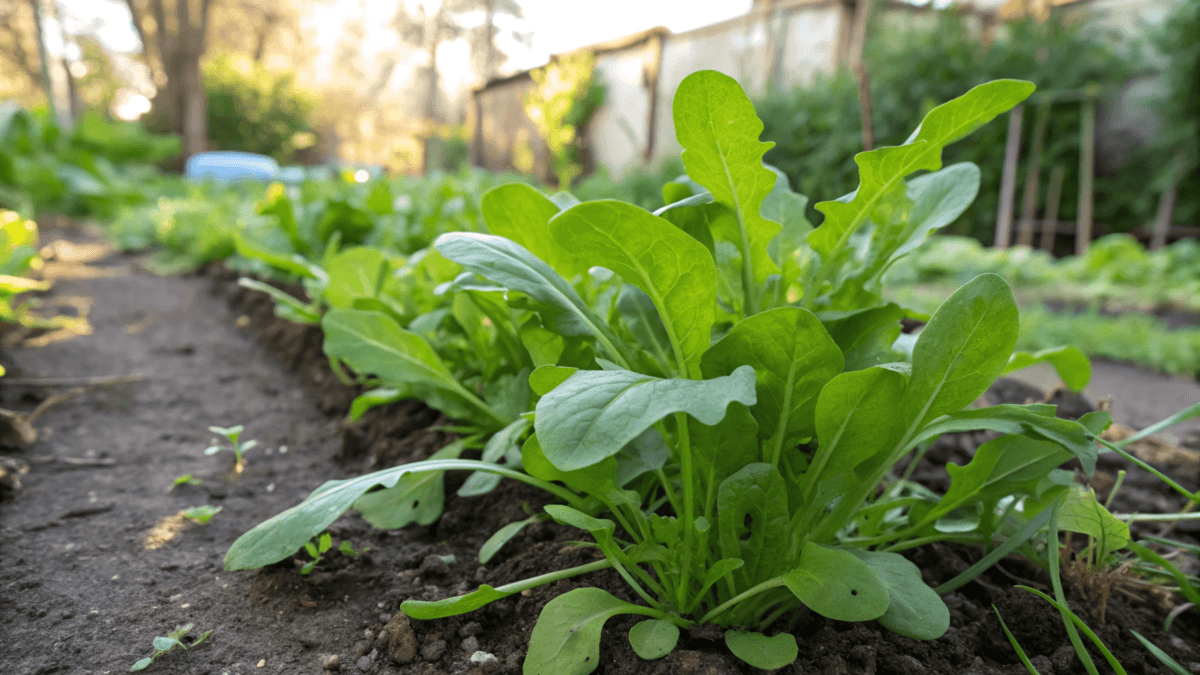
The best time to plant arugula is early spring (2-4 weeks before the last frost) and again in late summer (6-8 weeks before the first frost). Arugula grows best when soil temperatures are between 45-65°F (7-18°C) and daytime temperatures stay below 75°F (23°C).
If you plant too late in spring, it bolts quickly and turns bitter. If you plant too early in cold, soggy soil, germination slows and growth stalls. The goal is simple: catch that cool window when plants grow steadily without stress.
If you want a quick starting point on when to plant arugula, here it is:
- Sow every 2-3 weeks again while temperatures stay cool
- Stop spring sowing when consistent highs reach 75-80°F (23-26°C)
- Plant again in late summer for fall harvests
- Avoid sowing during peak summer heat
For a complete step-by-step guide covering planting, spacing, and harvesting, see how to grow arugula.
Why Planting Time Matters So Much for Arugula
Arugula grows fast, often ready for baby leaves in 3-4 weeks, but it reacts quickly to stress. Because it moves through its life cycle rapidly, small timing mistakes show up fast.
Planting time directly affects how arugula tastes and grows. In cool conditions, leaves stay tender and mild. As temperatures rise, flavor becomes sharper and bitterness increases, and plants move more quickly toward flowering.
Unlike kale or collards, arugula does not tolerate extended warmth well. It’s programmed to grow, flower, and set seed quickly once temperatures rise. If you miss your cool-season window by even a couple of weeks in spring, you may end up with thin, sharp-tasting leaves and flower stalks instead of usable greens.
Arugula does not forgive late planting in spring.
Why Arugula Bolts Faster Than Other Greens
Arugula is genetically programmed to complete its life cycle quickly. Unlike kale or Swiss chard, which tolerate heat and continue producing leaves, arugula responds to rising temperatures by accelerating flowering.
This means timing matters more than with most leafy greens. Even a small increase in temperature can shorten the harvest window significantly.
Best Time to Plant Arugula in Spring
Spring is the first main window for arugula, and the earlier you can plant safely, the better.
Ideal Soil Temperature Range for Spring Planting
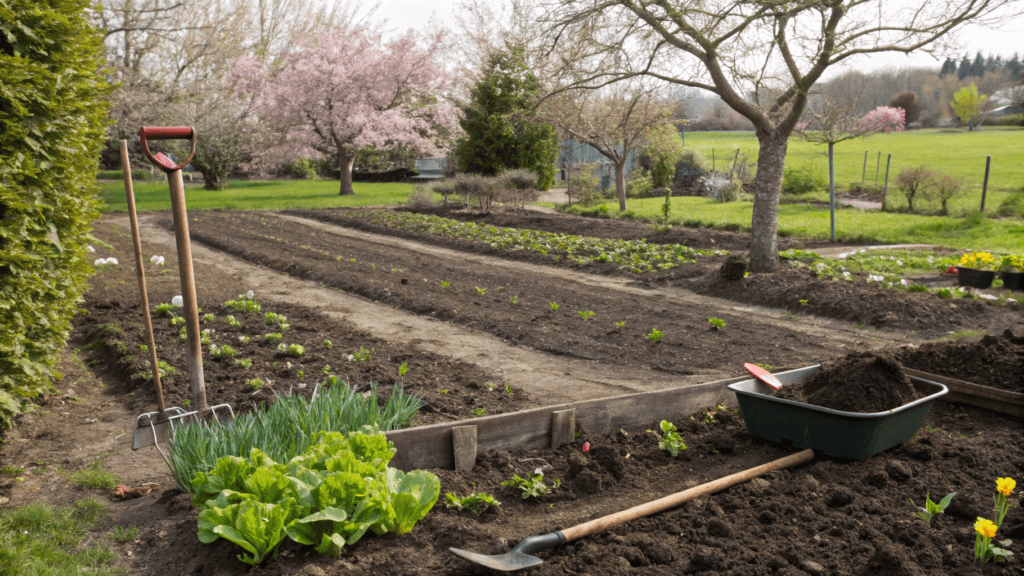
Arugula seeds germinate at soil temperatures as low as 40°F, though germination is slower at the low end. The ideal soil range for steady germination is 45-65°F (7-18°C).
In real terms:
- At 45°F (7°C) soil, seeds may take 5-10 days to sprout.
- At 55-65°F (12-18°C), they often emerge in 3-5 days.
You don’t need warm soil. You just need workable soil that isn’t frozen or waterlogged.
How Early Arugula Can Be Planted Compared to Other Greens
Arugula can be planted as early as spinach and earlier than lettuce in many gardens. It tolerates light frost once established, and young seedlings handle brief dips into the upper 20°F (-6°C).
If you’re choosing between crops for very early sowing, arugula is usually safe alongside:
- Spinach
- Peas
- Radishes
Planting Before vs After Last Frost
You do not need to wait for your last frost date. In fact, waiting often causes problems.
Planting 2-4 weeks before your average last frost usually works well. Light frost rarely harms established seedlings. The bigger risk is planting too late, not too early.
If you wait until after your last frost and temperatures are already consistently climbing into the 70°F (21°C), you shorten your harvest window.
What Happens If Spring Planting Is Delayed
When you plant late in spring:
- Plants grow quickly but bolt sooner
- Leaves become sharper and tougher
- Harvest window may shrink to 1-2 weeks
At that point, it’s often better to pause and wait for fall.
Can You Plant Arugula in Fall?
In many climates, fall is actually the best season for arugula.
Why Fall Is Often the Best Season for Arugula
Fall offers:
- Shorter days
- Cooling temperatures
- Slower bolting
These conditions produce milder, more tender leaves. Plants grow steadily instead of racing to flower.
When to Plant for Fall Harvests
Count backward from your first expected frost:
- Sow 6-8 weeks before the first frost for mature plants.
- Sow 4-6 weeks before the first frost for baby leaves.
In mild climates, you can continue planting even closer to frost since light freezes rarely kill established plants.
How Cooler Temperatures Affect Growth
In fall:
- Growth is steady but slightly slower than in the spring
- Flavor is milder
- Bolting is significantly delayed
If temperatures remain between 45-70°F (7-21°C), arugula can keep producing until hard freezes below about 20-25°F (-6/-3°C).
Using Arugula as a Late-Season Crop
Arugula works well as:
- A follow-up crop after summer vegetables
- A quick filler in empty beds
- A fall container green
Because it matures quickly, you can often fit in one or two sowings after summer crops are cleared.
Arugula Planting Time by Climate Zone
Zone numbers are helpful, but local temperature patterns matter more. Here’s how to think about timing by general climate type. Check what zone you are in! (for USA)
| Climate | Spring Planting | Fall Planting | Notes |
|---|---|---|---|
| Cool (Zones 3-5) | Very early spring | Late summer | Long cool season |
| Moderate (Zones 6-8) | Early-mid spring | Late summer-early fall | Two strong seasons |
| Warm (Zones 9-10) | Late winter-early spring | Fall-winter | Avoid summer heat |
Cool Climates (Short Summers)
In cooler northern regions:
- Plant as soon as the soil is workable in spring
- Continue sowing into early summer if highs stay under 75°F (23°C)
- Fall planting can begin in late summer
Your growing window is often longer, since extreme heat arrives later and leaves earlier.
Mild Climates (Long Spring and Fall Windows)
In moderate coastal or temperate regions:
- Early spring planting works well
- Light summer shade may allow extended sowing
- Fall planting can continue deep into autumn
These climates offer the most flexibility.
Warm and Hot Climates
In hot southern regions:
- Spring planting must be very early
- Stop sowing when highs consistently exceed 80°F
- Resume planting in late summer or early fall
In some very warm climates, arugula may grow primarily as a winter crop.
Adjusting Without Relying Strictly on Zone Numbers
Instead of focusing on the zone alone, watch:
- Soil temperature
- 10-day weather forecasts
- Average daytime highs
If forecasts show a steady warming trend, you’re approaching the end of the safe planting window.
Can You Grow Arugula Year-Round?
In mild climates, arugula can be grown nearly year-round with short pauses during extreme heat or deep winter cold.
In colder climates, it is mainly a spring and fall crop, while in hot climates, it grows best from fall through early spring. The key is avoiding temperature extremes rather than following a strict calendar.
Soil Temperature vs Air Temperature (What Matters More)
When it comes to planting arugula, both matter, but at different stages. Soil temperature controls germination and early root development, while air temperature influences leaf growth and bolting.
Minimum Soil Temperature for Germination
Arugula needs soil above about 40°F (4-5°C) to germinate reliably. Germination at that temperature is slower, but it’s reliable as long as the soil isn’t waterlogged. Cold soil slows sprouting but rarely kills seeds.
Ideal Temperature Range for Steady Growth
For best leaf production:
- Soil: 45-65°F (7-18°C)
- Air: 50-70°F (10-21°C) daytime
Growth slows under 45°F and becomes stressed above 75-80°F (23-26°C).
Why Hot Soil Triggers Stress
Warm soil accelerates development and shortens the harvest window, even before air temperatures feel extreme.
Simple Ways to Check Soil Temperature
- Use an inexpensive soil thermometer.
- Insert it 2 inches deep in the morning.
- Check for several days in a row for consistency.
If soil is creeping toward 70°F and forecasts show rising heat, consider pausing new sowings.
Tip: If the soil feels cool to the touch early in the morning, it is usually within the safe planting range for arugula. Warm soil early in the day often signals that the planting window is closing.
Succession Planting Arugula for Continuous Harvests
Arugula grows fast and bolts fast. If you plant one large batch all at once, you’ll get one strong harvest, and then everything will flower within a short window.
Succession planting spreads that risk out and keeps your harvest steady.
Why Arugula Is Ideal for Succession Planting
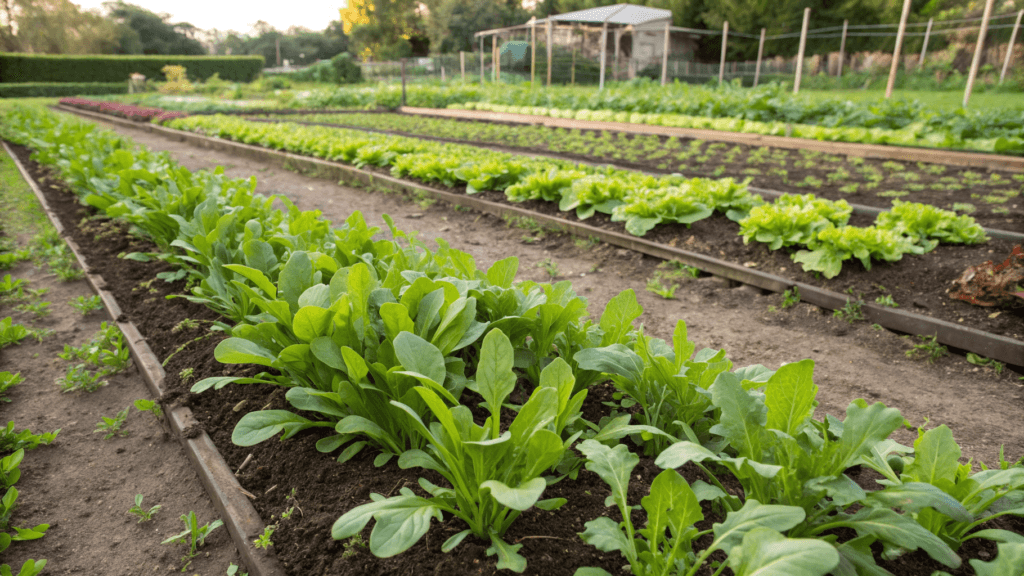
Instead of planting one large patch at once, sow smaller amounts regularly. This prevents a single wave from bolting all at once.
How Often to Re-Sow
During cool seasons:
- Sow every 2-3 weeks
In very cool early spring or fall:
- You may stretch that to every 3 weeks
When to Stop Before Heat or Frost
Stop spring sowing about 2-3 weeks before expected consistent highs above 80°F (26°C). For fall, stop sowing 4 weeks before the expected hard freeze if you want baby leaves, earlier for mature plants.
Common Mistakes That Cause Gaps
- Planting everything at once
- Waiting too long between sowings
- Continuing sowing into rising heat
Steady small sowings create steady harvests.
Planting Arugula in Summer (Is It Possible?)
Arugula is a cool-season crop. Summer planting is difficult but not impossible in some climates.
Why Summer Planting Is Risky
High heat leads to rapid flowering and sharply bitter leaves.
If daytime highs are regularly above 85°F (29°C), success is unlikely without protection.
When Summer Planting Can Work
It may work if:
- You have partial afternoon shade
- Nights cool below 65°F (18°C)
- You’re planting for baby leaf harvest only
Using Shade, Mulch, and Timing
To reduce stress:
- Sow in the coolest part of summer (early or late)
- Provide 30-50% shade cloth
- Keep soil consistently moist
These steps lower soil temperature slightly and delay bolting.
Signs Summer Planting Is Failing
- Flower stalks form before leaves expand
- Leaves are small and sharply bitter
- Growth is stunted
If that happens quickly, it’s better to wait for fall.
When NOT to Plant Arugula
There are moments when planting is almost guaranteed to disappoint.
Avoid sowing when:
- Soil temperatures exceed 75°F
- Daytime highs are consistently above 85°F
- Extended heat waves are forecast
- Soil is waterlogged and cold
If a heat spike is forecast right after sowing, it’s better to wait.
Indoor vs Outdoor Planting Timing
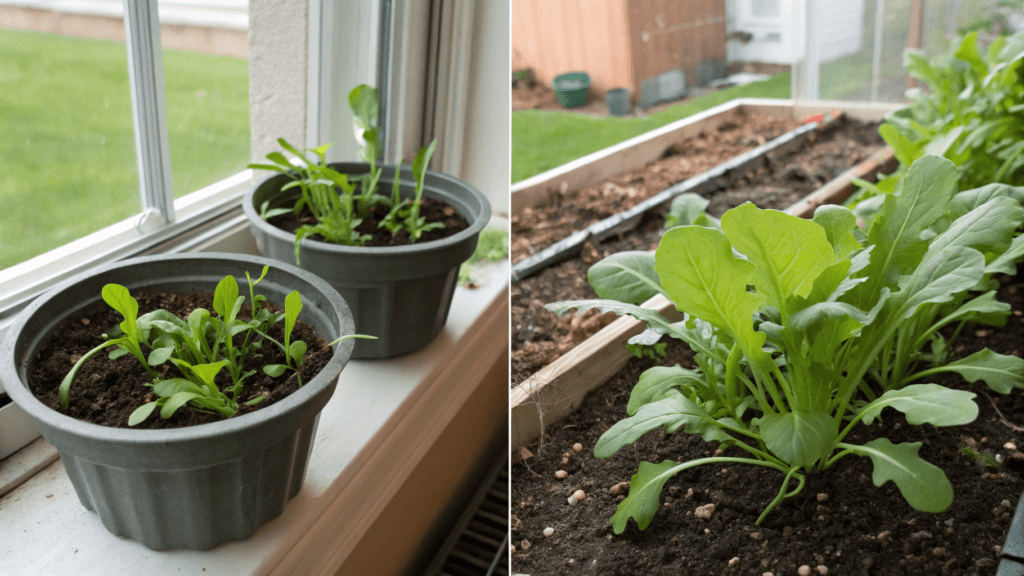
Arugula is almost always better direct-sown outdoors, but there are situations where indoor planting makes sense. The key is understanding how fast this crop grows and how little transplant shock it tolerates.
When Indoor Planting Makes Sense
Starting indoors may help if:
- The soil outside is still frozen
- You want a very early container crop
- You are growing microgreens under lights for microgreens
Why Arugula Is Usually Better Direct-Sown
Arugula grows quickly and doesn’t respond well to root disturbance, so direct sowing is usually better.
Timing Indoor Sowing With Outdoor Conditions
If starting indoors:
- Sow 2-3 weeks before the outdoor planting window
- Transplant while the seedlings are small
Do not let them become root-bound.
Transition Mistakes to Avoid
- Hardening off too late into warm weather
- Transplanting during sudden heat
- Letting seedlings outgrow small containers
If outdoor conditions are already warm, skip transplanting and wait for fall.
Quick Planting Timeline (Seed to Harvest Overview)
Under cool conditions:
- Germination: 5-10 days
- Baby leaf harvest: 21-30 days
- Mature harvest: 40-50 days
In cooler fall weather, growth may stretch a week longer. In borderline warm conditions, bolting may shorten the harvest window.
The warmer the weather (within tolerance), the faster the growth, but also the faster the flowering.
Common Planting-Time Mistakes Beginners Make
Timing errors are the most common reason arugula disappoints. The good news is that once you understand the patterns, they’re easy to avoid.
- Planting too late in the spring: Waiting until after the last frost often pushes growth into rising heat.
- Ignoring soil temperature: Seeds germinate in cool soil, but stressed seedlings in warming soil bolt quickly.
- Skipping succession planting: One large sowing leads to one short harvest.
- Treating arugula like heat-tolerant greens: It does not tolerate heat like kale or collards. Planning as if it does leads to bitterness and bolting.
Correct timing prevents most flavor and bolting issues before they start.
Quick Arugula Planting Guide
- Spring: 2-4 weeks before last frost
- Fall: 6-8 weeks before first frost
- Soil temp: 45-65°F (7-18°C)
- Best growth: 50-70°F (10-21°C)
- Stop planting: above 80°F (26°C)
Conclusion
Arugula thrives in mild conditions and struggles in heat. The best results come from planting during cool, steady weather in early spring and again before fall temperatures drop. Watch soil temperature, not just frost dates. Use succession planting to stretch your harvest.
If you focus on catching that cool window, rather than chasing calendar dates, arugula becomes one of the easiest and fastest greens you can grow.

Leave a Reply