
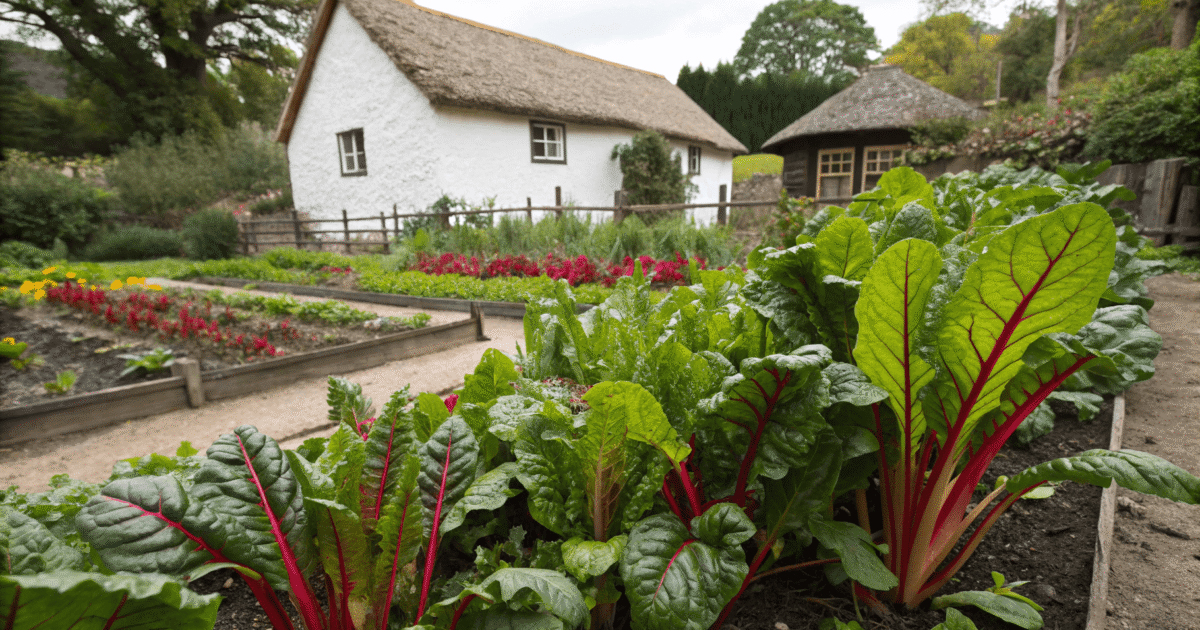
If you want a leafy green that keeps producing for months, Swiss chard is one of the best choices you can grow. It’s beginner-friendly, handles both cool and warm weather, and you don’t have to harvest the whole plant at once.
The short answer to “How to grow Swiss chard successfully?” is to plant it in full sun to partial shade, use rich, well-draining soil, keep moisture steady, and harvest regularly. Do that, and you can enjoy fresh leaves from spring through fall and in mild climates, even into winter.
What makes Swiss chard even better is how flexible it is. You can grow it in raised beds, containers, or in-ground gardens. It’s also more forgiving than many greens when temperatures swing. If you’ve struggled with lettuce bolting or spinach fading in heat.
Swiss chard is part of the larger group of leafy vegetables that grow quickly, tolerate regular harvesting, and are ideal for beginner gardeners.
Health Benefits of Swiss Chard
Swiss chard isn’t just easy to grow, it’s also packed with nutrition. It’s known for being rich in:
- Vitamin K (important for normal blood clotting and bone health)
- Vitamin A (supports vision and immune function)
- Vitamin C (helps with immune support and collagen production)
- Magnesium and potassium (help with muscle function and fluid balance)
- Fiber (supports digestion and helps you feel full)
Chard is also a smart “kitchen garden” plant because you can eat both the leaves and stems. Younger leaves are tender for salads; larger leaves are great sautéed, added to soups, or cooked like spinach.
If you’re aiming to grow food that gives you a lot of nutrition per square foot, Swiss chard is hard to beat.
Swiss Chard Plant Profile
This quick profile summarises the basic growing requirements for Swiss chard at a glance.
| Factor | Swiss Chard Profile |
|---|---|
| Plant Type | Leafy green (grown as an annual, naturally biennial) |
| Planting Time | Early spring; late summer to early fall |
| Sun Requirements | Full sun to partial shade |
| Soil Requirements | Loose, well-drained soil rich in organic matter |
| Watering | Moderate, consistent moisture |
| Climate Tolerance | Frost-tolerant; moderate heat tolerance |
| Time to Harvest | 50–60 days |
| Common Pests & Diseases | Leaf miners, aphids, slugs; occasional fungal leaf spots |
| Companion Plants | Beans, onions, garlic, lettuce |
Best Types of Swiss Chard
Swiss chard comes in a few main “types,” and choosing the right one can make your harvest bigger, prettier, and easier to manage. All Swiss chard varieties grow similarly; the best choice mostly depends on your weather, how you like to cook, and whether you want colorful stems.
Quick Chooser (Pick the Right Swiss Chard Fast):
- Want the biggest harvests? Choose ‘Fordhook Giant’ for large leaves and heavy, repeat picking.
- Gardening in warm or changeable weather? Choose ‘Lucullus’ for better heat tolerance and steady growth.
- Want the most colorful garden (and plates)? Choose ‘Bright Lights’ or red chard for vibrant stems and reliable production.
If you’re unsure, ‘Bright Lights’ is the safest all-around choice for beginners.
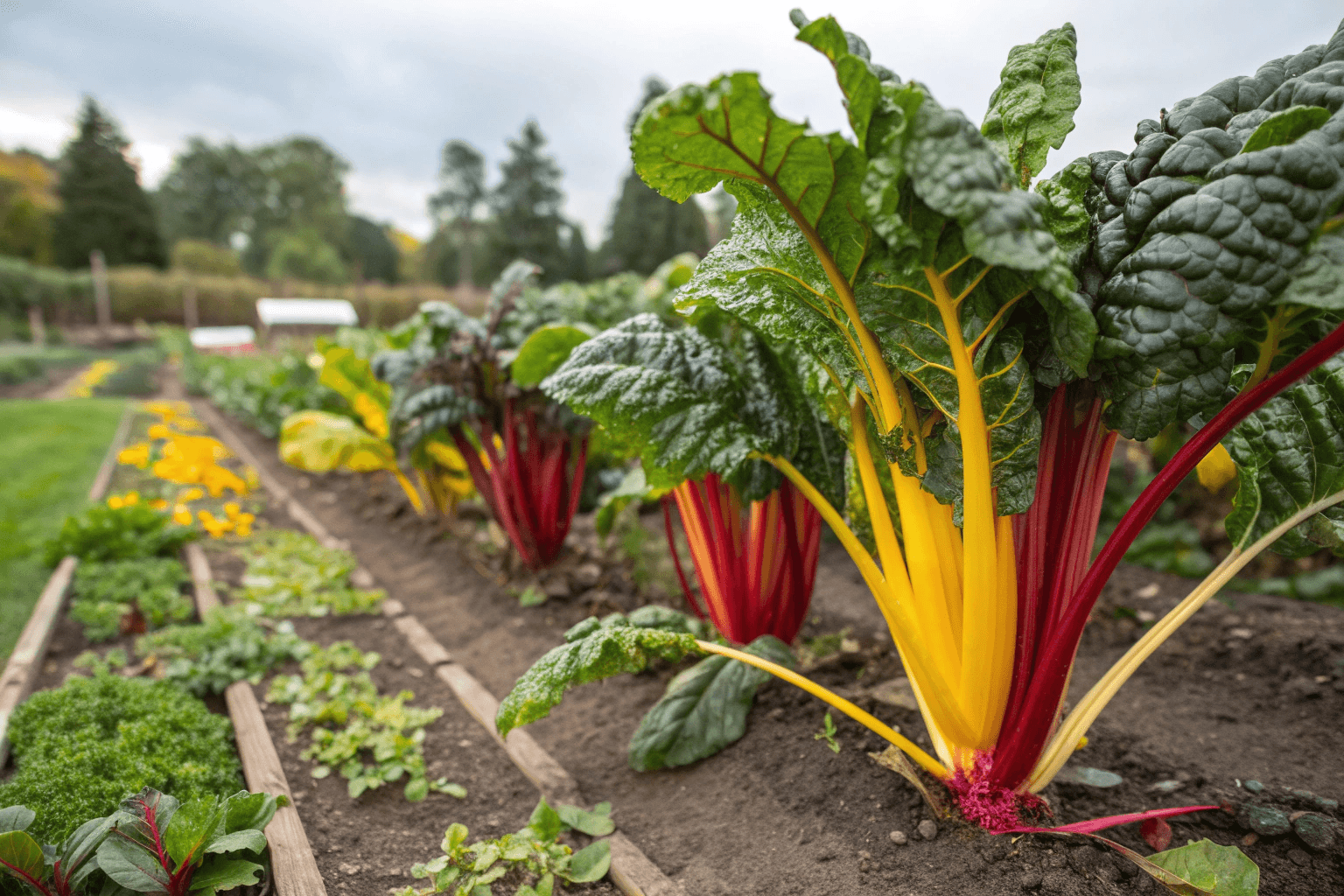
1. ‘Bright Lights’ (The Classic Colorful Variety)
This is the most eye-catching type, with stems in red, yellow, orange, pink, and white. It’s great for home gardens and garden beds because it looks decorative while still producing tender leaves. It’s reliable, productive, and holds its color well in the garden and on the plate.
Best for:
- Consistent harvests through the season
- Kids or beginner gardens (fun colors = more excitement)
- Steaming and sautéing
- Farmers markets and home cooks who love colorful plates
If you want the rainbow look but prefer a well-known, proven option, this is the go-to.
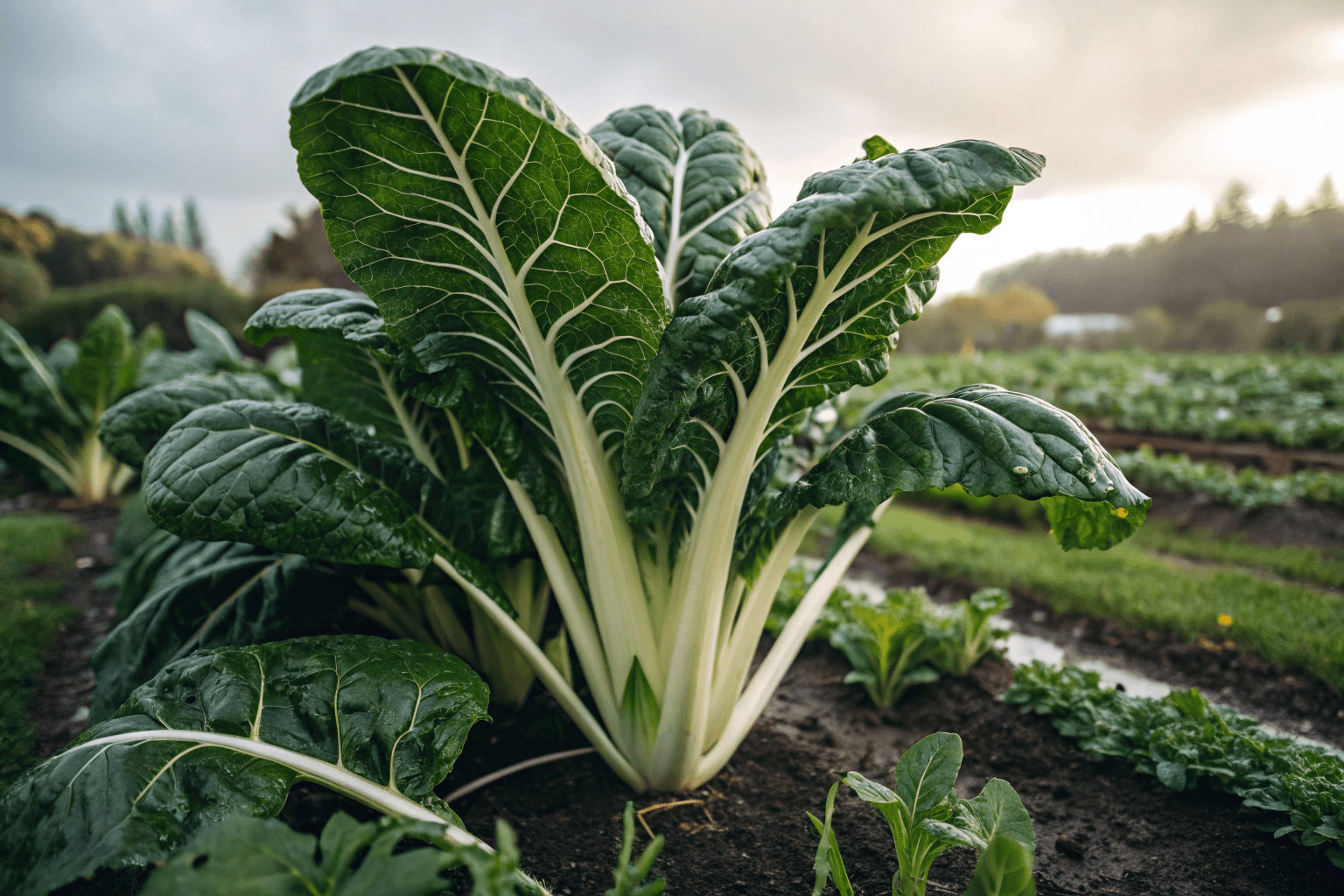
2. ‘Fordhook Giant’ (Big Leaves, Heavy Harvests)
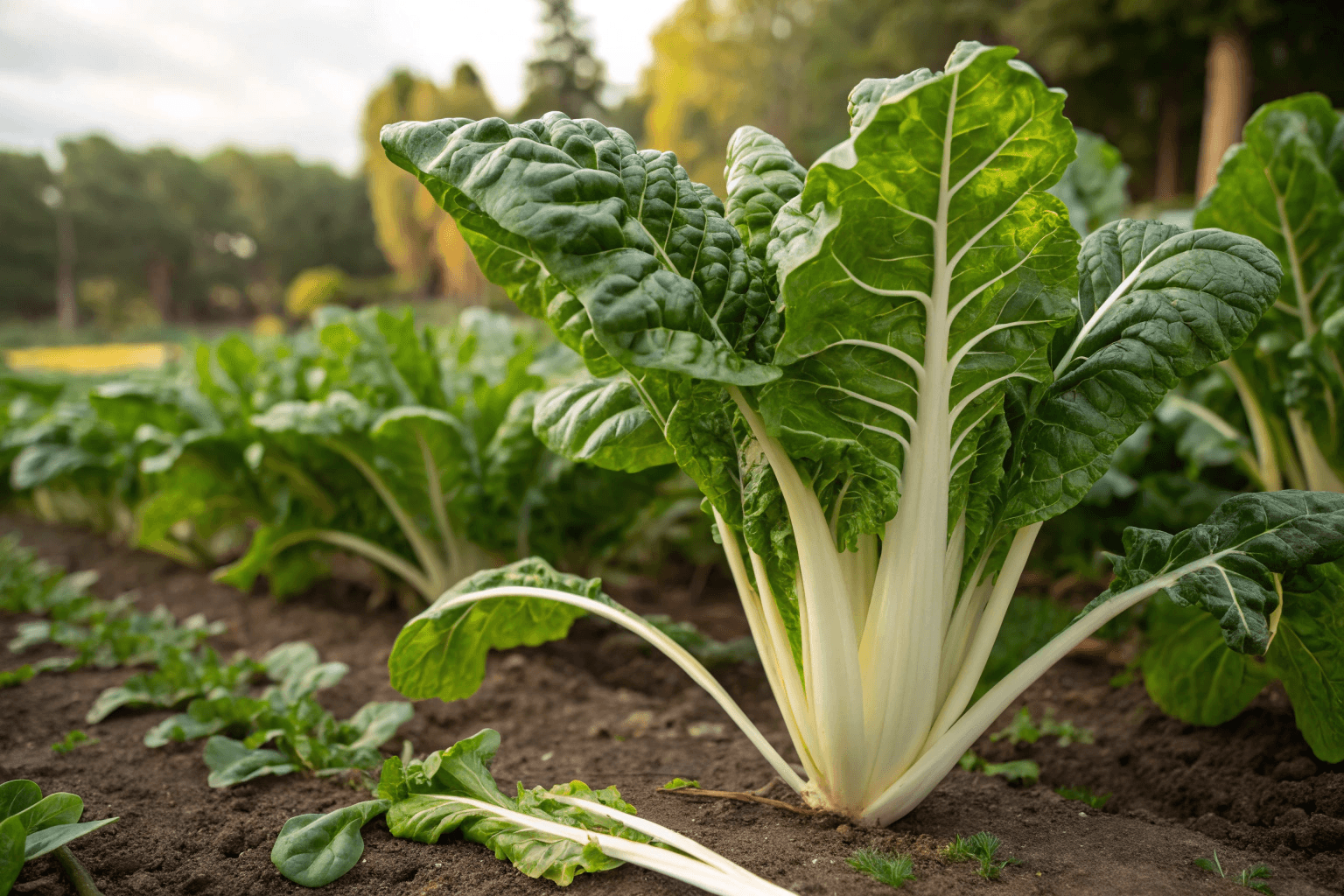
If your main goal is lots of food, ‘Fordhook Giant’ is hard to beat. It produces dark green, large, thick leaves and broad white stems, great for repeated harvest.
Best for:
- High-yield gardens and family cooking
- Soups, stews, and batch cooking
- Gardeners who like larger, sturdier leaves
Leaves can be slightly tougher than smaller-leaf types, so harvest young for tenderness.
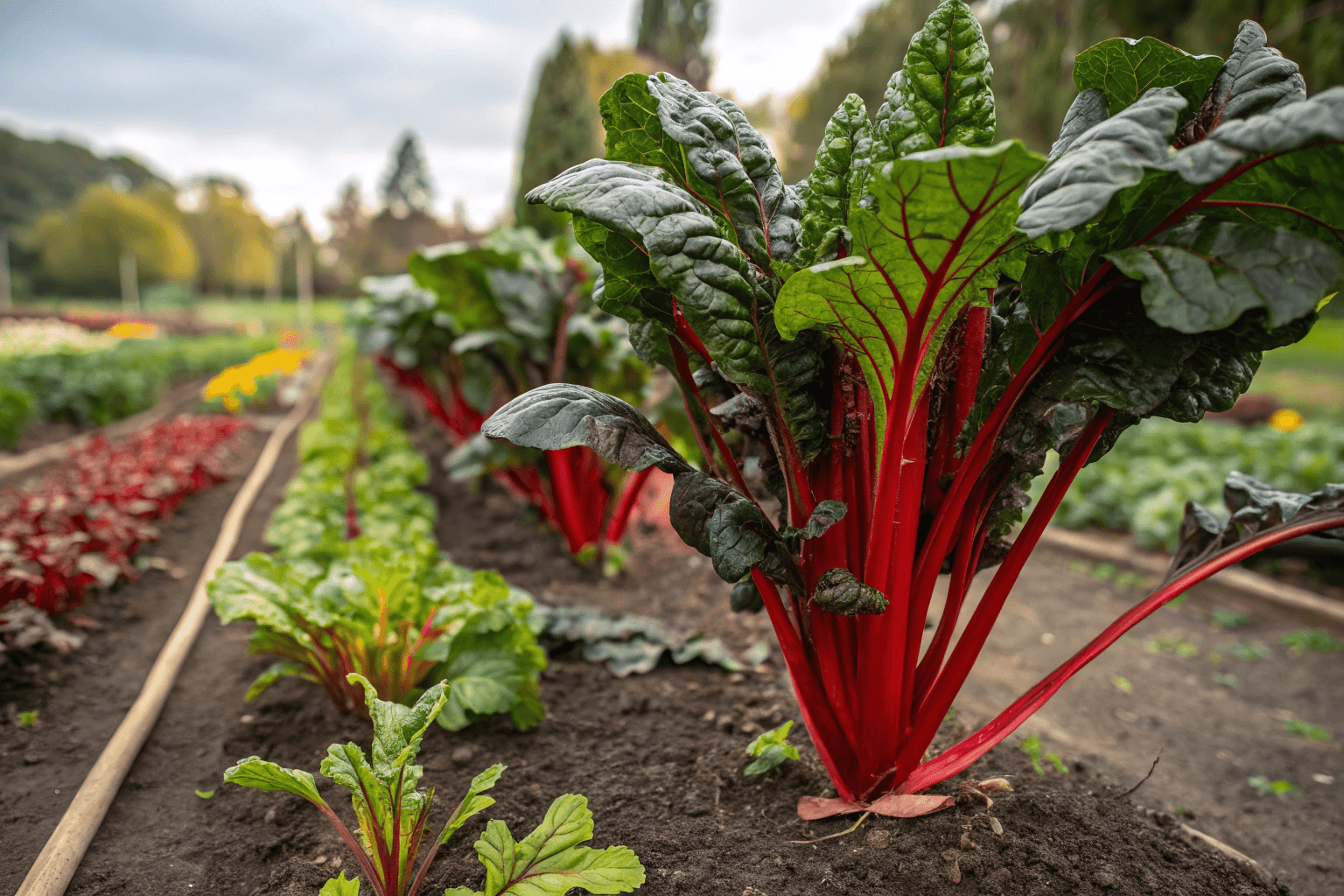
3. Red Chard (Deep Red Stems and Veins)
Red chard has deep red stems and veins with green leaves and a slightly more “earthy” flavor than white-stem types. It’s popular with gardeners who want a bold look without planting a full rainbow mix.
Best for:
- Adding strong color to salads (use younger leaves)
- Stir-fries and quick sautés
- Gardeners who want one dramatic variety
The color can fade a bit when cooked for a long time, so quick cooking keeps it vibrant.
4. ‘Lucullus’ (Tender, Mild, and Heat-Tolerant)
This is a great option if you want a milder flavor and tender leaves, especially in warmer conditions. It’s also known for strong growth and steady production.
Best for:
- Hot or changeable weather
- Gardeners who prefer a softer taste
- Continuous picking (cut-and-come-again harvest)
- Best for fresh eating and salads
It’s a smart “workhorse” variety less showy than rainbow types, but very dependable.
Which Swiss Chard Type To Choose?
- For maximum yield: ‘Fordhook Giant’
- For the prettiest garden: ‘Bright Lights’
- For hot summers: ‘Lucullus’
- For salads and color: Red chard (young leaves)
If you’re only planting one variety, a safe bet is ‘Bright Lights’ (for beauty and reliability) or ‘Fordhook Giant’ (for pure production). Many gardeners do both: one bed for big harvests and one bed for color.
Best Growing Conditions for Swiss Chard
Swiss chard is one of the most climate-flexible leafy greens you can grow, which is a big reason it’s so popular with beginners. While many greens struggle outside a narrow temperature range, Swiss chard adapts well to both cool and moderately warm climates.
Temperature
- Best growth: Cool to mild weather 50-75°F (10-24°C)
- Minimum tolerance: Down to about 30°F (-1°C)
- Swiss chard tolerates light frost better than most leafy greens
- Upper tolerance: Up to 85°F (29°C) with proper care
Unlike lettuce or spinach, Swiss chard continues producing even when temperatures rise, which is why it’s often the most reliable summer green in home gardens.
Space
- Chard plants get bigger than many people expect
- Plan for good airflow to reduce leaf diseases and pest issues
When to Plant Swiss Chard
Swiss chard can be planted in spring and late summer for two main harvest seasons.
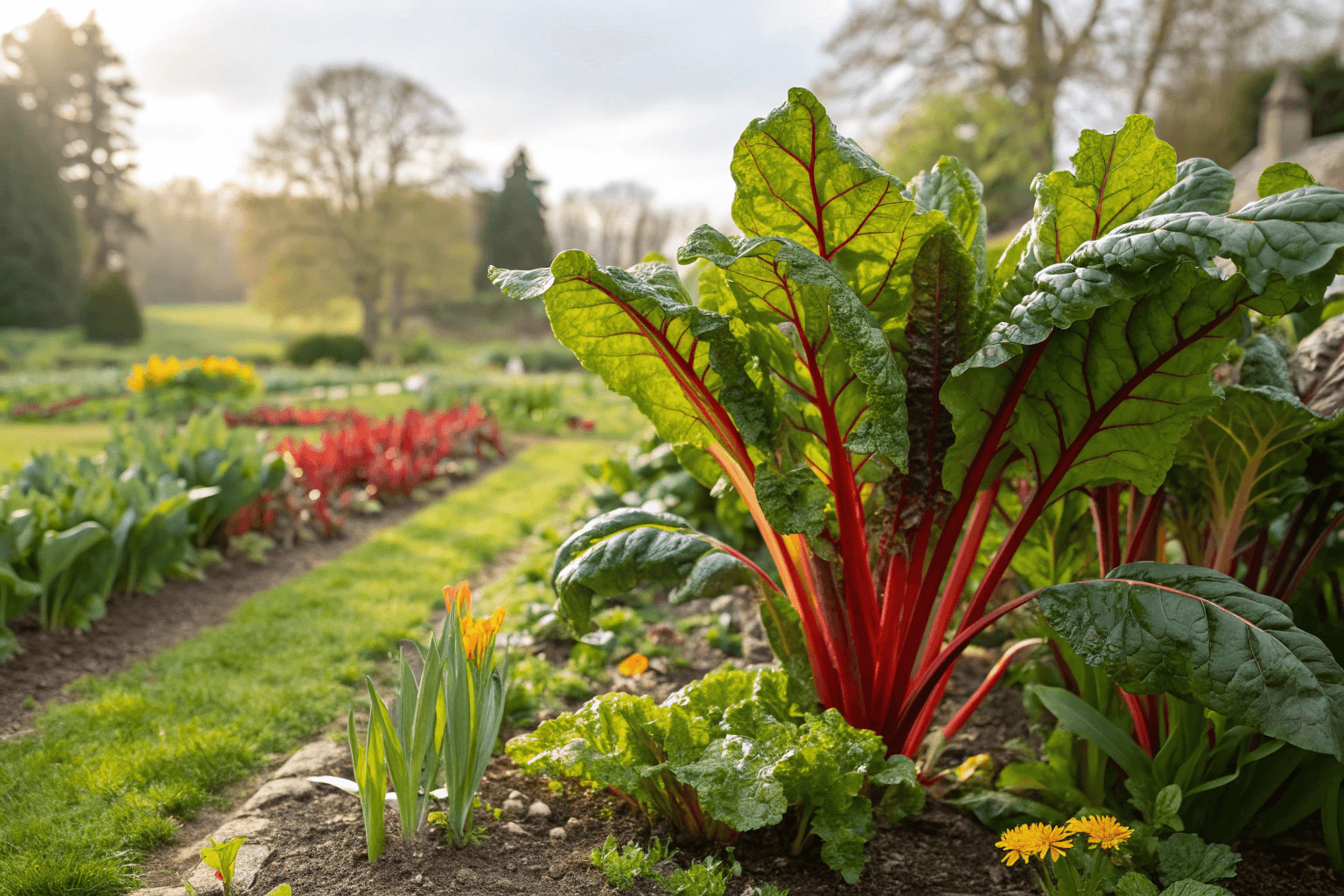
Spring planting
- Plant Swiss chard 2-3 weeks before the last expected frost
- Chard can handle cool temps, so you don’t need to wait for hot weather
- Seeds germinate best when soil temperatures are 50-70°F (10-21°C)
- Harvest usually begins in late spring to early summer
Fall planting
- Plant Swiss chard 6-8 weeks before the first expected frost
- Cooler temperatures improve leaf texture and flavor
- Fall-grown Swiss chard is often sweeter and more tender
- Bolting is much less likely in cool weather
In many regions, fall-planted Swiss chard can continue producing until hard frost.
If you’re unsure when to plant, early spring is your best bet. Swiss chard handles cool soil well, grows steadily, and gives you plenty of time to learn as it matures.
Soil Preparation
Swiss chard grows best in loose, fertile, well-draining soil. It’s a leafy crop, so it appreciates nitrogen and organic matter.
Ideal Soil Basics
- Texture: Loamy or amended soil that drains well
- Soil pH: Slightly acidic to neutral, 6.0 to 7.0
- Richness: Moderate to high organic content
Swiss chard tolerates slightly heavier soil. While it still prefers good drainage, it won’t struggle as quickly if your soil isn’t perfect. This makes it a reliable option for beginner gardens and raised beds.
How to Prep The Bed
- Clear weeds and debris. Chard doesn’t like competition early on.
- Loosen the top 8-12 inches of soil if possible.
- Mix in compost (a generous layer worked into the top soil).
- If your soil is heavy clay, add compost and consider raised beds to improve drainage.
In-Ground Soil Prep
- Loosen soil at least 8-10 inches deep
- Mix in compost or well-rotted manure before planting
- Avoid compacted or clay-heavy soil that holds water too long
The ideal soil should feel crumbly in your hand and drain well after watering.
Swiss chard is less sensitive to soil imperfections than many leafy greens, but richer soil directly increases leaf size and harvest length.
Sunlight Requirements
Swiss chard grows best with full sun to partial shade. In cool seasons, sunlight helps plants grow faster and produce thick, healthy leaves. As temperatures rise, too much direct sun can stress the plant and lead to tougher leaves.
Ideal Sun Exposure
- 6-8 hours of sunlight per day
- Morning sun preferred
- Hot climates: Partial afternoon shade can keep leaves from getting tough and can reduce stress
- Cool climates: Full sun encourages faster growth and stronger stems
Heat Protection Tips
One of Swiss chard’s biggest advantages is its heat tolerance. While many leafy greens struggle or bolt in warm weather, Swiss chard keeps producing.
When temperatures regularly exceed 80°F (27°C), Swiss chard benefits from extra protection:
- Use shade cloth during heat waves
- Plant near taller crops (corn, tomatoes, trellised beans) for natural shade
- Grow in containers that can be moved out of harsh afternoon sun
- Mulch soil to keep roots cool
Reducing heat and sun stress helps Swiss chard stay productive longer and keeps leaves tender instead of tough, even in summer.
Container Growing
Swiss chard does very well in containers if the pot is deep enough, making it perfect for balconies or patios.
- Choose a pot at least 8-12 inches (20-30 cm) deep and wide enough, with drainage holes
- One plant per medium pot (or space plants 6-8 inches apart in large containers)
- Use high-quality potting mix, not garden soil
Containers dry out faster than garden beds, so you’ll need to pay closer attention to watering.
How to Plant Swiss Chard (Step-by-Step)
Swiss chard can be grown easily from seed or from young transplants.
But usually grown from seed, and it’s one of the easier greens to direct sow. The seeds are actually “seed clusters,” which means more than one seedling may sprout from each planting spot.
Direct Sowing Seeds
- Choose your spot and pick a bed or container with good drainage
- Prepare the soil. Mix compost into the top layer and smooth the surface
- Sow seeds ½-1 inch (1-2 cm) deep
- Space seeds 2-3 inches apart in rows
- Water gently after planting, and keep the top layer of soil lightly moist until germination
- Thin seedlings once they’re a few inches tall. Since each seed cluster can sprout multiple plants, thin to one strong seedling per spot. Snip extras at the soil level rather than pulling, to avoid disturbing roots
- Add a light mulch. Once seedlings are established, mulch helps hold moisture and reduces weeds
- For baby leaves: Sow closer together and harvest young
- For full plants: Aim for 8-12 inches between plants after thinning
Germination tip: If the soil dries out during germination, sprouting can slow down. Consistent moisture early on is key.
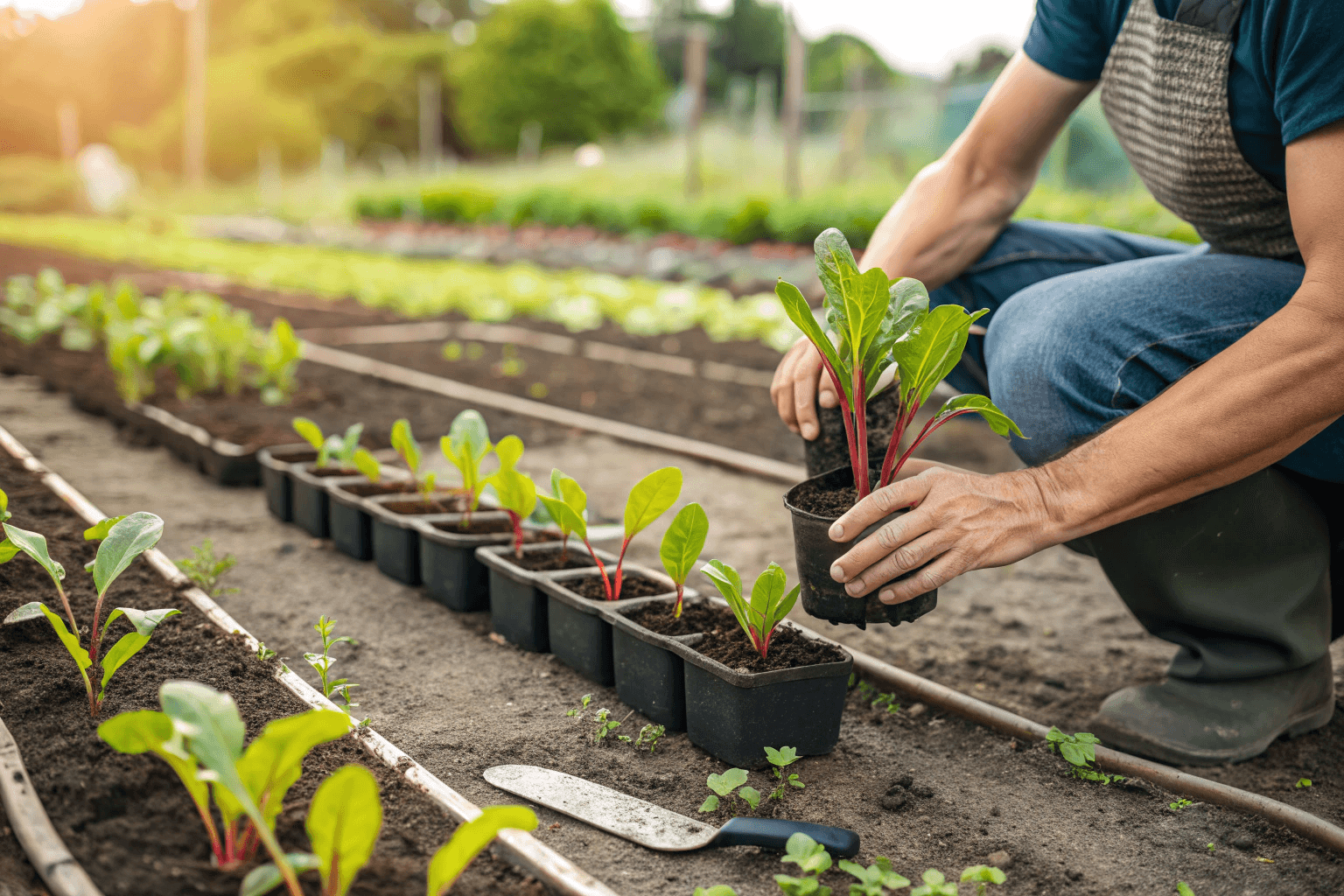
Planting Transplants
Planting transplants works well if you want a head start.
- Dig a hole slightly larger than the root ball
- Plant at the same depth they grew in their container
- Space plants 8-12 inches apart
- Water well after planting
Watering Swiss Chard
Swiss chard grows best with consistent moisture, especially during active growth, not soggy soil, and not long dry spells. Consistent watering is the secret to sweet, tender leaves.
How Often to Water
Swiss chard handles short dry periods, but steady moisture keeps leaves sweeter and more tender.
- Water deeply whenever the top inch of soil feels dry
- Aim for consistent moisture, especially during warm weather
- If leaves look droopy in the afternoon but perk up at night, that can be a normal heat response. If they stay limp, water more consistently
Signs of Water Stress
- Underwatering: Leaves become tough, bitter, or droopy
- Overwatering: Yellowing leaves and slow growth
Mulching around plants helps keep moisture steady and soil cool, especially in summer.
Feeding Swiss Chard
Swiss chard isn’t a heavy feeder, but regular, balanced nutrition makes a big difference in leaf size, color, and tenderness. Since you harvest the leaves over and over, the plant needs steady access to nutrients to keep producing new growth.
Feeding Before Planting
Healthy plants start with prepared soil:
- Mix in compost or well-rotted manure before planting
- This improves soil structure and provides slow-release nutrients
- Compost alone is often enough for the first few weeks
If your soil is poor, enriching it before planting reduces the need for frequent feeding later.
Feeding During Growth
Once plants are established (about 3-4 weeks after planting), light feeding helps maintain production.
Best options:
- Compost side-dressing every 3-4 weeks
- Organic liquid fertilizer (fish emulsion or seaweed) every 2-3 weeks
- Balanced fertiliser with slightly higher nitrogen (such as 5-5-5)
Always water after feeding to prevent root stress.
Signs Swiss Chard Needs Feeding
- Slow or weak growth
- Pale green or yellowing leaves
- Smaller leaves than expected
- Reduced regrowth after harvesting
Correcting nutrient shortages early keeps plants productive.
Avoid Overfeeding
Too much fertilizer can:
- Cause overly soft, floppy leaves
- Reduce flavor
- Increase pest problems
Stick to light, regular feeding rather than heavy applications.
Companion Plants
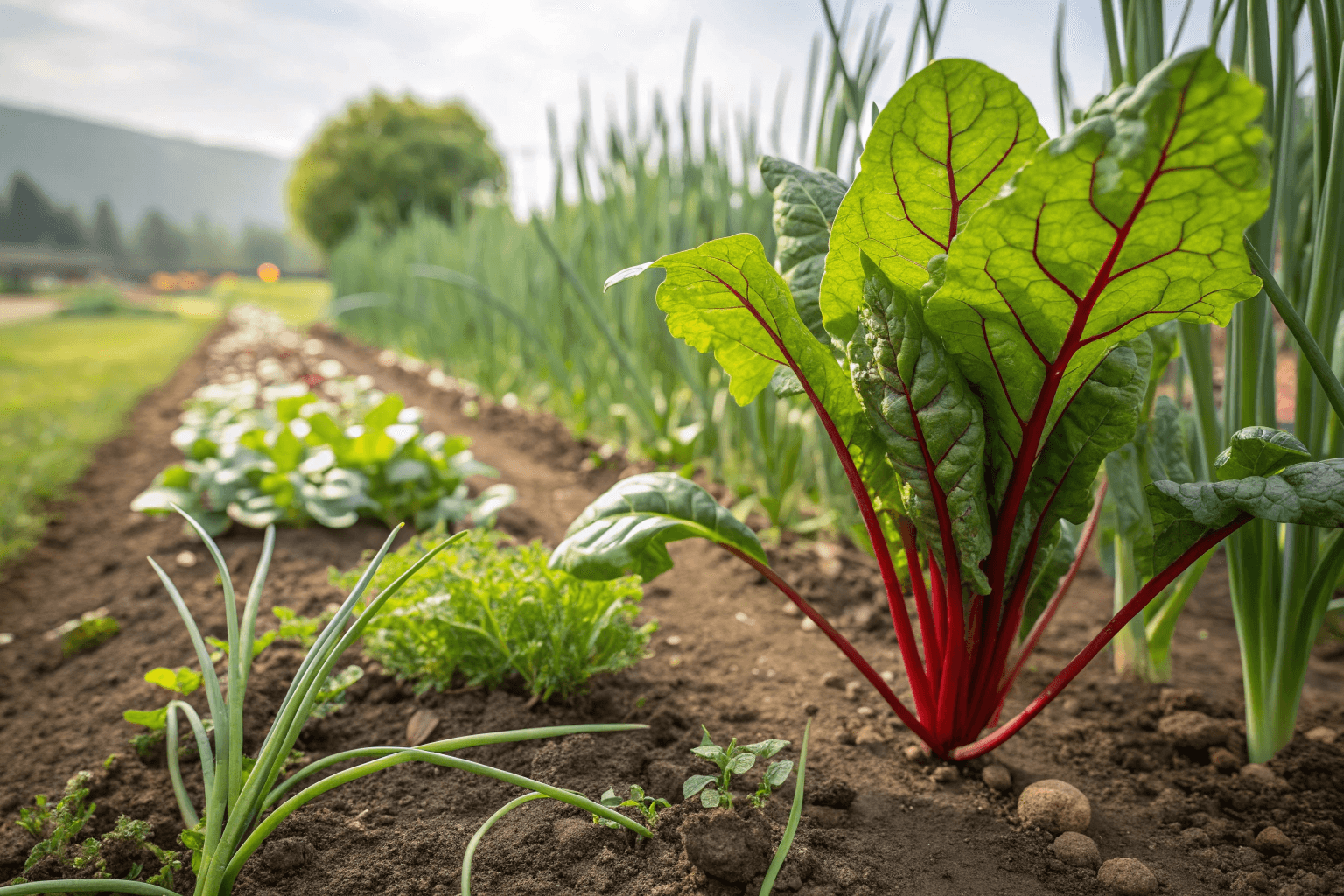
Companion planting won’t “magically” prevent every pest, but it can help with space use, pollinator support, and overall garden balance.
Good Companion Plants
- Beans (can support soil fertility)
- Onions, garlic, chives (often helpful in mixed plantings)
- Radishes (fast crop between young chard plants)
- Lettuce (shares similar care in cooler seasons)
- Nasturtiums and marigolds (useful garden flowers that can help distract pests)
Plants to Avoid
- Avoid crowding Swiss chard with very large, shading crops (pumpkins or squash) unless you specifically want shade in hot weather
- Give chard airflow; tight planting can increase leaf problems
When and How to Harvest for Continuous Growth
Swiss chard is a “cut-and-come-again” plant, meaning it can keep producing as long as you harvest correctly.
With regular harvesting, Swiss chard can keep producing for months. If you let it get overcrowded with old leaves, growth can slow down.
When to Start Harvesting
- Baby leaves: Often ready when leaves are 4-6 inches long
- Full leaves: Start when leaves are 6-8 inches long
- Baby leaves: 25-30 days
- Full-size leaves: 50-60 days
How to Harvest for Continuous Growth
- Use clean scissors or a sharp knife
- Pick the outer leaves first, leaving the center (the growing point) intact
- Cut stems 1-2 inches above the soil
- Harvest every 7-14 days, depending on growth speed
Don’t remove more than about ⅓ of the plant at one time. This allows continuous harvests over many weeks.
Regular harvesting not only improves leaf quality but also signals the plant to keep producing instead of slowing down.
Tip: Both the leaves and stems are edible. Stems can be sautéed, roasted, or added to soups for extra texture. If you like stems tender, harvest earlier. If you prefer a milder bite, cook them a little longer than the leaves.
Preventing Bolting and Leaf Toughness
Swiss chard bolts far less than spinach or lettuce, which look for excuses to flower once temperatures rise. Even so, heat stress can still affect leaf quality.
How to Delay Bolting
- Keep soil evenly moist
- Harvest regularly (don’t let leaves get too old)
- Provide afternoon shade in hot weather
- Avoid letting plants dry out completely
Common Problems
Swiss chard is fairly tough, but a few issues show up often.
Leaf miners (tunnels in leaves)
- You’ll see pale squiggly trails
- Remove affected leaves
- Floating row covers can help prevent adults from laying eggs
Aphids
- Cluster on new growth
- Spray with a strong stream of water or use insecticidal soap if needed
Slugs and snails
- More common in damp gardens
- Use traps, barriers, or hand-picking in the evening
Yellowing leaves
- Often caused by inconsistent watering or nutrient imbalance
- Check moisture first. If watering is steady, consider a light feeding
Bolting (flowering)
- Less common than with other greens, but heat stress can trigger it
- Harvest consistently and provide afternoon shade in very hot weather
How Long Does Swiss Chard Take to Grow?
Swiss chard grows at a comfortable pace, not too slow, not too fast.
- Germination: 7-14 days
- First harvest: 4-5 weeks (baby leaves)
- Full harvest: 7-9 weeks
- Production period: several months with regular harvesting
In mild climates, Swiss chard can produce from early spring until late fall.
Conclusion
Swiss chard pairs especially well with kale and spinach if you want steady leafy harvests across changing seasons.
For beginners, Swiss chard builds confidence. It grows well in many conditions, recovers from mistakes, and rewards regular harvesting with months of fresh food.
Consider growing Swiss chard alongside other leafy greens to spread out your harvest and enjoy variety throughout the season. Once you’ve grown it once, it’s hard not to plant it again.
If you’re completely new to growing food, start with my Vegetable Gardening for Beginners guide to learn soil preparation, watering basics, and planting fundamentals before growing Swiss chard.

Leave a Reply