
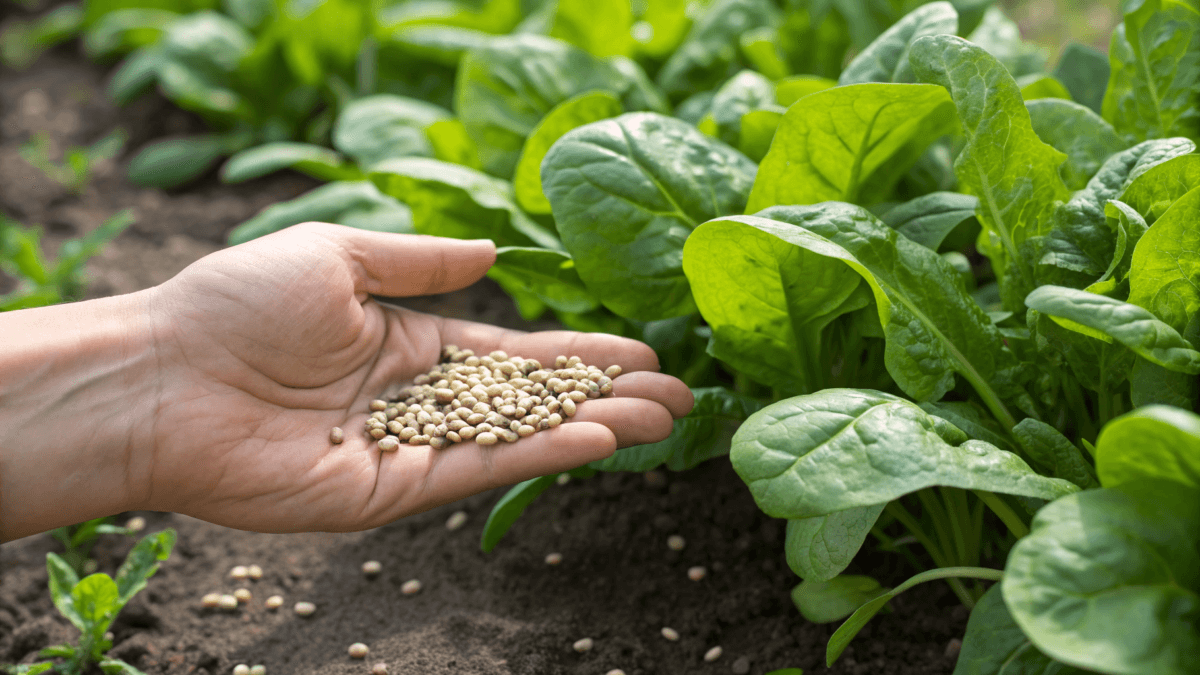
Learning how to grow spinach from seed is simple once you understand one key thing: spinach is a cool-season crop that cares far more about temperature and moisture than about fancy techniques. If you plant fresh seed at the right time, keep the soil consistently moist, and avoid heat, spinach usually does exactly what it’s supposed to: germinate, grow quickly, and give you tender leaves within weeks.
The most common problems people run into with spinach seeds, poor germination, patchy growth, or seedlings that stall, almost always trace back to planting too warm, letting the soil dry out, or using old seed. Fix those three things, and spinach becomes one of the easiest leafy greens to grow from seed, whether you’re planting in the ground, a raised bed, or a container.
Quick snapshot before we dive in:
- Plant early in spring or late summer when the soil is cool
- Use fresh seed and plant it shallow
- Keep the soil evenly moist until sprouts appear
- Thin seedlings early so plants don’t compete
- Harvest regularly to keep plants productive
Everything else builds on those basics.
If you want the full overview of planting times, spacing, watering, fertilizing, and harvesting, see the complete How to Grow Spinach guide.
What You Need Before Planting Spinach Seeds
Before you put seed in the ground, it helps to get a few fundamentals right. Spinach doesn’t need much, but it does need the right conditions from the start.
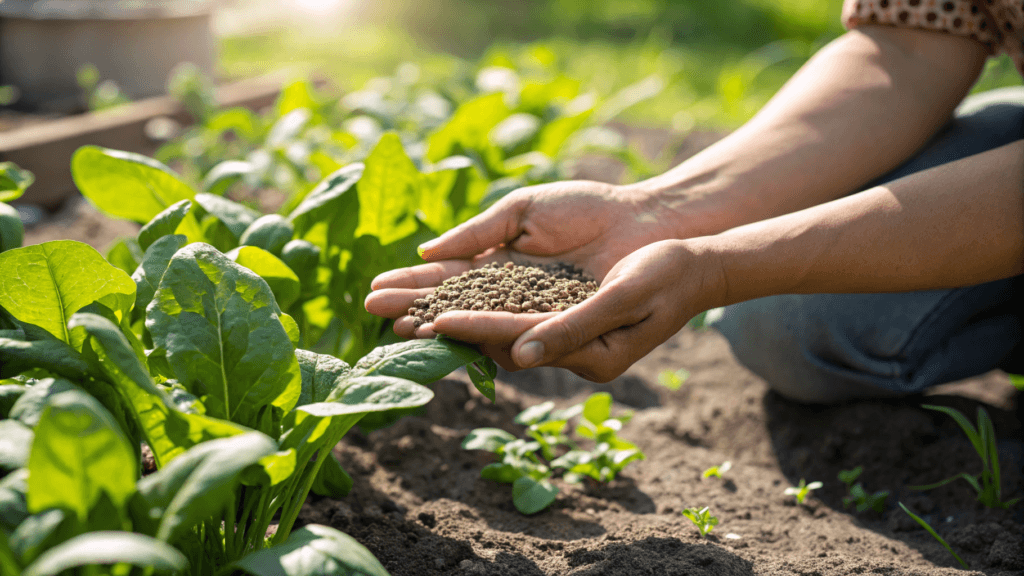
Spinach Seeds (Fresh vs Older Seed)
Spinach seed does not store as well as many other vegetables. Germination rates drop quickly after a year, especially if the seed wasn’t stored cool and dry.
Fresh seed (less than 1-2 years old)
- Sprouts faster
- Germinates more evenly
- Is far more forgiving of minor mistakes
Older seed often leads to thin, patchy rows that make you think you did something wrong when the real issue is seed viability. If your packet is more than a year old, it’s worth replacing.
Should You Soak Spinach Seeds Before Planting?
Spinach seeds have a hard outer coating that can slow water absorption, especially in cool soil.
Soaking seeds for 12-24 hours before planting can:
- Speed up germination
- Improve sprouting in dry conditions
- Help older seed perform slightly better
If soaking, drain well and plant immediately. Do not let soaked seeds dry back out before planting.
This small step often improves germination in borderline conditions, but it isn’t required if soil moisture is consistent.
Soil or Seed-Starting Mix
Spinach prefers loose, well-drained soil that holds moisture without becoming soggy. Heavy, compacted soil slows germination and leads to uneven sprouting.
For best results:
- Garden beds should be loosened at least 6-8 inches deep
- Raised beds work especially well for spinach
- Containers should use a high-quality potting mix, not garden soil
Rich soil helps later growth, but for germination, texture and moisture matter more than fertility.
If the soil surface crusts after watering, tiny spinach seedlings can struggle to break through, even when seeds germinate successfully.
Spinach grows best in soil with a pH between 6.5 and 7.5. Slightly acidic to neutral soil improves nutrient availability and supports stronger leaf growth. If your soil is very acidic, adding compost can help buffer it naturally.
Moisture and Temperature Basics
Spinach seeds need consistent moisture to germinate. Letting the soil dry out, even once, can delay or stop sprouting entirely.
Temperature matters just as much:
- Spinach germinates best in cool soil
- Heat slows germination and reduces success
This is why timing your planting correctly is more important than almost anything else.
Best Time to Plant Spinach Seeds (Spring vs Fall)
Spinach grows best in two windows:
Early Spring – Plant as soon as the soil can be worked. Cool weather improves germination and leaf quality.
Late Summer / Early Fall – Sow seeds 6-8 weeks before your first expected frost. Cooler fall temperatures produce sweeter leaves and reduce bolting.
In many climates, fall spinach performs better than spring plantings because the soil stays cooler and days shorten naturally.
How to Plant Spinach Seeds Step by Step
Planting spinach seeds is simple, but small details make a big difference in how evenly they sprout.
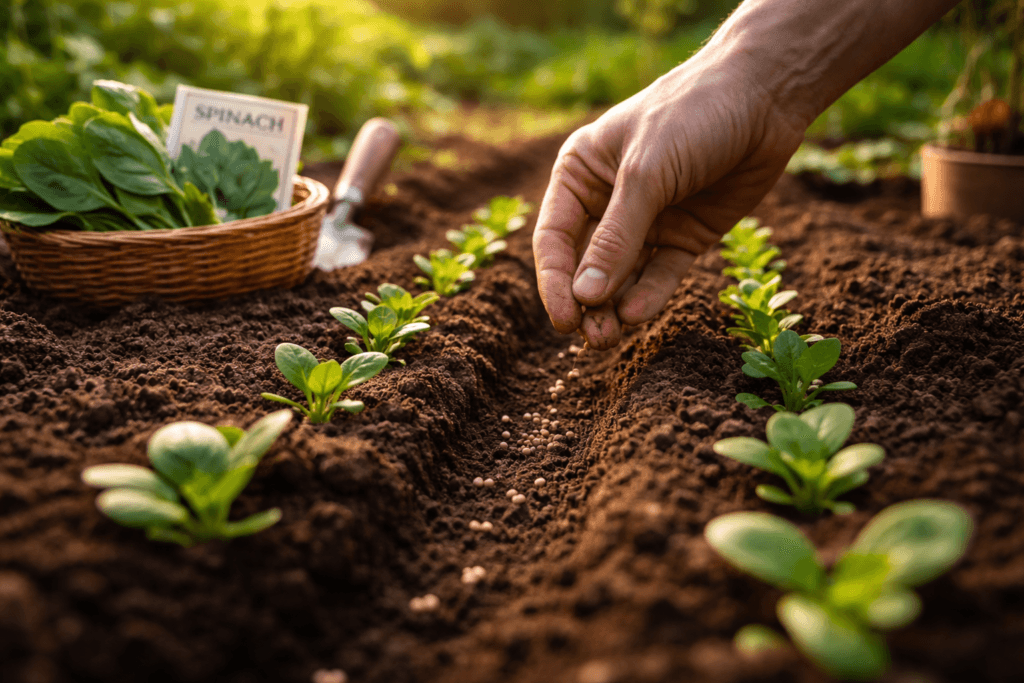
- Start by preparing the soil so it’s loose and level. Remove clumps, smooth the surface, and water the area lightly before planting. Mix in compost if the soil is low in organic matter.
- Plant spinach seeds about ½ inch (1-1.5 cm) deep. Shallower planting can cause seeds to dry out, while deeper planting can delay or prevent emergence.
- Space seeds roughly 1-2 inches apart for baby greens if planting in rows. Space seeds 2-3 inches apart for larger leaves. Spinach seeds are irregularly shaped, so perfect spacing isn’t necessary. Rows can be 10-12 inches apart, or closer in raised beds.
- After planting:
- Gently cover seeds with soil
- Firm the soil lightly so seeds make good contact
- Water carefully to avoid washing seeds away
- Keep the soil consistently moist until seedlings emerge. In cool conditions, this may mean watering lightly every day or two, depending on weather and soil type.
Heavy watering can compact the soil surface and form a crust, which slows or blocks seedling emergence.
- Once seedlings appear, continue regular watering but avoid soaking the soil.
Growing Spinach From Seed Indoors vs Direct Sowing Outdoors
Spinach can be grown both ways, but the plant has clear preferences.
Direct Sowing Spinach Seeds Outdoors (Pros and Cons)
Direct sowing is the most reliable method for spinach.
Pros
- No transplant shock
- Stronger root development
- Less work overall
Cons
- Germination depends heavily on the weather
- Early spring soils may be cold and wet
In most climates, direct sowing produces stronger, more resilient plants.
Starting Spinach Seeds Indoors (Pros and Cons)
Starting spinach indoors is possible, but it requires care.
Pros
- Allows earlier starts in very cold climates
- Helpful if outdoor conditions are unpredictable
Cons
- Spinach seedlings don’t transplant well
- Roots are sensitive and easily stressed
- Plants may bolt sooner after transplanting
If starting indoors, use deep containers and transplant very carefully while the seedlings are still small.
Which Method Works Better for Spinach Seeds?
For most gardeners, direct sowing outdoors is the better choice. Spinach grows quickly and prefers cool soil, making early spring and fall direct sowing both practical and effective.
Indoor starting only makes sense if your growing window is extremely short or your soil is unusable early in the season.
Spinach Seed Germination Time and What to Expect
Understanding what “normal” looks like during germination helps prevent unnecessary worry.
How Long Do Spinach Seeds Take to Germinate
Under ideal conditions, spinach seeds germinate in 5-10 days. In cooler soil, it may take up to two weeks. Up to 14 days in less ideal conditions
Slow germination doesn’t always mean failure. Uneven moisture or fluctuating temperatures often stretch out the process.
If no seedlings appear after about two weeks under proper conditions, germination has likely failed, and replanting is faster than waiting.
Ideal Soil Temperature for Spinach Germination
Spinach germinates best when soil temperatures are roughly 45-70°F (7-21°C). Soil temperature matters more than air temperature during germination, especially in early spring and late summer.
Below this range:
- Germination slows but still occurs. Germination slows above 75°F (23°C)
Above this range:
- Germination becomes erratic
- Some seeds may fail entirely
If soil temperatures climb too high, waiting or providing shade can make a big difference.
What Spinach Seedlings Look Like When They Sprout
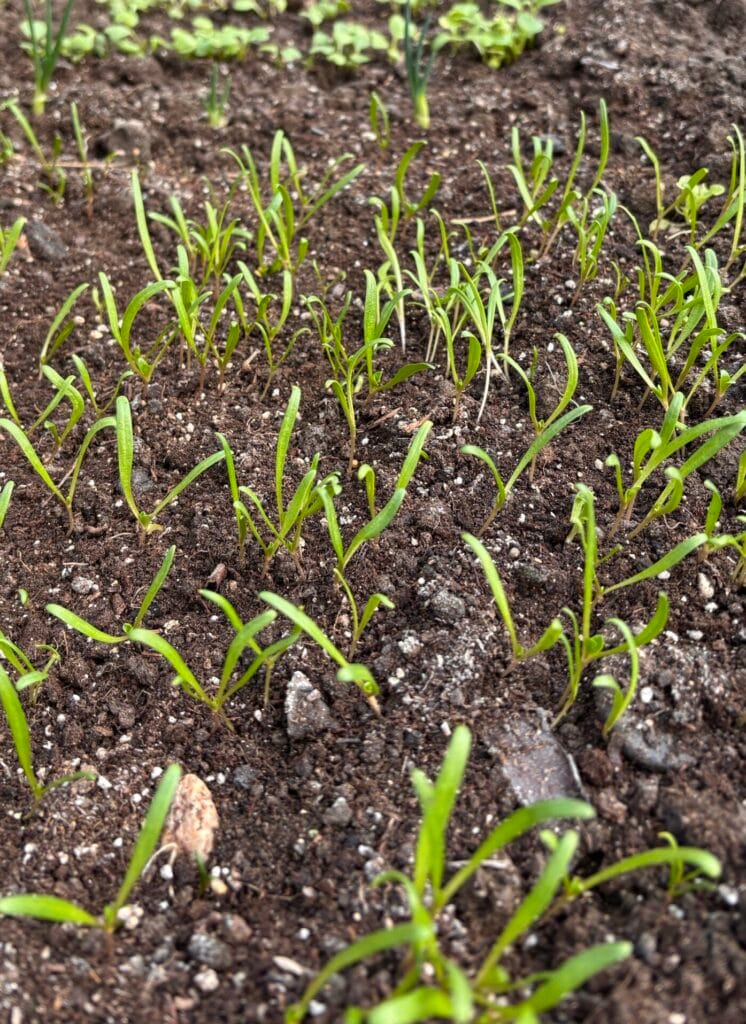
Spinach seedlings emerge with two narrow, smooth seed leaves. These are followed by true leaves that are thicker and more textured.
Healthy seedlings:
- Are upright and sturdy
- Have deep green color
- Grow steadily, not rapidly
Slow, steady growth is normal for spinach, especially in cool weather.
Common Spinach Seed-Starting Problems (And How to Fix Them)
If germination repeatedly fails in warm late-summer soil, try pre-chilling seeds in the refrigerator for 3-5 days before planting. This can improve sprouting in borderline warm conditions.
Almost no basic guides mention this. It makes you stand out.
Even experienced gardeners run into these issues.
- Poor germination in warm soil
Fix: Plant earlier or later in the season, use shade, or cool soil with mulch. - Seeds rotting before sprouting
Fix: Improve drainage and avoid overwatering heavy soil. - Uneven emergence
Fix: Check seed depth, soil moisture, and seed age. - Crusting or compacted soil surface
Fix: Loosen soil, add compost, and water gently.
Most of these problems trace back to soil conditions and timing, and most spinach problems show up early, but they’re usually easy to correct.
Troubleshooting Poor Spinach Germination
When spinach doesn’t come up evenly, it’s worth diagnosing the cause before replanting.
Why Spinach Seeds Don’t Sprout
The most common reasons include:
- Soil drying out during germination
- The soil temperature is too warm
- Old or poorly stored seed
- Planting too shallow or too deep
Replanting with fresh seed and improving moisture usually solves it.
What to Do If Germination Is Patchy or Slow
If only some seeds sprout, wait a few extra days before replanting. Spinach often emerges unevenly at first.
If gaps remain after two weeks:
- Lightly reseed bare areas
- Keep moisture consistent
- Shade the soil if temperatures are rising
Overseeding slightly and thinning later often leads to better results than trying to plant the first time.
Caring for Spinach Seedlings After Germination
This is a short but important stage. Spinach grows quickly once established, but stress early on can cause bitterness later.
Once seedlings appear:
- Water regularly to keep the soil evenly moist.
- Thin seedlings early to prevent crowding.
- Protect young plants from heat spikes.
- Mulch can help stabilize soil temperature and moisture.
When and How to Thin Spinach Seedlings
Spinach needs airflow and space, even when young. Crowded spinach competes for light and nutrients, leading to smaller, tougher leaves and bolts faster.
- Thin when seedlings have 2-3 true leaves.
- Final spacing should be 3-6 inches for mature plants.
- For baby greens, you can thin by harvesting.
Succession Planting for Continuous Harvest
Instead of planting all your spinach at once, sow a new short row every 10-14 days during cool weather.
This prevents:
- All plants maturing at once
- Sudden bolting during warm spells
- Gaps in harvest
Stop succession planting once daytime temperatures regularly exceed 75°F.
Best Spinach Varieties to Grow From Seed
Some spinach varieties germinate and perform better in different conditions:
Bloomsdale – Classic heirloom, excellent flavor, best in cool weather
Space – Reliable hybrid with strong disease resistance
Tyee – Slower to bolt in warmer spring conditions
Giant Winter – Excellent for fall planting
Choosing a bolt-resistant variety improves success, especially in unpredictable spring weather.
When Can You Harvest Spinach Grown From Seed?
Baby leaves can be harvested 20-30 days after germination.
Full-size leaves are typically ready in 35-50 days, depending on variety and temperature.
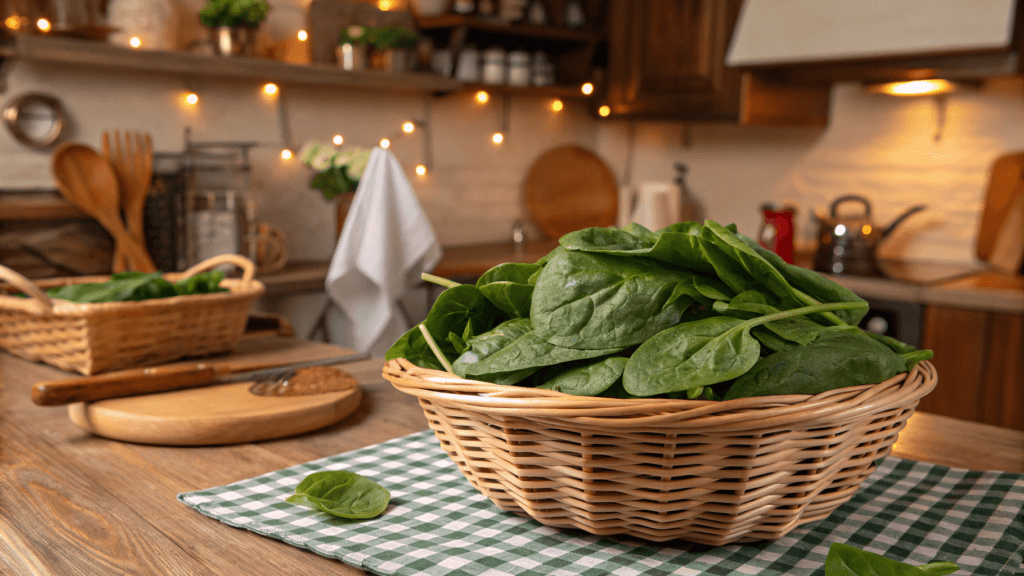
Cool weather slows growth slightly but improves flavor. Warmer conditions speed growth but increase bolting risk.
Harvest outer leaves first to extend production.
Conclusion
Growing spinach from seed is less about technique and more about timing and consistency. Cool soil, fresh seed, and steady moisture do most of the work for you. When those conditions are met, spinach germinates reliably, grows quickly, and rewards you with tender leaves long before many other vegetables are ready.
If your first attempt doesn’t go perfectly, don’t overthink it. Adjust planting time, replace old seed, and pay closer attention to moisture. Spinach is forgiving when you work with its preferences instead of against them.

Leave a Reply