
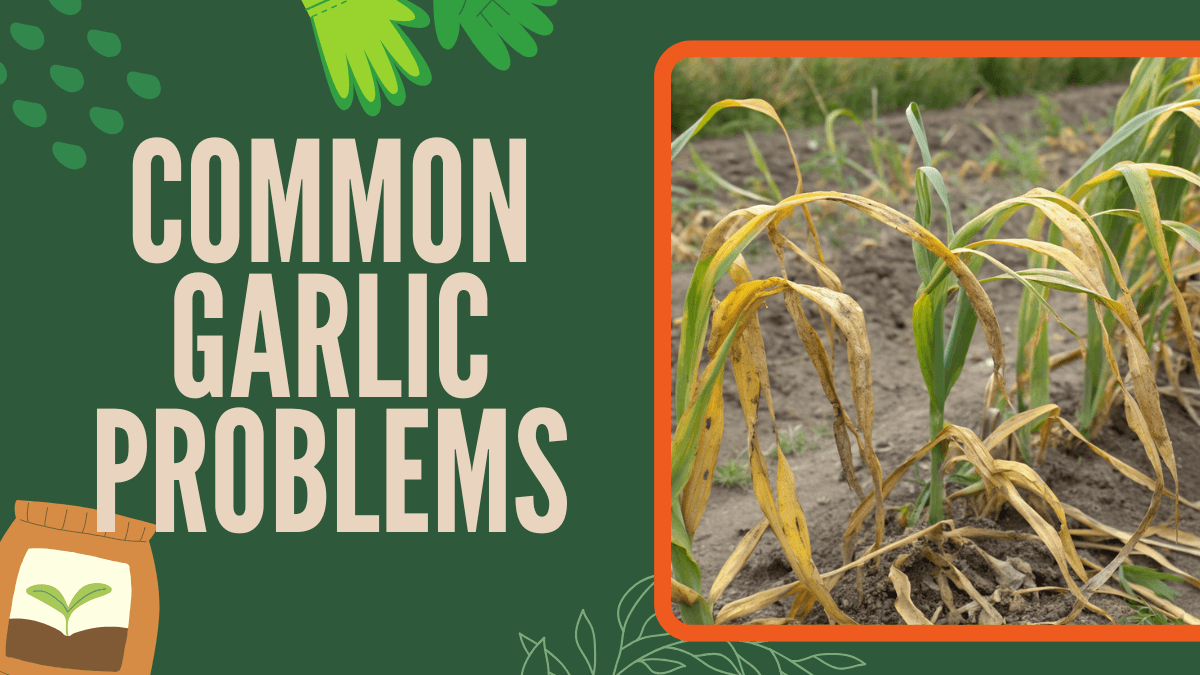
Garlic might seem like one of the easiest crops to grow, and for the most part, it is. Pop a clove in the ground, give it some water, and a few months later, you’re rewarded with a fresh, flavorful bulb. But even the most experienced gardeners will tell you: garlic has its share of problems. From undersized bulbs to moldy cloves, pests, and planting mistakes, there are a few things that can derail your garlic harvest.
If you’re staring at tiny bulbs or noticing yellow leaves and rot, don’t worry, most garlic problems are easy to diagnose and fix.
Why Your Garlic Didn’t Size Up
Few things are as disappointing as harvesting garlic only to find bulbs that look more like marble-sized marbles than full heads. Garlic is a heavy feeder and has specific growing needs, so when bulbs stay small, it’s usually a sign that one (or more) of those needs wasn’t met.
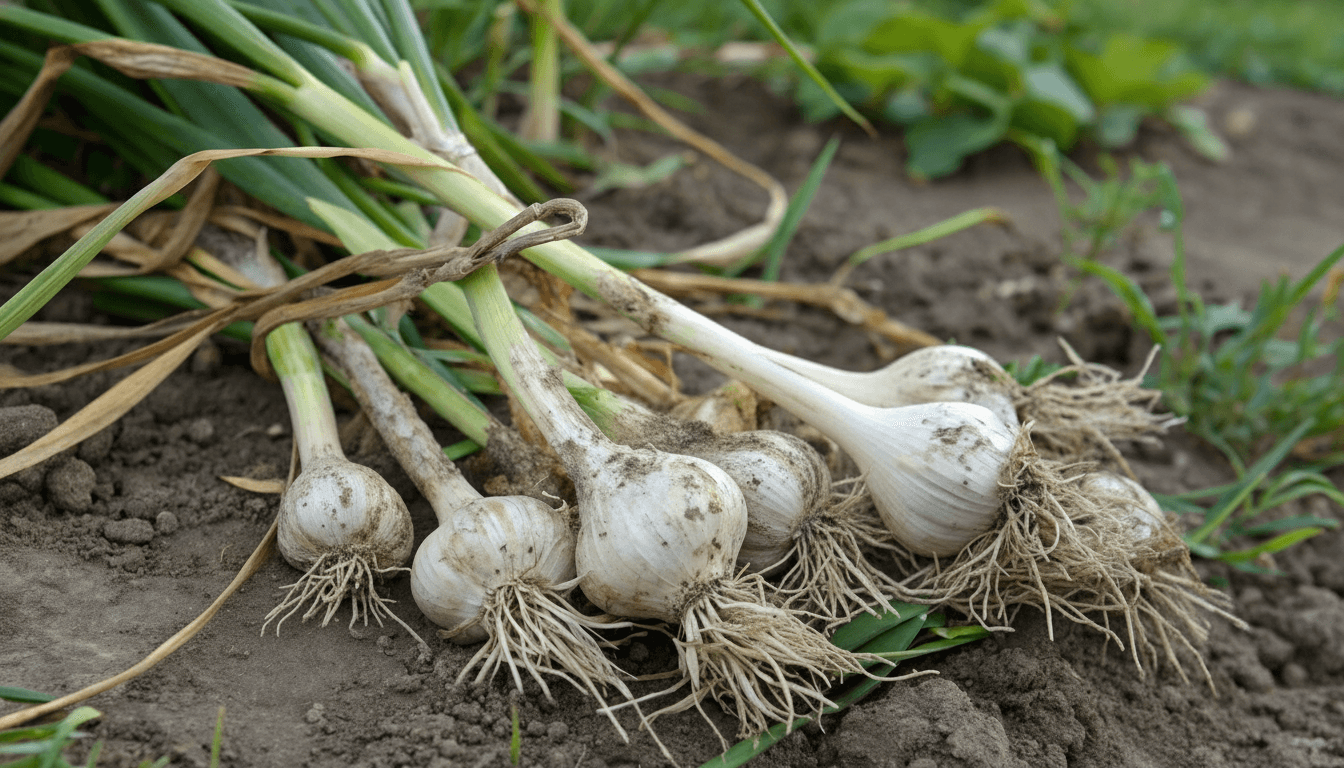
Here are the most common reasons your garlic bulbs didn’t grow large, and what to do about them.
1. Poor Soil Preparation
Garlic thrives in loose, fertile soil rich in organic matter. If your soil is compacted or lacking nutrients, bulbs won’t expand. The roots can’t spread easily, and the plant focuses on survival instead of bulb growth.
Fix it: Before planting, amend the soil with compost or well-rotted manure. Work it into the top 6–8 inches to create a light, crumbly texture. If your soil tends to be heavy or clay-like, consider building a raised bed or mixing in sand for better drainage.
2. Wrong Planting Time
Timing matters more than most gardeners realize. Plant garlic too late in the fall, and the cloves don’t have time to develop roots before winter dormancy. Too early, and the shoots may grow too much before frost, leading to winter damage.
Fix it: Plant garlic about 4–6 weeks before the ground freezes. In most regions, that’s mid to late fall (October in many areas). The cloves should sprout roots, but minimal green growth before winter.
3. Not Enough Sun
Garlic is a sun-loving crop. It needs at least 6–8 hours of direct sunlight daily. Planting it in a shady corner or behind tall plants can drastically reduce bulb size.
Fix it: Choose a sunny, open location. If your garden doesn’t get much sun, try growing garlic in raised beds or large containers that can be placed in the brightest spot.
4. Overcrowding or Wrong Spacing
Garlic needs room to expand underground. If planted too close together, bulbs compete for nutrients and space, leading to stunted growth.
Fix it: Space cloves about 4–6 inches apart in rows 10–12 inches apart. Bigger spacing encourages better air circulation and healthier growth.
5. Nutrient Deficiencies
Garlic especially needs nitrogen in early growth and phosphorus and potassium later for bulb development. Poor soil nutrition often results in small or soft bulbs.
Fix it: Apply a balanced organic fertilizer or side-dress with compost in early spring.
Rot, Mold, and Drainage Issues
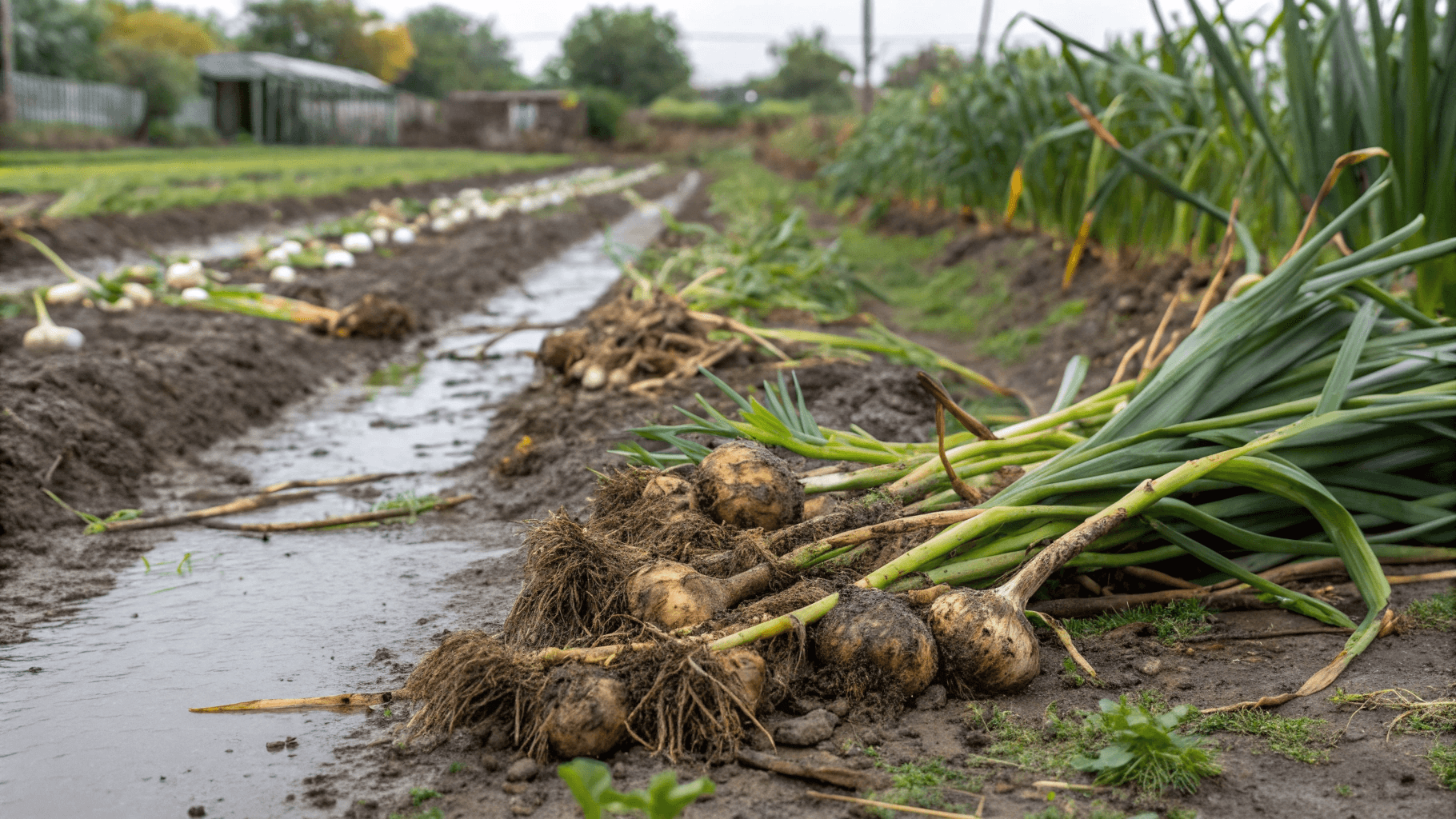
Garlic doesn’t like “wet feet.” One of the most common garlic problems is rot, especially if the soil stays soggy for long periods or if watering is inconsistent.
Signs of Rot or Mold
- Bulbs feel soft or mushy
- Yellowing leaves starting from the bottom
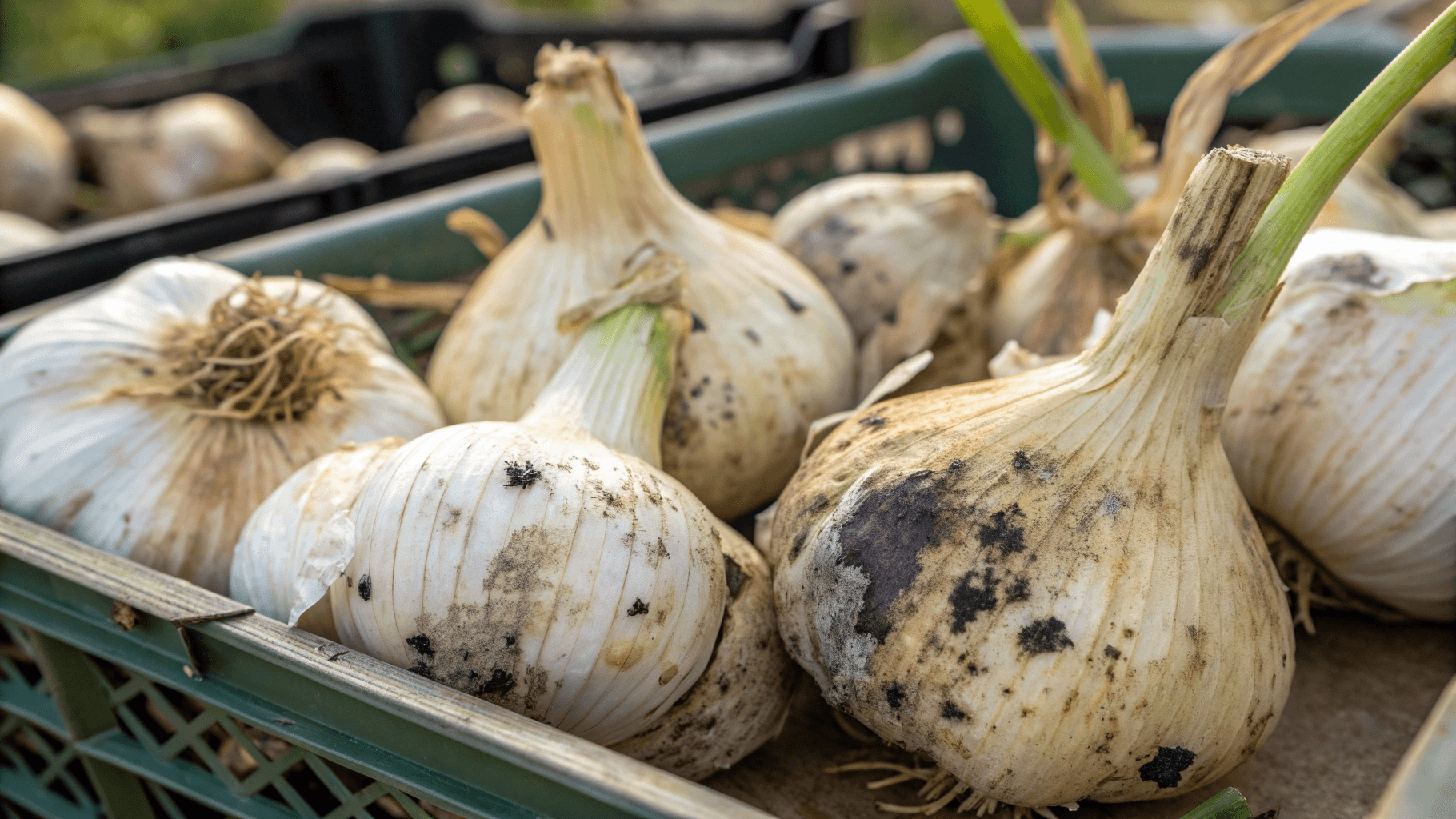
- White or gray fuzzy mold at the base
- A sour or musty smell when you pull the bulbs
Causes and Fixes
- Poor Drainage
Clay-heavy soil or compacted garden beds trap moisture, which suffocates roots and encourages fungal diseases.
Fix it: Grow garlic in raised beds or add compost, perlite, or coarse sand to improve drainage. Water only when the top inch of soil feels dry.
2. Overwatering
Even in well-draining soil, too much water can lead to fungal infections like white rot or fusarium.
Fix it: Water deeply but less frequently. Garlic prefers consistent moisture during its early growth, then drier soil as bulbs mature.
3. Infected Seed Cloves
Sometimes rot begins with the seed itself. Planting diseased cloves introduces fungal spores into your soil.
Fix it: Always choose healthy, firm cloves from reliable seed garlic suppliers, not supermarket garlic, which is often treated to prevent sprouting.
Pests and Diseases That Attack Garlic
While garlic is naturally pest-resistant (its smell actually repels many insects), there are still a few persistent invaders that can cause damage or disease.
1. Onion Thrips
Tiny, slender insects that suck the sap from garlic leaves, leaving behind silvery streaks and reducing bulb growth.
Fix it: Spray plants with insecticidal soap or neem oil, and remove nearby onion-family plants that might harbor thrips.
2. Nematodes
These microscopic worms live in the soil and attack garlic roots and bulbs, causing stunted plants and distorted cloves.
Fix it: Rotate crops every year and avoid planting garlic or onions in the same spot for at least three years. Solarizing the soil (covering it with clear plastic for 6 weeks in a hot summer) can also kill nematodes naturally.
3. Bulb Mites
These mites feed on garlic cloves and often appear in storage, though they can start in the soil.
Fix it: Avoid planting garlic in the same spot for consecutive years. Before storing, cure bulbs thoroughly and keep them in a cool, dry, well-ventilated area.
4. Fungal Diseases (White Rot, Downy Mildew, Rust)
- White Rot: Causes yellow leaves and a fluffy white mold at the base of the plant.
- Downy Mildew: Appears as pale green or yellow blotches on leaves, which turn brown over time.
- Rust: Orange or brown pustules on leaves that reduce photosynthesis and bulb size.
Fix it:
- Rotate crops yearly.
- Avoid overhead watering; always water at the soil level.
- Remove infected plants immediately to prevent spreading.
- Use disease-free seed cloves and sanitize garden tools.
Avoiding Planting Mistakes (Timing, Location, and Clove Selection)
Many garlic-growing problems start before you even plant a clove. A few small mistakes can snowball into poor yields or disease later on.
Wrong Planting Depth
Planting too shallow leaves cloves exposed to temperature swings and pests; too deep, and the shoots struggle to emerge.
Fix it: Plant cloves about 2 inches deep from the tip of the clove to the soil surface. In colder climates, you can go a little deeper (up to 3 inches) for insulation.
Using Store-Bought Garlic
Supermarket garlic is often sprayed with anti-sprouting chemicals and may carry diseases.
Fix it: Always plant seed garlic from a reputable garden supplier or your own healthy bulbs from last year’s harvest.
Poor Crop Rotation
Garlic (and other alliums like onions or leeks) shouldn’t be planted in the same spot year after year. This builds up pests and diseases in the soil.
Fix it: Rotate garlic beds every 3–4 years, planting it after legumes, leafy greens, or brassicas instead.
Ignoring Climate Suitability
Softneck and hardneck garlic types behave differently depending on your region. Hardneck varieties thrive in colder climates; softneck types do better in mild or warm regions.
Fix it: Choose varieties suited to your local conditions for best results.
Harvesting and Storage Mistakes
Even if your garlic grows beautifully, improper harvesting or storage can ruin your crop.
- Harvest too early, and bulbs will be underdeveloped.
- Harvest too late, and the outer wrappers split, shortening storage life.
Fix it: Wait until about half the leaves are brown and the other half are still green. Gently loosen the soil and pull bulbs out by the base; don’t yank by the leaves.
Cure garlic by hanging or laying it in a warm, dry, well-ventilated space for 2–3 weeks. Once cured, trim the roots and tops, brush off dirt, and store in mesh bags or baskets.
Conclusion
Garlic problems are frustrating, but they’re also fixable. Whether you’re struggling with small bulbs, rot, or pests, the key is understanding why the issue happened and addressing it early. With healthy soil, good drainage, and the right planting timing, your next garlic harvest can be your best yet.
Garlic rewards patience and attention, and once you master its needs, it becomes one of the easiest and most satisfying crops in your garden.
With these tips and a bit of garden care, you’ll never have to settle for small or moldy garlic again. Happy growing!

Leave a Reply