
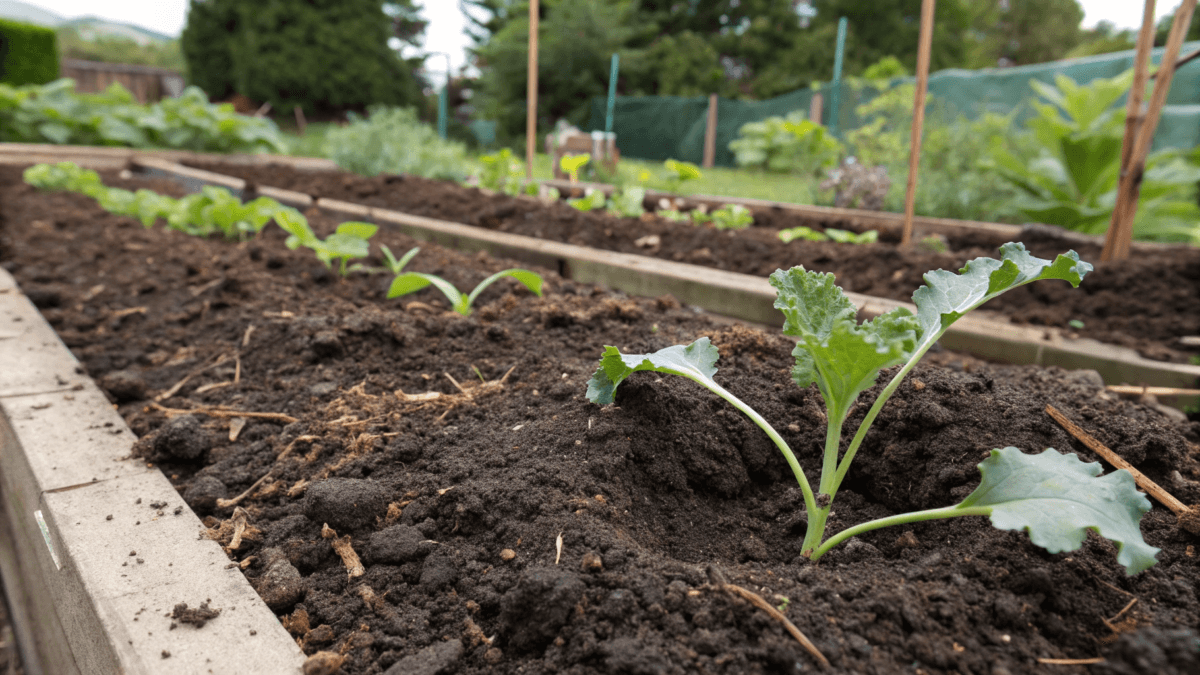
The best soil for growing kale is loose, crumbly, well-drained soil that holds moisture without staying soggy, with a slightly acidic to neutral pH (about 6.0-7.0) and plenty of finished compost or other stable organic matter mixed in.
If you can give kale those three things: good texture, steady drainage, and steady fertility, it will grow faster, make larger leaves, and taste sweeter and less bitter.
Kale is forgiving, so you can get a harvest in “okay” soil. If kale grows slowly or tastes bitter, soil conditions are often the reason.
Most kale soil problems come from structure and moisture issues, not a lack of fertilizer.
Why Soil Quality Matters for Kale
Good soil makes everything easier when growing kale. While kale can survive in less-than-perfect conditions, the quality of the soil plays a big role in how fast it grows, how big the leaves get, and how good they taste.
How Soil Affects Growth, Leaf Size, and Flavor
In practice, the difference between “okay” soil and good soil is obvious:
In “okay” soil, kale often:
- Germinates fine but stays small
- Looks healthy, but grows slowly
- Produces leaves, but they’re thicker and more pungent
- Struggles more with pests
In good soil, kale:
- Establishes quickly
- Produces steady new leaves
- Recovers faster after harvest
Kale is basically a leaf-making machine. Leaves are mostly water, and they’re built from nutrients pulled through the roots.
Soil controls:
- How easily roots spread (texture and structure)
- How long moisture stays available (organic matter and drainage)
- How nutrients become available (pH and biology)
- How steady growth is (evenness matters more than “richness”)
When kale grows steadily, the leaves are tender and mild. When growth is interrupted, too dry, too wet, compacted, or short on nitrogen, kale often turns tougher and more bitter, and older leaves can get leathery fast.
Why Kale Tolerates “Okay” Soil but Thrives in Good Soil
Kale is hardy. It can handle cool weather, light frost, and it doesn’t demand the deep, perfect soil that carrots or parsnips do.
Soil quality affects kale every day, while fertilizer only helps when the soil can actually deliver it to the roots.
Ideal Soil Texture for Growing Kale
Kale grows best when its roots can spread easily and get both water and air.
Loose, Crumbly Soil Explained
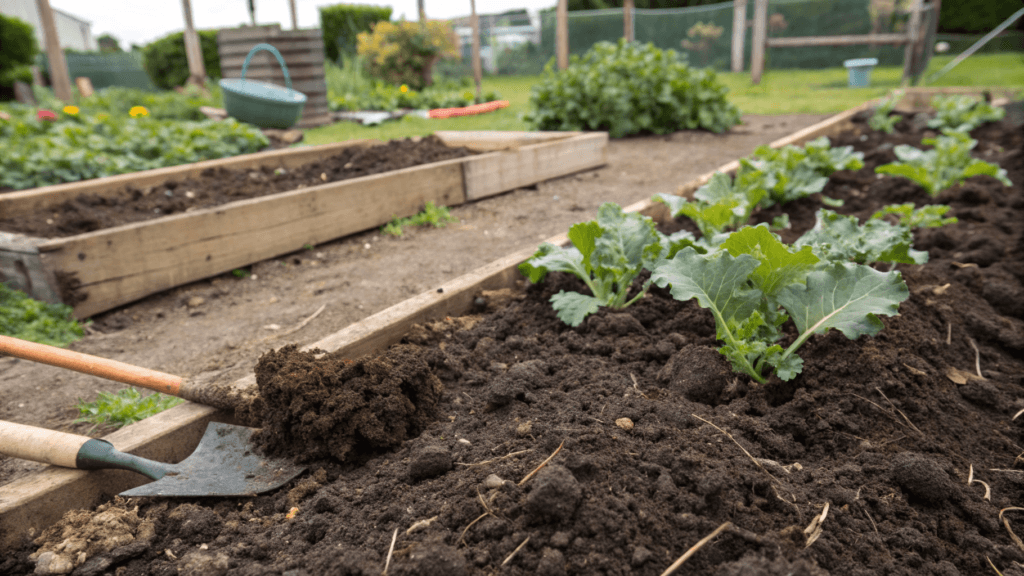
The texture you’re aiming for is often described as “friable,” which just means it breaks apart easily and has plenty of tiny spaces for air and water. The best kale soil feels like:
- A crumbly cake when you squeeze it
- Full of small clumps (aggregates) that fall apart with light pressure
- Moist like a wrung-out sponge, damp, not wet
If your soil breaks apart easily and doesn’t smear or collapse when wet, kale roots can usually explore it without trouble.
That structure matters more than the label (clay, loam, sand). A clay soil with great structure can outperform a sandy soil with poor structure.
Why Heavy Clay and Very Sandy Soil Cause Problems
Heavy clay problems for kale:
- Compacts easily, especially if worked wet
- Holds water too long (roots need oxygen)
- Can form a crust on top that slows seedlings
- Often stays cold longer in spring, delaying growth
Very sandy soil problems for kale:
- Drains too fast and dries out quickly
- Nutrients wash through (especially nitrogen)
- Kale may look hungry even if you fertilize because the soil can’t “hold” it
- Plants can get bitter during dry spells
You don’t have to “fix” your soil type. You just manage it:
- Clay needs structure and drainage help
- Sand needs organic matter and moisture-holding
Many productive kale gardens start with less-than-ideal soil; steady improvement matters more than perfection.
Simple Hand Test to Check Soil Texture
You can learn a lot without a lab test.
Do this after a rain or after watering deeply:
- Grab a handful of soil from 4-6 inches deep.
- Squeeze it into a ball.
- Open your hand and poke it.
What it tells you:
- If it forms a ball and stays a sticky lump, you’re clay-heavy.
- If it won’t form a ball and feels gritty, you’re sand-heavy.
- If it forms a ball but breaks apart easily into crumbs, you’re close to ideal.
Soil Drainage Requirements for Kale
Kale roots need water, but they also need oxygen. When soil stays saturated, the air spaces fill with water. Roots basically suffocate, and that opens the door to root rot and nutrient lockups.
Even short periods of waterlogged soil can slow kale growth for days afterward.
Good drainage doesn’t mean dry soil. It means water moves through at a steady rate, leaving the soil moist but breathable.
Signs Soil Drains Too Slowly
Watch for these in the bed where you want to plant:
- Water pools for hours after rain
- Slick, muddy soil a day after watering
- Pale, stalled plants despite “wet” soil
- Sour smell when digging
Quick drainage test (simple and useful):
- Dig a hole about 12 inches deep and 6 inches wide.
- Fill it with water and let it drain once (this saturates the surrounding soil).
- Fill it again and time how long it takes to drain.
A rough guide:
- 1-3 hours: Excellent
- 3-6 hours: Workable for kale
- 6+ hours: Too slow; you’ll want to improve drainage or plant in a raised bed
In fast-draining soil, consistent watering matters more than heavier feeding.
Signs Soil Drains Too Fast
Too-fast drainage shows up differently:
- Soil looks dry again, a day after watering
- Plants wilt midday even when you wateredthem recently
- Leaves get tough and bitter during warm spells
- Growth stalls unless you water constantly
- Fertility seems to disappear quickly (plants look hungry often)
If this sounds like your garden, you’ll get better kale by building soil that holds moisture with compost, leaf mold, and consistent mulching.
Soil pH for Kale Plants
Ideal pH Range for Kale
Kale does best at a pH of about 6.0 to 7.0, with many gardeners aiming for 6.5-6.8 as a sweet spot.
Kale will still grow slightly outside this range, but growth and nutrient efficiency decline gradually rather than suddenly.
In that range, kale can access nitrogen, potassium, phosphorus, calcium, magnesium, and the trace minerals it needs.
What Happens If Soil Is Too Acidic
When pH is too low (often below about 6.0), you may see:
- Slower growth and smaller leaves
- Yellowing between veins (nutrient availability issues)
- Stunted plants, even with compost added
- Greater risk of clubroot in brassicas in affected areas
Acidic soil can also make some nutrients less available while making others overly available. The plant ends up stressed.
What Happens If Soil Is Too Alkaline
When pH is too high (often above about 7.5), kale can struggle to take up certain micronutrients, and you may see:
- Pale new growth even when the plant is watered
- Leaves that look “washed out”
- Slower, less vigorous growth
Alkaline soil isn’t a deal-breaker, but it can make feeding less efficient.
Simple Ways to Check Soil pH
- Home pH test kit (inexpensive, good enough for gardens)
- pH meter (can be hit-or-miss; calibrate if possible)
- County extension or local lab soil test (best if you want clear amendment recommendations)
If you’re growing kale regularly, a basic lab test every couple of years is worth it. It tells you pH and often gives amendment rates so you’re not guessing.
How to Prepare Soil for Kale Before Planting
Taking a little time to prepare the soil before planting kale pays off all season.
Clearing and Loosening the Soil
- Pull weeds (roots and all if possible)
- Remove rocks and big sticks
- Break up any crust on top
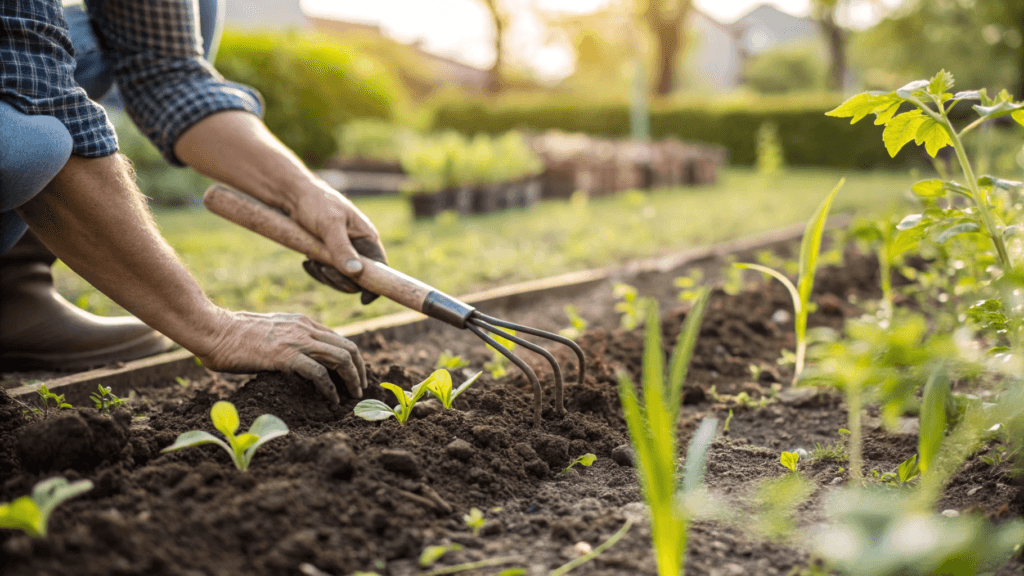
Then loosen the soil so the kale roots can move:
- In beds, I like using a garden fork to loosen without turning everything upside down.
- Push the fork in 8-12 inches, rock it back, and move along the bed.
If your soil compacts easily, avoiding deep tilling helps structure over time.
When and How Deep to Work the Soil
- Loosening 8-12 inches is plenty.
- Work the soil when it’s moist, not wet. If you’re unsure, squeezing a handful is safer than guessing.
- When planting transplants, 6–8 inches of loose, fertile soil is usually enough.
Why Soil Preparation Matters More Than Later Fixes
Once kale is growing, you can top-dress compost and water correctly, but you can’t easily fix:
- A compacted layer holding water
- Poor rooting depth
- pH issues that block nutrients
Good prep makes everything easier later, watering, feeding, and harvesting.
Compost for Kale Plants
Finished compost helps kale by improving soil structure, holding moisture without waterlogging, and feeding soil life that releases nutrients steadily over time.
Because kale prefers consistent, gentle nutrition rather than sharp feeding spikes, the type of compost you use matters.
The best compost for kale is:
- Fully finished (dark, earthy smell, no recognizable food scraps)
- Screened if you want an easy seedbed (especially for direct seeding)
- Made from a balanced mix of “greens” and “browns” (kitchen scraps and leaves or straw)
Good bagged compost can work too, especially when you’re starting a new bed. I like to open the bag and check, quality compost should smell like forest soil, not sour or sharp.
Once soil structure and pH are in range, feeding becomes much easier. This guide on the best fertilizer for kale explains what to use and when.
How Much Compost to Add for Kale
A practical, reliable range:
- 1-2 inches of compost mixed into the top 6-8 inches of soil for established garden beds
- 2-3 inches if your soil is sandy or low in organic matter
- For containers or raised beds, compost is often 20-30% of the total mix, with the rest being a quality soil blend
Too much compost every single season can lead to nutrient imbalances over time (especially phosphorus). Most gardens do best with a steady, moderate addition.
Two reliable methods work well, depending on your soil condition.
For new or struggling beds (bigger improvement):
- Spread compost 1-2 inches thick
- Mix it into the top 6-8 inches using a fork or shovel
For already decent beds (gentler, protects structure):
- Spread about 1 inch of compost as a top-dress
- Mulch over it
- Let worms and weather pull it down
Other Organic Soil Amendments for Kale
Compost does most of the work for kale, but a few other organic amendments can help improve soil structure, moisture retention, or nutrient balance.
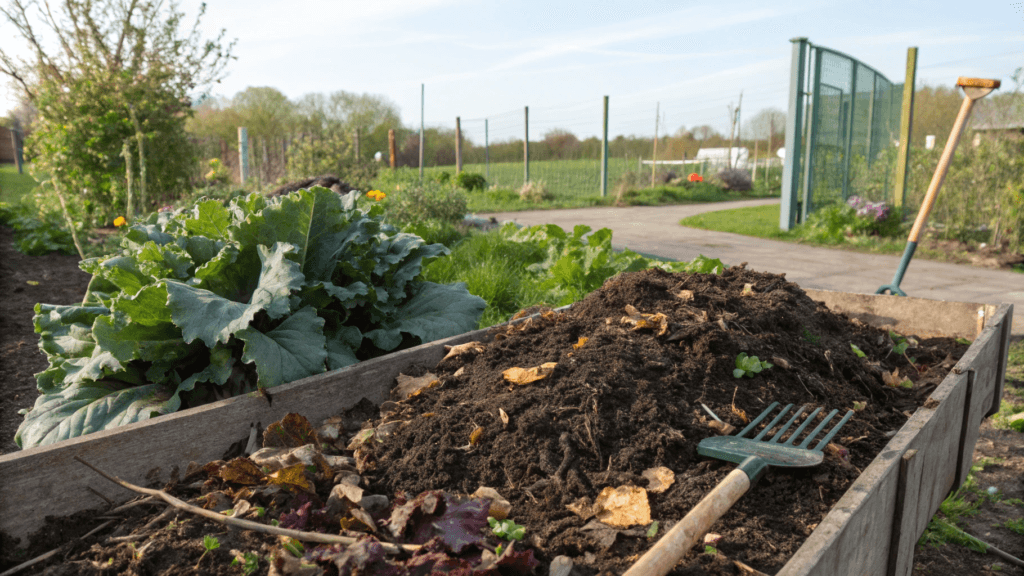
Amendments work best when they support compost rather than replace it.
Leaf Mold
Leaf mold is one of the best “quiet” amendments for kale, especially in clay or sandy soils. It’s decomposed leaves, and it:
- Improves crumbly structure
- Holds moisture well
- Encourages earthworms
Use it like compost: 1-2 inches mixed in or top-dressed. It’s not a strong fertilizer, so pair it with compost or a balanced organic feed if your soil is poor.
Aged Manure
Aged manure (especially from herbivores like cows, horses, rabbits, or chickens when properly composted) can be excellent for kale because kale loves nitrogen.
Key rules:
- Use well-aged or composted manure, not fresh.
- Fresh manure can burn plants and may carry pathogens.
A practical approach:
- Add 1 inch of composted manure to beds in fall or a few weeks before planting.
- Mix into the top layer or use as a top-dress.
If you grow leafy greens you eat raw, take extra care with timing and cleanliness.
Garden Compost vs Store-Bought Compost
Both homemade and bagged compost can work. What matters is that the compost is fully finished, because unfinished compost can tie up nitrogen and slow kale growth just when young plants need it most.
What to Avoid Adding
A few things cause problems more often than they help:
- Fresh manure
- Unfinished compost
- Large amounts of wood chips mixed into soil
- High-salt amendments
If you’re unsure, do a small test patch first.
Common Soil Problems When Growing Kale
If kale struggles despite good watering and feeding, soil structure is often the cause.
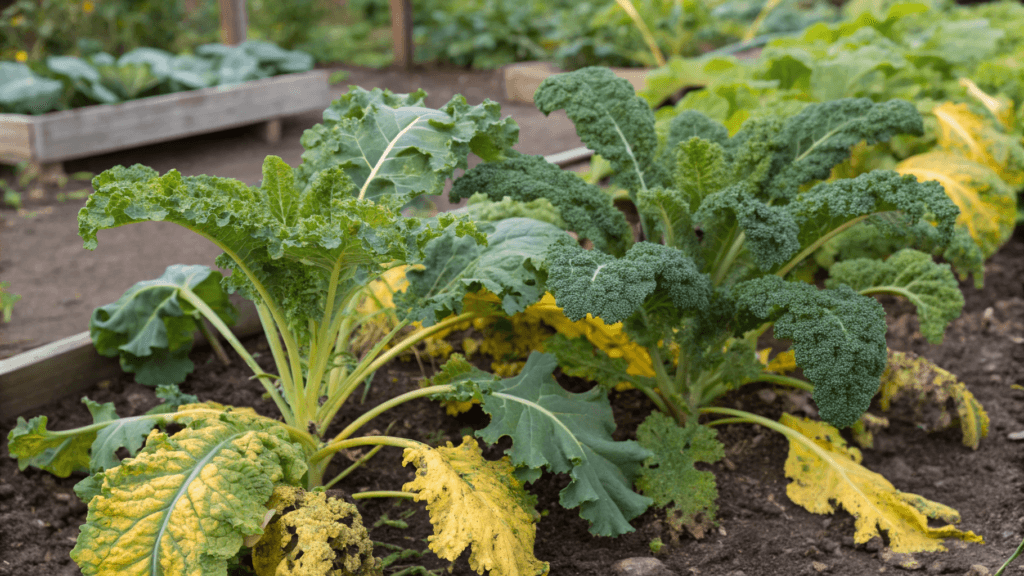
Most kale problems trace back to either drainage or drying stress, not nutrient deficiency.
Soil That Stays Wet Too Long
This is common in clay, low spots, or beds with compaction.
What you’ll see:
- Yellowing lower leaves
- Slow growth, even with regular watering
- Fungus gnats or algae on the surface
- Plants that topple easily (weak roots)
Fixes in the garden:
- Add compost and leaf mold to improve structure
- Switch to raised beds or mounded rows if drainage is truly poor
- Avoid working soil when wet
- Use a fork to loosen compacted areas (especially if there’s a hard layer)
Post-harvest note: Kale from waterlogged soil can be thinner and more prone to spoilage. Harvest on a dry morning if possible and cool it quickly.
Soil That Dries Out Too Fast
Common in sandy soil and in raised beds during summer.
What you’ll see:
- Plants wilting midday
- Bitter, tough leaves
- Slow regrowth after picking
Fixes in the garden:
- Add 2-3 inches of compost over time (not all at once)
- Use mulch (straw, shredded leaves, or fine bark) 2-3 inches thick
- Water deeply: Aim for the soil to be moist 6 inches down, not just on top
- Consider drip irrigation or a soaker hose for steady moisture
Kale grown through dry stress can taste stronger. It’s still good, just better cooked or massaged for salads.
Poor Structure Despite “Rich” Soil
Sometimes soil looks dark and “rich” but behaves poorly, crusting, compacting, or draining strangely. That can happen if:
- The soil is high in clay and has been worked wet
- The bed gets heavy foot traffic
- Too much fine organic material has broken down and leftthe soil dense
Fixes:
- Add coarser organic matter like leaf mold or well-finished compost with some texture
- Stop stepping in beds (use boards or defined paths)
- Loosen with a fork and top-dress compost and mulch rather than constant digging
How to Tell If Your Soil Is Good Enough for Kale
Before you plant, look for:
- Soil surface that doesn’t crust hard after watering
- Worms or worm castings when you dig
- A dark top layer with crumbly aggregates
- No standing water after normal rain
Plant Growth Clues
Your kale will tell you quickly:
- Strong soil: Fast new leaves, sturdy stems, consistent color
- Weak soil: Slow growth, pale leaves, bitterness, frequent wilting, poor regrowth after harvest
A healthy kale plant should be able to handle regular picking and still push new leaves weekly in good conditions.
Simple Soil Feel Test
This is one I use every season:
- Dig a small hole 6 inches deep.
- Grab a handful from the sidewall.
- Squeeze it.
You want soil that:
- Clumps lightly but breaks apart with a poke
- Feels springy and alive, not slick or dusty
- Smells earthy, not sour
Soil doesn’t need to be perfect to grow great kale; it just needs to be consistent.
Conclusion
Kale grows best in soil that’s loose, crumbly, and well-drained, with steady moisture, plenty of finished compost, and a pH around 6.0-7.0. If you focus on soil structure first, air, water movement, and organic matter, you’ll get healthier plants and better-tasting leaves with fewer headaches.
Most soil problems that show up later (yellowing, bitterness, slow growth) are easier to prevent with smart prep than to fix mid-season. A couple of inches of compost, a quick drainage check, and a basic pH test can change the whole season.
When soil conditions are right, kale becomes easier to water, easier to feed, and more forgiving overall.
Leave a Reply