
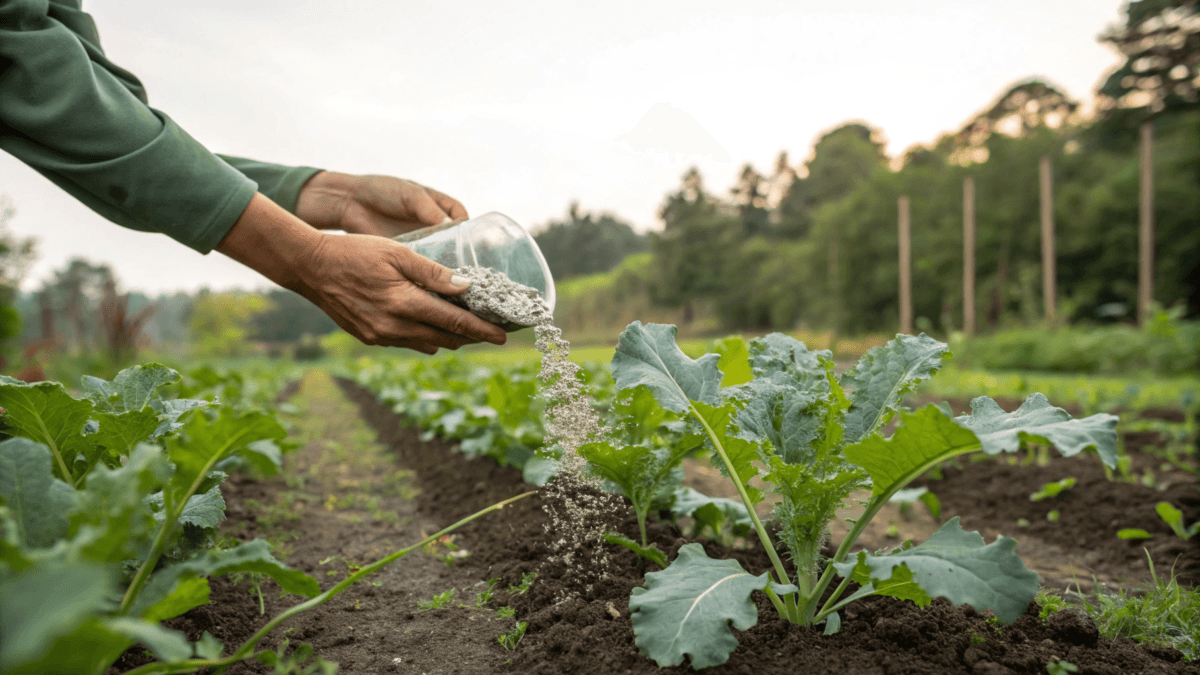
The best fertilizer for kale is one that supports steady, leafy growth without pushing the plant into soft, weak, pest-prone leaves. For most home gardens, that means a nitrogen-forward fertilizer paired with organic matter; compost at planting time plus a balanced organic fertilizer (like 4-4-4) early, followed by light nitrogen boosts during harvest season.
Kale is forgiving, but fertilizer timing matters. Too little and you get pale, thin leaves. Too much and you can end up with lush growth that attracts aphids, tastes bitter, or collapses in heat and drought.
This guide walks you through what to use, how much, and when, based on what actually shows up in the garden.
For a complete overview of planting, soil, watering, and feeding through the entire season, see how to grow kale.
Quick Answer: Best Fertilizer for Kale
For most home gardens, kale grows best with compost at planting time plus a nitrogen-forward fertilizer during active growth.
Mix 1-2 inches of finished compost into the soil before planting, then feed with a light nitrogen source (such as fish emulsion or a balanced organic fertilizer like 4-4-4) every 2-4 weeks while harvesting.
Tip: Avoid heavy feeding in cold or heat-stressed conditions.
Why Kale Needs The Right Fertilizer
Kale is basically a leaf factory. The better you support leaf-building nutrients (especially nitrogen), the more you can harvest.
- Nitrogen (N): Drives leaf size, speed of growth, and deep green color.
- Phosphorus (P): Supports root growth and early plant establishment.
- Potassium (K): Improves overall plant strength, water regulation, and stress tolerance.
- Calcium, magnesium, and micronutrients: Help prevent odd leaf problems and support steady growth, especially in containers or depleted soil.
Check Soil First: pH and Existing Nutrients Matter
Kale responds best to fertilizer when soil conditions are already working in its favor. Before adding extra nutrients, it helps to know whether the soil actually needs them.
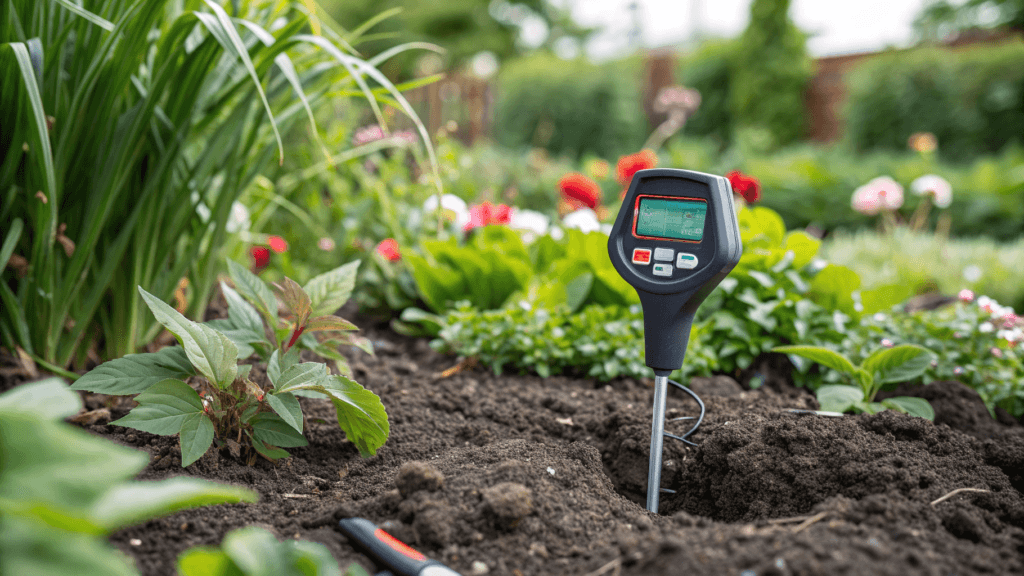
Kale grows best in soil with a pH between 6.0 and 7.5. Outside this range, nutrients may be present but unavailable to the plant. If kale grows slowly or stays pale despite feeding, pH is often part of the problem.
A basic soil test can show whether phosphorus or potassium is already sufficient. Many garden soils contain enough of these nutrients, which means adding more fertilizer won’t improve growth and may even create imbalances.
If soil testing isn’t an option, compost remains the safest foundation. Compost improves nutrient availability without pushing excess salts or creating sharp nutrient spikes.
If you’re unsure whether your soil is helping or limiting nutrient uptake, this guide on the best soil for growing kale explains texture, drainage, and pH in more detail.
Nutrient Needs Of Kale At Each Growth Stage
Early Growth And Leafy Development
Build roots and a sturdy plant body so it can keep producing.
What works well:
- Compost plus a balanced fertilizer at planting.
- If your soil is already rich, compost alone may be enough for the first few weeks.
What I watch for:
- Seedlings that stay yellow-green or stop growing after transplanting usually need warmth, consistent moisture, and a mild feed, not a heavy dose.
Practical approach:
- At planting (in-ground): 1-2 inches of compost mixed into the top 6-8 inches.
- In containers: use a quality potting mix plus a slow-release organic fertilizer mixed in at the label rate.
Active Growth And Repeated Harvesting
This is where kale really eats. Keep leaves coming without stalling.
What works well:
- Nitrogen-forward feeding every few weeks.
- Light, frequent feedings beat heavy, occasional feedings.
What I watch for:
- If you’re harvesting weekly and new leaves get smaller or lighter, kale is telling you it needs fuel.
Late-Season Or Slow-Growth Periods
Cold weather and short days slow kale down. So does heat stress.
What works well:
- A light compost top-dress or a gentle liquid feed only if the plant looks pale.
- In cold soil, heavy fertilizer can just sit there.
What I watch for:
- In late fall, I stop “pushing” plants. I let them cruise, harvest what they make, and avoid piling on fertilizer that won’t be used.
How Much Nitrogen And Why It Matters
If your kale stalls, turns pale, or makes small, tough leaves, it’s often either low nitrogen or poor growing conditions (cold soil, inconsistent moisture, crowded roots). Fertilizer helps most when the plant is otherwise growing well.
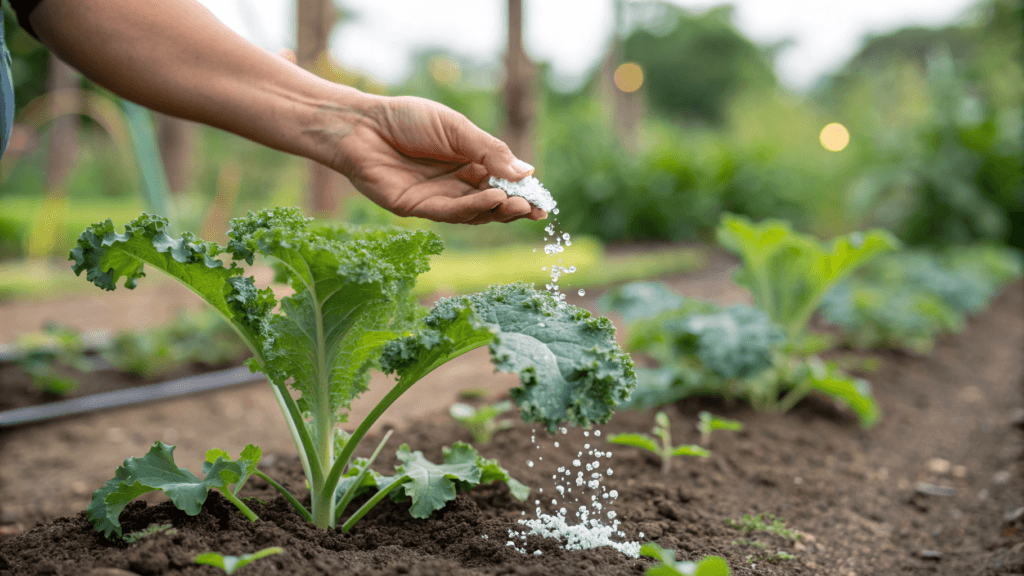
As a general guide for home gardens, kale benefits from small, regular nitrogen inputs rather than large doses. Light feedings every 2-4 weeks during active growth support steady leaf production without encouraging weak or pest-prone growth.
Practical nitrogen guidelines:
- Compost at planting provides a mild baseline
- Liquid feeds work best at half-strength, applied more often
- Granular fertilizers should be applied sparingly and watered in well
- If leaves stay deep green and firm, no extra feeding is needed
Role Of Nitrogen In Leaf Production
Nitrogen is the main driver of:
- Fast regrowth after picking
- Leaf size and thickness
- Deep green color
Kale can produce for months if nitrogen stays available. Without it, you’ll still get leaves, but they’ll be smaller, tougher, and slower.
Signs Of Nitrogen Deficiency
- Older leaves are turning pale green or yellow first
- Slow growth even when temperatures are good
- Thin leaves and smaller new growth
- Overall plant looks “tired,” not perky
If the plant is well-watered and pest-free but stays light-colored, nitrogen is a good suspect.
Signs Of Excess Nitrogen
Too much nitrogen often looks like:
- Very dark green, overly lush leaves
- Soft, floppy growth that snaps or wilts easily
- Lots of leaf growth with fewer sturdy stems
- Increased aphids or other sap-feeding pests
- Sometimes, there is a bitter taste or leaves that don’t hold well after harvest
If kale looks huge but fragile, ease off. Strong plants have some firmness.
What to Do If Kale Shows Nitrogen Problems
If kale looks pale, grows slowly, or produces small, thin leaves, nitrogen is often the missing piece, assuming the plant is well watered and not crowded.
Quick fix options:
- Apply a gentle liquid nitrogen source like fish emulsion.
- Use a light side-dressing of compost or composted manure.
- Avoid heavy feeding in cold or very hot weather; wait for active growth.
If kale becomes very dark green, soft, or attracts aphids easily, nitrogen may be too high.
What to do:
- Stop feeding for a few weeks.
- Water deeply to flush excess nutrients.
- Resume feeding only once new growth looks firm and balanced again.
In both cases, avoid large corrective doses. Kale responds best to small adjustments and steady conditions rather than aggressive fixes.
Organic Fertilizer Options For Kale
Organic fertilizers are my first choice for kale because they feed more steadily and improve the soil over time.
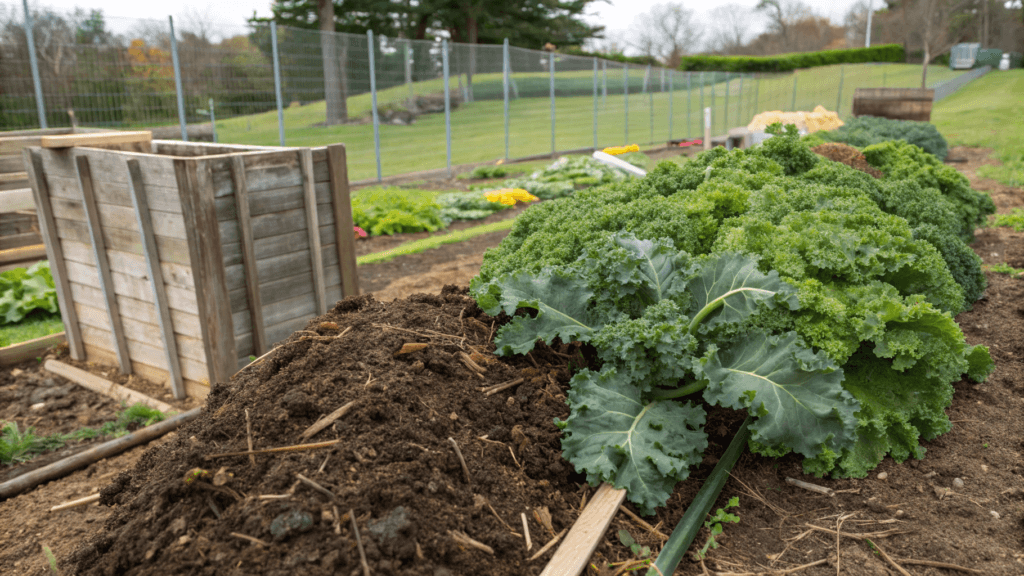
Common Organic Fertilizers That Work Well
- Compost (or worm castings): Best all-purpose base. Use at planting and as a top-dress.
How much: 1-2 inches in-ground; a handful or two scratched into the top of a pot.
- Composted manure (aged): Great for heavy feeders like kale, but it must be composted/aged.
How much: Similar to compost; don’t pile it against stems.
- Fish emulsion (liquid): Fast nitrogen boost, great after harvesting or when leaves pale.
How much: Usually mixed in water per label; I prefer half-strength more often.
- Alfalfa meal: Gentle nitrogen, good for steady growth.
How much: Light sprinkle around plants, scratch in.
- Blood meal: Strong nitrogen. Effective but easy to overdo.
How much: Small measured amounts; don’t “eyeball” it.
- Feather meal: Slow-release nitrogen. Great as a base feeding.
- Kelp meal/seaweed extracts: Not high in nitrogen, but helpful for micronutrients and stress tolerance.
Best used with compost or another nitrogen source.
If you only choose two, compost and fish emulsion will carry most home kale plantings.
How Organic Fertilizers Release Nutrients
Organic fertilizers rely on soil life to break them down.
That means:
- They release nutrients more slowly and steadily.
- They’re less likely to burn plants.
- They work best in soil that stays moderately moist and warm.
In very cold soil, slow-release organics can act slowly. That’s when a gentle liquid feed helps.
When Organic Fertilizers Are Most Useful
Organic feeding shines when:
- You want a consistent harvest over a long season
- You’re building better soil each year
- You’re growing in beds that dry out or compact (compost helps both)
- You’re trying to avoid rapid, pest-attracting flushes of growth
Synthetic Fertilizers For Kale: Pros And Cons
Synthetic fertilizers can work very well, especially when kale needs a fast correction. They just require more careful measuring and timing.
When Synthetic Fertilizers Make Sense
Use them when:
- You need a quick fix for a pale, stalled plant
- You’re growing in poor soil and need predictable nutrition
- You’re growing in containers and want precise control
- You already know you tend to underfeed and want a simple schedule
If you go this route, choose a fertilizer that matches your goal:
- For leafy growth: Something with a higher first number, like 10-5-5 or 20-10-10 (examples vary by brand).
Fast-Release Vs Slow-Release Formulas
- Fast-release (water-soluble): Works quickly, but can burn if overapplied and can flush out with heavy watering.
- Slow-release (granular): Safer and steadier, great for containers, but can still cause problems if you apply too much at once.
For beginners, slow-release is usually easier, just don’t stack extra feeds on top of it because “it’s not working yet.” It often is.
Common Mistakes With Synthetic Fertilizers
- Using lawn or “weed-and-feed” fertilizers. These products are not designed for vegetables and can damage kale or contaminate edible leaves.
- Applying to dry soil (burn risk goes up)
- Feeding right before a heat wave (stressed roots don’t handle salts well)
- Using lawn fertilizer (often too strong and not meant for vegetables)
- Double-feeding: slow-release plus frequent liquid feeds without realizing it
How To Fertilize Kale Properly
This is the section that keeps kale productive without problems.
When To Apply Fertilizer
A practical timeline:
- At planting/transplanting: Compost and optional balanced fertilizer
- 2-3 weeks after transplanting (or once established): First nitrogen-leaning feed
- After your first real harvest, feed lightly to support regrowth
- Mid-season: Continue a steady schedule if you keep harvesting
If you direct-seed kale, wait until it has 4-6 true leaves before feeding.
How Often To Fertilize
A simple schedule that works for most gardens:
In-ground beds (average soil):
- Compost at planting
- Then every 3-4 weeks: Light nitrogen feed (fish emulsion or a side-dress)
- If growth is very fast and you harvest often, every 2-3 weeks
Containers (nutrients wash out faster):
- Slow-release fertilizer mixed into potting mix at planting (per label)
- Plus liquid feed every 2-3 weeks (often at half-strength)
Weather matters:
- In heavy rain periods, nutrients leach, and kale may need more frequent feeding.
- In cold or hot stress periods, don’t push feedings. Let plants recover first.
How to Apply Fertilizer Without Stressing Plants
A few rules that prevent most fertilizer problems:
- Water first, then fertilize if the soil is dry.
- Keep dry fertilizers a few inches away from the stem.
- Scratch granular fertilizers into the top inch of soil, then water in.
- For liquid feeds, apply to the soil, not just the leaves
Mini how-to: side-dressing kale (works great)
- Pull mulch back a little
- Sprinkle a thin ring of compost or fertilizer 3-6 inches from the stem
- Scratch it in lightly
- Water well
- Put mulch back
Fertilizer works best when soil moisture is consistent, not soggy or bone dry, as explained in how often to water kale.
Signs Of Over-Fertilization In Kale Plants
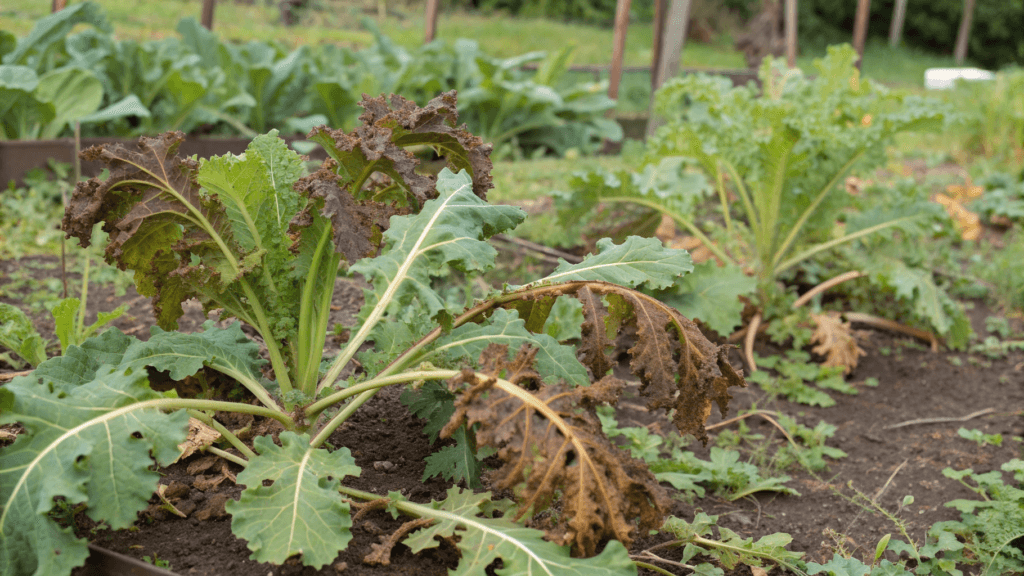
Common signs include:
- Leaf tips or edges are turning brown after feeding
- Very dark green, shiny leaves
- Soft, floppy growth that wilts easily
- Sudden wilting even when soil is moist
- Stalled growth and weak stems
- Increased aphid pressure
Over-fertilization often shows up shortly after feeding and is more common with synthetic fertilizers or heavy nitrogen sources.
How Over-Fertilization Differs From Pest Or Water Issues
This helps you avoid treating the wrong problem:
- Over-fertilization: Often shows up soon after feeding, with tip burn or sudden stress.
- Under-watering: Leaves droop, but usually perk up after deep watering.
- Over-watering: Yellowing, soggy soil and slow growth, often with a dull look.
- Pests: You’ll see damage, holes, stippling, and curling with insects present.
Quick test:
- Think back 3-7 days. If you fed recently and symptoms follow, fertilizer is likely involved.
How To Fix Over-Fertilized Kale
Immediate Steps To Reduce Stress
Do this first:
- Stop fertilizing immediately.
- Water deeply to dilute salts (especially important with synthetic fertilizers).
In-ground: Slow soak so water penetrates 6-8 inches.
Containers: Water until it drains freely, then repeat once more later the same day if you suspect heavy buildup.
If leaves are badly burned:
- Harvest the worst ones so the plant can focus on new growth.
What To Stop Doing
- Don’t add more “balancing” products.
- Don’t add Epsom salt unless you know you have a magnesium issue.
- Don’t feed again just because growth slows for a week, roots need time to recover.
How Long Does Recovery Usually Takes
In mild cases, kale often perks up in 7-14 days.
- New leaves should emerge healthier.
- Old, damaged leaves won’t heal; watch the new growth.
If recovery isn’t happening:
- Check drainage and watering habits.
- Consider that heat, root crowding, or pests may be stacking on top of fertilizer stress.
Common Fertilizing Mistakes When Growing Kale
Even though kale is one of the easier greens to grow, fertilizing mistakes can quietly limit how much you harvest and how healthy the plants stay.
Fertilizing Too Often
This is the #1 issue I see in home gardens, especially with liquid feeds.
Avoid:
- Feeding on top of slow-release fertilizer without accounting for it
Instead:
- Feed based on plant performance (color, regrowth rate) and a steady schedule.
Using The Wrong Fertilizer Type
Common mismatches:
- High-phosphorus “bloom booster” formulas (not useful for leafy greens)
- Lawn fertilizers (often too strong and sometimes contain additives you don’t want on vegetables)
- Strong nitrogen sources applied without measuring (blood meal is the classic)
Leaf crops want moderate nitrogen consistently, not random heavy doses.
Applying Fertilizer To Stressed Plants
If kale is stressed by:
- Heat
- Drought
- Transplant shock
- Pest outbreaks
Fertilizer can make it worse.
What to do instead:
- Fix watering and shade (if needed)
- Manage pests
- Wait for new healthy growth
- Then resume light feeding
Conclusion
For most gardens, the best fertilizer for kale is a simple combination of compost for a steady baseline nutrition and moderate nitrogen feedings during active growth. Start with compost at planting, then feed lightly once kale is established, especially after you begin harvesting.
Keep it steady, keep it measured, and let the plant’s color and regrowth rate guide you. Kale rewards consistency more than intensity.

Leave a Reply