
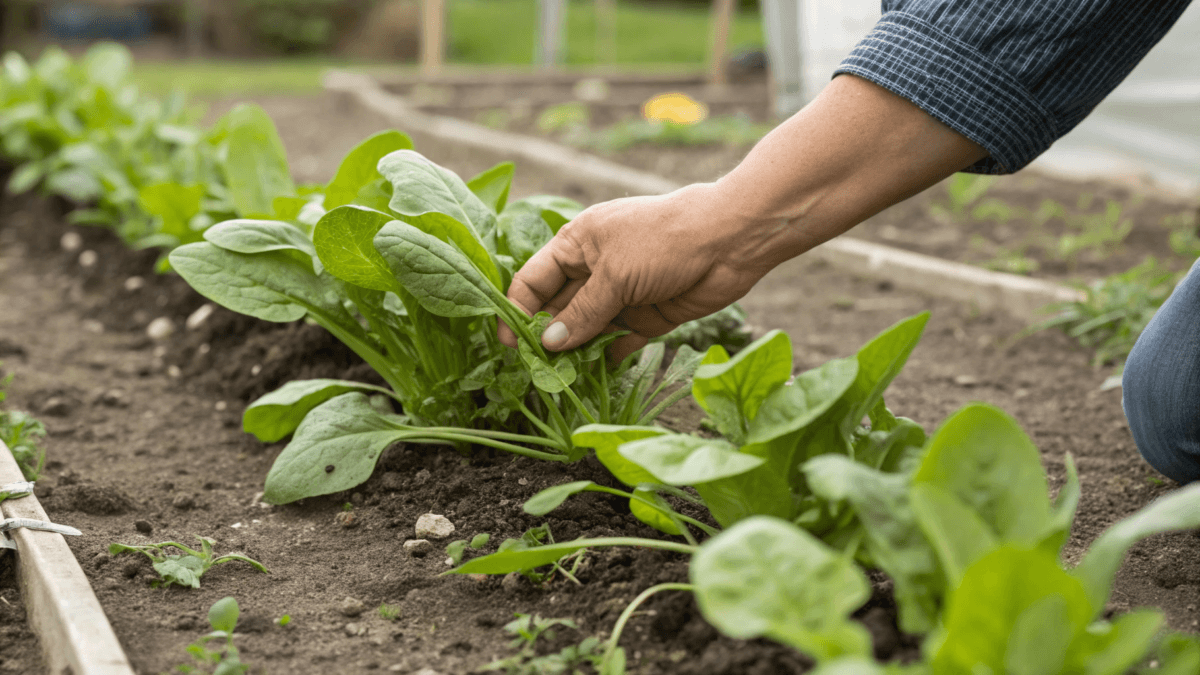
Thinning spinach seedlings is not optional if you want healthy plants and a good harvest. Spinach germinates densely, even when you try to space seeds carefully, and those crowded seedlings will compete with each other almost immediately. If they’re left packed together, spinach plants stay small, grow weak stems, and produce thin, bitter leaves instead of tender ones.
This guide explains how to thin spinach seedlings cleanly and confidently, without damaging the plants you want to keep.
The goal of thinning is to give each plant enough space, light, and airflow to grow properly. Done at the right time and in the right way, thinning turns a patch of tiny sprouts into strong, productive plants that grow evenly and stay usable longer into the season.
If you’re growing spinach from seed, thinning is one of the most important early steps for strong leaf development and delayed bolting. Proper spacing directly affects leaf size, texture, airflow, and how long plants stay productive.
Quick answer:
- Thin spinach once the seedlings have their first true leaves
- Cut extra seedlings at the soil level instead of pulling them
- Leave 2-3 inches for baby leaf spinach, 3-6 inches for full-size plants
- Thin early rather than waiting “a little longer.”
- Expect visible improvement within a few days
If you’re still in the early stages of growing spinach, or want the full step-by-step from planting to harvest, see my complete guide on how to grow spinach for timing, watering, spacing, and harvesting details.
Why Thinning Spinach Seedlings Is Important
Spinach grows fast, but it has shallow roots and limited tolerance for competition. When seedlings are crowded, they compete for light, water, and nutrients almost immediately. That competition shows up as slow growth, pale leaves, and plants that stretch upward instead of filling out.
Proper thinning solves several problems at once. It improves airflow around the leaves, which helps prevent disease. It allows roots to expand without tangling, which supports steady leaf production. And it ensures each plant gets enough light to grow thick, tender leaves rather than narrow, tough ones.
Crowded spinach also bolts earlier. Stress from competition pushes the plant to mature faster, especially as temperatures rise. Thinning reduces that stress and helps spinach stay productive longer in spring or fall.
Crowding increases root stress and limits airflow. Combined with rising temperatures, this pushes spinach to switch from leaf production to seed production faster.
In short, thinning isn’t about removing plants you don’t want. It’s about protecting the ones you do.
When Thinning Spinach Seedlings Is Necessary
Timing matters more than precision here. Spinach responds best when thinning happens early, while roots are still small and flexible.
How To Tell If Seedlings Are Overcrowded
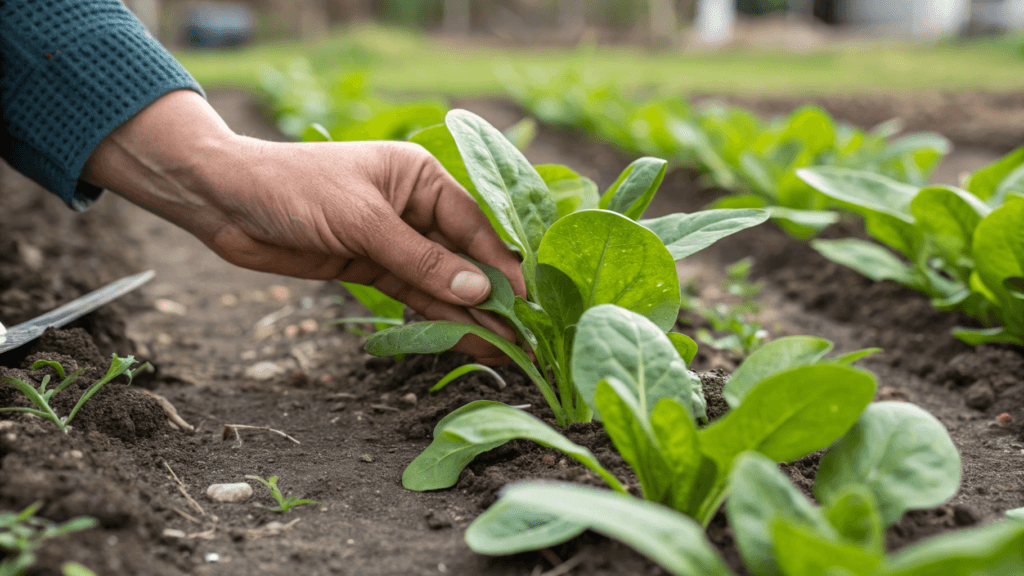
You don’t need to measure with a ruler to know thinning is needed. Look for these signs:
- Seedlings are touching or overlapping at the leaf tips
- Multiple stems are emerging from the same small patch of soil
- Leaves are growing upright and thin instead of spreading outward
- The soil surface is shaded so tightly that it stays damp all day
If you see any of these, thinning should happen soon.
Ideal Seedling Size for Thinning
The best time to thin spinach is when seedlings are about 1-2 inches tall and have 2-3 true leaves. These are the leaves that appear after the initial seed leaves and look like small versions of mature spinach leaves.
At this stage, seedlings are strong enough to handle disturbance nearby, but their roots are still shallow. Waiting longer increases the risk of damaging neighboring plants during thinning.
What Happens If Thinning Is Delayed
Delaying thinning doesn’t just slow growth; it can permanently reduce plant quality. Once spinach roots tangle, even careful thinning can tear or loosen the roots of nearby plants. That stress can stall growth for a week or more.
Late-thinned spinach often produces uneven plants. Some recover, others stay stunted, and the bed ends up with inconsistent leaf size and harvest timing. Early thinning avoids that problem entirely.
Correct Spacing for Spinach After Thinning
Spacing depends on how you plan to harvest spinach. There’s no single “correct” distance, only the right spacing for your goal.
Recommended Spacing for Baby Leaf Spinach
If you plan to harvest spinach young for salads or quick cooking, closer spacing works well.
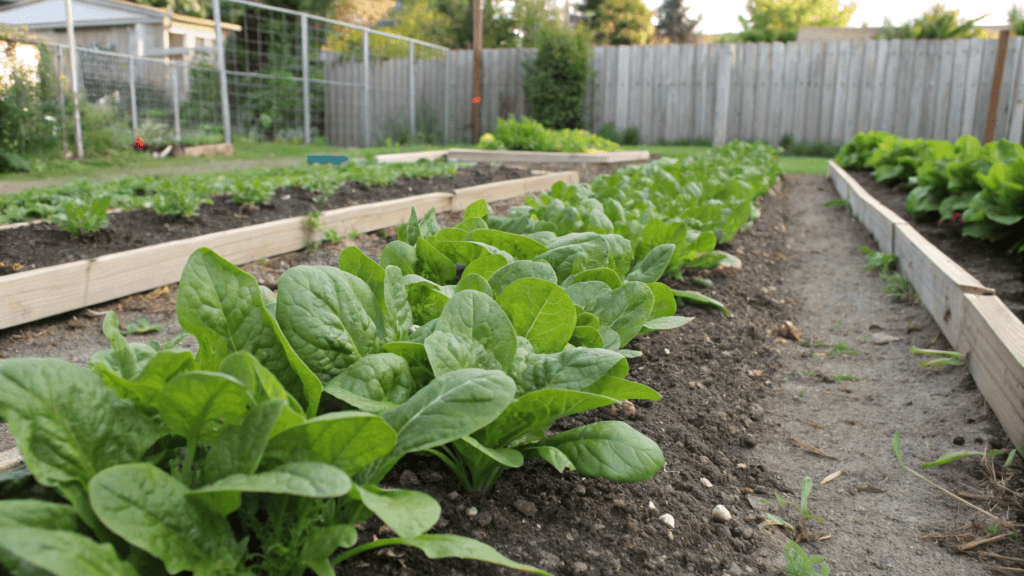
- Final spacing: 2-3 inches between plants
- Best for repeated small harvests
- Leaves stay tender and thin
At this spacing, plants grow upright and produce frequent small leaves. You’ll harvest sooner, but individual plants won’t reach full size.
Recommended Spacing for Full-Size Spinach Plants
For larger leaves and longer harvest windows, plants need more room.
- Final spacing: 4-6 inches between plants
- Allows wider leaves and stronger stems
- Reduces the risk of disease and bolting
This spacing gives spinach room to form a low, spreading shape and produce thicker, more substantial leaves.
How Spacing Affects Harvest Quality
Crowded spinach tends to produce narrow, upright leaves with a tougher texture. Proper spacing encourages broader leaves, better color, and more consistent regrowth after harvest.
Spacing also affects how easy harvesting feels. Well-spaced plants are easier to cut cleanly without damaging nearby leaves.
How Growing Method Affects Thinning Strategy
Row Planting vs Broadcast Sowing
Spinach planted in rows is easier to thin evenly because the spacing is more visible. Broadcast-sown spinach (scattered seed) often requires thinning in stages.
For broadcast beds:
• Thin lightly first
• Wait 5-7 days
• Thin again to final spacing
This prevents over-thinning and reduces shock.
Raised Beds vs In-Ground Gardens
In raised beds, spinach roots expand more easily due to loose soil. You can thin slightly more tightly without stressing the plants.
In compacted in-ground soil, give slightly more spacing to reduce root competition.
Container Spinach Thinning
Spinach grown in containers needs slightly more space than in-ground beds.
Reason:
Containers heat faster
Roots are confined
Moisture fluctuates more
For containers:
• Minimum 3 inches for baby leaf
• 4-5 inches for full-size
Visual Signs It’s Time to Thin (Before Measuring)
Thin when:
- Leaves begin overlapping heavily
- Seedlings lean toward light
- Growth slows even though the soil is moist
- Lower leaves are slightly yellow
This helps beginners who don’t measure spacing.
How to Thin Spinach Seedlings Step by Step
Thinning spinach is quick, but doing it carefully prevents setbacks.
Choosing Which Seedlings to Keep
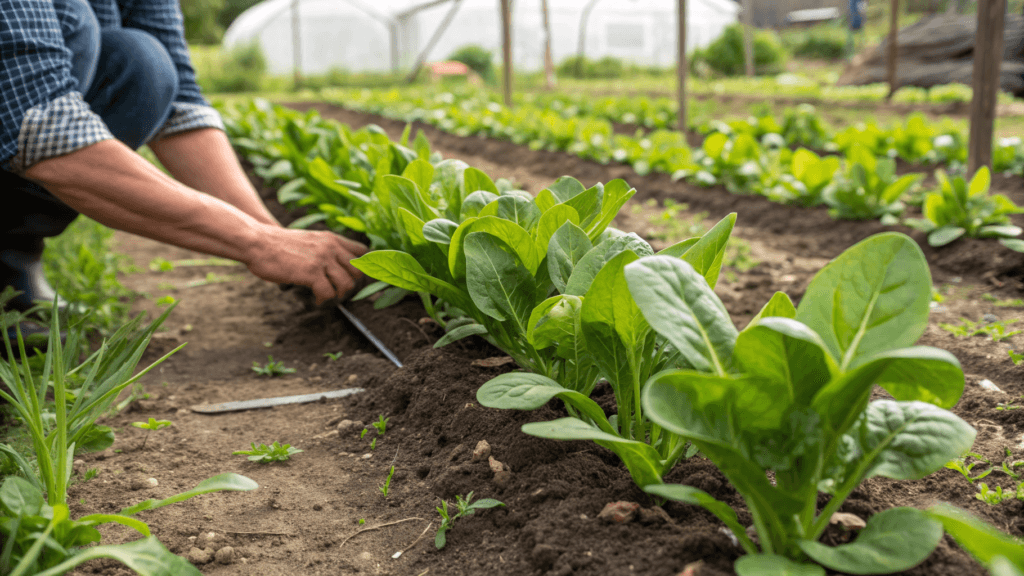
Before removing anything, pause and look at the bed. You’re looking for seedlings that are:
- Straight and upright
- Deep green rather than pale
- Slightly larger than their neighbors
These traits usually indicate stronger root systems. Favor seedlings that are evenly spaced or can be spaced evenly once others are removed.
Avoid keeping seedlings that are bent, leggy, or growing directly on top of another plant unless there’s no better option nearby.
Best Way to Remove Extra Seedlings
The safest method is cutting, not pulling.
Use small scissors, garden snips, or even clean fingernails to snip unwanted seedlings at the soil level. Cutting avoids disturbing nearby roots and keeps the soil surface stable.
Pulling seedlings often lifts surrounding soil, loosening the roots of plants you want to keep. Even gentle pulling can cause enough disruption to slow growth.
How to Avoid Disturbing Nearby Roots
Work slowly and then in stages if needed. If seedlings are extremely dense, remove every other one first, then come back a few days later to fine-tune spacing.
Watering lightly before thinning can help if the soil is very dry, but avoid thinning in soggy soil. Wet soil tears more easily and increases root disturbance.
Can You Eat Thinned Spinach Seedlings?
Yes, and this is one of the small rewards of thinning. Those extra seedlings don’t have to go to waste. In fact, they’re often sweeter and more tender than mature spinach leaves.
Because the plants haven’t developed thick stems or larger veins yet, the entire seedling is usually edible. If you thin at the right stage, you’re essentially harvesting microgreens or very young baby greens.
When Thinned Seedlings Are Edible
Spinach seedlings are edible once they have developed true leaves. Young spinach has a mild flavor and a very soft texture and is well-suited for salads, sandwiches, or quick sautés.
Very tiny seedlings with only seed leaves are also edible, but they’re delicate and mostly useful as garnish.
How to Handle Them Gently
If you want to eat thinned seedlings, cut them cleanly and lift them gently by the leaves, not the stems. Rinse them in cool water and dry lightly.
Use them the same day if possible. Seedlings wilt quickly and don’t store well, even in the refrigerator.
Thinning vs Growing Spinach as Microgreens
If you want dense growth for microgreens, do not thin. Microgreens are harvested before spacing matters.
Thinning applies only when growing spinach to maturity.
Common Thinning Mistakes (And How To Avoid Them)
Thinning spinach is simple, but small mistakes can slow plants down or undo the benefit of spacing. Most problems come from rushing, hesitating, or trying to “save” too many seedlings.
Pulling Seedlings Instead of Cutting
This is the most common mistake. Pulling feels faster, but it disrupts roots and soil structure. Always cut unless you’re thinning extremely early and the soil is dry and loose.
Thinning Too Late
Waiting until seedlings “look bigger” often backfires. By the time spinach looks crowded, roots are already competing. Think early, even if it feels aggressive.
Leaving Spacing Uneven
Uneven spacing leads to uneven growth. Take an extra minute to check distances after thinning and adjust if needed. It’s easier to fix spacing now than later.
What to Expect After Thinning
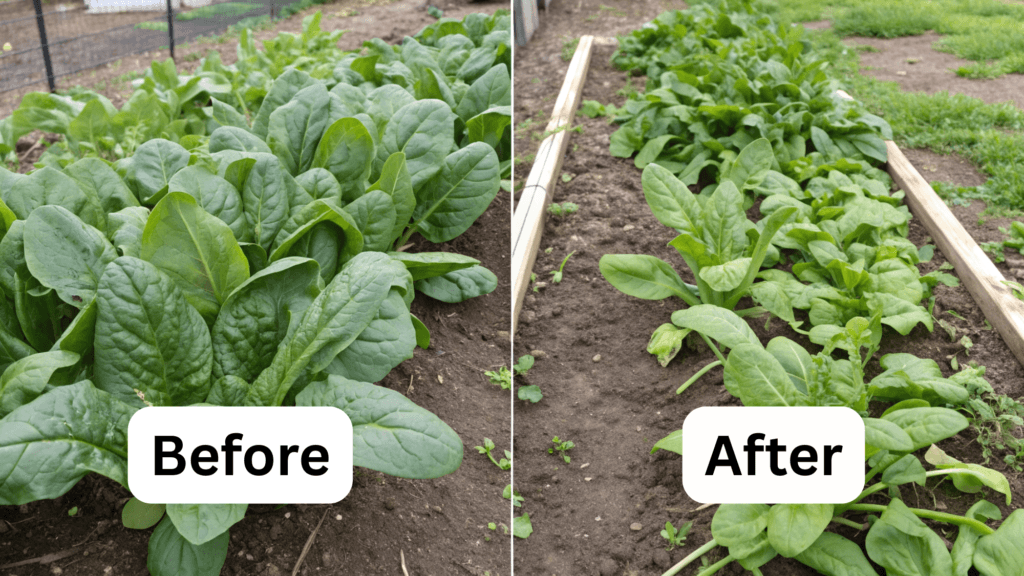
Spinach responds quickly when competition is removed. When seedlings suddenly have more light, space, and access to roots, growth shifts within days.
How Quickly Plants Respond
Within 3-7 days, you should see:
- Leaves are widening instead of stretching upward
- Deeper green color
- Faster overall growth
If growth stalls temporarily, it usually recovers within a week as roots reestablish.
Signs Thinning Worked
Healthy post-thinning spinach looks balanced. Leaves don’t overlap excessively, stems stay short, and new growth emerges steadily from the center of each plant.
If plants remain pale or stop growing, check moisture levels. Thinning improves access to water, but spinach still needs consistent moisture to take advantage of that space.
Second Thinning (Optional but Powerful)
Sometimes a second thinning improves results.
If plants were left slightly tight during the first thinning, you can harvest every other plant once leaves reach baby size.
- Creates natural spacing
- Extends harvest
- Reduces waste
- Improves airflow mid-season
This method works especially well in spring when growth is steady.
Quick Thinning Checklist for Spinach
Use this as a final pass before and after thinning. It helps to run through a quick mental checklist.
When to Thin
- Seedlings 1-2 inches tall
- First true leaves visible
- Before roots tangle
Final Spacing Targets
- 2-3 inches for baby leaf harvest
- 4-6 inches for full-size plants
What to Avoid
- Pulling seedlings
- Thinning in waterlogged soil
- Leaving clumps or uneven gaps
Conclusion
Thinning spinach seedlings is one of those tasks that feels optional until you skip it, and then the results make it obvious why it matters. Proper thinning gives each plant the space it needs to grow well, resist stress, and produce leaves worth harvesting.
Done early and gently, thinning takes only a few minutes and pays off for weeks. You’ll get stronger plants, better leaf quality, and a more predictable harvest. It’s not about perfection. It’s about giving spinach the conditions it needs to do what it already wants to do: grow fast and feed you well.

Leave a Reply