
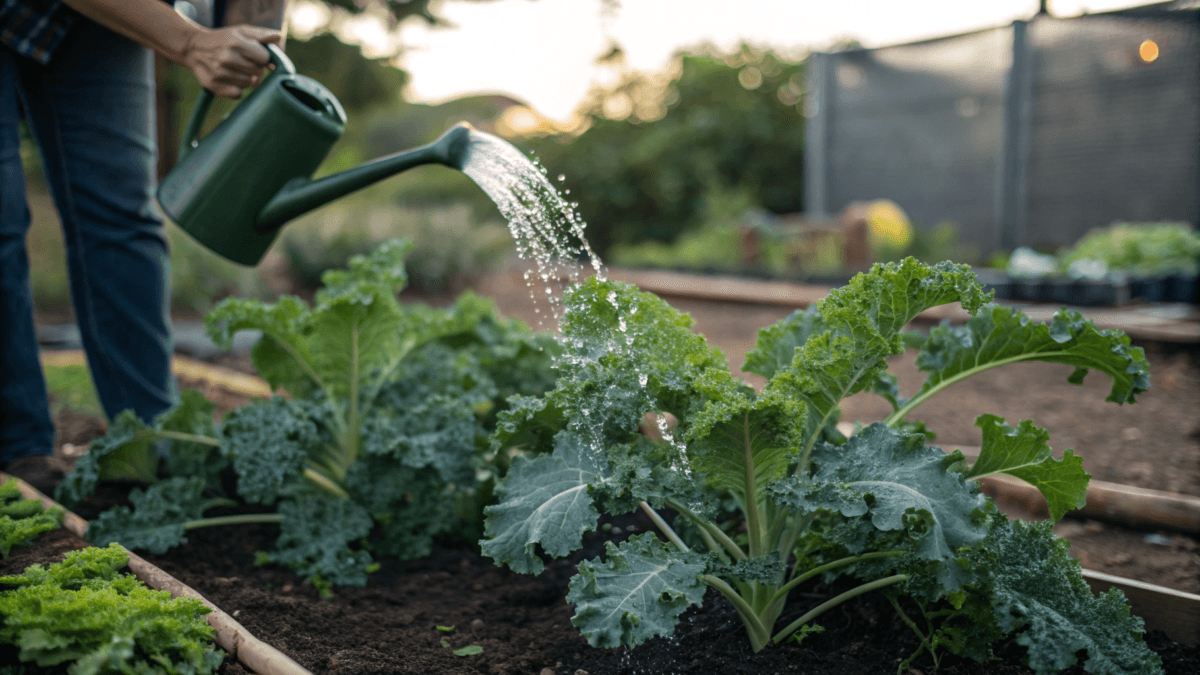
Kale does best with steady moisture, not daily watering. In most home gardens, that means about 1 to 1.5 inches of water per week, delivered through deep waterings rather than frequent light sprinkling.
In warm weather, this often works out to watering every 2-4 days, while in cool, damp conditions, it may be closer to once a week.
Instead of following a fixed schedule, the key is watering when the root zone starts to dry, before the plant gets stressed.
Michigan State University notes on how often to water kale, saying it needs “1 to 1.5 inches of water per week” and recommends, as in your description, that this should be applied as deep, infrequent watering.
If you’re looking for a complete overview of planting, soil, spacing, feeding, and long-term care, see the full guide on how to grow kale, which covers the entire process from seed to harvest.
Why Consistent Watering Matters for Kale
Kale grows best when soil moisture stays even.
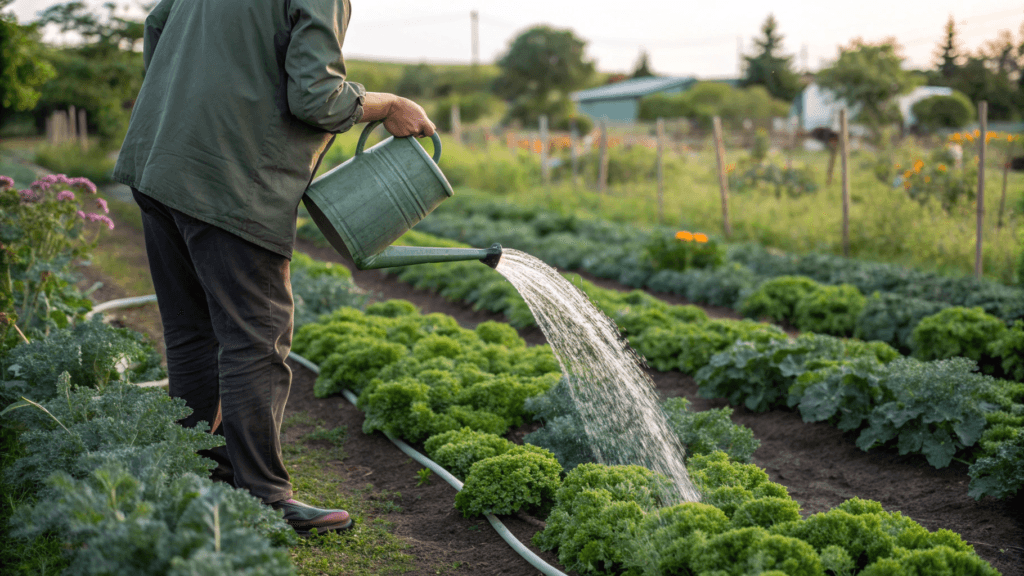
When kale receives consistent moisture:
- Texture stays tender, especially in younger leaves
- Growth remains steady rather than stopping and restarting
- Flavour is milder and sweeter, not bitter
- Plants handle heat and pests more easily
How Often to Water Kale Plants
A reliable guideline for kale grown in the ground is about 1 to 1.5 inches of water per week, including rainfall.
In practice, this usually means:
- Spring/Fall: Watering about once per week
- Warm weather: Every 3-5 days
- Hot weather: Every 2-3 days, especially in sandy soil
For kale in containers (which dry out faster):
- Often every 1-3 days in warm weather
- Sometimes daily during hot, windy stretches
Deep watering is the goal. You want moisture to reach 6-8 inches down, where most kale roots feed. Shallow watering that only wets the surface encourages shallow roots, which makes plants more sensitive to heat and drought.
Golden rule: Water enough to fully moisten the root zone, then wait until the top couple of inches of soil begin to dry before watering again.
Drip irrigation or soaker hoses are ideal for kale because they deliver water slowly and directly to the root zone without unnecessary runoff or leaf wetting.
How Soil Type Changes Watering Frequency
Soil type plays a major role in how quickly moisture is lost and how often kale needs watering.
Sandy soils drain quickly and usually require more frequent watering. Clay soils hold moisture longer and should be watered less often but more deeply. Raised beds and containers dry out faster than in-ground beds, especially in warm or windy conditions.
Because of these differences, two gardens in the same climate may need very different watering schedules.
How to Adjust Based on Weather
The weather is the biggest reason a “schedule” stops working. Here’s how I adjust it:
- Cool 50-70°F: About once/week or less
- Warm 70-85°F: Every 3-4 days
- Hot 85-95°F+: Every 2-3 days (1-2 days in sand/raised beds); containers daily
- After heavy rain: Check again in 2 days
How Mulch Affects How Often You Need to Water Kale
Mulching significantly reduces how often kale needs to be watered. A 2-3 inch layer of organic mulch helps slow evaporation, keeps soil temperatures stable, and prevents rapid drying during hot weather.
Mulched beds retain moisture longer than bare soil, making watering more forgiving and reducing stress during heat waves. This is especially helpful for kale grown in raised beds and containers.
Watering Kale at Different Growth Stages
Kale’s water needs change as it grows.
Newly planted seedlings need consistently moist soil to establish roots and may require watering every day or two. Young plants benefit from frequent, deep watering as their root systems expand.
Mature plants prefer deeper watering with slightly longer gaps between waterings, as long as the root zone does not fully dry out.
How to Check If Kale Needs Water
If you’re unsure whether you’re watering too much or too little, the fastest way to tell is to check the soil and the plant together.
Finger Test
The finger test is the simplest and most reliable way to check if kale needs water.
Push your finger 2-3 inches into the soil near the plant:
- Moist and cool: No watering needed yet
- Slightly damp: Water soon
- Dry and dusty: Water now
If you can’t get your finger in easily, the soil may be compacted or crusted. In that case, loosen the surface gently and consider mulching.
Visual Soil Cues
Your soil gives you hints before the plant does.
- Dark, crumbly soil usually has moisture.
- Pale, dusty soil is drying out.
- Soil pulling away from the sides of a container is a classic “too dry” sign.
- Crusting or cracking can mean the top dries fast (common in clay or bare soil).
One caution. The surface can look dry while the root zone is still moist, especially if you mulch. That’s why the finger test matters.
Plant Behaviour Clues
Kale will “talk” to you if you pay attention, but it often waits until stress has started.
Early signs that kale wants water:
- Leaves look a little less perky late in the day
- New growth slows slightly
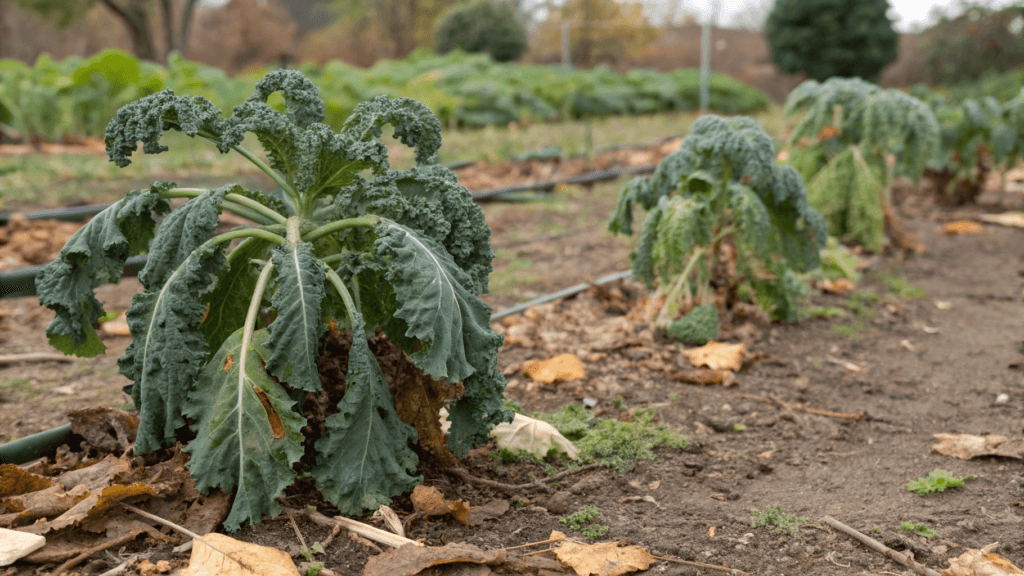
Signs of Underwatered Kale
- Drooping leaves during heat
- Thick or stiff leaf texture
- Slower growth and smaller leaves
- Increased bitterness in older leaves
- Curling or slightly rolled edges
- Dry, crispy leaf tips if it’s been dry for a while
Signs of Overwatering Kale
- Pale or yellowing leaves
- Soft, limp growth
- Soil that stays wet for days
- Sour smell in containers
What to Do If You’re Watering Wrong (Quick Fix)
If you catch watering problems early, kale usually recovers well.
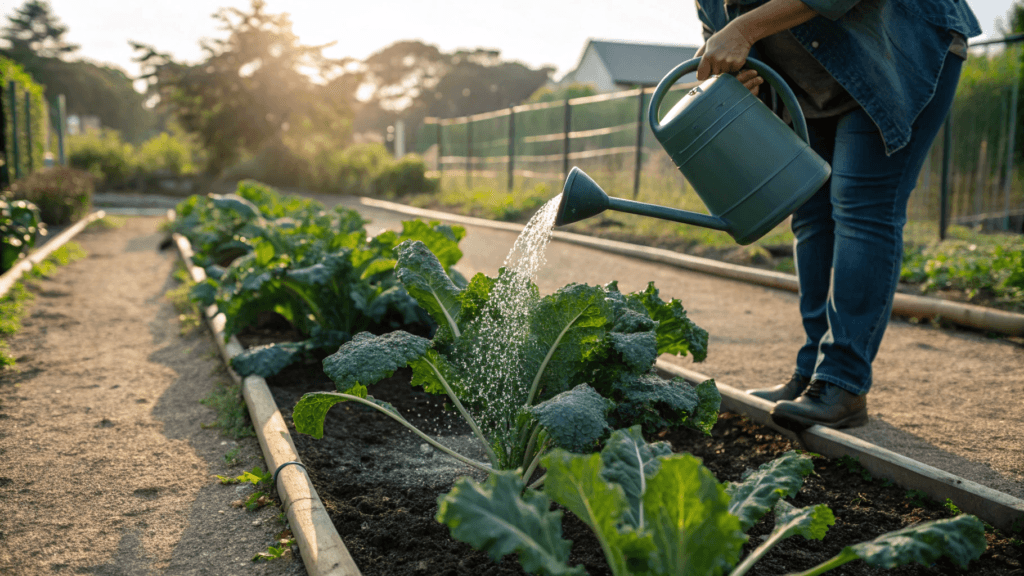
If kale is underwatered:
- Water deeply at the base of the plant.
- If the soil is very dry, water in two passes (light first, deeper soak after).
- Add mulch to reduce further moisture swings.
If kale is overwatered:
- Pause watering and let the top few inches of soil dry.
- Check drainage and avoid standing water.
- Improve airflow and drainage before watering again.
Leaves damaged by stress won’t recover, but new growth usually improves once moisture levels stabilize.
In containers, make sure there are drainage holes, and never let pots sit in standing water.
Seasonal Watering Adjustments for Kale
- Spring: Usually weekly or less
- Summer: Every 2-4 days in-ground; daily in containers
- Fall: Weekly or less as growth slows
Best Time of Day to Water Kale
Morning is best for most gardens.
Always water at the base of the plant so moisture reaches the soil rather than coating the leaves. Avoid wetting foliage late in the day, as damp leaves overnight increase the risk of disease.
Why Timing Affects Plant Stress
Plants lose water through their leaves during the day. If the soil is already drying and the day gets hot, kale can hit stress faster. Morning watering gives kale a “buffer” so it can keep growth steady and avoid midday droop.
Common Watering Mistakes When Growing Kale
Watering Too Often but Too Shallow
This is probably the most common mistake.
- Water slower and longer so moisture reaches 6-8 inches down
- Then wait until the upper few inches begin to dry
Quick check: If the soil is wet on top but dry a few inches down, you’re watering too shallow.
Letting Soil Dry Out Completely
Kale can survive a dry spell, but quality drops fast.
If your soil tends to dry out quickly:
- Add 2-3 inches of mulch (straw, shredded leaves, untreated grass clippings in thin layers, or compost)
- Water deeper
- Consider adding organic matter to improve water-holding over time
Conclusion
Watering kale isn’t about following a strict schedule. It’s about keeping the root zone consistently moist without leaving it soggy. Start with about 1 to 1.5 inches of water per week, adjust for weather and soil, and let the soil, not the calendar, guide you.
Consistent watering also makes harvesting easier and more predictable. Plants that receive even moisture produce leaves at a steady pace, recover faster after harvest, and stay tender longer. You’ll spend less time reacting to problems and more time enjoying reliable harvests throughout the season.
With steady moisture, kale rewards you with stronger growth, better flavour, and a longer harvest window.

Leave a Reply