
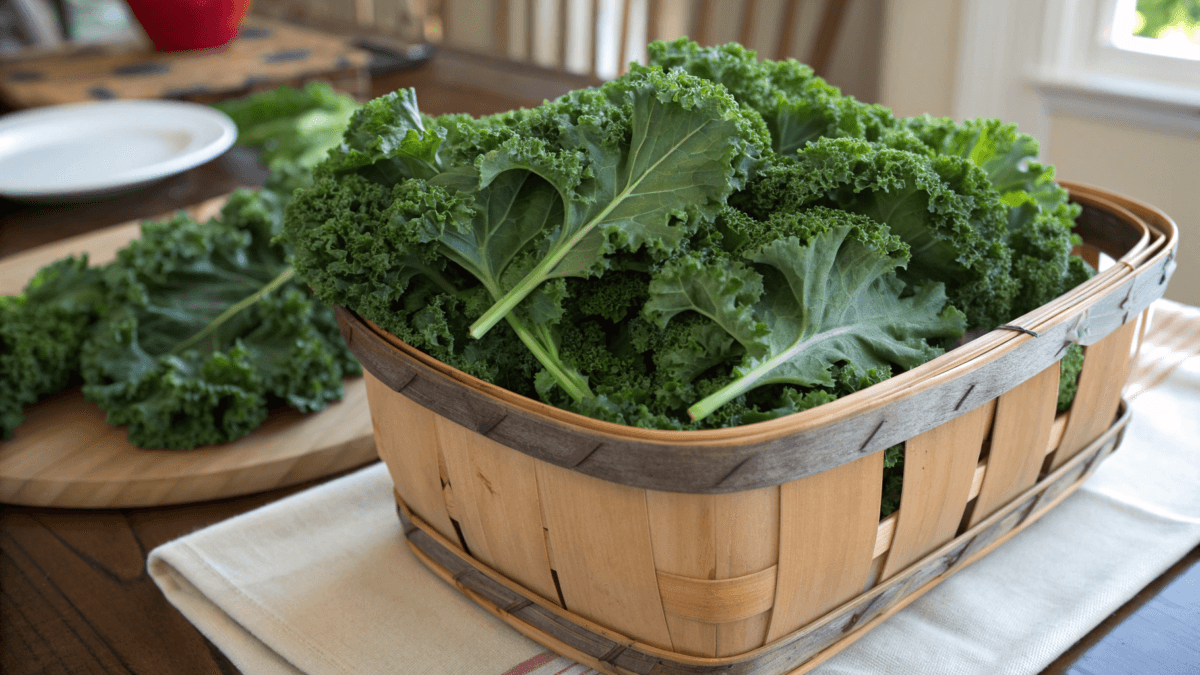
If your kale tastes bitter, it’s usually because the plant got stressed (most often by heat or uneven watering) or you harvested it too late. The good news is that you can fix a lot of bitterness either by changing how you grow and harvest it, or by using a couple of simple kitchen tricks after you pick it.
Almost every gardener runs into the question “why is my kale bitter” at least once, usually in their first summer growing it.
Below, I’ll walk you through what kale should taste like, why it turns bitter, and exactly what to do both in the garden and after harvest to get back to sweet, tender leaves.
What Kale Is Supposed to Taste Like
Kale will never taste like iceberg lettuce, and that’s okay. But good kale shouldn’t taste tongue-grabbing or mouth-drying bitter.
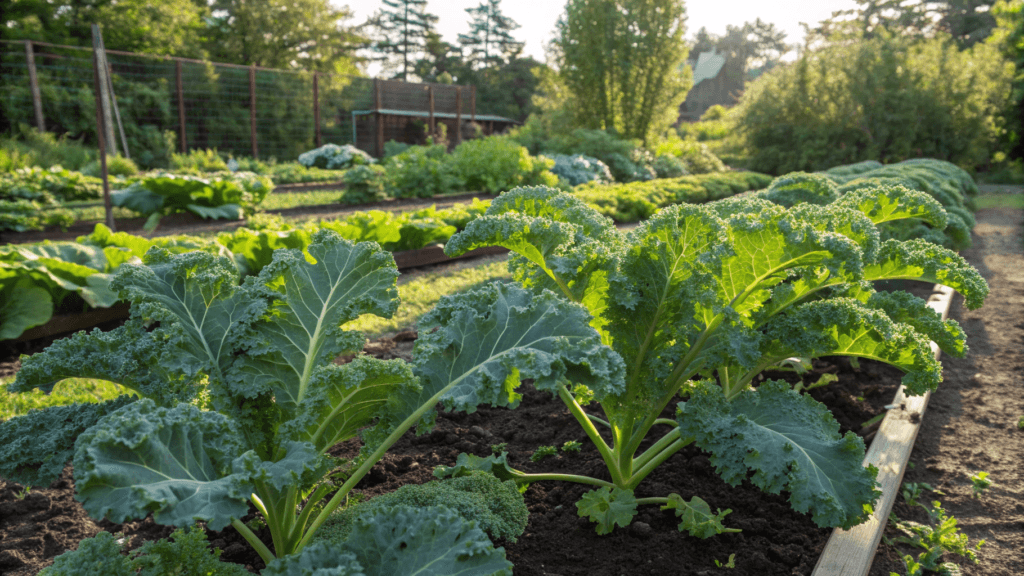
A good bite of kale is usually:
- Green and slightly earthy
- Mildly peppery (especially in younger leaves)
- A little sweet when grown in cool weather
- Not harsh and not “tongue-grabbing” bitter
Mild Vs. Bitter Expectations
Kale flavour depends a lot on leaf age and conditions:
- Baby kale (small, tender leaves): Mild, almost lettuce-like with a gentle kale flavour
- Mature kale (full-size leaves): Stronger, more “green,” sometimes a little bitter
- Stressed kale (heat/water issues): Sharp bitterness, tough texture
- Post-frost kale: Noticeably sweeter, less bitter
If you’ve ever had kale in late fall after a light frost and thought, “Oh… that’s why people like it,” that’s the baseline. Cold weather shifts the plant’s chemistry, and kale converts some starches into sugars to protect its cells from freezing, and the flavour gets noticeably sweeter.
So when kale is very bitter, something pushed it into “defend myself” mode.
Main Causes Of Bitter Kale
Most bitter kale problems come down to one (or more) of these:
- Heat stress
- Inconsistent watering
- Overmature leaves
- Naturally strong-flavored varieties
- Ongoing pest pressure
Bitterness is mostly tied to compounds (like glucosinolates) that brassicas naturally make. Those compounds can spike when the plant is stressed or when leaves get older and tougher.
Kale tastes best when daytime temperatures are roughly 60-75°F (15-24°C).
Heat Stress
Hot weather is the #1 bitterness driver in many gardens.
This is why kale grown in the fall usually tastes sweeter than kale grown in late spring or summer.
What it looks like:
- Leaves get tougher and sometimes thicker
- Growth slows, even if the plant looks healthy
- Leaf edges may curl slightly
- In some varieties, the plant may start hinting at bolting (sending up a flower stalk)
Common heat stress situations:
- Daytime highs consistently above 80°F (27°C)
- Warm nights (above ~65°F) can keep kale from “resetting” and sweetening
- Kale planted too late in spring, so it matures inthe summer heat
- Full sun in hot climates with no afternoon shade
Why does it make kale bitter?
Heat pushes kale into survival mode. It accelerates ageing, thickens leaf texture, and intensifies those strong-tasting defence compounds. Kale is a cool-season crop that tolerates heat but performs best in cooler conditions.
Water Stress
Kale likes consistent moisture. Long dry spells followed by big soakings can make leaves tougher and more bitter.
What it looks like:
- Leaves may look smaller
- Older leaves can turn leathery
- Plants wilt in afternoon sun (some wilting is normal in heat, but they should perk back up by evening)
- Growth becomes uneven, a burst after rain, then a stall
Why does it make kale bitter?
Once a leaf develops under drought stress, its flavour usually doesn’t fully recover.
Common watering mistakes that trigger bitterness:
- Watering shallowly every day (encourages shallow roots and bigger stress swings)
- Watering at random times instead of checking soil moisture first
Stick a finger in the soil. If it’s dry down 1-2 inches, it’s time to water.
Overmaturity
Kale is one of those greens that doesn’t exactly “ripen.” It just gets bigger, tougher, and stronger.
If kale starts to bolt (send up a flower stalk), leaf quality usually declines quickly, with tougher texture and stronger flavor.
What it looks like:
- Leaves are large, darker, and thicker
- Midribs feel woody
- Texture is better suited to cooking rather than raw use
Why it makes kale bitter:
Older leaves have had more time to develop strong flavor compounds and fibrous structure. You can cook them, sure, but if you’re expecting salad kale, overmature leaves will disappoint you.
If your kale has been growing for a while and you’re only picking occasionally, the plant keeps those older leaves as “storage,” and the flavor tends to skew stronger.
Variety Choice
Some kale types are simply more bitter than others, even with perfect care.
In general:
- Curly kale (common grocery type) can be more bitter and tough when mature
- Lacinato / dinosaur kale is often milder and sweeter
- Red Russian tends to be mild and tender
- Siberian types are usually mild and handle cold well
If bitterness has been a recurring problem in your garden, switching varieties can be one of the easiest fixes.
Bitterness is usually a sign that something in the growing conditions is off. If you want a full walkthrough on spacing, soil, watering, feeding, and day-to-day care, see our complete guide on how to grow kale.
How To Fix Bitter Kale In The Garden
If your kale is already growing and tasting bitter, the best fixes come from reducing stress and improving harvest timing. These changes won’t remove bitterness from leaves that already developed under stress, but they often lead to noticeably milder, more tender new growth within a week or two.
Think of this section as improving the next harvest, not rescuing the past one.
Harvest the Right Leaves (and Harvest More Often)
This is the fastest improvement you’ll taste. Kale often tastes sweeter after cool nights, even just 40-55°F / 4-13°C.
Best practice:
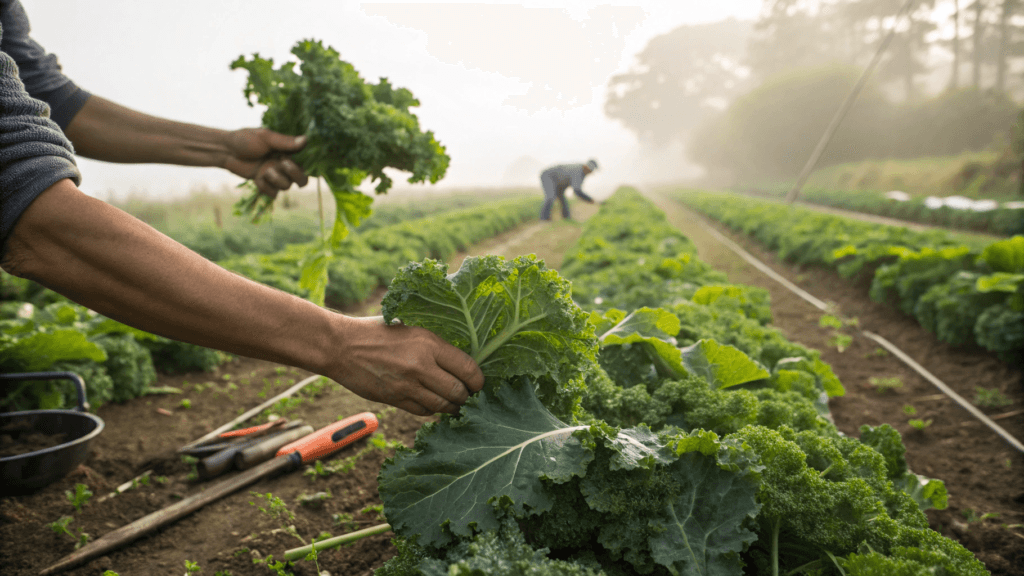
- Harvest in the morning (cooler and leaves are more hydrated)
- Pick outer leaves first, starting with the lowest leaves
- Leave the top center “crown” to keep growing
- Harvest when leaves are hand-sized (roughly 6-10 inches for many types)
A simple harvesting plan that works:
- Grab 2-4 outer leaves per plant every few days (or once a week)
- Don’t take more than about 1/3 of the plant at a time
What to avoid:
- Letting leaves get huge because you’re “saving them up.”
- Taking only baby leaves from the top repeatedly (you can stall growth)
- Avoid harvesting after a blazing hot afternoon when plants are tired, and flavors can feel sharper
Cool The Plant Down
If your kale is in a hot spell, you can reduce heat stress enough to improve new growth.
Practical heat fixes:
- 30% shade cloth during hot afternoons can make a noticeable difference
- Planting where it gets morning sun and afternoon shade
- Using taller plants (tomatoes, pole beans) as partial shade
- A 2-3 inch layer of straw, shredded leaves, or untreated grass clippings keeps roots cooler
Even a temporary solution helps. I’ve propped up an old bed sheet on stakes for a few hot days. Even temporary shade can noticeably reduce stress and improve new growth.
Water Consistently
The goal is steady moisture, not soggy soil.
How often to water:
- Kale generally does well with about 1–1.5 inches of water per week, including rainfall (more in sandy soil or intense heat)
How to water so it actually helps flavor:
- Water in the morning when possible.
- Water deeply so moisture reaches several inches down.
- Check the soil again before watering the next time.
If you’re not sure your watering is deep enough, after watering, dig a small hole with a trowel and see how far the moisture went. You want the damp zone at least 4-6 inches down.
Feed Lightly for Steady Growth
Kale that’s underfed can also taste stronger and grow tougher (especially if it’s limping along in summer).
Signs that kale may need nitrogen:
- Leaves are pale green (not the normal deep kale green)
- Growth is slow even in decent weather
- Leaves are small and thin
Easy, feeding options:
- Mix compost into the soil
- Top-dress with compost mid-season around the plant
- Use a gentle nitrogen source (like fish emulsion) at the label rate
- Avoid overdoing it; too much nitrogen can make leaves lush but can invite pests and reduce resilience
A well-fed plant produces tender leaves, but too much nitrogen can create huge, pest-prone growth.
Check the Kale For Pest Stress
You asked for heat, water, and maturity, and those are big ones, but pests are a sneaky stress amplifier. Kale can look “fine” from a distanc,e while chewing damage stresses it into a stronger flavour.
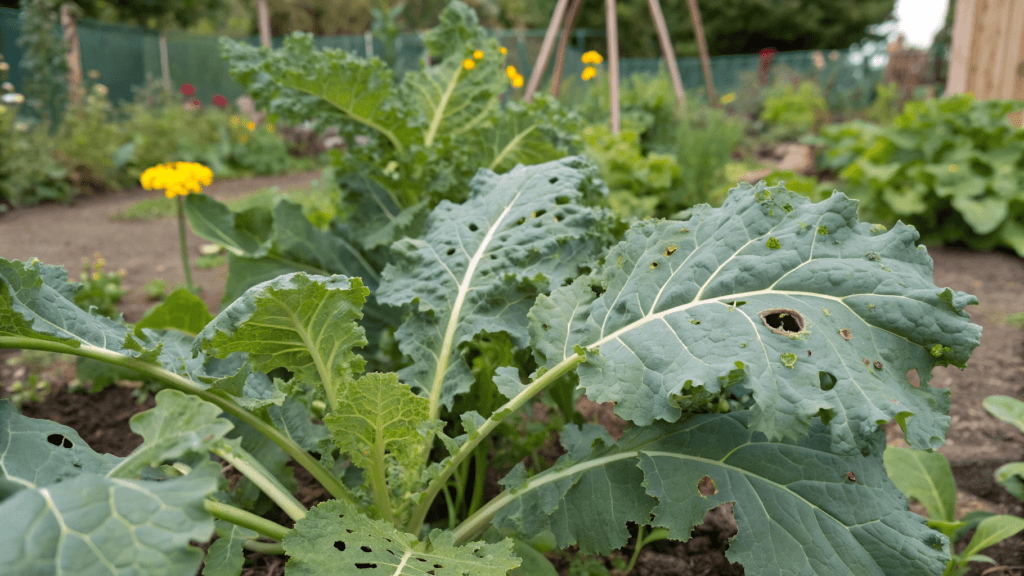
Common culprits:
- Aphids (clustered on new growth)
- Cabbage worms (ragged holes, green caterpillars)
- Flea beetles (tiny “shot holes”)
Quick fixes that don’t require a chemistry degree:
- Blast aphids off with a strong water spray
- Hand-pick caterpillars (oddly satisfying)
- Use insect netting or row cover to prevent egg-laying
Even light, constant pest pressure can keep kale stressed enough to affect flavour.
How To Fix Bitter Kale After Harvest
This is the part most people don’t realise until they’ve grown kale for a couple of seasons: kale can taste like two different plants depending on when you pick it.
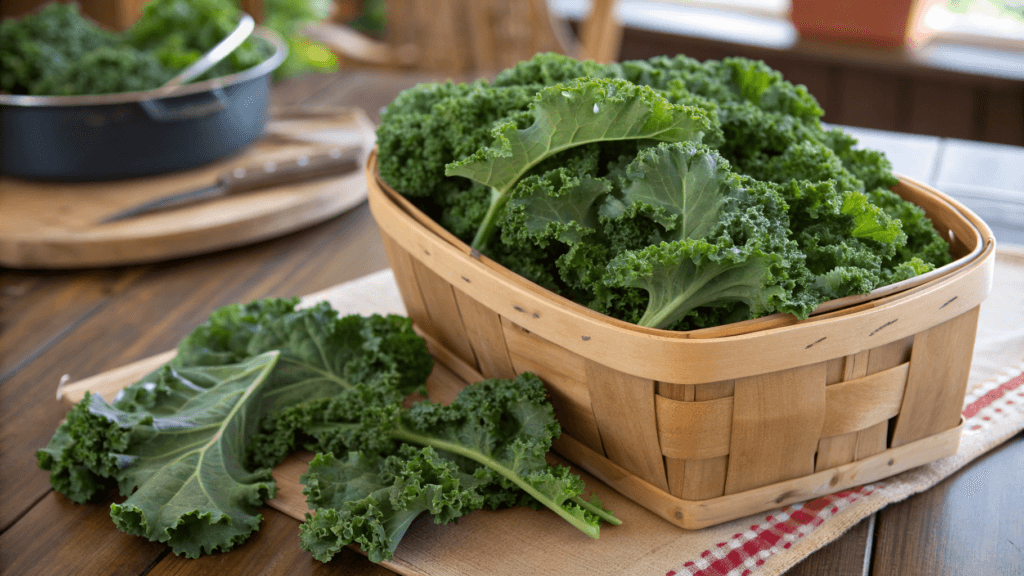
Not all kale bitterness needs the same tool.
- Slightly bitter and tender: Massage and dressing is enough
- Bitter and tough: Blanch or sauté
- Very bitter: Blanch then cook with fat and acid
1. Wash and Soak
Soak leaves in cold water for 10-20 minutes, then drain and dry. This can reduce harshness and remove any dust or pests that add off-flavours.
2. Strip The Stems
For older leaves, the thick midrib can taste extra strong and feel unpleasantly tough to chew.
Fast method:
- Hold the stem in one hand.
- Pinch the leaf with the other and pull upward, leaf slides right off.
Save stems for stock, or slice them thin and cook longer than the leaves.
3. Massage Kale For Salads
Massaging breaks down cell walls and softens texture. It also mellows the bite.
How to do it:
- Chop kale into bite-sized pieces.
- Sprinkle a small pinch of salt.
- Add a little olive oil and/or lemon juice.
- Massage with your hands for 1-2 minutes until darker and softer.
Then add your dressing. This works best on lacinato (dinosaur) kale and younger curly kale.
Why it works:
- Salt and acid start breaking down cell walls
- Oil coats bitter compounds so they hit your tongue less aggressively
- Texture becomes less chewy, which reduces the “bitter perception”
If your kale is extremely bitter, massage helps, but blanching helps more.
4. Blanching
Blanching is one of the best fixes for very bitter kale. Removes some bitterness into the water and softens texture fast.
How to blanch kale:
- Boil a pot of water and salt it lightly.
- Drop in chopped kale for 30-60 seconds.
- Drain and immediately rinse in cold water (or ice bath).
- Squeeze dry.
Then sauté it, add it to soup, freeze it, or toss it into casseroles.
Important: Don’t blanch forever. Overdoing it makes kale mushy.
5. Cooking Methods
Bitterness is easier to manage when kale is cooked with the right “helpers”:
Best bitterness-balancing ingredients:
- Fat: Olive oil, butter, bacon fat (fat)
- Acid: Lemon juice, vinegar, tomatoes (acid)
- Salt: Salt, soy sauce, parmesan (salt/umami)
Fat helps round out bitter flavors and makes kale taste richer.
Bitterness and acid balance each other beautifully. This doesn’t remove bitterness; it balances it so it tastes fresh and intentional.
Reliable cooking approaches:
- Sauté kale with garlic and olive oil, then finish with lemon
- Add kale to soups/stews where it simmers with salty/umami broth
- Roast kale quickly (kale chips) with oil and salt (works best with less bitter leaves)
6. Pair Kale With Sweet Ingredients
Sweetness doesn’t “remove” bitterness, but it makes it taste intentional and smoother.
Great pairings:
- Roasted sweet potato
- Caramelized onion
- Apples or dried cranberries
- Raisins
- Honey-mustard dressing (a little goes a long way)
- A pinch of sugar
7. Ferment It
Kale can be fermented like sauerkraut (often mixed with cabbage). Fermentation changes flavor and reduces harshness over time. This isn’t the fastest fix, but it’s a great “don’t waste the harvest” move.
How To Prevent Bitterness Next Season
If you want consistently tasty kale, prevention is easier than rescue. Most bitter kale stories come down to planting at the wrong time or letting stress build up.
Grow Kale In The Right Season
Kale shines in cool seasons and is at its best in:
- Spring (harvest before true summer heat)
- Fall (harvest through cool weather)
- Winter in mild climates or under protection
Fall kale is often sweeter because nights cool down and growth is steady without heat stress.
If you’re trying to grow kale through peak summer, you can, but you’ll need shade and steady water, and the flavor may still lean stronger.
If you’re unsure about timing in your climate, this guide on when to plant kale by zone and frost dates can help.
Pick Less Bitter Varieties
Not all kale tastes the same. Some types are naturally more tender or mild.
Kales that tend to be milder:
- Lacinato (Dinosaur) kale (often less sharp than some curly types)
- Red Russian (tender, generally milder when young)
- Siberian types (often bred for cold hardiness and good flavor)
Some tightly curled kale varieties can be stronger, especially in heat.
If you’ve been fighting bitterness year after year, try a different variety and see if the problem magically gets easier. Sometimes it really does.
Keep Growth Steady
Kale tastes best when it grows steadily. The best way to support that is healthy soil that holds moisture.
Before planting:
- Mix in compost (even 1-2 inches over the bed helps)
- Aim for soil that stays evenly moist, not crusty and dry
After planting:
- Mulch once the seedlings are established
- Keep weeds down (weeds steal moisture and nutrients)
Don’t Crowd Plants
Crowding stresses plants (less airflow, more competition for water, more pest pressure).
Spacing guideline:
- Most kale does well with 12-18 inches between plants.
- In rich soil with big varieties, lean toward 18 inches.
Crowded kale tends to make smaller, tougher leaves and stress can push bitterness up.
Protect Fall Kale For Sweeter Leaves
If you want the sweetest kale you’ve ever grown, aim for leaves that mature in cool weather.
Easy ways to extend harvest:
- Row cover or low tunnels
- Harvest after light frosts (leaves often taste sweeter after cold nights)
Harvest Young And Keep The Plant Productive
Bitterness prevention is mostly a harvest habit.
A good “no bitterness” routine:
- Plant a small batch
- Don’t let leaves get huge before harvesting
- Pick outer leaves weekly
- Remove any yellowing or battered leaves so the plant stays focused on fresh growth
- Plant another batch a few weeks later (if your season allows)
This keeps you in the “tender leaf” zone longer.
Conclusion
Bitter kale is almost always a message from the plant: “I’m stressed,” or “I’m old.” Heat, uneven watering, and overmature leaves are the big three, and they’re all fixable with better timing, steadier moisture, and smarter harvesting.
In the short term, focus on picking younger leaves, cooling and watering the plant consistently, and controlling pests so new growth stays tender.
If you’ve already harvested a bitter batch, blanching and the fat-acid-salt combo can turn it into something you’ll actually want to eat.
Once you learn to read what kale is telling you, bitterness becomes a rare problem instead of a constant frustration.

Leave a Reply