
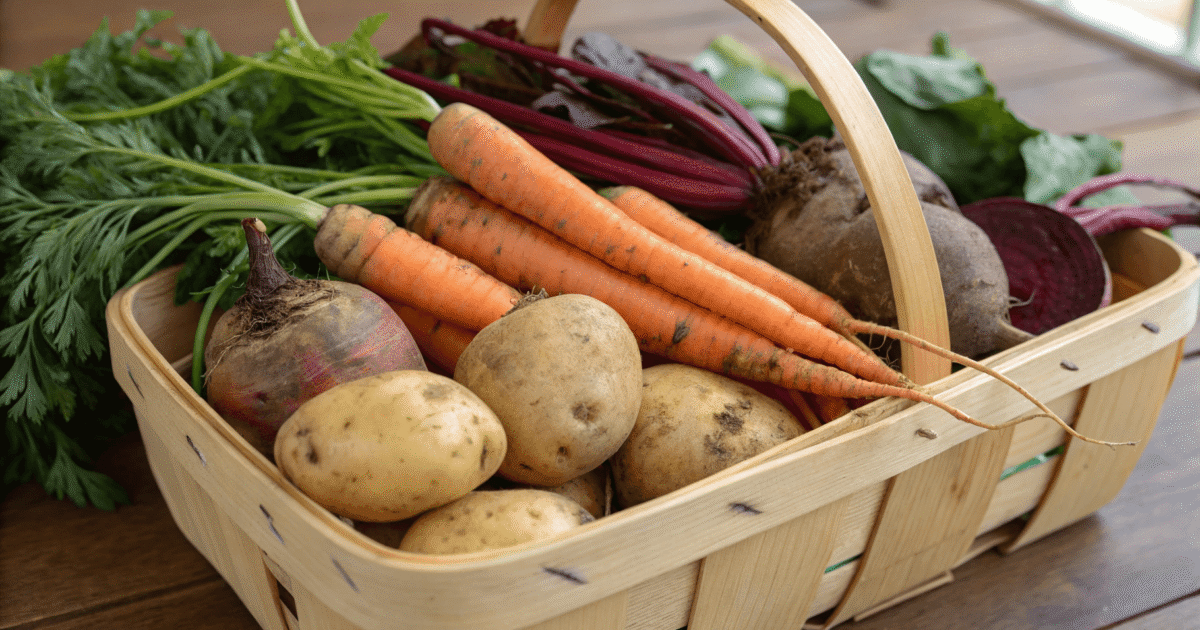
Root vegetables are crops grown for their edible underground parts. Familiar examples include carrots, beets, radishes, turnips, and parsnips. In everyday cooking and gardening, the term is also used more broadly for crops such as potatoes, onions, and garlic, even though their edible parts are tubers or bulbs rather than true roots.
These differences matter when choosing what to plant. Carrots need room for their long roots, while radishes can suit smaller spaces. Planting season, soil conditions, and the variety you choose also affect which crops will work in your garden.
This guide explains the main types, helps you compare familiar examples, and covers the growing conditions to consider before planting.
Root vegetables are often among the first crops gardeners try when learning the basics of vegetable gardening.
What Are Root Vegetables?
In the strict botanical sense, root vegetables are plants grown for edible roots. Carrots, parsnips, and sweet potatoes are examples.
In cooking and gardening, the term often covers a broader group of crops harvested for underground storage organs. That broader usage includes potatoes, which form stem tubers, and onions and garlic, which form bulbs.
Root Vegetables and Deep-Rooted Vegetables Are Different
A root vegetable is grown for its edible root or underground storage organ. A deep-rooted vegetable has a root system that extends far into the soil, regardless of which part you eat.
These descriptions are not interchangeable. Tomatoes, for example, can develop deep roots, but they are grown for their fruit.
Why the Difference Matters When Growing Them
Crops grouped as root vegetables do not all need the same growing conditions. Long carrot varieties need enough loose soil for their edible roots to develop, while onions form bulbs near the surface.
Choose planting depth, spacing, and container size for the particular crop and variety. The label “root vegetable” alone does not tell you how much growing space a plant needs.
Types of Root Vegetables and Related Underground Crops
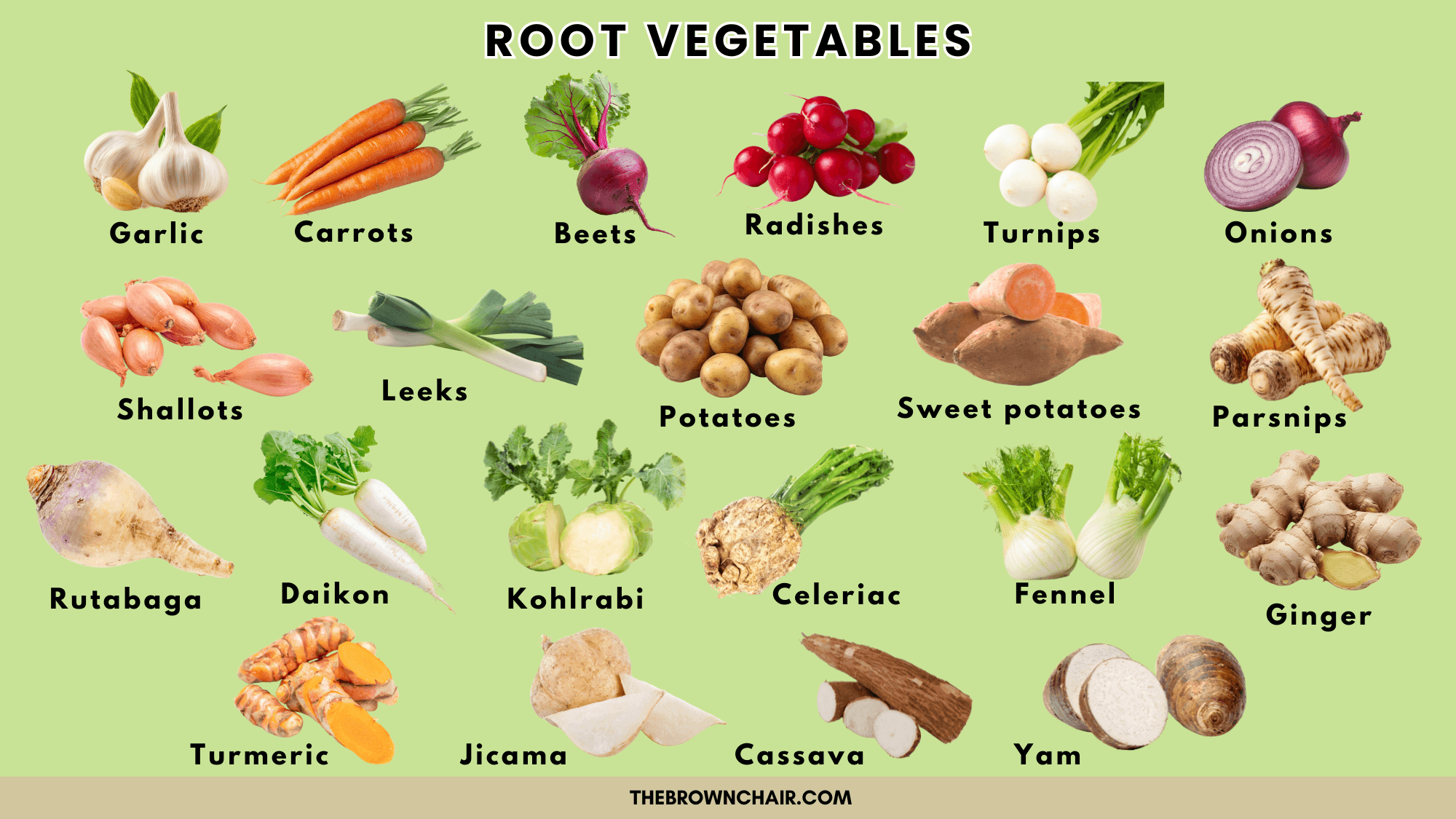
“Root vegetable” is a useful everyday label, but the crops grouped under it do not all store food in the same plant structure. Here are the main differences.
Edible Roots
Carrots and parsnips develop enlarged taproots. Sweet potatoes, cassava, and jicama also store food in enlarged roots.
Beets, radishes, turnips, and rutabagas are commonly grouped as root crops. Depending on the crop, the harvested portion includes the root and an enlarged section between the root and the seedling leaves.
Stem Tubers
Potatoes form underground stem tubers. Their “eyes” are buds that can produce new shoots.
True yams also form tubers. Despite sometimes sharing a name in grocery stores, yams and sweet potatoes are different crops: sweet potatoes develop storage roots.
Bulbs
Onions, garlic, and shallots form bulbs. These consist of a short stem surrounded by fleshy leaf bases that store reserves.
They belong in the broader culinary grouping of underground vegetables, but their bulbs are not roots.
Rhizomes
Ginger and turmeric grow from rhizomes, which are underground stems that spread horizontally and produce roots and shoots.
Their growing requirements differ from those of cool-season crops such as carrots and parsnips.
Vegetables That Need a Separate Explanation
Celeriac, also called celery root, is grown for its swollen base and is commonly treated as a root vegetable. It should not be classified as a corm.
Kohlrabi is grown for an enlarged stem above the soil. It is a stem vegetable, even though its shape resembles a turnip.
Florence fennel forms a bulb-like base from overlapping, thickened leaf bases. Leeks are grown for their overlapping leaf sheaths rather than a storage bulb. Neither should be presented as a true root vegetable.
Common Root Vegetables to Grow at Home
Use this comparison to narrow your choices before checking planting dates and varieties for your location. Crops commonly grouped as root vegetables can need very different conditions.
| Crop | Edible part | What to consider before planting |
|---|---|---|
| Carrots | Enlarged taproot | Choose a variety whose root length suits your soil or container depth. |
| Beets | Swollen root and adjoining seedling stem | Allow room for the roots to develop. The leaves are also edible. |
| Radishes | Swollen root and adjoining seedling stem | Small salad radishes and long daikon varieties have different space requirements. |
| Turnips | Swollen root and adjoining seedling stem | Choose varieties for roots, greens, or both, depending on your intended harvest. |
| Parsnips | Enlarged taproot | Allow a long growing season and enough loose soil for the roots. |
| Rutabagas | Swollen root and adjoining seedling stem | Check that your planting window allows enough time for roots to mature. |
| Sweet potatoes | Storage roots | Choose a suitable variety for the length of your warm, frost-free season. |
| Potatoes | Underground stem tubers | Keep developing tubers covered and protected from light. |
| Onions | Bulbs | Choose a day-length type suited to your growing region. |
| Garlic | Bulbs made up of cloves | Select a type and planting season suited to your climate. |
| Shallots | Bulbs | Check whether your chosen variety is grown from seed or planting bulbs. |
| Celeriac | Swollen base, commonly called celery root | Plan for a long growing season rather than treating it like a quick radish crop. |
Which Crops Suit Your Garden?
For a small space, compare compact varieties and their spacing requirements. For deeper beds, consider crops with longer edible roots, such as parsnips and long carrot varieties.
Choose by climate, growing season, available space, and what you enjoy eating. A crop that grows well in one region may need a different planting schedule or variety elsewhere.
Best Root Vegetables for Beginners
Start with one or two crops suited to your planting season and available space. A manageable first planting makes it easier to learn about sowing, thinning, watering, and harvesting.
Small Salad Radishes
Small salad radishes are a useful first choice for a short growing project. Choose a variety suited to the season, sow directly where it will grow, and follow the packet’s spacing instructions.
Check them regularly as harvest approaches. Leaving them in the ground longer does not necessarily improve their size or eating quality.
Beets
Beets offer both edible roots and leaves. Give the plants enough space to develop, and thin crowded seedlings according to the variety’s instructions.
If roots are your main goal, avoid repeatedly removing large amounts of foliage while the plants are growing.
Short Carrot Varieties
Short or round carrot varieties can be practical where the depth of loose soil is limited. They still need a suitable seedbed and consistent moisture during germination.
Carrots require more patience than quick salad radishes. Sow directly into their growing position and thin carefully rather than planning to transplant crowded seedlings later.
How to Choose Your First Crop
For a short project, consider small salad radishes. For roots and edible greens, consider beets. For carrots, match the variety’s expected root length to your growing space.
Check local planting guidance and the seed packet before sowing. None of these crops is equally easy in every climate or season.
How Root Vegetables Grow
Root crops use energy captured by their leaves to develop the parts we harvest. However, carrots, beets, potatoes, and onions do not form their harvestable parts in the same way. Their planting and care requirements need to be considered separately.
Start with the Right Planting Material
Carrots, radishes, beets, turnips, and parsnips are commonly sown directly into their growing position. Follow the seed packet for sowing depth and spacing.
Other underground crops start differently. Potatoes are commonly grown from seed tubers, garlic from individual cloves, and sweet potatoes from rooted shoots called slips.
Give Each Plant Enough Space
Crowded plants compete for light, water, and nutrients. For directly sown crops, thinning may be necessary to achieve the spacing recommended for the variety.
Do not use one spacing rule for every root vegetable. A small salad radish needs a different amount of room from a large rutabaga or a spreading sweet potato plant.
Match Soil Depth to the Crop
Long carrots and parsnips need enough loose soil for their edible roots to develop without obstruction. Shorter varieties offer alternatives where usable soil depth is limited.
The length of the harvested root is not the same as the depth of the plant’s entire root system. Avoid choosing bed or container depth based only on how large you expect the vegetable to look at harvest.
Use Crop-Specific Harvest Timings
There is no single growth timeline for all root vegetables. Variety, temperature, planting season, and growing conditions affect maturity.
Check whether the supplier’s estimated days to harvest are counted from sowing or transplanting. Use that estimate as a planning guide, then assess the crop itself before harvesting.
Best Soil for Root Vegetables
Most root crops grow well in loose, well-drained soil. The aim is to give the harvested roots room to develop while providing enough moisture and nutrients for steady growth.
Prepare the Growing Area
Remove stones and break up compacted clumps where the edible roots will develop. This is particularly important for long carrots and parsnips, which can become misshapen when they encounter obstacles.
Prepare soil when it is workable rather than saturated. Working very wet soil can worsen compaction.
Improve Structure with Finished Compost
Well-decomposed compost can help improve soil structure. The amount needed depends on the existing soil, previous amendments, and the crop.
Avoid adding fresh manure immediately before sowing root crops. Use mature amendments and follow crop-specific fertility guidance rather than assuming that more organic material always produces better roots.
Check Drainage
Water should move through the growing area without leaving it persistently waterlogged. If drainage is poor, investigate the cause before planting.
Raised beds may help where the existing soil is difficult to manage, but they still need a suitable soil mix and somewhere for excess water to drain.
Use Soil Testing to Guide Amendments
Do not apply one pH target or fertilizer recipe to every crop in this guide. Requirements differ, especially because the broader group includes roots, bulbs, and tubers.
A soil test can help identify pH and nutrient needs. Use the results alongside recommendations for the particular vegetable rather than adding lime or fertilizer automatically.
Choose a Suitable Mix for Containers
For pots, use a growing mix intended for containers. Garden soil alone can become dense and drain poorly in a confined space.
Choose a container deep enough for the variety’s edible roots, with additional room for the growing medium and drainage.
Helpful guides:
Where to Grow Root Vegetables
Root crops can grow in garden beds, raised beds, or containers. Choose a location with suitable sunlight, drainage, and enough usable soil depth for the crop and variety.
In-Ground Garden Beds
An in-ground bed is a practical choice where the soil is workable and drains well. Before sowing, check for compacted layers and stones that could obstruct developing roots.
Do not assume that an in-ground bed automatically offers unlimited growing depth. A shallow layer of loose soil over compacted ground can still restrict growth.
Raised Beds
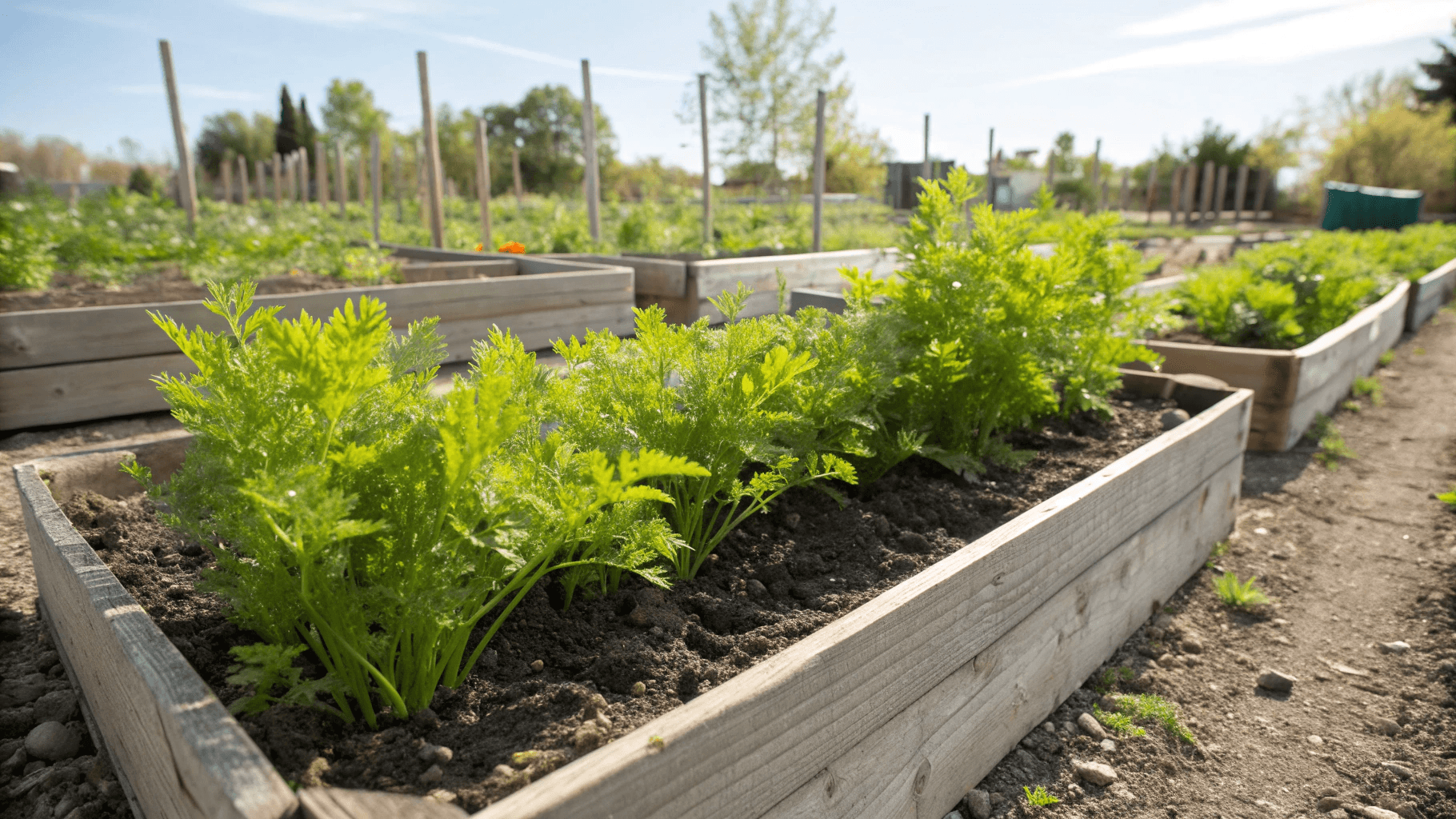
Raised beds let you manage the growing medium separately from the surrounding soil. They can be useful where the existing ground is compacted or difficult to cultivate.
Consider the soil beneath the bed as well as the height of its sides. An open-bottom bed over workable ground provides different growing conditions from a shallow bed placed on concrete.
For long-rooted varieties, check the total depth of suitable soil before planting.
Containers
Containers can work well for selected root crops, especially when you choose varieties suited to the available space.
Use a container with drainage holes and a growing mix intended for pots. Match its depth and width to the mature crop, leaving room below the expected edible root rather than choosing a pot that only just fits it.
Short or round carrots, small salad radishes, and beets are options to consider. Check the variety’s spacing requirements so that the container is not overcrowded.
Match the Location to the Season
The right growing space cannot compensate for unsuitable temperatures or planting dates. Check local guidance for each crop, particularly when choosing between cool-season vegetables and warm-season crops such as sweet potatoes.
Common Problems With Root Vegetables
Similar symptoms can have different causes. Before changing watering or adding fertilizer, check the crop, planting date, spacing, and soil conditions.
Forked or Misshapen Roots
Carrots and parsnips can develop distorted roots when they encounter stones or compacted soil. Damage to the growing root tip can also affect their shape.
Prepare a loose seedbed before sowing. If the usable soil is shallow, choose a shorter variety rather than expecting long roots to grow through a hard layer.
Plenty of Leaves but Small Roots
Crowding, unsuitable growing temperatures, harvesting too early, or excessive nitrogen can contribute to disappointing root development.
Check the variety’s expected maturity and recommended spacing first. Do not assume that adding more fertilizer will solve the problem.
Poor or Uneven Germination
A drying seedbed, unsuitable soil temperature, sowing too deeply, or old seed can reduce emergence. A hard surface crust can also make it difficult for seedlings to break through.
Follow crop-specific sowing guidance and keep the seedbed appropriately moist without leaving it waterlogged.
Holes, Tunnels, or Chewed Roots
Different insects and other animals can damage underground crops. Examine the damage and look for the pest before choosing a treatment.
Use identification guidance relevant to your crop and region. Avoid applying a pesticide simply because a root has a hole in it.
Soft or Rotting Roots
Persistently wet conditions and certain diseases can cause roots to decay. Remove affected material and investigate drainage, watering, and the crop’s disease history.
Do not treat every case of rot as overwatering. If the problem recurs, seek a diagnosis before planting the same crop again.
Small Onion or Garlic Bulbs
Bulb size depends on more than soil depth. Variety, planting time, spacing, and local growing conditions all matter. For onions, choosing a day-length type suited to your region is particularly important.
Review these factors before changing the fertilizer programme.
Watering and Feeding Root Crops
Water and nutrient needs vary between crops, growing stages, and soil types. Check the growing medium and the plants rather than following one fixed schedule for every vegetable.
Keep the Seedbed Moist During Germination
Directly sown seeds need moisture around them to germinate. Check the surface regularly, particularly in warm or windy weather, and water gently to avoid washing seeds out of position.
Aim for moist soil rather than a saturated seedbed. Once seedlings establish, adjust watering to reach their developing root zone.
Check Moisture Below the Surface
A dry-looking surface does not always mean the soil underneath needs water. Check below the surface before watering, especially in heavier soils.
Containers and raised beds may dry differently from nearby ground beds. Assess them separately rather than watering every growing area for the same length of time.
Avoid Large Swings Between Dry and Wet
For crops such as carrots and radishes, uneven moisture can contribute to splitting and reduced eating quality. Aim for steady growth while allowing excess water to drain.
If the soil remains wet for long periods, investigate drainage instead of continuing to water on schedule.
Feed According to the Crop and Soil
Use soil-test results and crop-specific guidance to decide whether fertilizer is needed. Account for nutrients already supplied by compost or previous applications.
Avoid adding nitrogen simply because roots or bulbs look small. Excessive nitrogen can favour leafy growth in some crops, while poor spacing or unsuitable planting conditions may be the actual problem.
Adjust Care as Harvest Approaches
Do not stop watering every underground crop at the same stage. Onions and garlic approaching maturity need different management from actively growing carrots or beets.
Follow the harvest guidance for the particular crop, taking rainfall and soil conditions into account.
Harvesting and Storing Root Vegetables
Harvest timing and storage conditions differ between crops. Use the variety’s estimated maturity as a starting point, then check the size and condition of the vegetables themselves.
Check Before Harvesting the Whole Crop
For carrots, beets, radishes, and similar crops, lift a sample to assess size and eating quality. Bigger is not always better, particularly for varieties intended to be harvested young.
Onions, garlic, and potatoes have different maturity signs. Follow guidance for each crop rather than using root size alone.
Lift Carefully to Avoid Damage
Loosen firm soil beside the crop before lifting, keeping tools far enough away to avoid piercing the harvest. Pulling against hard ground can break roots or damage bulbs.
Handle the vegetables gently and separate damaged specimens from those intended for longer storage. Use sound but damaged produce promptly.
Cure Only the Crops That Need It
Curing is a controlled postharvest process used for crops such as onions, garlic, potatoes, and sweet potatoes. The conditions and duration differ, so these crops should not all receive the same treatment.
Carrots, beets, and radishes are not cured in the same way. Avoid leaving them exposed while waiting for them to dry like onions.
Match Storage Conditions to the Crop
Carrots, beets, and several other root crops generally need cold, humid storage. Remove leafy tops before storing roots, and keep edible greens separately.
Dry onions and garlic need different conditions, with suitable ventilation. Potatoes need darkness to prevent greening, while sweet potatoes require warmer storage than many cool-season root crops.
Use crop-specific storage guidance instead of placing the entire harvest together under one set of conditions.
Inspect Stored Produce Regularly
Check for softening, mould, decay, or sprouting. Remove deteriorating vegetables promptly and review the storage conditions if problems spread.
Only store produce that is in suitable condition. Storage cannot reverse damage or make a diseased harvest healthy.
Related Growing Guides
For more detailed help with one of the bulb crops covered here, read our guide to growing garlic.
If you are planning your growing space, explore raised bed gardening for vegetables for advice on setting up a bed.
Choosing Root Vegetables for Your Garden
Choose your crops by planting season, available soil depth, and what you want to harvest. Small salad radishes can suit a short growing project, while parsnips and sweet potatoes require a longer season under suitable conditions.
Prepare the growing space before planting, follow spacing guidance for the variety, and check each crop’s harvest and storage requirements separately.
If you are starting out, grow one or two crops first. Keep notes on the variety, sowing date, and results so you can make better choices for your own garden next season.

Leave a Reply