
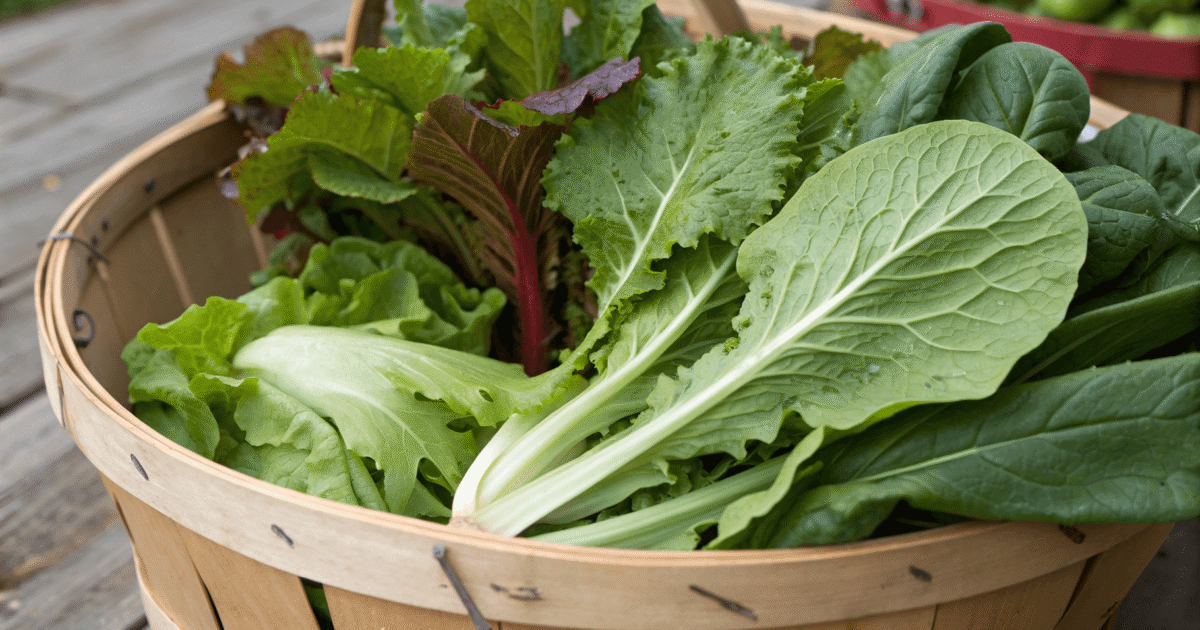
If you’re new to vegetable gardening, leafy vegetables are forgiving. They grow fast, don’t need much space, tolerate small mistakes, and can be harvested again and again, giving beginners fresh food in weeks instead of months.
Whether you’re planting in a raised bed, a container on a balcony, or even indoors, leafy greens fit easily into almost any setup.
Leafy vegetables are often one of the first crops people grow when learning the basics of vegetable gardening.
What Are Leafy Vegetables?
Leafy vegetables are plants grown mainly for their edible leaves. Unlike root vegetables (like carrots or beets) or fruiting vegetables (like tomatoes or peppers), the leaves are the main harvest.
We harvest the leaves while they are tender and fresh, usually before the plant flowers.
Leafy Vegetables vs. Other Vegetables
- Leafy vegetables: Grown for leaves (lettuce, spinach, kale)
- Root vegetables: Grown for roots or bulbs (carrots, garlic, beets)
- Fruiting vegetables: Grown for fruits (tomatoes, cucumbers, peppers)
Leafy greens are typically fast-growing and shallow-rooted, which makes them ideal for small spaces and beginner gardens.
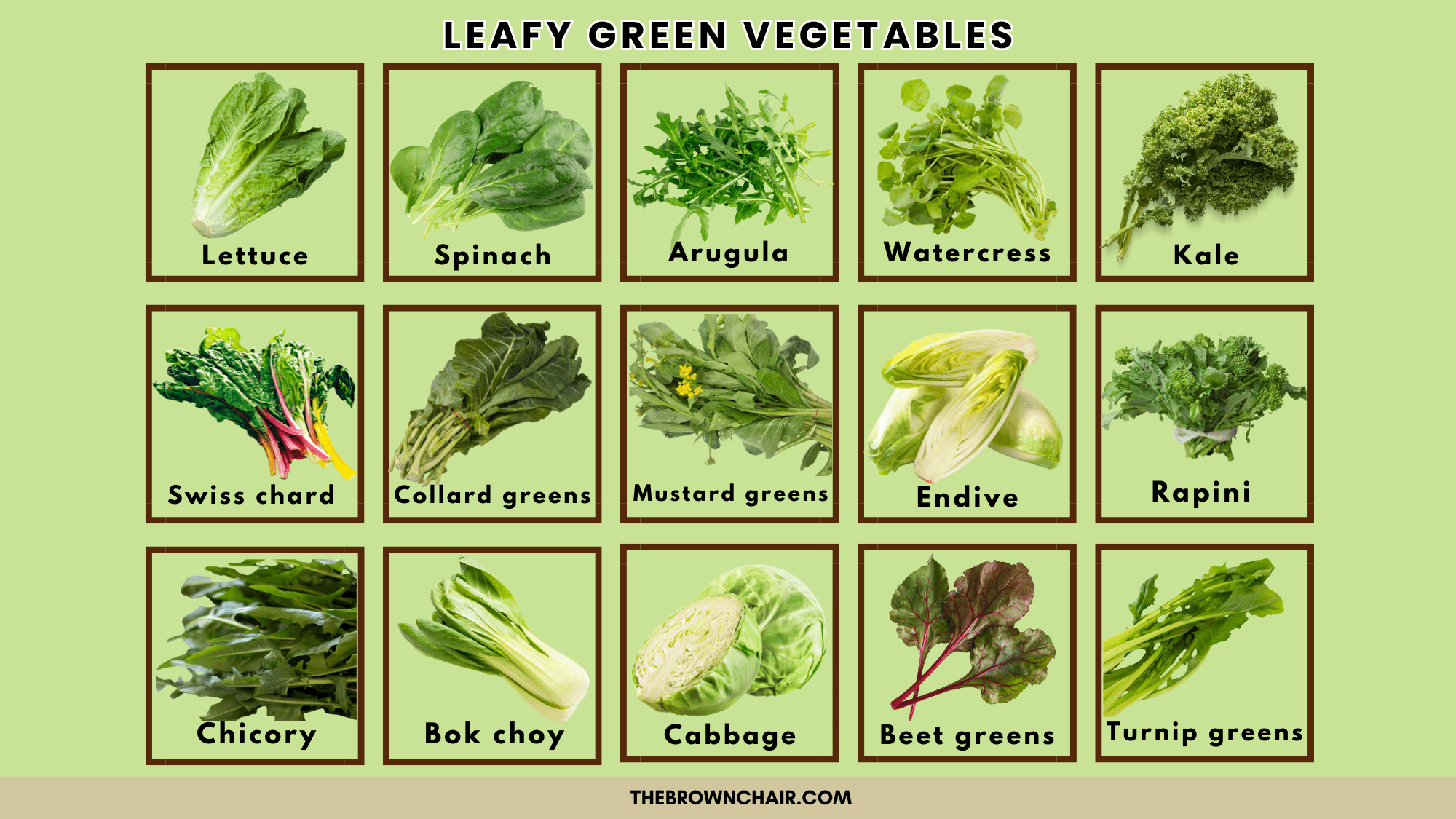
Common Examples of Leafy Vegetables
- Lettuce (romaine, butterhead, iceberg, loose-leaf)
- Spinach
- Arugula
- Watercress
- Kale
- Swiss chard
- Collard greens
- Mustard greens
- Endive
- Broccoli rabe (rapini)
- Chicory
- Bok choy
- Cabbage
- Beet greens (leaves harvested from beet plants)
- Turnip greens (leaves harvested from turnips)
Beet and turnip greens are leafy greens harvested from root crops.
Common Leafy Vegetables to Grow at Home
Below are some of the most popular leafy vegetables grown in home gardens. Some are quick harvest crops, while others provide leaves over a longer season.
| Leafy Vegetable | Description |
|---|---|
| Lettuce | Fast-growing, mild-flavored leaves ideal for salads and fresh eating |
| Spinach | Cool-season leafy green with tender, nutrient-rich leaves |
| Arugula | Peppery-flavored green that grows very quickly |
| Watercress | Fast-growing leafy green that prefers consistently moist conditions |
| Kale | Hardy leafy green that tolerates cold and repeated harvests |
| Swiss chard | Large, colorful leaves with thick stems; very productive over a long season |
| Collard greens | Large, sturdy leaves commonly used for cooking |
| Mustard greens | Spicy-flavored greens that grow quickly in cool weather |
| Endive | Slightly bitter leafy green often grown in cool conditions |
| Chicory | Hardy leafy green with a mild to bitter flavor depending on variety |
| Bok choy | Compact leafy green commonly used in stir-fries and Asian dishes |
| Cabbage | Dense leafy heads grown over a longer growing season |
| Broccoli rabe (rapini) | A leafy brassica grown for its tender leaves and stems |
| Beet greens (from beetroot) | Nutritious leaves harvested while growing beets for roots |
| Turnip greens (from turnips) | Tender, flavorful leaves grown alongside turnip roots |
How to Grow Leafy Vegetables (General Guide)
While each leafy vegetable has its own preferences, most leafy greens share similar growing needs. Understanding these basics will help you succeed with almost any leafy crop.
Climate and Temperature
- Leafy vegetables prefer cool to mild temperatures
- Ideal range: 50-75°F (10-24°C)
- Many leafy greens bolt (flowering too early) in hot weather
Most can be grown:
- Early spring
- Fall
- Mild winters in warm climates
Sunlight Requirements
- Best growth in full sun to partial shade
- 4-6 hours of sunlight is often enough
- In hot climates, afternoon shade helps prevent bitterness
- Morning sun is better than intense afternoon sun
Water Needs
- Leafy vegetables need consistent moisture
- Soil should stay evenly damp, not soggy
- Irregular watering leads to bitter leaves and slow growth
- Mulching helps maintain soil moisture
Growth Speed
- Fast growers: Lettuce, arugula, mustard greens (3-6 weeks)
- Moderate growers: Spinach, bok choy (5-8 weeks)
- Slower growers: Kale, collards, cabbage (8+ weeks)
Best Soil for Leafy Vegetables
Healthy soil makes a big difference when growing leafy greens. Since we’re harvesting leaves, soil quality has a direct impact on both taste and growth.
Ideal Soil Characteristics
- Loose and crumbly texture
- Good drainage
- Rich in organic matter
Because leafy vegetables are harvested for their leaves, poor soil quality shows up quickly as slow growth, pale color, or bitter-tasting greens.
Why Drainage Matters
Waterlogged soil causes:
- Root rot
- Slow growth
- Yellowing leaves
If drainage is poor, raised beds or containers work better than in-ground planting.
Organic Matter
Leafy vegetables love soil enriched with:
- Compost
- Aged manure
- Leaf mold
Organic matter helps hold moisture while still allowing excess water to drain.
Soil pH
- Ideal pH range: 6.0-7.0
- Slightly acidic to neutral soil works best
If you want deeper, step-by-step help, these guides cover specific setups in more detail.
Where to Grow Leafy Greens
One of the biggest advantages of leafy vegetables is their flexibility. You don’t need a large garden to grow them successfully.
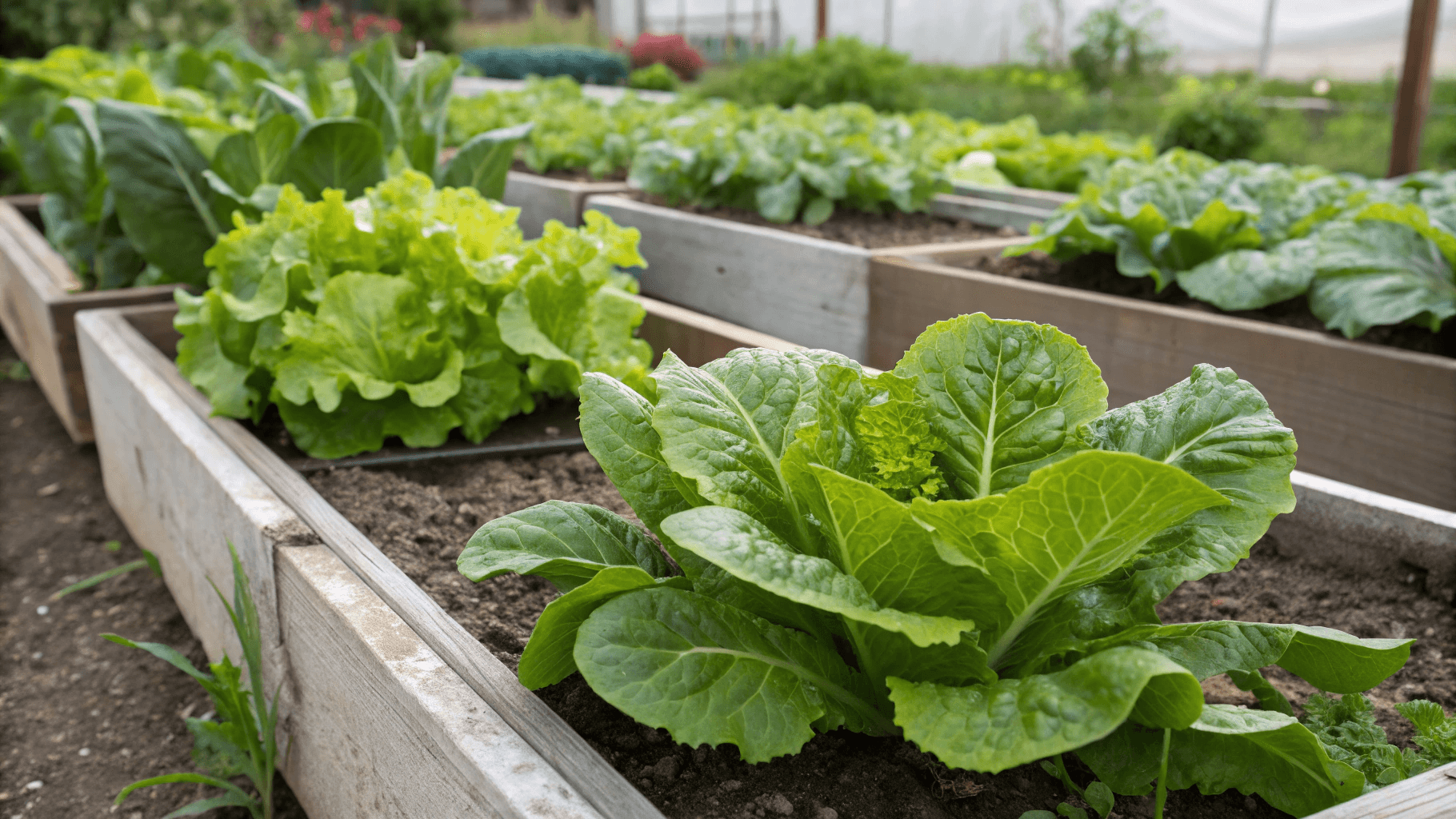
Raised Beds
Raised beds are ideal because:
- Soil drains well
- You control soil quality
- Weeds are easier to manage
- Ideal for consistent harvests
Helpful resource:
Containers
- Perfect for patios and balconies
- Shallow roots need wide pots, not deep ones
Many leafy greens grow very well in pots:
- Lettuce
- Spinach
- Arugula
- Bok choy
Use containers at least 6-8 inches deep for most greens.
Indoor Growing
Some leafy vegetables can be grown indoors with:
- Bright windows
- Grow lights
This works well for lettuce and herbs during winter.
Common Problems With Leafy Vegetables
Even easy crops can run into problems. Knowing what to watch for helps you fix issues early.
Bolting
Bolting happens when plants flower too early.
- Caused by heat or stress
- Leaves turn bitter
Bitter Leaves
Common causes:
- Hot weather
- Inconsistent watering
- Poor soil
Pests
Common leafy green pests include:
- Aphids
- Slugs
- Caterpillars
Regular inspection and early action prevent major damage.
Slow Growth
Often caused by:
- Poor soil fertility
- Cold temperatures
- Crowded plants
Crowding and Poor Spacing
Leafy vegetables planted too closely compete for light, water, and nutrients.
- Overcrowding reduces airflow
- Leads to disease and slow growth
Companion Planting for Leafy Vegetables
Companion planting helps create a healthier garden by using plant relationships.
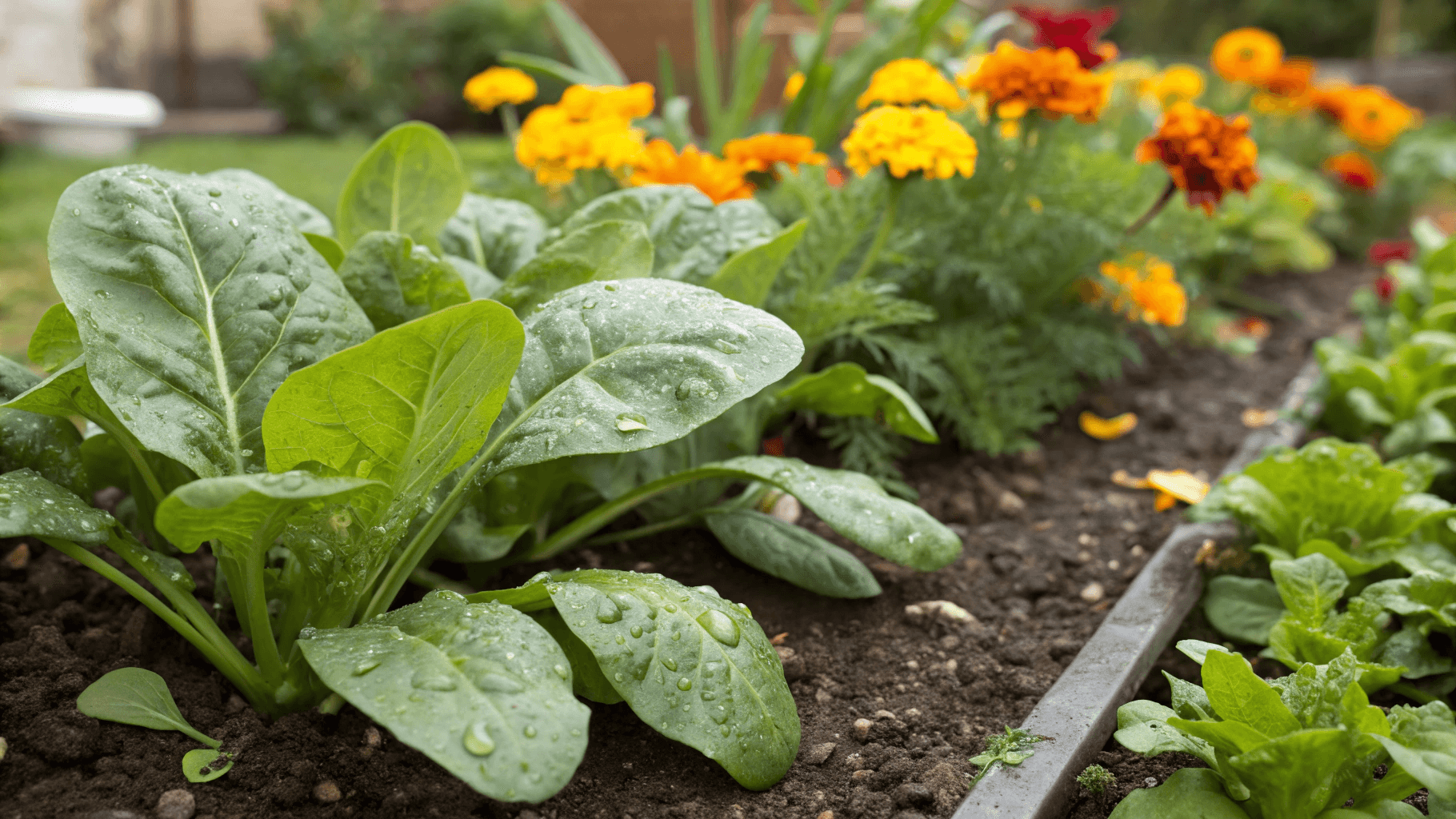
Why Companion Planting Helps
- Reduces pests
- Improves growth
- Makes better use of space
Good Companions
- Onions
- Garlic
- Marigolds
- Herbs like dill and cilantro
Plants to Avoid Nearby
- Large, shading aggressive plants
- Crops that compete heavily for nutrients
Harvesting and Using Leafy Vegetables
Harvesting at the right time improves flavor and encourages regrowth.
When to Harvest
- Harvest young leaves for best taste
- Don’t wait too long, or the leaves become tough
Cut-and-Come-Again Method
- Cut outer leaves, leave the center growing
- Allows multiple harvests from one plant
Storage Basics
- Harvest in the morning
- Rinse gently
- Dry leaves well
- Store in the refrigerator in breathable containers
- Use within a week for best flavor
Leafy Vegetable Growing Guides
If you want step-by-step instructions for specific leafy vegetables, these guides go deeper into planting, care, and common problems.
Growing Guides
- Lettuce – Complete growing guides covering how to grow lettuce, care, harvesting, and common problems
- Spinach – Complete growing guides covering how to grow spinach, care, harvesting, and common problems
- Kale – Complete growing guides covering how to grow kale, care, harvesting, and common problems
- Swiss chard – Complete growing guides covering how to grow swiss chard, care, harvesting, and common problems
- Arugula (rocket) – Complete growing guides covering how to grow arugula, care, harvesting, and common problems
- Collard greens – (Growing guide coming soon)
- Mustard greens – Complete growing guides covering how to grow mustard greens, care, harvesting, and common problems
- Bok choy – (Growing guide coming soon)
- Cabbage – (Growing guide coming soon)
- Collard Greens – Complete growing guides covering how to grow collard greens, care, harvesting, and common problems
These guides provide step-by-step instructions based on real growing experience.
Conclusion
Leafy vegetables are one of the smartest choices you can make in a home garden. They grow fast, fit into small spaces, and provide fresh food season after season. Once you learn the basics, you’ll find yourself planting leafy greens again and again.
If you’re just starting out, begin with lettuce and expand from there. Over time, your leafy vegetable garden will become one of the most productive parts of your growing space.

Leave a Reply