
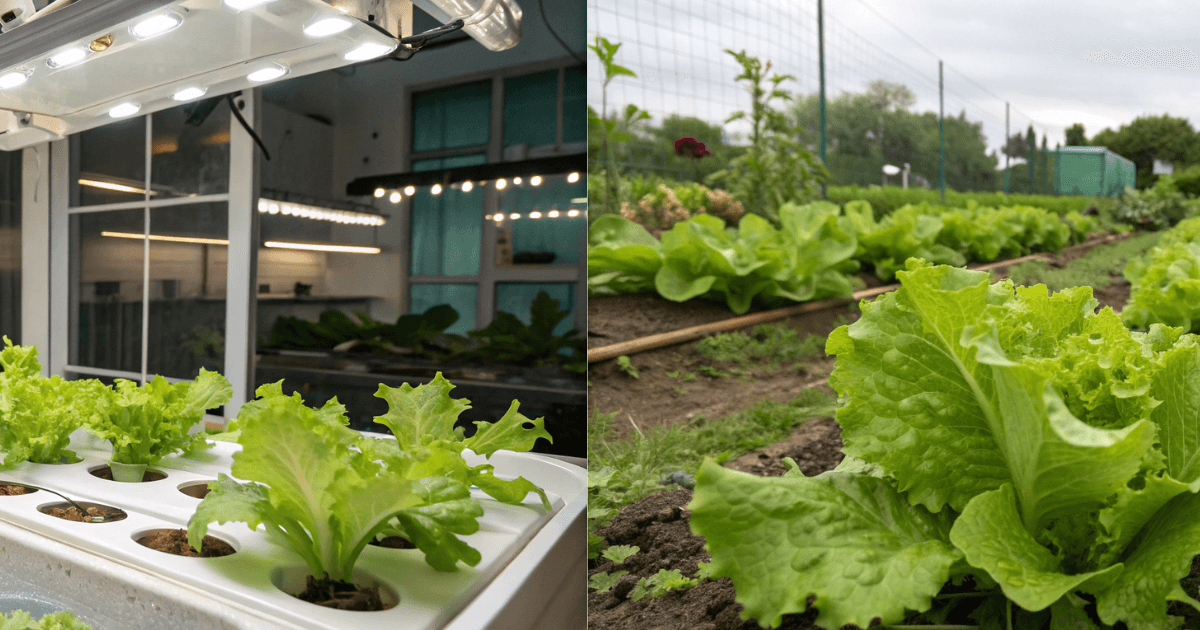
Hydroponic lettuce vs soil-grown lettuce is a question most home vegetable gardeners eventually face, whether they grow in raised beds, containers, or even indoors.
Hydroponic lettuce is often marketed as cleaner, fresher, and more sustainable. Traditional soil-grown lettuce, on the other hand, is what most vegetable gardeners have grown, harvested, and eaten for generations.
The truth is that both types of lettuce can be excellent, but they shine in very different situations.
Unlike brand-led comparisons or promotional taste tests, this guide looks at hydroponic lettuce vs regular lettuce from a vegetable gardener’s perspective, flavor, nutrition, cost, effort, sustainability, and how each method fits into real home food production.
If you grow vegetables to eat them (not sell them), this comparison will help you decide what actually makes sense for your garden.
What Is Hydroponic Lettuce?
Hydroponic lettuce is grown without soil, using water enriched with dissolved nutrients to feed plant roots directly.

Instead of rooting into soil, lettuce plants are supported in systems such as:
- Nutrient Film Technique (NFT)
- Deep Water Culture (DWC)
- Raft systems
- Vertical towers
- Countertop or indoor grow units
Because nutrients, light, temperature, and moisture are tightly controlled, hydroponic lettuce grows quickly and consistently, often reaching harvest size faster than soil-grown lettuce.
Related: Small-Space Hydroponics – How to Grow Food Indoors
Where Hydroponic Lettuce Excels
Hydroponic lettuce offers several real advantages:
- Fast growth cycles (often 30-40 days)
- Very consistent leaf size and texture
- No soil splashing or mud
- Minimal pest pressure indoors
- Year-round growing capability
- Ideal for apartments or urban settings
For growers with limited outdoor space, or no yard at all, hydroponics can make fresh lettuce possible where soil gardening simply isn’t.
That speed and control, however, come with trade-offs.
How Regular (Soil-Grown) Lettuce Is Grown
Soil-grown lettuce is produced in natural growing media, including in-ground gardens, raised beds, containers, and grow bags.

It relies on:
- Sunlight (or partial shade)
- Soil nutrients and organic matter
- Microbial life
- Natural temperature fluctuations
- Seasonal rhythms
This is the method most vegetable gardeners are familiar with and for good reason.
What Soil Offers That Water Alone Can’t
Healthy garden soil does more than hold plants upright:
- Microbial diversity supports nutrient uptake
- Trace minerals come from compost and organic matter
- Natural stress cycles often improve flavor
- Soil structure regulates moisture and oxygen
- Compost integration feeds plants gradually
In real gardens, lettuce grown in well-managed soil often develops more complex flavor, especially when grown slowly in cool spring or fall conditions.
That said, soil gardening introduces variability – weather, pests, and soil quality all influence results.
Hydroponic Lettuce vs Soil-Grown Lettuce Taste Comparison
Taste is where opinions get loud and where marketing often oversimplifies.
Hydroponic Lettuce Taste
Hydroponic lettuce typically tastes:
- Mild
- Clean
- Slightly sweet
- Very crisp
Because growth conditions are optimized and consistent, bitterness is rare. Leaves are thick and crunchy, especially when harvested young.

This makes hydroponic lettuce appealing for:
- Raw salads
- Sandwiches
- Wraps
- Delicate dishes
Soil-Grown Lettuce Taste
Soil-grown lettuce flavor varies more:
- Can be sweeter in cool weather
- Can turn bitter in heat
- Often has deeper “green” flavor
- Texture depends on moisture and harvest timing
In my own vegetable beds, slower-growing spring lettuce almost always tastes better; this is especially noticeable with leafy vegetables like romaine, butterhead, and loose-leaf varieties grown for fresh salads.
This isn’t magic, it’s plant physiology. Cooler temperatures slow growth, allowing sugars and flavor compounds to develop more fully.
Why Taste Differences Exist
The key difference isn’t soil vs water, it’s growth speed and stress.
- Faster growth = milder flavor
- Slower growth = stronger flavor
- Heat stress = bitterness
- Consistent moisture = tenderness
Hydroponics removes most stress. Soil gardening introduces some and sometimes, that’s a good thing.
Related: Why Is My Garden Lettuce Bitter?
Texture, Appearance, and Shelf Life
Texture
- Hydroponic lettuce: Uniform, crunchy, thick leaves
- Soil-grown lettuce: Ranges from tender to crisp depending on variety and conditions
Appearance
Hydroponic lettuce
- Clean
- Evenly shaped
- “Grocery-ready”
Soil-grown lettuce
- May have dirt
- Natural variation
- Occasionally imperfect leaves
For home gardeners, appearance usually matters far less than flavor and yield.
Shelf Life
Hydroponic lettuce often lasts longer after harvest, especially if:
- Harvested and stored quickly
- Kept cool and dry
- Not washed until use
Soil-grown lettuce shelf life depends heavily on harvest timing, moisture, and refrigeration speed.
Nutrition: Is Hydroponic Lettuce Healthier?
Both types of lettuce can be nutritious, but they aren’t identical.
Nutrition Comparison Table
| Factor | Hydroponic Lettuce | Soil-Grown Lettuce |
|---|---|---|
| Macronutrients | Comparable | Comparable |
| Vitamin consistency | High | Variable |
| Trace minerals | Limited to nutrient solution | Soil-dependent |
| Antioxidant variation | Moderate | Higher potential |
| Microbial influence | None | Significant |
What Research Suggests
Studies show hydroponic lettuce can match and sometimes exceed soil-grown lettuce in:
- Vitamin C
- Folate
- Certain antioxidants
However, soil-grown lettuce may contain a broader range of trace minerals, depending on soil health and compost quality.
For vegetable gardeners, this reinforces a simple truth:
Healthy soil produces healthier vegetables.
Nutrition matters, but for most home vegetable gardeners, practicality matters just as much.
Cost, Effort, and Accessibility for Home Growers
This is where marketing comparisons often fall apart.
Hydroponic Lettuce Costs
Hydroponics requires:
- System purchase or build
- Pumps, lights, timers
- Electricity
- Nutrient solutions
- Monitoring pH and EC
Startup costs range from modest to significant.
Soil-Grown Lettuce Costs
Soil gardening requires:
- Seeds
- Soil or compost
- Water
- Sunlight
Once beds are established, lettuce is one of the cheapest vegetables to grow.
Learning Curve
- Hydroponics: Steeper, more technical
- Soil gardening: More forgiving and intuitive
For beginners, soil-grown lettuce is usually the easier entry point.
Sustainability: Which Method Is Greener?
Hydroponic Sustainability Strengths
- Uses up to 90% less water
- No runoff
- Grown close to consumers
- Year-round production
Soil Gardening Sustainability Strengths
- Builds soil carbon over time
- Supports pollinators and microbes
- Requires no electricity
- Integrates with composting and waste reduction
Hydroponics excels in urban efficiency.
Soil gardening excels in long-term ecosystem health.
For gardeners growing leafy vegetables primarily for household use, soil systems often align better with composting, rotation, and long-term soil health goals.
How Each Fits Into a Vegetable Garden
Hydroponic Lettuce Works Best When:
- You lack outdoor space
- You want year-round greens
- You enjoy technical systems
- You grow lettuce only
Soil-Grown Lettuce Works Best When:
- You grow multiple vegetables
- You use raised beds or containers
- You compost
- You rotate crops
- You want low-input food
For most home vegetable gardeners, soil-grown lettuce integrates more naturally into an existing garden.
So, Which Lettuce Wins?
The answer isn’t hydroponic or soil.
You win when you choose the method that fits your space, season, and gardening style.
- Hydroponic lettuce wins for speed, cleanliness, and consistency
- Soil-grown lettuce wins for flavor depth, simplicity, and garden integration
For most vegetable gardeners, soil-grown lettuce remains the most practical and rewarding choice, especially when grown in cool seasons with healthy soil.
Conclusion
Hydroponic lettuce and soil-grown lettuce aren’t competitors, they’re tools.
Hydroponics offers control, efficiency, and urban accessibility.
Soil gardening offers flavor, resilience, and long-term sustainability.
If you grow vegetables to eat them, experiment, observe, and adjust. Lettuce is forgiving, fast-growing, and incredibly rewarding no matter how you grow it.
And that’s what really matters.

Leave a Reply