
Raised bed maintenance works best when you care for them in small, intentional steps throughout the year.
With simple seasonal upkeep – from spring cleanup to winter protection, you protect soil health, reduce pests and diseases, and keep your raised beds performing at their peak.
Related: Raised Bed Gardening for Vegetables
Quick Seasonal Checklist
| Season | Main Focus | Key Tasks |
|---|---|---|
| Spring | Reset beds & prep soil |
|
| Summer | Support growth & reduce stress |
|
| Fall | Restore soil & prep for cold |
|
| Winter | Protect soil & plan ahead |
|
Spring Raised Bed Maintenance
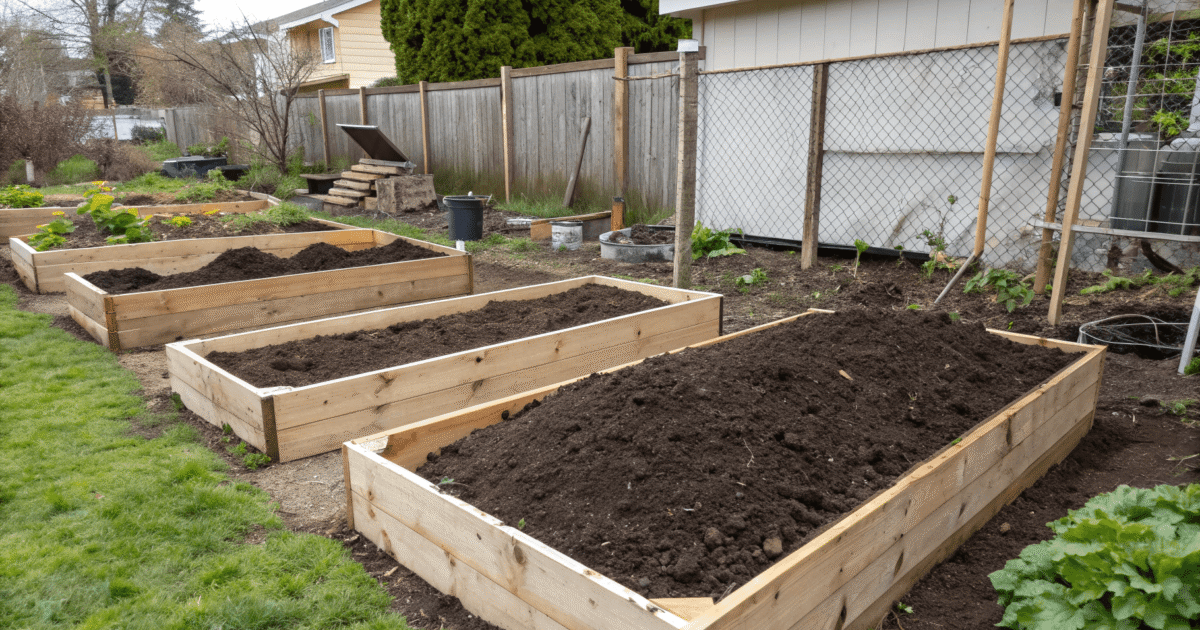
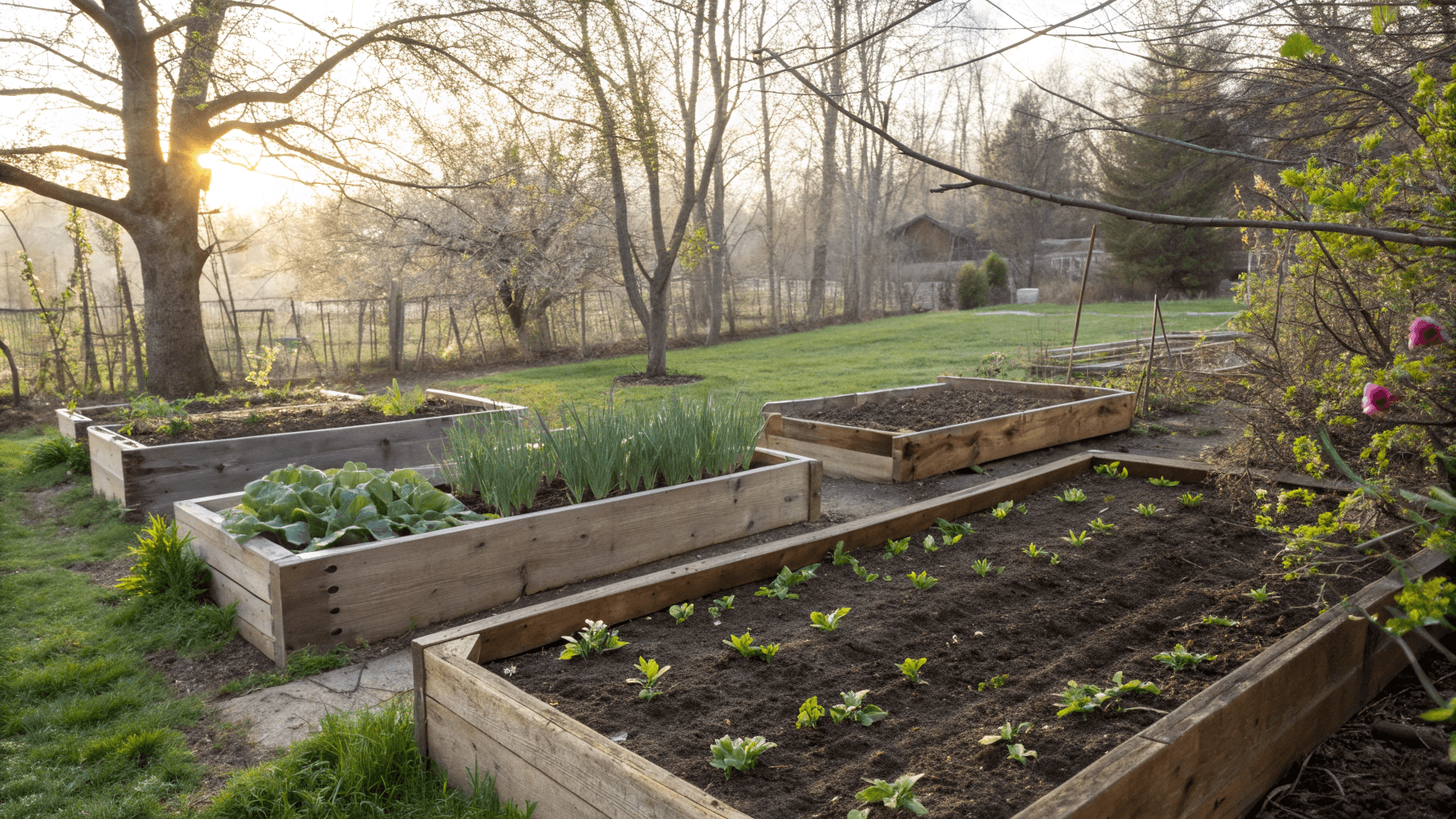
Spring is the “reset button” for your raised beds. It’s the time to clean up, evaluate soil condition, and set the stage for healthy growth.
1. Clear Debris and Check the Structure
Once the danger of frost passes, start by removing leftover plant material, weeds, mulch, and fallen leaves. These can harbor pests and diseases that may overwinter in your garden.
Then inspect the wooden or metal walls of the bed. Tighten screws, replace rotting boards, and check for warping, bulging, or loose corners. A sturdy structure prevents soil erosion and keeps roots evenly supported.
2. Warm Up and Loosen the Soil
Raised beds naturally warm faster than in-ground gardens, but early spring can still leave soil compacted from winter moisture.
Use a hand fork or broadfork to loosen the top 6-8 inches without overturning the layers entirely. This aerates the soil, reduces compaction, and wakes up beneficial microbes.
3. Add Organic Matter
Compost, worm castings, or well-rotted manure help replenish what last year’s plants used. Aim for 1-2 inches mixed lightly into the top layer.
This boosts soil fertility and jumpstarts nutrient cycling.
4. Test Soil and Adjust Nutrients
If plants struggled last year, slow growth, yellow leaves, or small yields, a soil test can reveal nutrient or pH issues early.
Spring is the best time to correct these issues with amendments such as lime, sulfur, rock phosphate, or greensand.
5. Plan your Layout
Before planting, map out your crops based on sunlight, spacing needs, and rotation goals. Planning prevents overcrowding and keeps your harvest consistent throughout the growing season.
Summer Raised Bed Maintenance
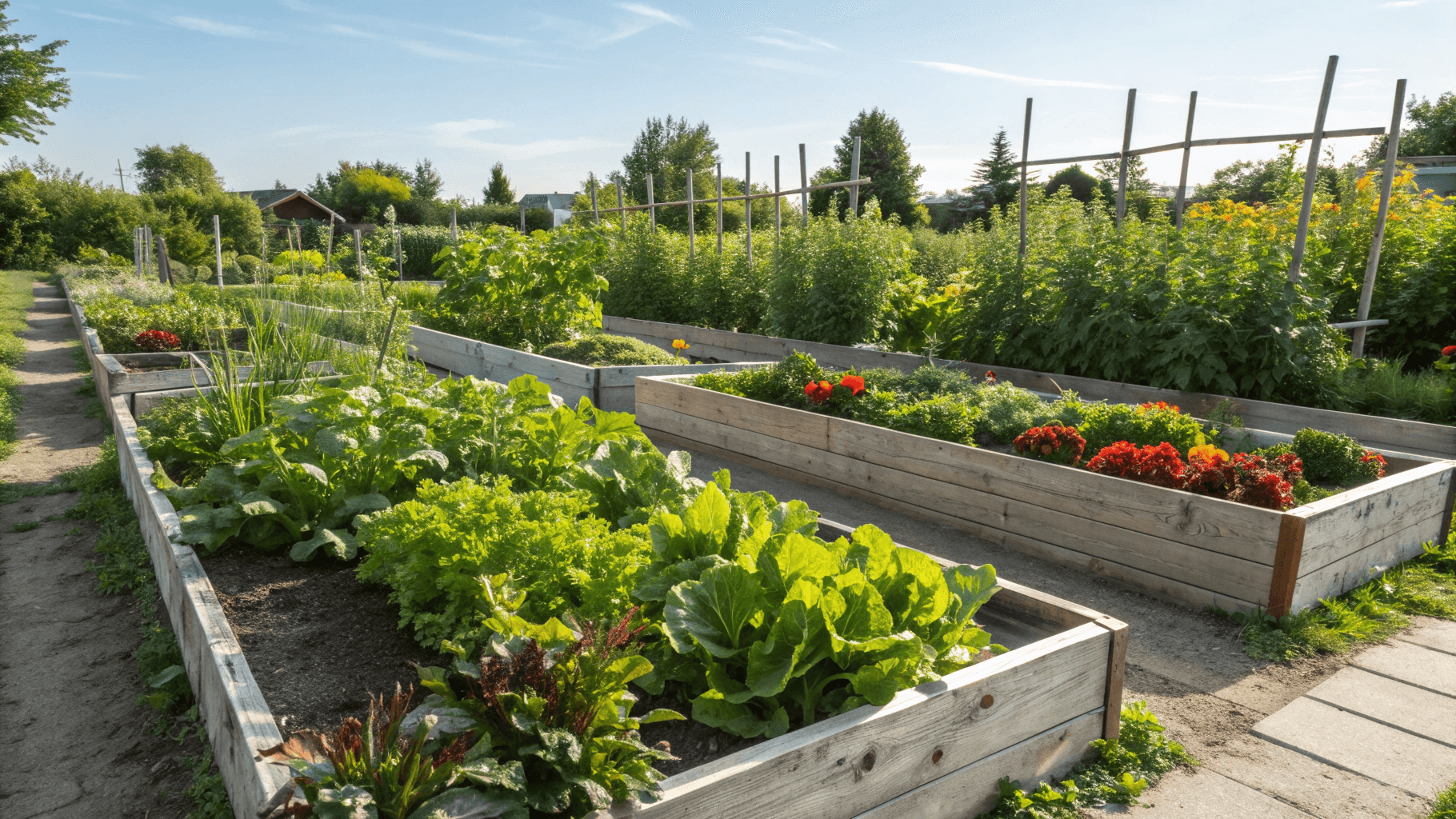
Summer is when your raised beds are working their hardest. Plants grow fast, temperatures climb, and watering becomes more important than ever.
1. Monitor Moisture Consistently
Raised beds dry out faster than traditional garden beds. In my own raised beds, skipping consistent watering almost always leads to uneven growth later in the season, especially along the edges.
During hot spells, raised beds can dry out a full day faster than in-ground soil. A simple rule: water deeply but less frequently. Early morning watering is ideal, giving roots time to absorb moisture before the heat peaks.
Consider adding mulch to reduce evaporation; straw, shredded leaves, or bark all work well.
2. Mulch and Weed Regularly
A thick mulch layer (2-3 inches) not only preserves moisture but also blocks weed seeds from sprouting. Even so, a few weeds will sneak in; pull them early to prevent competition for nutrients.
3. Inspect Plants for Pests and Diseases
Raised beds naturally deter some pests, but summer heat brings increased insect activity. Check under leaves, around stems, and near soil level.
Handpick pests like caterpillars or beetles. If needed, use organic treatments such as neem oil or insecticidal soap.
If pests become persistent, see my guide on raised bed pest control.
4. Support and Prune Plants
Many summer crops, such as tomatoes, cucumbers, and peppers, benefit from staking, pruning, or trellising. This promotes airflow, reduces disease, and makes harvesting easier.
Remove yellow leaves or branches touching the soil.
5. Feed Plants as Needed
Some vegetables, especially heavy feeders like tomatoes and squash, appreciate midseason fertilization.
Use natural fertilizers such as compost tea, fish emulsion, or slow-release pellets to give plants a gentle boost.
6. Succession Plant for Continuous Harvest
Summer is the perfect time to plant quick-growing vegetables such as lettuce, radishes, green beans, or herbs. Succession planting ensures your beds stay productive all season long.
Fall Raised Bed Maintenance
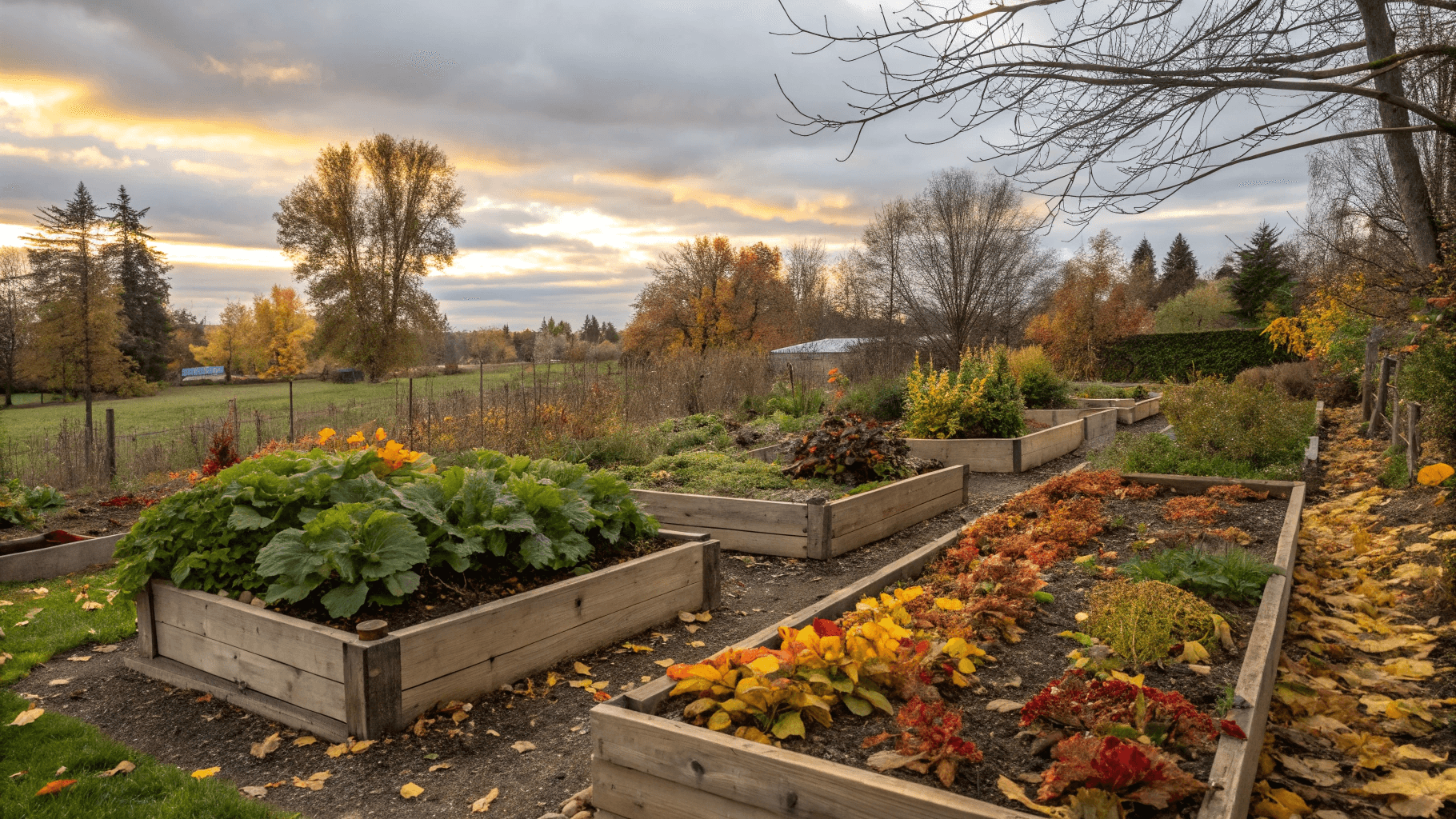
Fall is your transition period. As harvest winds down, it’s time to clean the beds, improve the soil, and prepare for colder weather.
1. Remove Spent Plants and Weeds
Pull vegetables that have finished producing, and remove any plant debris. Healthy leftovers can be composted; diseased material should be disposed of separately to avoid contamination.
2. Trim Perennials and Herbs
If your raised beds contain perennial herbs (such as thyme, sage, or chives) or crops like asparagus, prune them lightly and remove dead foliage.
3. Add Compost and Soil Amendments
Fall is one of the best times to add compost because winter moisture helps break down amendments and enrich the soil. Add 1-2 inches of compost on top, this is your soil’s “nutritional recharge.”
If your soil test earlier revealed deficiencies, fall is the perfect time to add minerals like bone meal, kelp meal, or sulfur.
4. Plant Cover Crops (Optional but Recommended)
Cover crops like clover, winter rye, or field peas protect your soil from erosion and add organic matter. They can also help suppress weeds and improve soil structure over winter.
5. Re-edge and Repair Raised Bed Structures
Before winter hits, fix any damage caused during the growing season. Tighten or replace boards, remove rust from metal frames, and check for signs of rot in wooden beds.
Making repairs now prevents bigger problems in spring.
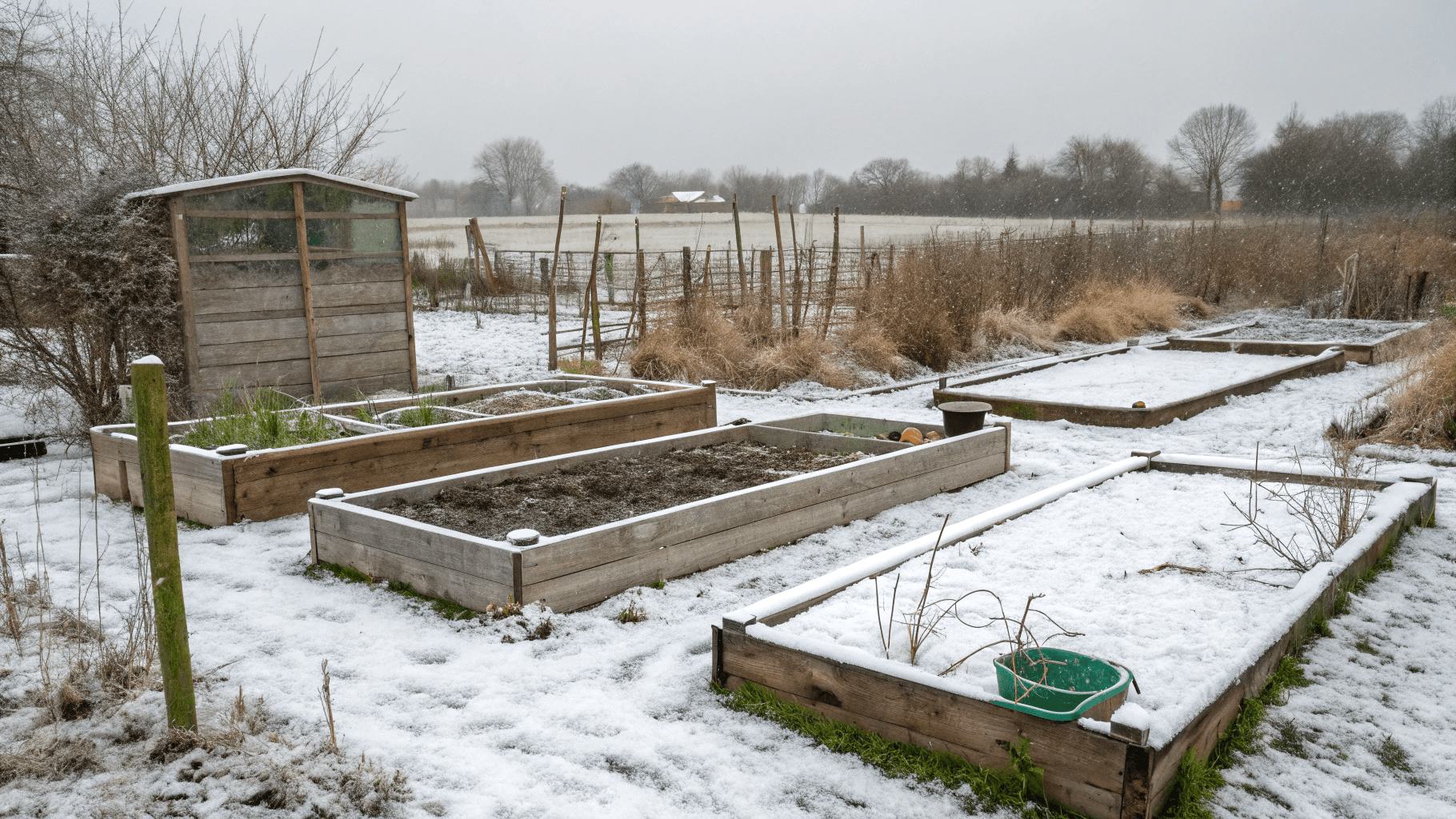
Winter Raised Bed Care and Protection
Winter is a restful period for your garden, but that doesn’t mean it should be ignored. A few simple steps ensure your raised beds survive harsh weather and emerge ready for planting.
1. Protect the Soil Surface
If you didn’t plant cover crops, add mulch instead. Use straw, shredded leaves, or wood chips to keep the soil warmer, prevent winter erosion, and protect beneficial organisms.
2. Avoid Walking on or Disturbing the Soil
Raised beds are designed to remain fluffy and well-aerated. Walking on them in winter compresses the soil when it’s most vulnerable. Keep the bed surface untouched.
3. Cover the Bed if Desired
Avoid sealing beds too early, wait until consistent cold sets in so soil life can finish breaking down organic matter.
A tarp, frost blanket, or simple plastic sheeting protects the soil from excessive rain or snow. This can help prevent nutrients from leaching out, especially in regions with very wet winters.
4. Plan for Spring
Winter is a great time to evaluate what worked, what didn’t, and what you want to grow next year. Reviewing notes, seed catalogs, and sketches ensures you enter spring with a solid plan.
How to Refresh Soil Each Season
Raised beds deplete nutrients more quickly because they contain a finite amount of soil. Refreshing your soil seasonally keeps plants healthy and productive.
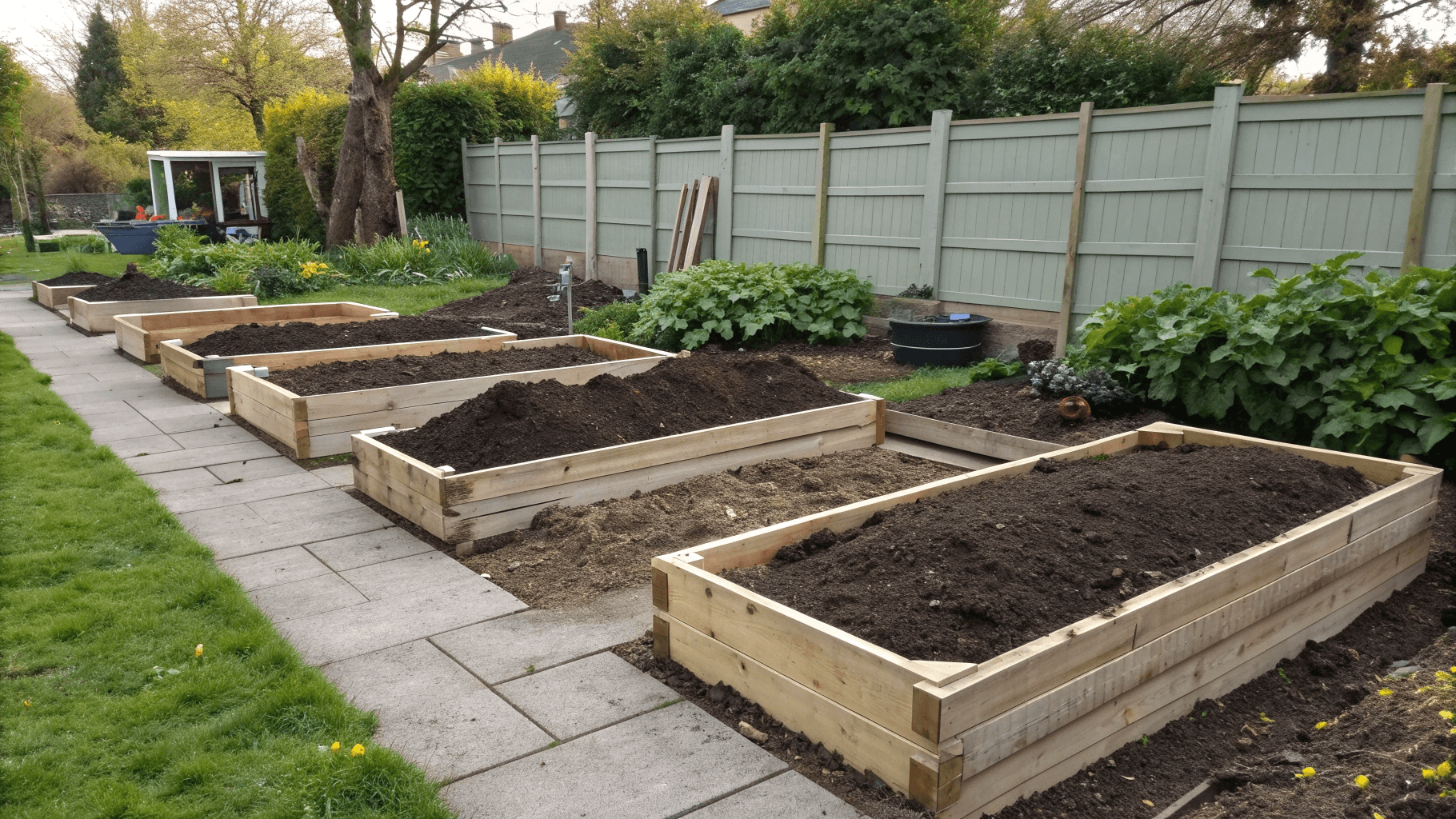
If you’re unsure where to start, using a proven soil mix for raised beds makes seasonal refreshing easier and more effective.
Spring Soil Refresh
- Add compost or worm castings.
- Mix lightly into the top few inches.
- Adjust pH if needed.
Summer Refresh
- Add side dressings of compost around heavy feeders.
- Use compost teas or natural liquid fertilizers.
- Replace mulch as it breaks down.
Fall Soil Refresh
- Add another layer of compost.
- Incorporate mineral amendments (bone meal, kelp, etc.).
- Apply mulch or cover crops to protect soil biology.
Winter Protection
- Keep soil covered.
- Avoid disturbing the layers that beneficial organisms rely on.
By maintaining a rhythm of replenishing organic matter and minerals, you keep your soil alive, fertile, and structurally sound.
Rotating Crops in Raised Beds
Crop rotation is one of the most overlooked but impactful practices in raised bed gardening. It prevents nutrient depletion and breaks pest and disease cycles.
Why Rotate Crops?
- Different plants use different nutrients. For example, tomatoes draw heavily on nitrogen and phosphorus, while beans add nitrogen back into the soil.
- It reduces pests and diseases. Many soil-borne issues, like tomato blight or cucumber beetles, build up when the same crop is planted in the same place each year.
- Improves long-term productivity. Rotation balances nutrient use and encourages healthier plants.
How to Rotate in Small Raised Beds
You don’t need a large garden. Even two or three beds are enough for rotation.
A simple annual rotation:
- Leafy greens, move to where root vegetables were.
- Root crops (carrots, beets) move to where fruiting crops were.
- Fruiting crops (tomatoes, peppers, cucumbers) move to where leafy greens were.
- Legumes (peas, beans) can be inserted anywhere to add nitrogen to depleted soil.
Legumes can fit anywhere to replenish nitrogen. Avoid planting crops from the same family, such as nightshades, in the same bed year after year.
For example, tomatoes, peppers, eggplants, and potatoes are all part of the nightshade family.
Conclusion
Maintaining raised beds doesn’t have to be complicated. When you break it down season by season, the tasks become manageable and even enjoyable. Spring builds the foundation, summer sustains growth, fall restores the soil, and winter protects what you’ve built.
By refreshing your soil regularly and rotating crops each year, you support a sustainable system that keeps producing abundant harvests for years to come.

Leave a Reply