
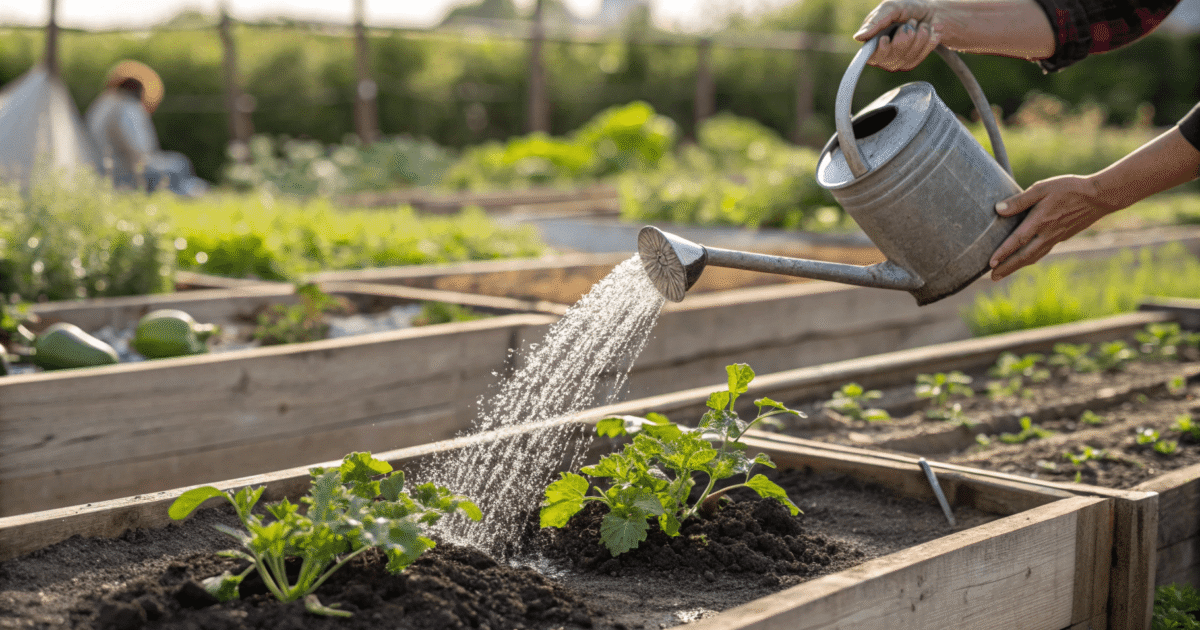
Raised beds make gardening easier in so many ways: better soil, fewer weeds, less bending, but there’s one thing every raised-bed gardener quickly learns: they dry out faster than in-ground gardens.
In fact, once you understand how to water raised beds the right way, how much water your crops truly need, and which irrigation method suits your space, watering becomes almost automatic.
Related: Raised Bed Gardening for Vegetables (setup, soil, plants, and care)
How to Water Raised Beds (Quick Answer)
- Most raised beds need 1-2 inches of water per week
- Hot or windy weather increases needs
- Deep watering is more important than frequent watering
Water early in the morning, check soil moisture 2-3 inches below the surface, and adjust based on heat, wind, plant type, and soil mix. Mulching and drip or soaker systems greatly reduce watering problems.
Related: What Is Sandy Loam Soil (and why it drains so well)
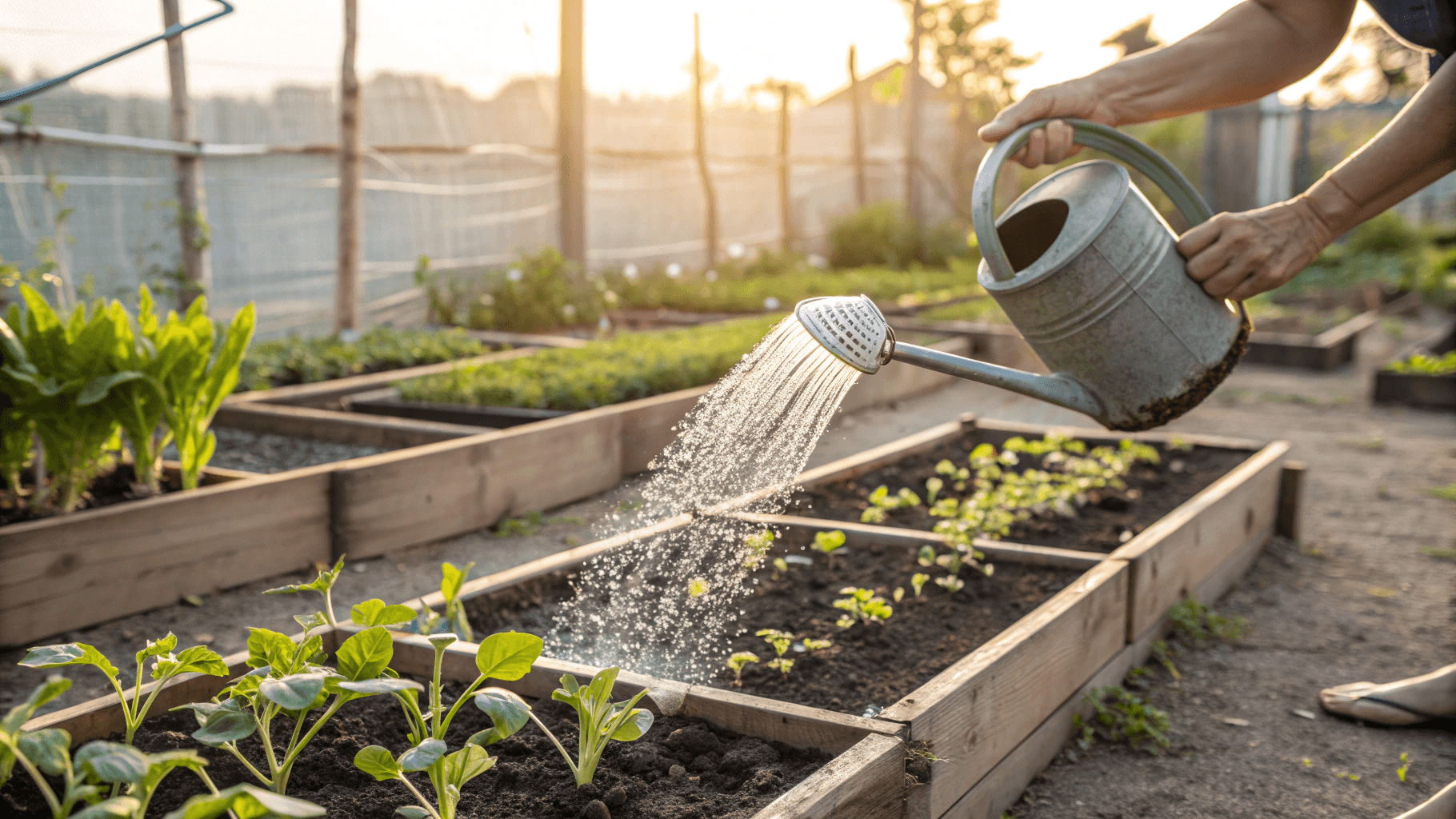
Why Raised Beds Need More Consistent Water
Raised beds sit above ground, which means:
- They warm up faster in spring
- They drain more quickly
- Their soil is usually fluffy and well-aerated, great for roots, but moisture evaporates faster
- Raised beds present more exposed surface area to the wind
Because of this, raised-bed soil can go from perfectly moist to bone dry surprisingly quickly, especially in summer.
How Often Should You Water?
There is no one-size-fits-all rule, but we can break watering frequency into predictable patterns based on the season.
| Weather | Water Needed | Notes |
|---|---|---|
| Cool or mild | ~1 inch per week | Usually 1–2 deep waterings |
| Warm | ~1.5 inches per week | Water 3–4 times per week |
| Hot or windy | 2+ inches per week | Daily watering may be needed |
What 1 Inch of Water Looks Like
In a typical 4×8 raised bed:
- 1 inch of water = roughly 20 gallons
- That’s about four 5-gallon watering cans (if hand-watering)
- Or 20 minutes on a soaker hose (depending on flow)
But rather than chasing numbers, you’ll get better results by learning how to check soil moisture properly.
Top 3 Watering Methods for Raised Beds
Raised beds are flexible, so you can use several watering styles. Here are the three best options, with the pros and cons of each.
Method 1: Hand Watering (Hose or Watering Can)
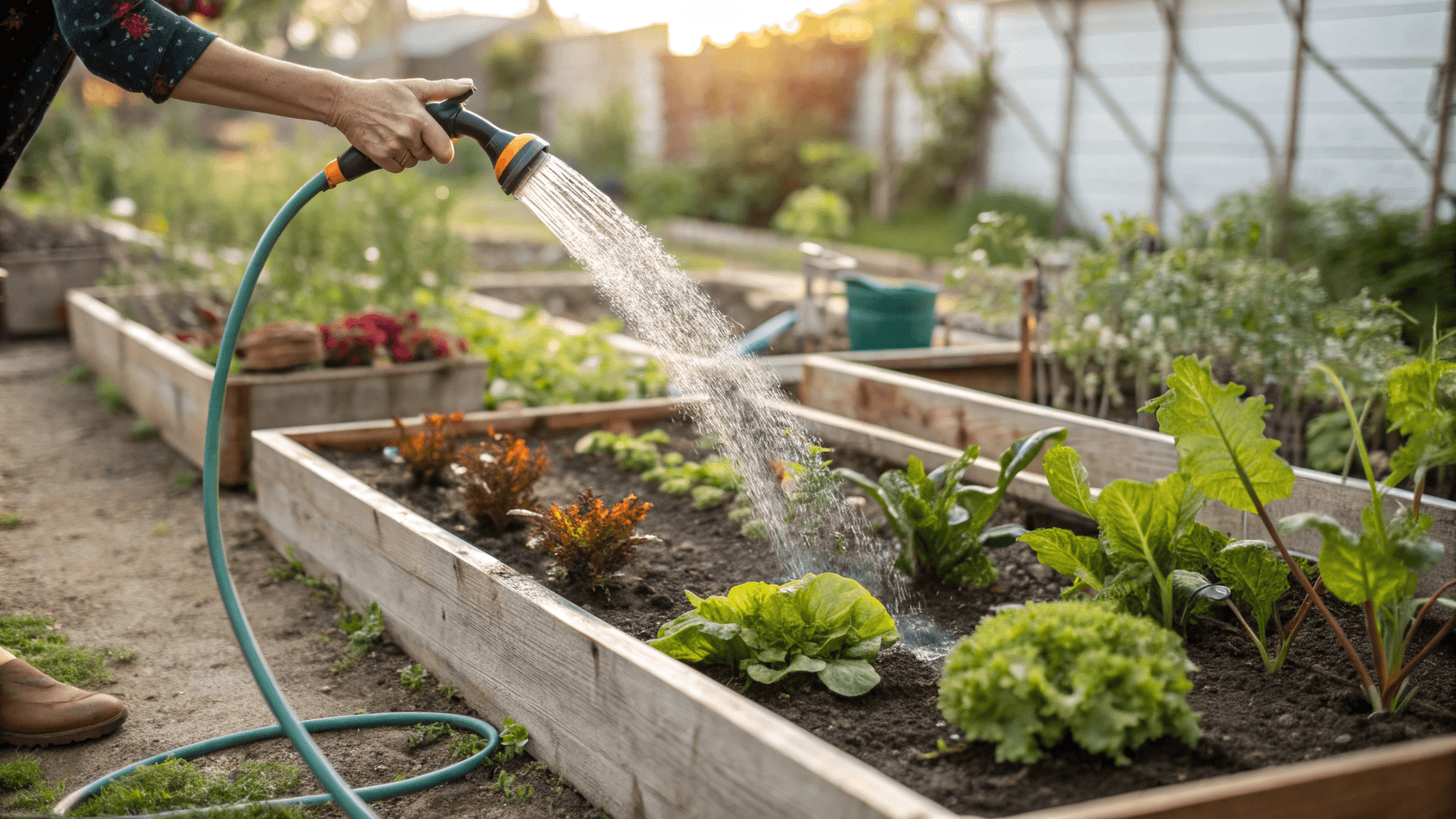
- Best for: Small gardens or a few raised beds
- Why it works: Allows precise control over individual plants
- Watch out: Easy to over- or underwater when rushed
Pros
- Helps rinse dust and pests from leaves
- Easy to adjust depending on the weather
- No setup cost
- Useful for newly sown seeds
Cons
- Time-consuming for multiple beds
- Inconsistent if different people water
- Easy to under- or overwater if rushed
- Can spread fungal diseases
Tips for Hand Watering
- Water at the soil level, not over the leaves
- Move slowly, let water soak instead of running off
- Try to water only in the early morning to avoid wet foliage at night
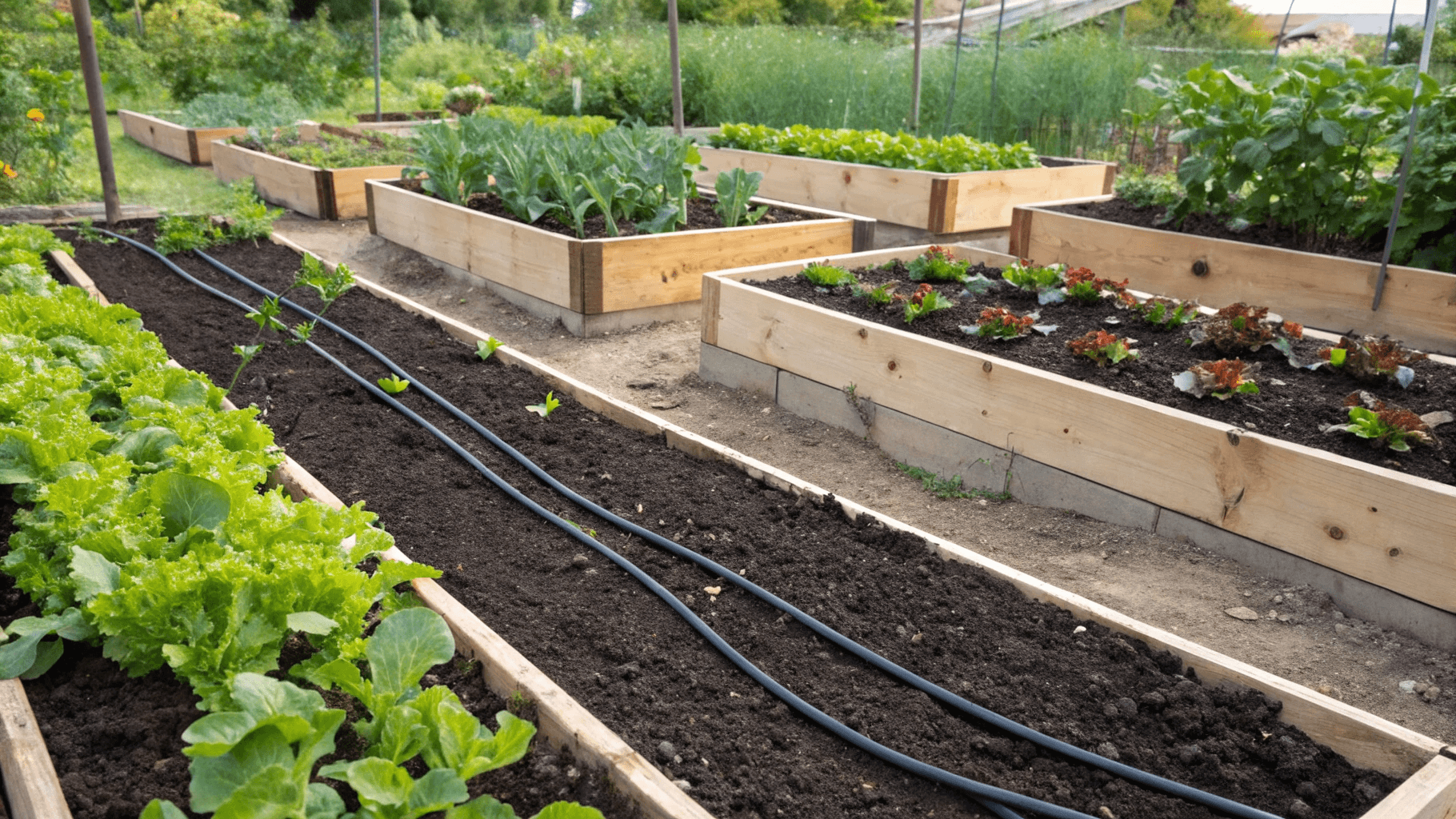
Method 2: Soaker Hoses
Soaker hoses are porous hoses that slowly release water along the entire bed. They’re one of the easiest ways to keep raised beds evenly moist without manual effort.

Pros
- Gentle watering for delicate plants
- Easy to install, lay them down, and cover with mulch
- Great for 4×8 beds or long rows
Cons
- Can clog in hard water
- Harder to reposition once buried under mulch
- Not ideal for very narrow beds
Best Use Case
Set the hoses in a serpentine pattern throughout the bed, then mulch over them. Connect to a timer for near-automatic watering.
Method 3: Drip Irrigation Systems
Drip systems use small emitters or micro-tubing to deliver precise amounts of water directly to each plant’s root zone.
Pros
- Most efficient watering method
- Reduced risk of overwatering
- Works well for large garden setups
- Ideal for thirsty crops like tomatoes, cucumbers, and melons
Cons
- Higher upfront cost
- Requires a bit of setup
- More maintenance than soaker hoses
Best Use Case
Gardeners with multiple beds, mixed plantings, or long-term growing plans benefit the most from drip irrigation.
How to Check Soil Moisture Properly
Guessing leads to problems, either soggy roots or dehydrated plants. Knowing exactly when to water is simple once you use the right technique.
Here are two reliable moisture-checking methods:
The Soil Moisture Test (Never Guess Again)
- Push your finger 2-3 inches into the soil
- If it feels dry at that depth, water now.
- If it’s cool and slightly moist, wait another day
Raised beds can be moist at the top but dry at root depth. Always check deeper.
Alternatively, you can use a moisture meter, but your hand works just as well.
Soil Probe or Screwdriver Test
Push a long screwdriver or soil probe into the bed.
- If it slides in easily, the soil is still moist
- If it resists or stops – soil is dry below the surface
Professional gardeners swear by this method because it’s fast and surprisingly accurate.
Mulching to Reduce Water Needs
Mulch is one of the easiest ways to reduce watering frequency. It acts as a protective blanket that keeps soil cool, reduces evaporation, and even suppresses weeds.
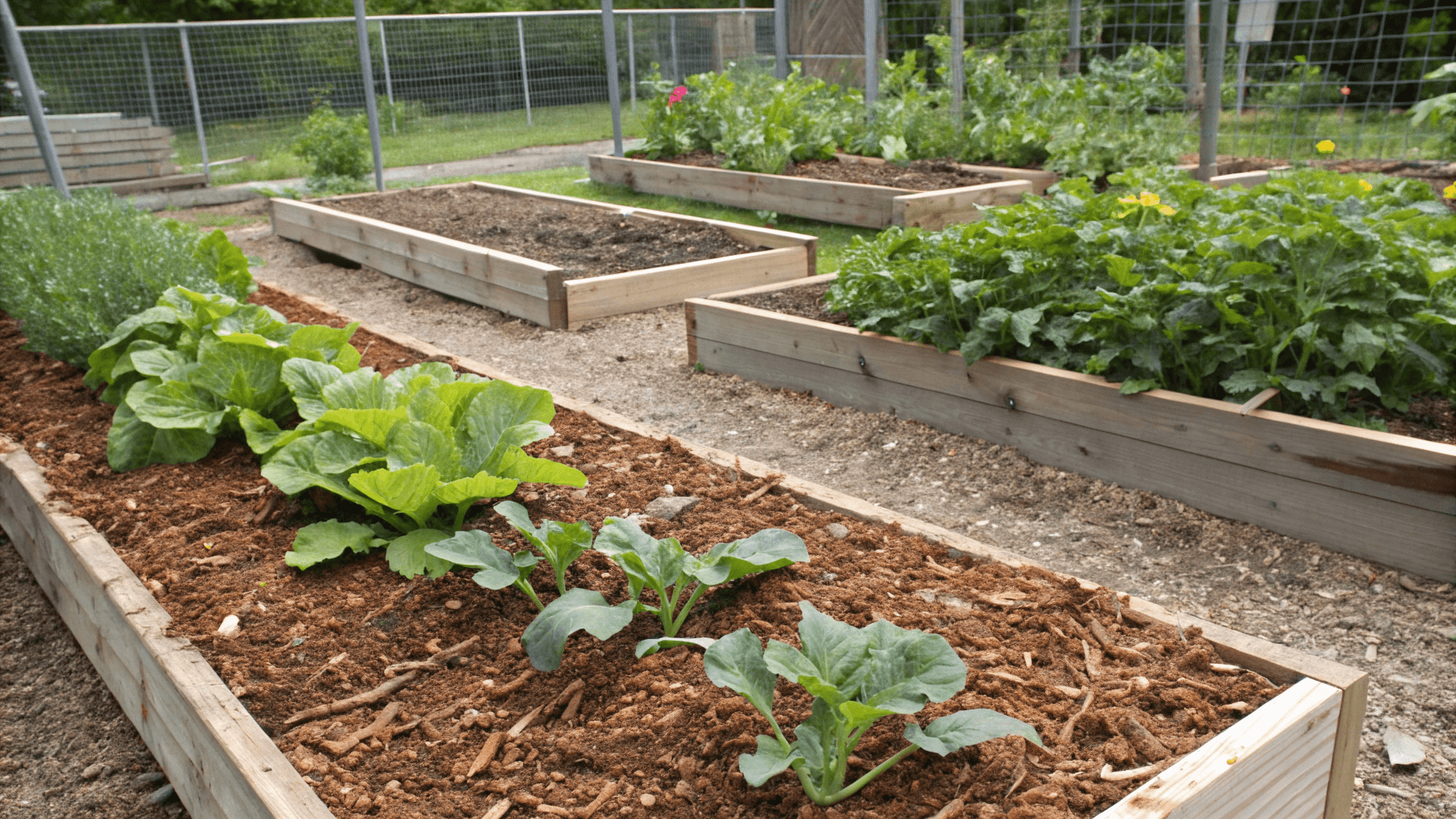
Best Mulch Types for Raised Beds
Straw
- Lightweight
- Decomposes slowly
- Great for vegetable gardens
- Keeps soil cooler in summer
Wood Chips
- Long-lasting
- Ideal for perennial plants or pathways
- Not recommended for mixing into the soil; use only as top dressing
Shredded Leaves
- Free and nutrient-rich
- Improves soil as it breaks down
- Excellent for fall mulching
Grass Clippings
- Add nitrogen as they decompose
- Best applied in thin layers to avoid matting
Compost
- Doubles as mulch and soil amendment
- Helps retain moisture while feeding plants
How Much Mulch Should You Use?
A typical raised bed needs:
- 2-4 inches of mulch in summer
- 1-2 inches in spring and fall
Too little won’t make much difference. Too much can block airflow and impede water absorption.
Mulching Mistakes to Avoid
Watch out for these common errors:
- Piling mulch against plant stems can cause rot
- Using fresh wood chips in vegetable beds may tie up nitrogen temporarily
- Letting mulch touch wooden bed frames accelerates decay
- Applying mulch over dry soil, always water first, then mulch
A properly mulched bed is noticeably easier to keep watered.
Related: Organic Vegetable Gardening for Beginners
Watering Newly Filled vs. Established Raised Beds
Your watering approach should change depending on the age of the bed.
Watering Newly Filled Raised Beds
Fresh soil mixes, especially those high in compost, bark, peat, or coco coir, tend to dry out quickly because they’re fluffy and full of air pockets.
New Bed Watering Tips
- Water deeply and frequently for the first 2-4 weeks
- Soil may shrink as it settles, so water helps compact it naturally
- Check moisture more often than usual
- Add 2-3 inches of mulch right away to regulate evaporation
How Often to Water New Beds
- Mild weather: every 1-2 days
- Hot weather: daily, especially for seedlings
Watering Established Raised Beds
Once the soil matures, develops structure, and holds moisture better, watering becomes more predictable.
Established Bed Watering Tips
- Deep, slower waterings are more effective than quick surface sprays
- Encourage deep roots by soaking the bed thoroughly
- Mulch becomes essential for moisture retention
How Often to Water Established Beds
- Mild weather: 2-3 times per week
- Hot weather: daily or every other day, depending on crops
Related: How to Fill a Raised Garden Bed for Cheap
Common Watering Mistakes to Avoid
Most watering issues come from habits, not the method itself. Avoid these common pitfalls:
1. Watering Too Fast
Raised beds can drain so quickly that water runs down the sides before it sinks in.
Solution: Water slowly or in multiple passes.
2. Only Wetting the Top Inch of Soil
Sprinkling the surface for a few minutes does almost nothing. Roots grow deeper, and they need deep moisture to thrive.
Solution: Always water deeply, aim for 6-8 inches of penetration.
3. Watering in the Evening
This keeps foliage wet overnight, increasing the risk of mildew and fungal issues. Evening watering is okay in emergencies, but frequent night watering encourages fungal issues.
The best time to water is early morning. Second-best time is late afternoon (only in very hot climates)
4. Watering on a Set Schedule Without Checking Soil
Every week is different; rainfall, heatwaves, and wind all affect moisture.
Solution: Use soil-checking methods weekly.
5. Not Adjusting for Plant Needs
Plants like tomatoes or cucumbers need far more water than herbs like rosemary or thyme.
Solution: Group plants with similar water needs when possible.
6. Not Mulching
Skipping mulch is one of the most common reasons raised beds dry out too quickly.
Solution: A layer of mulch acts like insulation for the soil. It slows evaporation, keeps roots cooler in summer, and helps water soak in more evenly rather than run off.
How to Water Raised Beds Season-by-Season Guide
Watering needs change with temperature, daylight, and plant growth stage.
Use this as a guide, not a strict schedule.
Spring Watering Schedule
Spring weather is mild, nights are cooler, and evaporation is slower. Soil is cool and holds moisture longer.
- Water 2-3 times per week
- Aim for deep watering sessions of 20-30 minutes
- Check soil depth before watering; the top layer often dries faster than the root zone.
- Avoid overwatering seedlings; young roots are sensitive
In early spring, rain may cover most watering needs. Still, always check soil moisture.
Summer Watering Schedule
This is when raised beds dry out the fastest.
- Water daily or every other day, depending on the heat
- In temperatures above 90°F (32°C), deep soak 3-4 times a week in normal summer weather
- Add or refresh mulch
- Deep watering is more important than frequency; slow trickles are better than fast blasts
- Prioritize thirsty crops: tomatoes, peppers, squash, corn, cucumbers
Water early in the morning to reduce stress and give plants a full day of hydration.
Fall Watering Schedule
Temperature drops slow down evaporation.
- Water 1-2 times deep waterings per week
- Avoid letting soil completely dry out (cool-season greens hate dryness)
- Don’t overwater as days get shorter, roots need oxygen too
- If you’re still growing warm-season crops, monitor closely; they continue drinking heavily until nights dip below 55°F (13°C)
Winter Watering Schedule
Beds still need water if temperatures stay above freezing or if you grow winter vegetables.
- Water every 1-2 weeks in dry winter climates
- Avoid watering frozen soil
- Mulch heavily to protect soil structure
Skipping mulch allows water to evaporate quickly and soil temperature to spike.
Solution: Use straw, shredded leaves, wood chips, or compost mulch.
Conclusion
Watering raised beds doesn’t have to be a guessing game. Once you learn how much water your soil needs, how to check moisture properly, and which irrigation system fits your garden, everything becomes easier and more predictable. Raised beds may dry out faster, but they’re also far more manageable once you adopt deep, consistent watering habits.
Choose the method that fits your time and budget, pay attention to seasonal changes, and check your soil regularly.
Do that, and you’ll avoid the two biggest problems, overwatering and underwatering, while enjoying healthier plants, bigger harvests, and a more stress-free gardening experience.
If you ever feel unsure, check the soil first. The soil never lies.

Leave a Reply