
Feeding and watering garlic properly is the key to growing big, healthy bulbs. Simply planting cloves in the soil isn’t enough; garlic needs consistent moisture, the right nutrients, and care throughout the growing season to reach its full potential.
Garlic has specific timing needs, sensitive stages of growth, and clear signs that tell you when it’s thirsty or hungry. Understanding these can make the difference between small, underdeveloped cloves and those beautiful, plump bulbs every gardener dreams about.
How to Water Garlic
Garlic roots deeply, but it’s surprisingly sensitive to inconsistent watering. The right balance of moisture at the right time is essential for forming those large, firm bulbs.
How Much Water Does Garlic Need?
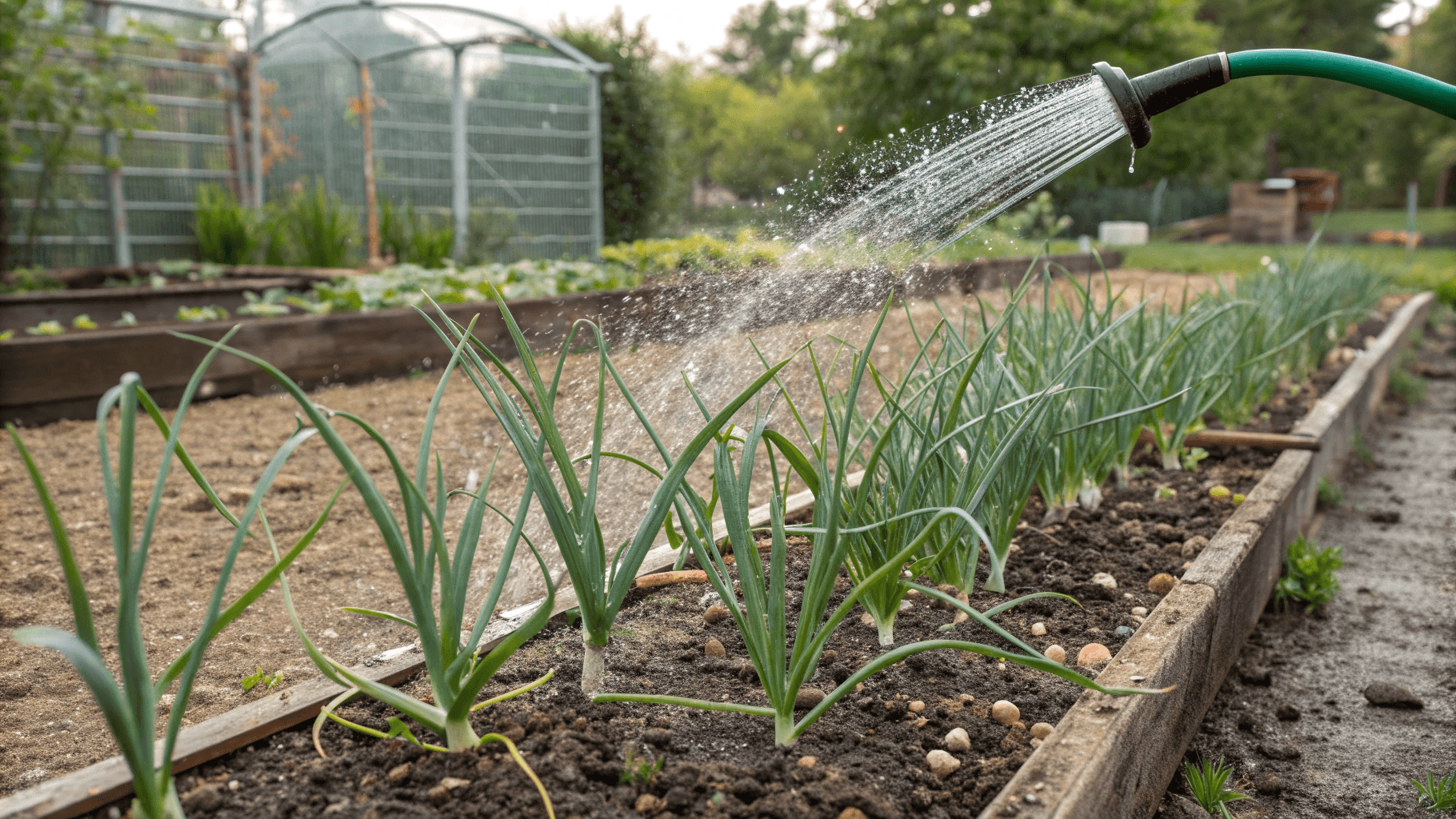
Garlic thrives in moist but well-drained soil. It doesn’t like soggy roots, but dry spells can stunt its growth quickly. On average, garlic requires about 1 inch (2.5 cm) of water per week, either from rainfall or irrigation. In sandy soils or hot climates, it may need closer to 1.5 inches.
The key is consistency. Uneven watering, letting the soil dry out and then flooding it, can stress the plants, leading to split or irregular bulbs.
Spring Watering Care
The most important watering phase is spring, typically from March to May (depending on your region). This is when garlic is building its bulb, the part you’ll harvest. During this time, the plant needs steady moisture to grow those fat cloves.
- Water deeply once or twice a week, ensuring moisture reaches at least 6 inches into the soil.
- Avoid shallow watering, which encourages weak root growth.
- Mulch generously – 2 to 4 inches of straw, shredded leaves, or grass clippings help retain moisture and regulate temperature.
Watering During Bulb Formation
As the garlic begins to form bulbs (you’ll notice the leaves thickening and the stems firming up), keep the soil evenly moist. However, stop watering about two weeks before harvest. This helps the bulbs cure naturally in the soil and prevents rot or mold from excess moisture.
Summer Care and Water Reduction
If you’re growing garlic into early summer, pay attention to your weather patterns. Hot, dry conditions can quickly dehydrate garlic plants. But as the lower leaves begin to yellow, a sign the plant is maturing, gradually reduce watering. By the time only 3–4 green leaves remain, it’s time to stop entirely.
This step ensures the bulbs harden properly, giving them a longer storage life and stronger flavor.
What Nutrients Garlic Needs and When to Feed
Garlic is a heavy feeder. It demands nutrient-rich soil, especially in nitrogen, during the first half of its growth cycle. But too much of the wrong fertilizer at the wrong time can lead to excessive leafy growth and smaller bulbs.
1. Early Feeding: Nitrogen for Strong Growth
Garlic’s initial growth phase focuses on root and leaf development. For that, it needs nitrogen (N). A nitrogen-rich fertilizer promotes lush green growth, which directly supports bulb formation later.
Feed garlic when:
- The first green shoots appear (early spring).
- Then again, every 3–4 weeks until the bulb begins to swell.
Good nitrogen sources include:
- Blood meal or fish emulsion (organic options).
- A balanced all-purpose fertilizer (10-10-10).
- Compost tea for a mild, steady feed.
Apply fertilizer around the base of the plants and water it in deeply.
TIP: Avoid over-fertilizing. Too much nitrogen late in the season can delay bulb formation and produce soft bulbs that don’t store well.
2. Mid-Season Boost: Phosphorus and Potassium
Once your garlic begins to bulb (usually when daylight increases and the temperature rises), shift to phosphorus (P) and potassium (K). These nutrients help the plant transfer energy and develop strong, dense bulbs.
Use a low-nitrogen, high-potassium fertilizer, such as a 5-10-10 blend, once in mid to late spring. You can also side-dress with compost or bone meal to add slow-release phosphorus.
3. Organic Feeding Options
If you prefer to grow organically, here are excellent natural fertilizers for garlic:
- Fish emulsion: Quick nitrogen boost early in the season.
- Bone meal: Rich in phosphorus for root and bulb growth.
- Kelp meal or wood ash: Adds potassium for firmness and disease resistance.
- Compost: A gentle, balanced feed that improves soil structure over time.
Mix compost into the soil before planting and top-dress during spring growth for steady nutrition.
Garlic Care Mistakes
Even experienced gardeners can make errors that limit garlic size. Here are the most common ones to avoid:
1. Overwatering or Poor Drainage
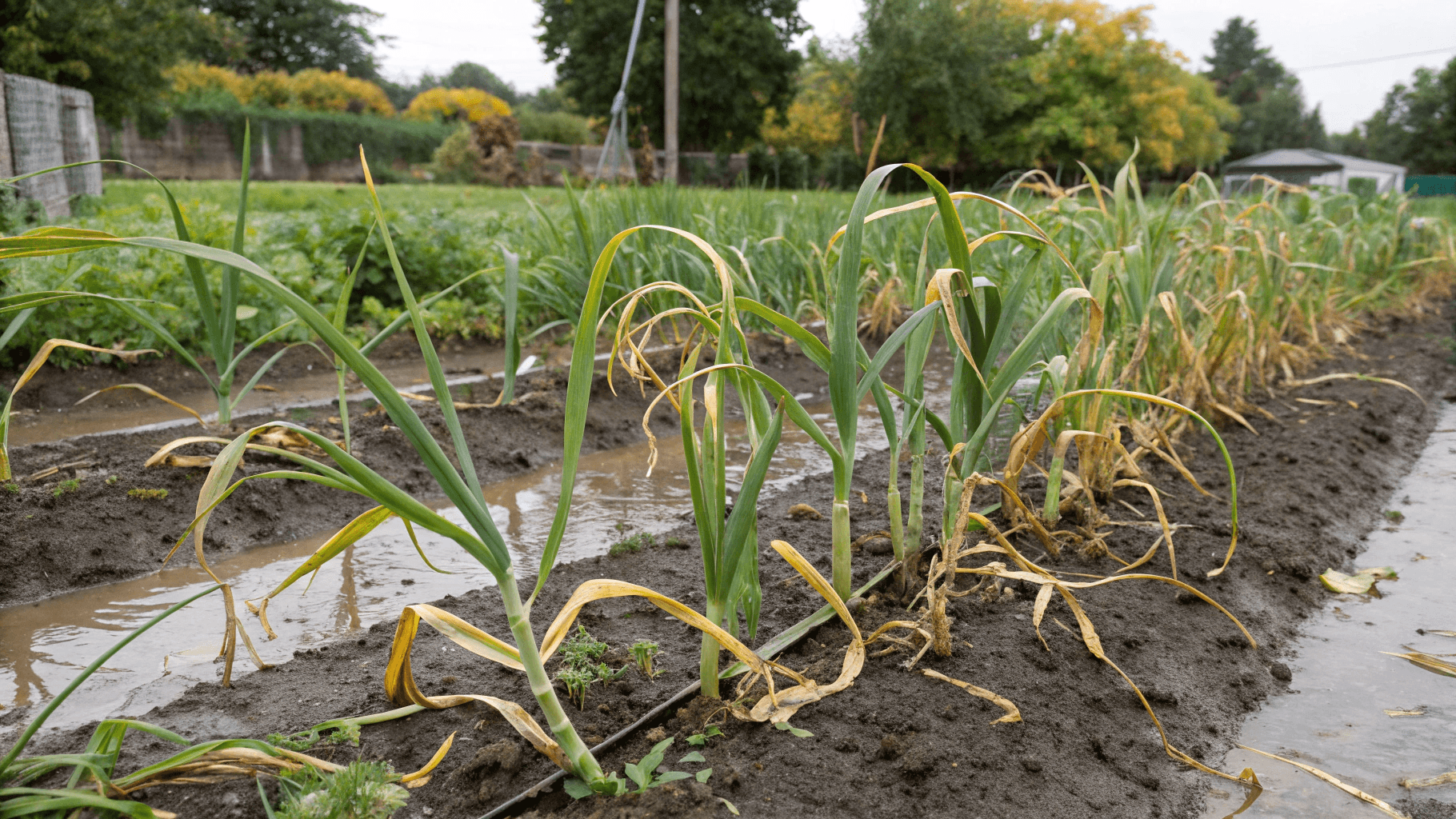
Garlic hates soggy soil. Constantly wet conditions suffocate roots and invite fungal diseases like white rot or downy mildew. Ensure your soil drains well; raised beds or sandy loam are ideal.
2. Skipping Fertilizer or Feeding Too Late
Neglecting to feed garlic results in small, weak bulbs. But feeding too late (after the bulbs begin forming) can cause lush leaves and soft bulbs. Stick to a fertilizing schedule that ends by late spring.
3. Compact or Heavy Soil
Garlic bulbs need loose, aerated soil to expand. Hard or clay soil restricts growth, resulting in misshapen bulbs. Before planting, amend the soil with compost, sand, or aged manure to improve texture.
4. Not Mulching
Skipping mulch leads to quick moisture loss, weed competition, and temperature fluctuations. Mulch acts like insulation, keeping the soil evenly moist and cool, exactly what garlic prefers.
5. Ignoring Watering During Spring
Some gardeners stop watering once the plants look established. That’s a big mistake. Garlic’s bulb formation stage in late spring is when it needs moisture the most. A dry spell at this time can reduce bulb size dramatically.
Winter and Spring Care
Garlic is typically planted in the fall, allowing the roots to establish before winter dormancy. But care requirements change drastically from winter to spring.
Winter Care
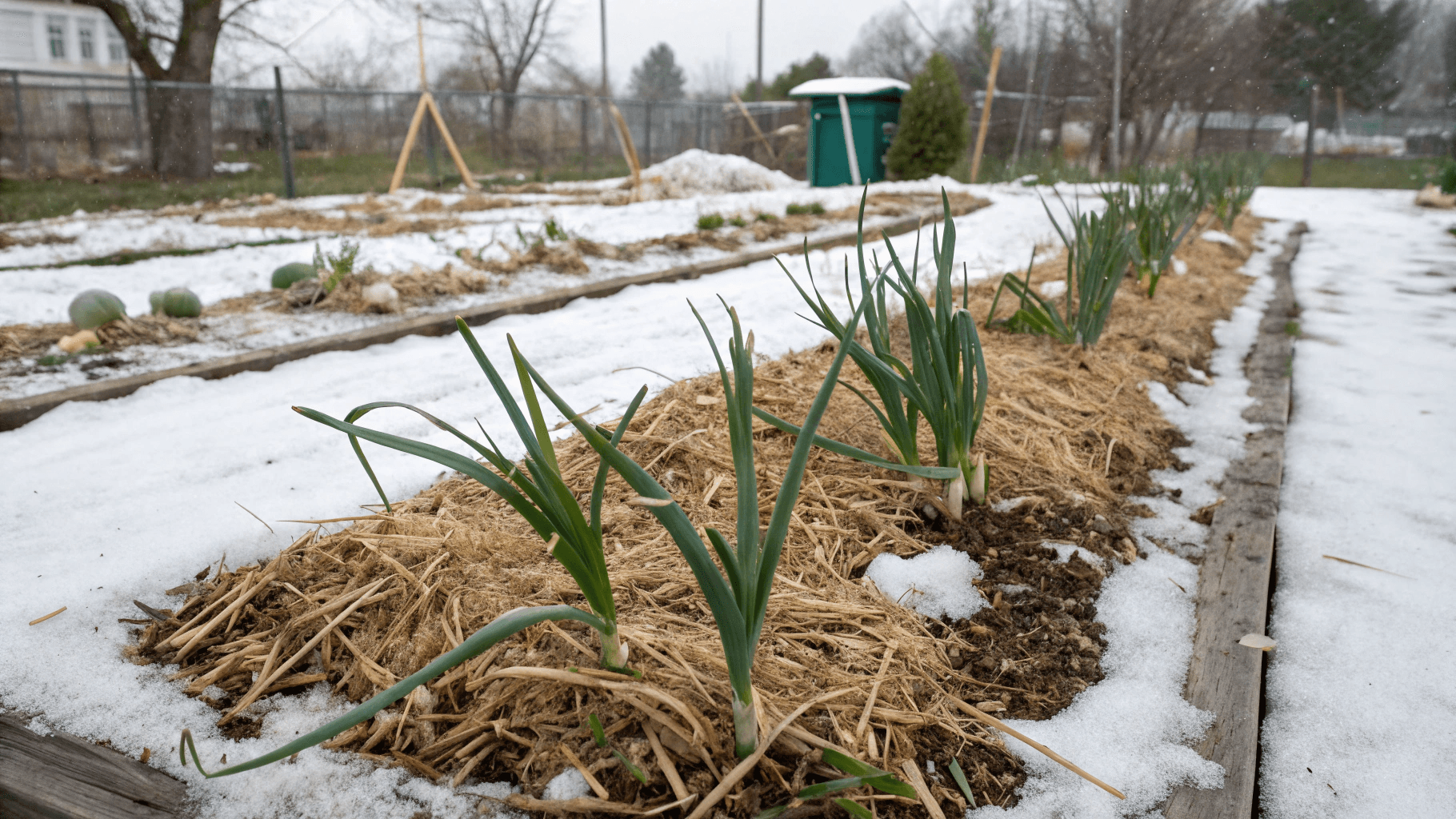
In winter, garlic growth slows down or pauses altogether. The focus shifts to protecting your cloves from freezing temperatures and excessive moisture.
Here’s how to care for garlic in winter:
- Mulch heavily after planting (4–6 inches of straw or leaves). This insulates the soil and prevents frost heaving.
- Avoid overwatering. Unless you’re in a dry winter climate, natural rainfall or snowmelt is usually enough.
- Check periodically for mulch compaction or rodent damage.
You don’t need to feed garlic in winter; it won’t absorb nutrients in cold soil anyway.
Spring Care
As soon as the weather warms (late February or March), garlic wakes up fast. This is when your feeding and watering routines truly matter.
- Remove heavy mulch once shoots are a few inches tall to let sunlight warm the soil.
- Feed with nitrogen to kickstart growth.
- Water regularly about 1 inch per week, adjusting for rainfall.
- Weed often, as garlic doesn’t like competition.
By late spring, when the plants start forming bulbs, switch to a phosphorus- and potassium-rich feed and maintain consistent moisture.
If you’re growing hardneck garlic, this is also when scapes (flower stalks) appear. Snip them off once they curl, doing so redirects energy from flower production back into bulb growth, leading to larger cloves.
Seasonal Feeding and Watering Garlic Schedule
| Growth Stage | Watering Schedule | Fertilizing Schedule | Notes |
|---|---|---|---|
| Fall (Planting) | Water after planting, then lightly as needed until frost. | Mix compost or aged manure into soil before planting. | Mulch well before winter. |
| Winter (Dormancy) | Mix compost or aged manure into the soil before planting. | None. | Keep mulch thick to protect from freeze. |
| Early Spring (Growth) | 1 inch per week, deep watering. | Apply nitrogen (blood meal, fish emulsion). | Remove excess mulch to warm soil. |
| Late Spring (Bulbing) | Maintain even moisture. | Switch to phosphorus/potassium fertilizer (5-10-10 or bone meal). | Stop feeding once bulbs start swelling. |
| Pre-Harvest (2 weeks before) | Stop watering entirely. | None. | Let bulbs cure naturally in soil. |
Following this seasonal rhythm gives your garlic the best chance to produce large, healthy bulbs with rich, full flavor.
Conclusion
Feeding and watering garlic might sound simple, but timing and balance are everything. Keep the soil consistently moist, feed early with nitrogen and later with phosphorus and potassium, and avoid overwatering near harvest.
With a little attention to timing, feeding, and watering, your garlic crop can go from ordinary to exceptional, year after year.

Leave a Reply